global oil prices
|

Global oil prices decline as OPEC cuts 2026 demand forecast

Global crude oil prices fell by more than $1 a barrel on Thursday after a period of gains, as concerns over weaker oil consumption in 2026 outweighed ongoing supply risks linked to the conflict in the Middle East.

Brent crude futures declined by $1.29, or around 1.5%, to $87.69 per barrel, while US West Texas Intermediate (WTI) crude dropped $1.30, or about 1.6%, to $81.97 per barrel.

Market sentiment was pressured by fresh estimates indicating that global oil demand could grow more slowly than previously expected next year. The weaker demand outlook has encouraged investors to reassess the strength of the oil market despite continued uncertainty over supplies from the Middle East.

The latest decline came after the Organisation of the Petroleum Exporting Countries (OPEC) lowered its forecast for global oil demand growth in 2026 to 580,000 barrels per day in its monthly oil market report. This marks the fourth consecutive reduction in the organisation’s demand-growth projection.

The ongoing conflict involving Iran and the United States and Israel has disrupted energy supplies and shipping routes, creating significant uncertainty in international oil markets. However, analysts say the economic and logistical disruptions are also weighing on fuel consumption and broader global demand.

Despite the latest decline, supply concerns continue to provide some support to crude prices. Traders remain focused on developments in the Middle East, particularly the impact of the conflict on oil production, exports and major shipping routes.

Analysts are therefore expecting continued volatility in global oil prices as markets balance two opposing factors: the risk of supply shortages caused by geopolitical tensions and the possibility of weaker demand resulting from disruptions to economic activity.

The latest OPEC forecast is likely to remain an important factor for investors in the coming sessions, particularly as traders assess whether weaker demand can offset the supply risks currently affecting the global energy market.
Similar Posts

  • | |

    ‘Stop crying’: Maryam takes aim at Bilawal

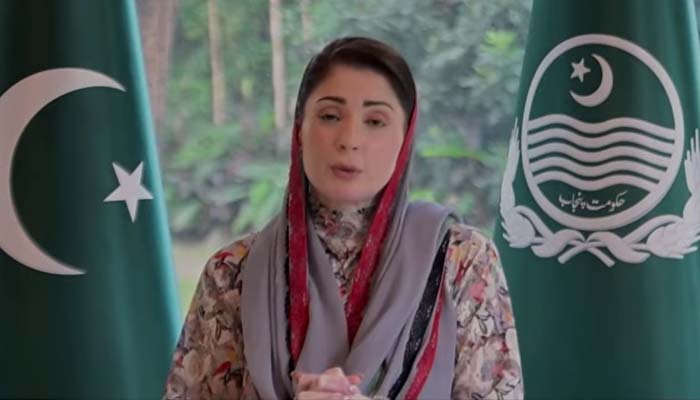
    Punjab Chief Minister Maryam Nawaz has urged the Pakistan Peoples Party (PPP) to accept its defeat in the first phase of the Azad Jammu and Kashmir (AJK) elections instead of making allegations of rigging. In a video statement, Maryam responded to PPP Chairman Bilawal Bhutto-Zardari’s criticism of the election results. She said the PPP should accept the outcome “with an open heart” and focus on its political responsibilities. Maryam said complaints and accusations would not change the election results. She also advised the PPP to concentrate on governance rather than questioning the electoral process. Her statement came after Bilawal strongly criticised the PML-N and raised questions about the conduct of the AJK elections. Speaking at a workers’ convention in Muzaffarabad, Bilawal questioned whether the situation in AJK could be described as genuine democracy. Bilawal claimed that PPP candidates had received strong public support and suggested that the party’s performance did not reflect the votes and expectations of the people. He also questioned whether political interests were being prioritised over the wider interests of AJK. The remarks triggered a political exchange between the two parties following the completion of polling in the first phase of the AJK Legislative Assembly elections. According to unofficial and provisional results, the PML-N emerged as the leading party by winning nine of the 13 constituencies contested in the first phase. The PPP secured the remaining four seats across the Mirpur division. The results prompted celebrations among PML-N workers and supporters, while the PPP raised concerns over the electoral process. The first phase covered constituencies in Mirpur, Kotli and Bhimber. Voting was held on July 27, with polling time extended by one hour after the scheduled closing time. The electoral contest has intensified political competition between the PML-N and PPP in AJK.

  • | |

    Hafiz Naeem targets IPP deals, fuel prices

    Jamaat-e-Islami Emir Hafiz Naeemur Rehman has strongly criticised the government over rising fuel prices, heavy taxation and electricity costs. Addressing participants at the party’s sit-in in Lahore, Hafiz Naeemur Rehman said the government was putting an increasing financial burden on ordinary citizens. He demanded the immediate withdrawal of the recent increase in petrol and diesel prices. He said the petroleum levy had no direct connection with the actual price of petrol. He questioned the justification for repeatedly increasing fuel prices and said the government was making life more difficult for the public. “The government drops a petrol bomb on us every day,” he said. Hafiz Naeemur Rehman also criticised the government’s policies regarding independent power producers (IPPs). He alleged that successive governments had entered into unfair agreements with IPPs in the name of ending load-shedding. According to him, the government was now passing the cost of its own shortcomings on to the people through higher taxes. He said citizens were already struggling with expensive electricity and gas bills. The Jamaat-e-Islami leader said heavy taxes were being imposed on electricity and gas bills. He argued that such charges were increasing household expenses and adding to the difficulties faced by ordinary consumers. Hafiz Naeemur Rehman further said the government had shut down five of the 27 IPPs. He referred to the government’s own claim that the move would provide a benefit of Rs3,360 billion to the national exchequer. He questioned why similar measures could not be taken to provide lasting relief to consumers. He said the government should focus on reducing electricity costs instead of continuously increasing taxes and other charges. The Jamaat-e-Islami emir also criticised the Federal Board of Revenue (FBR). He alleged that corruption within the tax collection system remained widespread. He called for greater transparency and accountability in government institutions. He said economic policies should be designed to provide relief to the public rather than increase their financial difficulties.

  • | |

    Shagufta Ejaz on reason for becoming a YouTuber

    Shagufta Ejaz has been a constant presence in Pakistani television since the PTV era, building a career that has spanned decades and generations of audiences. From her earliest roles in the golden age of state television to her continued prominence in contemporary drama, she has remained one of the industry’s most beloved and respected figures. In recent years, however, she has added an entirely new dimension to her public presence, stepping into the world of digital content creation and building a YouTube channel that has resonated with fans for its warmth, authenticity and the glimpses it offers of her family life. Appearing as a guest on Star and Style, Shagufta Ejaz spoke about what prompted her to make that shift, and the answer was a family connection rather than a professional calculation. The inspiration behind her YouTube journey was her son-in-law, Ali Hamza Baloch, who was already an established daily vlogger before she started her own channel. Shagufta explained that watching him work gave her a firsthand look at what the medium was capable of. She saw how deeply his audience connected with him, how his viewers followed his daily life and felt genuinely close to him through the screen, and something about that connection appealed to her. It was the kind of relationship with an audience that felt personal and immediate in a way that drama, for all its reach, does not always allow. With his help, she launched her own channel, and the early days of the venture were a family effort in more ways than one. Her children stepped in to handle the editing at the beginning, helping her find her footing in a format that operates very differently from the structured, scripted world of television production. Over time, however, she took ownership of the process herself and now edits her own videos, a progression that reflects both her growing comfort with the medium and her characteristic commitment to doing things properly. The content she produces has found a genuine audience. Fans have responded warmly to the homely, unpolished quality of her videos, which feature her family, her daily life and the kind of natural, unguarded moments that would never make it into a drama production. For an actress who has spent her career embodying carefully crafted characters, the channel offers something entirely different: just Shagufta Ejaz, being herself. It is a quality that her audience clearly values, and one that speaks to why she has remained relevant across so many years and so many changes in the entertainment landscape. Whether she is performing a complex character on screen or talking to her camera at home, the authenticity that has always defined her work comes through in exactly the same way.

  • | |

    PMDC warns doctors over expired medical licences

    The Pakistan Medical and Dental Council (PMDC) has issued an important warning to doctors whose professional licences have expired. The council has decided to take action against doctors who fail to renew their licences within the required period. Under the new decision, doctors will be given six months to complete the renewal process. Licences that are not renewed within this period may be cancelled. The PMDC has also stressed that doctors involved in clinical practice must have a valid and active licence. Doctors with expired or inactive licences could face restrictions on their professional practice. The council has advised such doctors to complete the renewal process without delay. The move is aimed at ensuring that only properly registered and authorised doctors continue to provide medical services. The PMDC maintains the registration and licensing system for medical and dental practitioners in Pakistan. Keeping licences active is an important requirement for doctors who are practising professionally. The latest warning is expected to push doctors with expired licences to complete their renewals within the specified six-month period. Doctors have been advised to remain compliant with the council’s licensing requirements to avoid possible cancellation of their licences and disruption to their clinical practice.

  • | |

    Pakistani passport ranks fourth weakest globally

    Pakistan’s passport has been ranked the fourth weakest in the world in the latest Henley Passport Index. The Pakistani passport stands at 101st place in the global ranking. Its holders can access 29 destinations without obtaining a visa in advance or through visa-on-arrival facilities. The Henley Passport Index evaluates passports based on the number of destinations their holders can enter without securing a visa before travelling. The index covers 199 passports and 227 travel destinations. The latest ranking shows that Pakistan’s passport remains ahead of only three passports. These belong to Iraq, Syria and Afghanistan. The ranking highlights the limited international mobility available to Pakistani passport holders compared with citizens of many other countries. Pakistan’s neighbouring countries have performed better in the latest index. China ranks 60th globally. India is placed at 81st. Iran stands at 96th. Despite its low overall ranking, Pakistani citizens can travel to several destinations without obtaining a visa before departure. Visa-free access is available for Pakistani passport holders to Barbados, the Cook Islands, Dominica, Haiti, Micronesia, Montserrat, Rwanda, St Vincent and the Grenadines, The Gambia, Trinidad and Tobago, and Vanuatu. Pakistani travellers can also obtain visas upon arrival in a number of countries. These include Burundi, Cambodia, the Comoro Islands, Djibouti, Guinea-Bissau, Madagascar, the Maldives, Mozambique, Nepal, Niue, Palau, Samoa, Senegal, Sierra Leone, Timor-Leste and Tuvalu. In addition, Pakistani citizens can obtain electronic travel authorisations for Kenya, Seychelles and Sri Lanka. The passport ranking is widely used as an indicator of international travel access. A higher position generally means that passport holders can enter more destinations without obtaining a visa in advance. Singapore continues to hold the strongest passport in the latest ranking. It tops the index with access to 192 destinations. Japan, South Korea and the United Arab Emirates share second place. Their passport holders can access 188 destinations. Sweden ranks third, with access to 187 destinations. The latest figures underline the significant gap between Pakistan and the countries at the top of the global passport ranking.

  • | |

    Nearly 2,000 child abuse cases reported in Pakista…

    Pakistan recorded 1,914 reported cases of child abuse during the first six months of 2026, with child sexual abuse making up the largest share of incidents, according to a new report released by child rights organisation Sahil. The report, based on cases published in national and regional newspapers, revealed that 1,015 children were victims of sexual abuse between January and June. It also documented 558 abductions, 101 missing children, 35 child marriages and 98 cases involving child pornography linked to sexual abuse. In addition, 49 newborn babies were found abandoned in different parts of the country during the reporting period. Girls accounted for 58 percent of the reported victims, while children between the ages of 11 and 15 were identified as the most vulnerable group. The report also noted that children aged 16 to 18 and those between six and 10 years old were among the frequently affected age groups. According to Sahil, many victims were abused by people they knew. Acquaintances were identified as the alleged perpetrators in 43 percent of the reported cases, while strangers accounted for 34 percent. The findings further showed that nearly half of the abuse incidents occurred inside the victims’ homes, highlighting the hidden nature of child abuse. Other cases took place in the homes of the accused or at various public locations, while the location was not specified in several reports. Urban areas recorded a higher number of reported incidents than rural regions. Punjab accounted for around 80 percent of all reported child abuse cases nationwide, followed by Sindh with 15 percent. The remaining cases were reported from Khyber Pakhtunkhwa, Balochistan, Islamabad Capital Territory, Azad Jammu and Kashmir, and Gilgit-Baltistan. The report also stated that police registered cases in 89 percent of the reported incidents. However, a small number of cases were either not reported to law enforcement or allegedly faced refusal in the registration of a First Information Report (FIR), while the registration status of some cases remained unknown.

Leave a Reply

Your email address will not be published. Required fields are marked *