stop crying maryam
| |

‘Stop crying’: Maryam takes aim at Bilawal

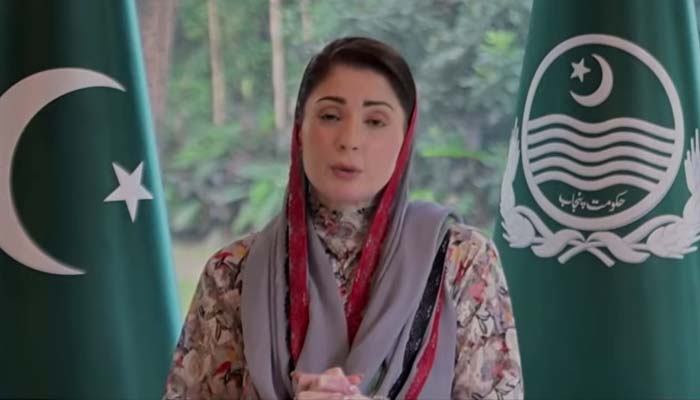
Punjab Chief Minister Maryam Nawaz has urged the Pakistan Peoples Party (PPP) to accept its defeat in the first phase of the Azad Jammu and Kashmir (AJK) elections instead of making allegations of rigging.

In a video statement, Maryam responded to PPP Chairman Bilawal Bhutto-Zardari’s criticism of the election results. She said the PPP should accept the outcome “with an open heart” and focus on its political responsibilities.

Maryam said complaints and accusations would not change the election results. She also advised the PPP to concentrate on governance rather than questioning the electoral process.

Her statement came after Bilawal strongly criticised the PML-N and raised questions about the conduct of the AJK elections. Speaking at a workers’ convention in Muzaffarabad, Bilawal questioned whether the situation in AJK could be described as genuine democracy.

Bilawal claimed that PPP candidates had received strong public support and suggested that the party’s performance did not reflect the votes and expectations of the people. He also questioned whether political interests were being prioritised over the wider interests of AJK.

The remarks triggered a political exchange between the two parties following the completion of polling in the first phase of the AJK Legislative Assembly elections.

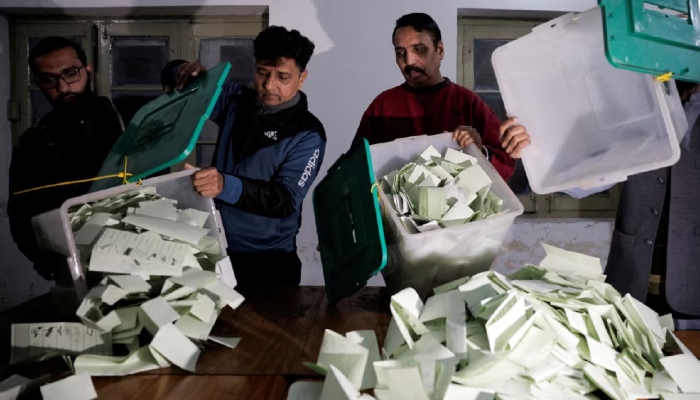
According to unofficial and provisional results, the PML-N emerged as the leading party by winning nine of the 13 constituencies contested in the first phase. The PPP secured the remaining four seats across the Mirpur division.

The results prompted celebrations among PML-N workers and supporters, while the PPP raised concerns over the electoral process.

The first phase covered constituencies in Mirpur, Kotli and Bhimber. Voting was held on July 27, with polling time extended by one hour after the scheduled closing time.

The electoral contest has intensified political competition between the PML-N and PPP in AJK.

Similar Posts

  • | |

    Khawaja Asif says Mir Raza case exposes compromise…

    Defence Minister Khawaja Asif has criticised the Sindh government over the investigation into the Mir Raza case. He said the developments emerging from the case suggest that the entire system had been compromised. In a social media post, Asif said continued attention was needed to ensure that the matter was investigated properly. He warned that any previous attempts to settle or cover up the issue should not be repeated. The defence minister also called for those who allegedly tried to conceal facts in the case to be exposed. His remarks came as questions continued to be raised over the handling of the Mir Raza case. The case has attracted attention because of conflicting information and concerns about the progress of the investigation. Meanwhile, the Sindh government has decided to establish a judicial commission to investigate the Mir Raza murder case. Sindh Home Minister Zia Lanjar said the provincial government wanted justice for Mir Raza’s family. He said a new committee had also been formed to examine the matter. Lanjar said the authorities would allow the judicial commission or the court to determine how conflicting reports should be dealt with. The government’s decision to form a judicial commission is expected to provide another forum for examining the circumstances surrounding the case. It may also help clarify conflicting accounts and determine responsibility based on the available evidence.

  • PSG Champions League Celebrations Marred By Violence And Vandalism In Paris

    PARIS, France — Celebrations following Paris Saint-Germain’s Champions League victory on Saturday descended into violence and vandalism across the French capital, prompting a significant law enforcement response and resulting in almost 800 arrests nationwide, according to official statements from French authorities. More than 700 arrested on the fifth night of riots in France, unrest spreads […]

  • | | | |

    Three powers, one shield? What the pact means

    Pakistan, Saudi Arabia and Türkiye have formalised their long-standing strategic and defence ties through the newly signed Makkah Joint Defence Agreement, establishing a framework for closer military coordination and collective security. The agreement was signed during a trilateral summit in Makkah attended by Prime Minister Shehbaz Sharif, Saudi Crown Prince Mohammed bin Salman and Turkish President Recep Tayyip Erdogan. The pact has attracted comparisons with established military alliances. However, analysts say its stated purpose is not to create a new military bloc or target any particular country. Instead, it provides an institutional structure for defence cooperation that has developed between the three nations over several decades. A formal structure for longstanding ties Pakistan and Türkiye have maintained close political and military relations for decades, while Islamabad and Riyadh have developed extensive defence, diplomatic and economic cooperation. The new agreement is viewed as an attempt to bring these existing relationships under a formal trilateral framework. It is designed to provide a more structured mechanism for consultations, military coordination and strategic cooperation. Why the agreement was signed now The agreement comes amid growing security challenges across the Middle East and wider region. Analysts say conflicts, changing military technologies and emerging security threats have encouraged countries with shared strategic interests to strengthen their defence coordination. The trilateral arrangement is intended to improve collective preparedness and provide a coordinated response to potential threats while supporting regional stability. What the defence pact provides A central element of the agreement is the principle of collective security. Under the framework, aggression against one member is to be treated as a threat to all three countries. The arrangement is expected to encourage greater military coordination, intelligence cooperation, strategic consultations and defence planning. Closer institutional links could also allow the three countries to coordinate their military capabilities and improve their ability to respond to security challenges. Different strengths, shared security interests Each country brings different capabilities to the partnership. Pakistan contributes a large and experienced military, operational expertise and extensive experience in counterterrorism and conventional defence. Saudi Arabia brings significant economic resources, regional influence and political weight. Türkiye adds its growing defence industry, military technology and manufacturing capabilities. Analysts believe these complementary strengths could make the partnership more effective while allowing the three countries to develop greater strategic self-reliance. Pakistan’s diplomatic role The agreement also comes as Pakistan seeks to strengthen its role as a regional diplomatic actor. Islamabad maintains relations with Saudi Arabia, Türkiye, Iran, China and the United States, giving it channels of communication with several major regional and global powers. Analysts argue that Pakistan’s diplomatic engagement, alongside its military capabilities, could help it contribute to regional crisis management and dialogue. What the pact does not mean Despite comparisons with NATO and other military alliances, analysts stress that the agreement is not described as an offensive alliance. It is also not presented as a pact directed against a particular country, a so-called “Muslim NATO”, a nuclear deterrence arrangement or a religious military bloc. Instead, the three countries have presented it as a defensive framework focused on collective security, deterrence, military cooperation and regional stability. The long-term effectiveness of the agreement will depend on sustained political coordination and the willingness of all three governments to implement its commitments.

  • | |

    Muse singer Matt Bellamy takes legal step to end m…

    Muse frontman Matt Bellamy has officially taken legal steps to end his marriage to model and actress Elle Evans. The 48-year-old musician filed for divorce in Los Angeles on August 12, 2026, citing “irreconcilable differences” as the reason for the split. (People.com⁠) Bellamy and Evans first met in 2015 while Evans appeared in Muse’s “Mercy” music video. Their relationship quickly developed, and the couple became engaged in December 2017. After dating for several years, they exchanged vows in an outdoor ceremony in Malibu on August 10, 2019. (Us Weekly⁠) The couple went on to build a family together. They welcomed their daughter, Lovella Dawn, in June 2020. Their second child, son George Julien-Wade, was born in May 2024. Bellamy also has a teenage son, Bingham, from his previous relationship with actress Kate Hudson. (People.com⁠) News of Bellamy and Evans’ separation first became public earlier this year. In June, Bellamy confirmed that they had separated in summer 2025, describing the circumstances behind the breakup as “really unexpected.” He also explained that the difficult period influenced his creative work and the making of Muse’s album The Wow! Signal. (People.com⁠) At the time, Bellamy focused on keeping life stable for his children. His comments suggested that protecting their family environment remained a priority while he dealt with the major personal change. The latest court filing provides more details about the divorce proceedings. Bellamy is seeking sole legal and physical custody of the couple’s two young children, Lovella and George. He is also asking the court to uphold the terms of their premarital agreement concerning spousal support. (People.com⁠) Evans, meanwhile, has indicated that she plans to contest Bellamy’s custody request, according to reports. The custody issue could therefore become an important part of the proceedings as the former couple works through their separation. (People.com⁠) Despite the end of their marriage, Bellamy and Evans have continued to share a connection through their children. The pair have also been seen maintaining family ties, including reuniting with their children for important occasions. For fans, the divorce marks the end of a relationship that lasted more than a decade from their first meeting and seven years of marriage. Bellamy’s filing now moves their private separation into a formal legal process, while both parents face the challenge of navigating the next chapter of their lives and their children’s future.

  • | |

    Iran rejects Hormuz plan as US intercepts missiles

    WASHINGTON: Regional tensions intensified on Wednesday after Iran rejected Oman’s proposal for jointly managed shipping routes in the Strait of Hormuz, while the United States said it intercepted multiple Iranian ballistic missiles allegedly launched towards American forces in the Middle East. Iranian Deputy Foreign Minister Kazem Gharibabadi said Muscat had proposed dividing the Strait of Hormuz transit route equally between Iranian and Omani territorial waters. However, Tehran instead suggested that shipping passing through Iranian waters should remain under its control, while Oman would oversee only part of the route on its side. He warned that if Oman declined the proposal, the strategic waterway would remain closed. The Strait of Hormuz is one of the world’s busiest maritime corridors and a vital route for global energy exports, making any disruption a significant concern for international trade and regional security. Meanwhile, the US Central Command announced that its forces had intercepted several ballistic missiles launched by Iran in what Washington described as an attempted surprise attack on US military personnel stationed in the Middle East. Although the exact target was not disclosed, Iranian state media reported that the Islamic Revolutionary Guard Corps (IRGC) had fired missiles at a US military base and a Central Command facility in Jordan, claiming the strikes were retaliation for recent American actions against Iranian interests. US President Donald Trump said diplomatic contacts with Tehran had shown positive signs but warned that military action could resume if negotiations failed to produce results. Iran, however, denied reports suggesting it was preparing to restart direct talks with Washington. The conflict has also spilled into neighbouring countries. Jordan confirmed that its air defence systems intercepted five missiles entering its airspace early Wednesday, marking the third consecutive day of aerial threats against the kingdom. No casualties or property damage were reported. In response to the escalating crisis, Gulf nations intensified diplomatic coordination. Saudi Foreign Minister Prince Faisal bin Farhan held separate discussions with his counterparts from Qatar, Kuwait and Bahrain, with all sides stressing the importance of reducing regional tensions and ensuring freedom of navigation through the Strait of Hormuz and the Bab al-Mandeb Strait. The ministers also condemned attacks attributed to Iran and its allied armed groups. The Gulf Cooperation Council (GCC) strongly criticised repeated attacks on Saudi Arabia, describing them as a serious violation of the kingdom’s sovereignty and a threat to regional stability. GCC Secretary-General Jasem Mohamed AlBudaiwi reaffirmed the bloc’s full support for Saudi Arabia and urged stronger regional cooperation to prevent further escalation. The European Union also expressed concern over the deteriorating security situation. EU foreign policy chief Kaja Kallas discussed Gulf tensions with Iranian Foreign Minister Abbas Araghchi, calling for renewed diplomacy while also raising concerns over Iran’s military support for Russia and the temporary detention of two French diplomats in Tehran. China appealed for restraint, urging all parties to resolve disputes through dialogue while safeguarding freedom of navigation in international waterways. Beijing reiterated its support for peaceful solutions and respect for the sovereignty of regional states. Separately, Iran’s IRGC Navy announced that it had intercepted and halted three oil tankers in the Strait of Hormuz after the vessels allegedly ignored official warnings. Iranian authorities did not disclose the ships’ identities or provide further details regarding the alleged violations. Iran also rejected accusations linking it to projectiles fired at targets inside Saudi Arabia from other countries, insisting that attributing every attack on US interests in the region to Tehran was a serious miscalculation. The latest developments highlight growing instability across the Gulf, with military confrontations, diplomatic efforts and concerns over maritime security continuing to shape one of the world’s most sensitive geopolitical flashpoints.

  • UK Prime Minister Keir Starmer Resigns Amid Pressure from Labour Party

    Keir Starmer announced his resignation as Leader of the Labour Party and Prime Minister of the United Kingdom on Monday, visibly emotional as he acknowledged that he had lost the confidence of his parliamentary group to continue governing. His appearance came after a weekend of reflection on his political future, besieged by pressure following a […]

Leave a Reply

Your email address will not be published. Required fields are marked *