punjab rahmat card
| | |

CM Punjab Rahmat Card enters digital disbursement …

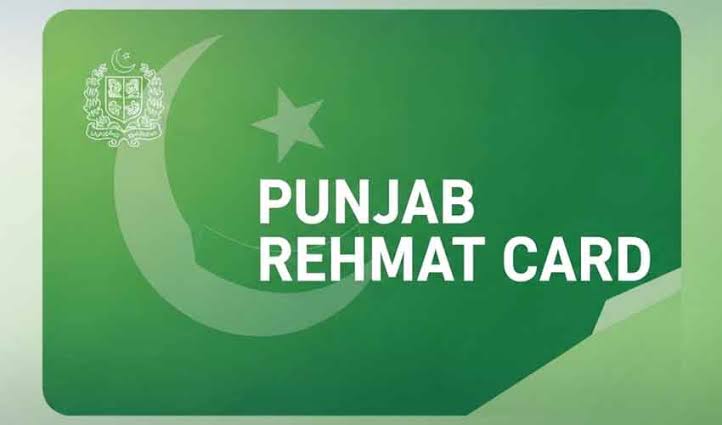
LAHORE: Following the successful computerized ballot held on June 23, 2026, the CM Punjab Rahmat Card initiative has entered its next major milestone with JazzCash commencing digital disbursements to selected widows and orphans across Punjab. The launch of digital payments marks the successful transition from beneficiary selection to financial assistance delivery, completing another key phase of one of Punjab’s most technologically advanced social welfare initiatives.

The CM Punjab Rahmat Card is a collaborative initiative of the Government of Punjab, Zakat & Ushr Department, Punjab Information Technology Board (PITB), NADRA, Punjab Social Protection Authority (PSPA), Urban Unit, JazzCash, and other stakeholders to digitize the complete lifecycle of welfare assistance from citizen application and eligibility verification to transparent beneficiary selection and digital financial disbursement.

During the computerized ballot ceremony, officials acknowledged the successful completion of the project’s technology implementation. Special Assistant to the Chief Minister (SACM) Rashid Iqbal Nasrullah appreciated the PITB team for its continuous technical support throughout the implementation of the initiative within stringent timelines. He also specially acknowledged the prompt guidance and support extended by PITB Chairman Faisal Yousaf at various stages of the project whenever required.

Secretary, Zakat & Ushr Department, Irfan Ahmad Sandhu also commended the dedicated efforts of PITB in designing, developing, and operationalizing the comprehensive digital ecosystem supporting the Programme. He appreciated PITB’s commitment to ensuring the timely completion of all assigned deliverables despite challenging timelines.

Participants observed that the CM Punjab Rahmat Card is the first initiative of its kind undertaken by the Zakat & Ushr Department in terms of both scale and technological sophistication. By replacing conventional manual processes with integrated digital workflows, the Programme has introduced unprecedented levels of transparency, efficiency, accountability, and speed in the delivery of welfare assistance.

As the technology implementation partner, PITB designed, developed, and operationalized the complete digital platform supporting the initiative. The digital ecosystem includes an online citizen application portal, an Android mobile application, a dedicated helpline for application support, inquiries, and complaints, a Beneficiary Management System, a multi-agency digital verification engine integrated with NADRA and Punjab Socio-Economic Registry (PSER) databases, automated scrutiny and eligibility determination workflows, a computerized district-wise balloting mechanism, and real-time monitoring and decision-support administrative dashboards.

The end-to-end digital workflow enabled citizens to submit applications online, which were then verified through multiple government databases, assessed against approved eligibility criteria, allocated according to district quotas, and finally selected through a transparent computerized ballot before being transferred for digital disbursement through JazzCash.

The CM Punjab Rahmat Card initiative stands as a successful example of how digital public infrastructure can enable multiple government institutions to operate through a unified technology platform, facilitating data-driven decision-making, automated eligibility verification, transparent Programme execution, and secure digital payments. The project reinforces the Government of Punjab’s commitment to delivering technology-enabled, scalable, and accountable citizen services that improve the lives of vulnerable segments of society.
Similar Posts

  • | |

    Trump returns to White House correspondents’ din…

    United States President Donald Trump will address the White House Correspondents’ Association at a rescheduled gala on Friday, nearly three months after a shooting outside the Washington Hilton forced the cancellation of the April event. The black-tie dinner, now relocated to the Waldorf Astoria hotel, will take place under heightened security. Secret Service Director Sean Curran said an advance team had implemented a comprehensive plan, acknowledging the risk of hostile actors but stressing that the agency was treating the venue with the same rigor as any presidential site. The April 25 incident occurred as Trump and his cabinet were arriving. A man armed with a shotgun attempted to breach a security checkpoint and opened fire. Secret Service officer Victor Gonzales, credited with stopping the attack, was shot but survived thanks to his protective vest. Gonzales will be honored at Friday’s dinner, along with Hilton staff who assisted guests during the chaos. The suspect, Cole Allen, has pleaded not guilty to charges including attempted assassination of the president. Trump has argued the attack underscored the need for a $400 million ballroom under construction at the White House, saying future events held there would enhance presidential security. The correspondents’ dinner, a century-old Washington tradition, raises funds for journalism scholarships and celebrates the First Amendment. Trump is scheduled to deliver remarks, with entertainment provided by mentalist Oz Pearlman. This year’s event carries added weight. Trump has frequently clashed with the press, denouncing coverage as “fake news,” restricting access for outlets such as the Associated Press, and threatening to revoke broadcast licenses. Yet he has also given reporters more direct access than recent presidents, often taking questions in unscripted settings. Several journalism organizations have urged the WHCA to use the dinner to condemn what they describe as Trump’s attacks on press freedom. WHCA President Weijia Jiang said the gala would send a clear message: “Violence has no place in American life and a free press will not be intimidated into silence.”

  • |

    Kriti Sanon urges people to prioritise mental health

    Bollywood actress Kriti Sanon has opened up about the importance of mental and emotional well-being, urging people to pay as much attention to their minds as they do to their physical health. The National Award-winning actress reflected on how her experiences while working on films such as Mimi and Do Patti changed her perspective on acting and the emotional impact of portraying complex characters. According to Kriti, she once believed that the characters she played remained confined to the world of cinema and did not have any lasting effect on her personal life. However, her experiences with these two films made her realise that characters can leave an unconscious emotional impact on actors. Kriti explained that the effect of a demanding role does not always become apparent immediately. Sometimes, an actor may complete filming and only begin noticing emotional changes several days later. She said that a character can continue to influence a person’s mood, behaviour and thoughts even after the cameras stop rolling. The actress said this experience taught her the importance of consciously separating herself from the characters she portrays. While actors are expected to completely immerse themselves in their roles, Kriti believes that it is equally important to know when to step away from the emotional world created for a film. She also recalled times when she was personally dealing with difficult or emotionally challenging situations while having to continue working on a comedy project. Despite going through personal struggles, she still had to portray cheerful and entertaining characters in front of the camera. Kriti pointed out that actors repeatedly draw upon their own emotions while performing. They have to access different feelings and sometimes revisit difficult emotional spaces to make their performances believable. Because of this, she believes that maintaining good mental and emotional health should be an important part of an actor’s life. The actress encouraged people to find healthy ways of managing their emotions and maintaining mental balance. She suggested practices such as meditation, therapy and other activities that help individuals feel mentally grounded and emotionally stable. Kriti also shared that she personally turns to meditation from time to time and finds it beneficial. For her, taking a pause and reconnecting with herself helps maintain emotional balance, particularly after working on emotionally demanding projects. Her comments highlight a broader reality of the entertainment industry, where performers are often required to move between intense emotions and different personalities within a short period of time. While professional commitment is important, Kriti believes that taking care of one’s mental health should never be overlooked. Kriti Sanon was most recently seen alongside Shahid Kapoor and Rashmika Mandanna in Cocktail 2. The actress continues to remain one of Bollywood’s prominent performers, balancing commercially successful projects with roles that require emotional depth and versatility.

  • | |

    Turkey submits bill to parliament aimed at reinteg…

    Turkey’s governing coalition put forward a draft law before parliament on Wednesday designed to secure lasting peace with the Kurdistan Workers’ Party, offering legal protection from prosecution to many former fighters and suspending prison terms for others. The legislation represents a significant step toward closing out an insurgency that has claimed more than 40,000 lives since 1984, deepened political divisions inside Turkey and spilled violence into neighboring Iraq and Syria over four decades. The bill aims to bring the long running conflict to a close in part by clearing the way for potentially thousands of former PKK fighters and civilians to return to Turkey from hideouts in northern Iraq. The measure carries support from a majority of lawmakers and is expected to clear parliament later this week, though public opinion polls suggest many Turks remain doubtful it will deliver a durable peace. Under the bill, Turkey’s national security council would confirm the group’s disarmament, while a dedicated committee, including the vice president, several cabinet ministers and the head of the MIT intelligence service, would supervise the surrender and disarmament of militants. That committee would then report on the process to a parliamentary oversight commission. According to the text of the legislation, the bill would suspend prison sentences for individuals convicted of PKK membership or of assisting the organization. It would also extend legal protection to fighters who were not involved in killings, provided they return to Turkey within six months of the law taking effect. PKK figures convicted of more serious offenses, including leading a terrorist organization or sentenced to aggravated life terms before 2005, would fall outside the scope of these protections and would not receive suspended sentences. That exclusion means PKK founder Abdullah Ocalan, who has been imprisoned since 1999 under an aggravated life sentence, would remain behind bars even as the broader peace process moves forward. Ocalan called on the PKK to lay down its weapons and dissolve last year, a call the group’s leadership accepted. President Tayyip Erdogan’s governing AK Party secured backing for the bill, formally titled the national solidarity and social integration law, from its nationalist ally the MHP as well as the pro Kurdish DEM Party. Most other parties in parliament, including the main opposition, have also expressed support for the legislation. DEM co chair Tuncer Bakirhan described the vote as an important first step, saying he hopes the process continues forward in a constructive direction. The peace initiative between Turkey, which fields NATO’s second largest army, and the PKK first got underway in late 2024. It nearly stalled earlier this year, however, as the war involving Iran raised fears of wider regional instability and diverted attention from the domestic peace effort. Turkey, along with the United States and the European Union, classifies the PKK as a terrorist organization. The group launched its armed campaign in 1984, initially demanding an independent Kurdish state in southeastern Turkey before later shifting its goals toward greater autonomy and expanded political rights for Kurdish communities within Turkey. The legislation now heads toward a parliamentary vote expected within days, marking one of the most consequential efforts yet to formally end a conflict that has shaped Turkish domestic politics and regional security dynamics for more than a generation.

  • | |

    Kinza Hashmi visits National Assembly after praise…

    Pakistani actor Kinza Hashmi visited the National Assembly after receiving praise from lawmakers for her portrayal of a politically influential woman in the drama Leader. Hashmi was invited to the parliament by MNA Romina Khurshid Alam. The actor shared highlights from her visit in an Instagram reel on Thursday. During the visit, Alam accompanied Hashmi through different parts of the National Assembly building. She showed the actor several artworks, historical displays, dioramas and other artefacts kept inside the building. Hashmi also visited the National Assembly floor and met staff members. She later spent time in Alam’s office, where the lawmaker presented her with a token of appreciation. Alam praised Hashmi for bringing the experiences and challenges of women involved in politics to television. She said she was proud of the actor’s work and appreciated the way she represented female politicians through her performance. The lawmaker described Hashmi’s portrayal as meaningful and said her work had helped bring greater attention to the role of women in political life. Hashmi also met Federal Minister for Information and Broadcasting Attaullah Tarar during her visit. According to the actor, they held a productive discussion about several important matters. She said the conversation particularly focused on issues faced by women working in Pakistan’s media industry. Reflecting on her parliamentary visit, Hashmi said the experience gave her a better understanding of the character she plays in Leader. She noted that politics is not simply about privilege or power. It also involves responsibility, public service, duty and long-term commitment. The actor said visiting the parliament allowed her to see the political system from a different perspective. The experience also helped her connect more deeply with the themes explored through her character. Hashmi’s performance in Leader has recently attracted attention from several politicians. In July, Romina Khurshid Alam and Balochistan MNA Jamal Raisani publicly praised her acting. Alam said Hashmi had fully embraced the character and described her performance as outstanding. Raisani also expressed appreciation for the actor’s portrayal. Hashmi thanked both lawmakers for their supportive comments and recognition of her work. In Leader, Hashmi plays Rubab, the daughter of a powerful politician from a feudal background. Her character initially grows up under the influence of her father and his political network. As the story develops, Rubab begins to establish her own identity. She eventually takes control of her father’s political organisation and emerges as a determined party leader. Her character’s political journey has made the drama a talking point among viewers, while Hashmi’s portrayal has drawn attention from audiences as well as people working in politics.

  • | |

    FBR detects Rs10bn tax shortfall, issues notices t…

    ISLAMABAD: The Federal Board of Revenue (FBR) has issued notices to seven major oil marketing companies, including Pakistan State Oil (PSO), after detecting an alleged tax and levy shortfall of nearly Rs10 billion linked to imported petroleum products. According to official documents, the tax authority claims that the companies deposited less than the required amount in customs duty, petroleum levy and climate support levy based on the volume of petroleum products imported and unloaded at their storage facilities. The notices were issued after the FBR examined petroleum import and sales data, comparing the quantities of fuel handled by the companies with the taxes and levies paid into the national exchequer. The authority concluded that the payments made did not match the applicable liabilities. Reports indicate that the total amount identified by the FBR stands at Rs9.99 billion, prompting the revenue authority to seek explanations from the companies and direct them to clear the outstanding amounts. Among the companies named in the notices, Pakistan State Oil (PSO) faces the largest claim. According to the FBR, the state-owned oil giant is required to deposit approximately Rs8.19 billion in unpaid customs duty, petroleum levy and climate levy. The remaining amount is distributed among six other companies. Puma Energy and Pak-Arab Pipeline Company have jointly been asked to deposit around Rs135.3 million, while Hi-Tech Lubricants has been directed to pay Rs116.7 million. Similarly, B Energy Limited has been issued a notice for approximately Rs250 million, Taj Gasoline has been asked to deposit around Rs260.4 million, and Gas & Oil Pakistan Limited (GO) has been directed to pay approximately Rs222.2 million, according to the official figures. The FBR has warned all the companies that failure to respond to the notices within the prescribed time or to deposit the outstanding amounts could result in legal proceedings under the relevant tax laws. The development comes as Pakistan continues efforts to strengthen tax collection and improve revenue generation amid ongoing fiscal reforms. Authorities have intensified scrutiny of various sectors, including the petroleum industry, to ensure compliance with customs regulations and levy payments. The companies concerned have not publicly responded to the notices or the allegations at the time of filing this report. The FBR is expected to review their replies before deciding on any further legal or administrative action. The case is likely to attract significant attention given its financial scale and the role of the petroleum sector in Pakistan’s economy.

  • | |

    Javed Akhtar says internet discourages originality

    Javed Akhtar has been writing words that endure for more than five decades, and in a candid conversation with Vogue India, he turned his gaze toward what he believes is happening to creativity in the digital age. What he found does not reassure him. The veteran lyricist and screenwriter argued that the internet and its algorithms have created a culture of creative fear, one in which people are no longer willing to take the risk of doing something that has not already been done before. “The echo chambers created by the internet have made most people afraid to do something for the first time,” he said. “Once someone else does it, they’re fine to follow in their footsteps.” He extended that observation into a broader concern about how people engage with ideas and the world around them. “People no longer want to pause, think, analyse or sit with an idea. They are living happily, so why would they bother to think about this universe or the vastness of nature? For them, it is a waste of time.” For Akhtar, this impatience is incompatible with the kind of work that lasts. “Meaningful creation requires time, discomfort and reflection,” he said, adding that his own willingness to question dominant voices and widely accepted ideologies has always come from exactly that kind of sustained engagement with ideas. He was particularly pointed about the music industry and the way commercial priorities have pushed the role of lyrics to the margins. “Today, words have become less important because the marketing team has decided that slow music won’t trend,” he said. The result, in his view, is an industry that remixes old material with inferior new writing rather than producing something genuinely fresh. “But then they take those same songs, edit the mukhras and remix them with some inferiorly written antaras. There was a time when writers had more space. Today, other forces dictate what music gets made. And yet, songs that are decades old still endure, while many recent ones have a short shelf life.” His advice to young writers was direct and unglamorous. Read more. Not only classical literature and celebrated authors, but light reading too. “The real loss is not in reading something trivial but in not reading at all,” he said. On the creative process itself, Akhtar drew a distinction that cuts to the heart of what separates craft from genuine art. “All arts can be divided into two parts. On one hand, there’s imagination, passion, fantasy and romance, and on the other, there is craft. You can learn the craft in a crash course. But imagining, fantasising and romanticising cannot be learned. There are no courses for yearning.” He closed with a lesson passed down from his father that has stayed with him throughout his career. “It is very easy to write in difficult language, but very difficult to write in easy language. When you write simply, there is no space for your idea to hide behind big words. Only if you are totally convinced of what you are writing can you afford to use transparent language.” It is a principle that has shaped some of Hindi cinema’s most enduring words, and one that no algorithm is likely to teach.

Leave a Reply

Your email address will not be published. Required fields are marked *