hafiz naeem targets
| |

Hafiz Naeem targets IPP deals, fuel prices

Jamaat-e-Islami Emir Hafiz Naeemur Rehman has strongly criticised the government over rising fuel prices, heavy taxation and electricity costs.

Addressing participants at the party’s sit-in in Lahore, Hafiz Naeemur Rehman said the government was putting an increasing financial burden on ordinary citizens. He demanded the immediate withdrawal of the recent increase in petrol and diesel prices.

He said the petroleum levy had no direct connection with the actual price of petrol. He questioned the justification for repeatedly increasing fuel prices and said the government was making life more difficult for the public.

“The government drops a petrol bomb on us every day,” he said.

Hafiz Naeemur Rehman also criticised the government’s policies regarding independent power producers (IPPs). He alleged that successive governments had entered into unfair agreements with IPPs in the name of ending load-shedding.

According to him, the government was now passing the cost of its own shortcomings on to the people through higher taxes. He said citizens were already struggling with expensive electricity and gas bills.

The Jamaat-e-Islami leader said heavy taxes were being imposed on electricity and gas bills. He argued that such charges were increasing household expenses and adding to the difficulties faced by ordinary consumers.

Hafiz Naeemur Rehman further said the government had shut down five of the 27 IPPs. He referred to the government’s own claim that the move would provide a benefit of Rs3,360 billion to the national exchequer.

He questioned why similar measures could not be taken to provide lasting relief to consumers. He said the government should focus on reducing electricity costs instead of continuously increasing taxes and other charges.

The Jamaat-e-Islami emir also criticised the Federal Board of Revenue (FBR). He alleged that corruption within the tax collection system remained widespread.

He called for greater transparency and accountability in government institutions. He said economic policies should be designed to provide relief to the public rather than increase their financial difficulties.

Similar Posts

  • |

    Pakistan’s auto tax policy sparks industry divide over EV incentives

    LAHORE: Pakistan’s automobile industry is witnessing growing divisions over the government’s taxation policy for vehicles, with local manufacturers warning that the current framework unfairly benefits expensive imported and premium new energy vehicles (NEVs) while placing a heavier tax burden on affordable cars purchased by middle-income families. The controversy has intensified following the government’s decision to introduce a range of fiscal incentives for new energy vehicles, including battery electric vehicles (BEVs), plug-in hybrid electric vehicles (PHEVs) and range-extended electric vehicles (REEVs). While the policy is designed to accelerate Pakistan’s transition towards cleaner transportation and reduce reliance on fossil fuels, established local assemblers argue that the incentives are skewed in favour of luxury vehicle buyers instead of promoting affordable green mobility. Industry representatives say the taxation gap between conventional locally assembled vehicles and premium electric vehicles has widened considerably, raising concerns over fairness, competitiveness and the long-term sustainability of Pakistan’s domestic automobile manufacturing sector. According to industry estimates, a locally assembled Suzuki Alto—one of the country’s most affordable passenger vehicles priced at around Rs3 million—bears nearly Rs550,000 in taxes, including sales tax, federal excise duty (FED) and the recently introduced New Energy Vehicle (NEV) levy. In contrast, a premium REEV costing close to Rs10 million reportedly attracts sales tax of only around Rs100,000 while remaining exempt from both the federal excise duty and the NEV levy. The tax disparity has triggered criticism from domestic manufacturers, who argue that the current structure effectively penalises middle-income consumers while offering generous incentives to buyers of high-end imported vehicles. Local Assemblers Raise Concerns Pak Suzuki Motor Company spokesperson Ikhlaq Virk said the taxation framework has created an uneven competitive environment that disadvantages affordable vehicles widely used by Pakistani families. He said entry-level models such as the Alto and Cultus serve as essential transportation for the country’s middle class but receive no meaningful tax relief despite their affordability. Virk further noted that premium hybrid and electric vehicles, valued at nearly Rs10 million or more, continue to enjoy substantial concessions under the government’s clean mobility policy. He also pointed to reports suggesting that the sales tax on certain plug-in hybrid and hybrid electric vehicles could be reduced from 25 percent to 18 percent after changes introduced through the Finance Bill, arguing that such relief would primarily benefit affluent consumers rather than encouraging mass-market adoption. IMF Programme Adds Complexity The debate comes at a time when Pakistan remains under an International Monetary Fund (IMF) programme, which has required the government to increase tax revenues, rationalise subsidies and implement fiscal reforms to stabilise the economy. Against this backdrop, industry stakeholders argue that taxation policies should strike a balance between environmental objectives and economic realities, ensuring that clean energy initiatives do not disproportionately favour a small segment of wealthy consumers. The discussion has also reopened a broader policy debate over whether Pakistan’s green mobility strategy should focus solely on reducing emissions or also safeguard domestic manufacturing, employment and industrial investment. Analysts Call for Balanced Incentives Automobile industry experts believe Pakistan’s transition towards cleaner transportation is necessary, but they stress that government incentives should encourage widespread adoption instead of being concentrated in the luxury vehicle segment. Yousuf M. Farooq, Director Research at Chase Securities, said environmental goals should be pursued alongside industrial development and economic sustainability. He noted that while encouraging cleaner transportation is an important national objective, incentive programmes should also consider vehicle affordability, localisation, environmental benefits and the contribution of manufacturers to Pakistan’s economy. Farooq emphasised the need for a consistent taxation framework across all vehicle categories, including conventional internal combustion engine vehicles, hybrids, plug-in hybrids and range-extended electric vehicles, while maintaining adequate protection for local assembly operations and the domestic auto parts industry. He added that environmental incentives should not undermine the competitiveness of local manufacturers or threaten employment generated by Pakistan’s automotive sector. Local Industry Fears Investment Slowdown Pakistan’s automobile industry has invested billions of rupees over the past three decades in assembly plants, localisation programmes and vendor development. The sector supports hundreds of component manufacturers and provides employment to thousands of skilled workers across the country. Industry stakeholders warn that if imported premium electric vehicles continue to enjoy significantly lower taxation than locally assembled conventional vehicles, future investment in domestic manufacturing could slow, weakening Pakistan’s automotive supply chain and localisation efforts. Manufacturers believe a prolonged imbalance may discourage further expansion by existing assemblers while affecting the viability of local parts suppliers that have developed alongside the country’s automobile industry. Government’s Green Mobility Vision Supporters of the government’s policy argue that Pakistan cannot afford to lag behind the global transition towards electric mobility. Many countries are offering tax incentives, subsidies and policy support to encourage electric vehicle adoption, reduce dependence on imported petroleum products and lower carbon emissions. Pakistan, which spends billions of dollars annually on fuel imports, could also benefit from increased electrification of its transport sector by reducing its import bill and improving environmental sustainability over the long term. However, industry observers believe the core issue is not whether electric vehicles deserve policy support but how those incentives should be structured.

  • | |

    Nawaz Sharif to lead key Murree meeting

    Prime Minister Shehbaz Sharif has arrived in Murree from Islamabad as the Pakistan Muslim League-Nawaz (PML-N) prepares to hold an important consultative meeting on the political situation in Azad Jammu and Kashmir. The meeting will be chaired by PML-N President Nawaz Sharif at the Government House in Murree. Senior party leadership is expected to discuss the formation of the government in Azad Kashmir and finalise the party’s strategy for the next phase of the political process. Hamza Shehbaz has also reached Kashmir Point in Murree to participate in the meeting. Prime Minister Shehbaz Sharif and Punjab Chief Minister Maryam Nawaz are also scheduled to attend, along with federal ministers and other senior PML-N leaders. The newly elected PML-N members of the Azad Jammu and Kashmir Legislative Assembly have also been invited to the session. Their participation is expected to help the party leadership assess the political situation and discuss possible arrangements for forming the next government. The meeting comes as the PML-N moves forward with consultations following the recent political developments in Azad Kashmir. Party leaders are expected to exchange views on government formation, parliamentary coordination and the future political roadmap. Nawaz Sharif is likely to receive briefings from party leaders and elected representatives during the meeting. The leadership will also consider the names and arrangements linked to the formation of the new administration.

  • |

    Government raises petrol price by Rs4.45, cuts diesel by Rs2

    The federal government has announced a fresh revision in petroleum prices, increasing the cost of petrol while providing a slight reduction in the price of high-speed diesel. According to a notification issued by the Petroleum Division, the revised fuel prices came into effect on August 6 as part of the government’s regular fortnightly price adjustment mechanism, which is based on fluctuations in international oil markets and the exchange rate. Under the latest revision, the price of petrol has been increased by Rs4.45 per litre, taking the new retail price to Rs333.10 per litre. In contrast, the price of high-speed diesel (HSD) has been reduced by Rs2.00 per litre, bringing its new retail price down to Rs383.86 per litre. The increase in petrol prices is expected to affect millions of private vehicle owners, motorcycle riders and commuters across the country, as petrol is the primary fuel used in passenger transport. Meanwhile, the modest reduction in diesel prices may provide limited relief to the transport and agriculture sectors, where diesel is widely used for heavy vehicles, machinery and irrigation equipment. Petroleum prices in Pakistan are reviewed every two weeks, with adjustments reflecting movements in global crude oil prices, refined petroleum product premiums, freight costs and the rupee-dollar exchange rate. The government says the pricing mechanism is intended to align domestic fuel rates with international market trends while meeting fiscal commitments. The latest adjustment comes at a time when international oil markets remain volatile amid geopolitical developments and shifting global supply expectations. Analysts believe future fuel prices will continue to depend on global crude oil trends and currency movements.

  • | |

    Massive $4 billion Iranian sanctions evasion network uncovered behind illegal gambling and crypto scheme

    A Reuters investigation has exposed a massive Iranian sanctions evasion network operating through a Dubai-based, unlicensed cryptocurrency exchange named Shelbit. The exchange has processed over $4 billion since May 2024, serving as a critical financial hub that links a Farsi-language illegal gambling network of over 2,000 websites, Iran’s central bank, state-backed bitcoin mining operations, and entities tied to the Islamic Revolutionary Guard Corps (IRGC). Despite strict prohibitions against gambling under Iranian law, the vast network utilises Iran’s central bank-regulated online payments system, allowing sanctioned entities and illicit networks direct access to global crypto markets and major international exchanges. Fronted by prominent Iranian influencers Sasha Sobhani and Pooyan Mokhtari, who promote the gambling sites to millions of social media followers while flaunting lavish lifestyles abroad, the operation is considered one of the largest illegal gambling and sanctions evasion schemes ever identified. Regulatory and law enforcement agencies have begun taking action against the network. Dubai’s Virtual Assets Regulatory Authority (VARA) issued a cease-and-desist order against Shelbit for anti-money laundering and counter-terrorism financing violations, while the U.S. Treasury Department’s Office of Foreign Assets Control (OFAC) confirmed it is actively investigating the network’s digital asset transactions.

  • | |

    Punjab launches Green Bus Service in seven more di…

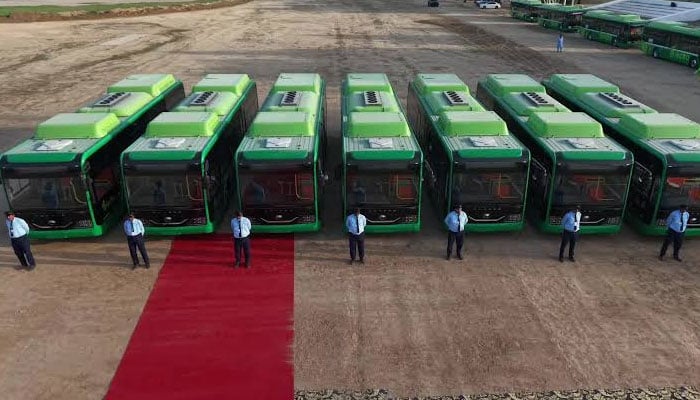
    Punjab Chief Minister Maryam Nawaz has inaugurated the Green Bus Service in seven additional districts, expanding the provincial government’s public transport network. Speaking at the inauguration ceremony, the chief minister said the Green Bus project has received an overwhelmingly positive response from the public by providing affordable, comfortable and high-quality transportation services. She said the Punjab government is gradually expanding the service and plans to introduce more buses across every district of the province in phases to improve public mobility. According to Maryam Nawaz, the Green Bus Service has officially started operations in seven districts, including Gujrat, Narowal, Kasur and Sheikhupura. The remaining newly covered districts were also included in the latest expansion under the provincial transport programme. The chief minister said all buses are fully air-conditioned and equipped with free Wi-Fi to provide passengers with a modern travel experience. She added that special facilities have also been introduced for senior citizens, women and students to make public transport more accessible and convenient. Maryam Nawaz said the expansion reflects the government’s commitment to improving public transport infrastructure and providing safe, reliable and economical travel facilities for residents across Punjab. The provincial government expects the expanded Green Bus network to improve daily commuting, reduce travel difficulties and encourage greater use of public transport throughout the province

  • |

    OGRA increases petrol, diesel prices again

    Islamabad – The Oil and Gas Regulatory Authority (OGRA) has announced another increase in petroleum prices marking the fourth consecutive day of fuel price hikes and issued new rates for petrol and high-speed diesel. According to an OGRA notification, the price of petrol has been increased by Rs. 4.40 per litre bringing the new price to Rs. 331.52 per litre. Similarly, the price of high-speed diesel (HSD) has been raised by Rs. 3.62 per litre taking the new price to Rs. 378.66 per litre. The notification states that the revised prices will come into effect from 12:00 a.m. on the night between July 23 and July 24 after which fuel stations across the country will charge customers according to the new rates. OGRA said the price adjustment was made after taking into account global crude oil prices, import costs and other relevant market factors. The continued increase in petroleum prices is expected to raise transportation costs which could in turn push up the prices of essential commodities. Members of the public and the business community have expressed concern over the repeated increases and urged the government to take effective measures to stabilize fuel prices. It is worth noting that this is the fourth consecutive day that OGRA has increased petroleum prices resulting in a significant rise in fuel costs over the past several days.

Leave a Reply

Your email address will not be published. Required fields are marked *