launches heavy strikes
| | | |

US launches heavy strikes on Iran after missile at…

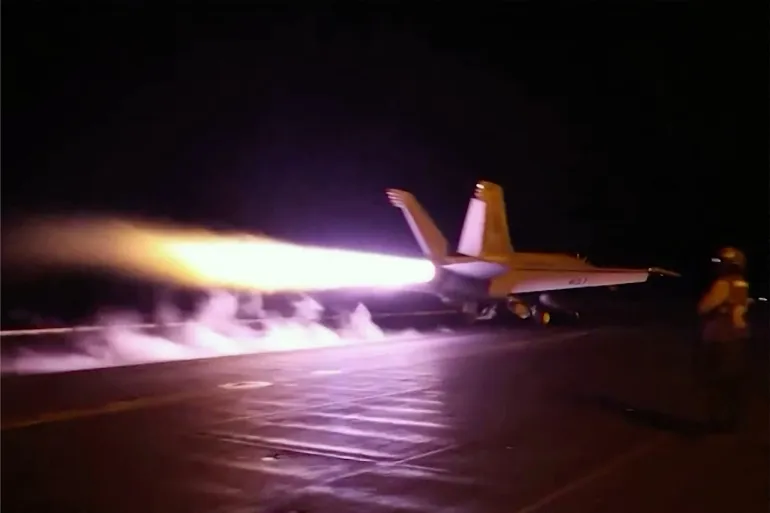
The United States has resumed large-scale military operations against Iran, launching what officials described as a “heavy wave” of precision strikes after a five-night pause, dramatically escalating tensions across the Middle East and raising fresh concerns over the security of the Strait of Hormuz.

According to the US Central Command (CENTCOM), the overnight operation targeted dozens of sites linked to Iran’s Islamic Revolutionary Guard Corps (IRGC), including military command centres, missile and drone facilities, coastal defence systems and maritime infrastructure. The strikes came in response to Iranian missile attacks a day earlier on American forces stationed at a US military base in Jordan.

US President Donald Trump had warned that Washington would respond “very hard” to any attack on American troops, and the latest operation marked one of the most extensive US offensives since the conflict intensified earlier this year.

Iranian state media reported that at least three civilians were killed in the strikes, including a couple and their two-year-old child after a residential building on Qeshm Island was hit. The IRGC also confirmed that three of its personnel were killed during the attacks.

Explosions were reported across several southern Iranian cities, including Ahvaz, Abadan, Bushehr, Kazerun and Farashband. Iranian media said power outages affected parts of Ahvaz following strikes in the oil-rich Khuzestan province, while local officials confirmed that multiple locations in Abadan had also been targeted.

The confrontation quickly spread beyond Iran. Jordan said its air defence systems intercepted five Iranian missiles launched toward its territory after Tehran targeted a US airbase and command headquarters inside the kingdom. No casualties were reported.

Meanwhile, Kuwait confirmed that an Iranian strike hit a building belonging to a Chinese company in the country’s north, killing one worker and causing significant damage. Saudi Arabia condemned Iran’s attacks on Jordan, describing them as a violation of international law and regional stability.

Despite the renewed fighting, diplomatic contacts continue behind the scenes. Pakistan’s Foreign Ministry said negotiations between Tehran and Washington remain active, particularly over the Strait of Hormuz and efforts to reduce tensions. Iranian officials also confirmed that discussions with Omani mediators regarding the future of the strategic waterway are continuing.

The Strait of Hormuz remains at the heart of the crisis. Iran insists the waterway remains closed because of US military actions, while Washington accuses Tehran of threatening global shipping and using maritime pressure to strengthen the IRGC’s influence.

Adding economic pressure, the US Treasury imposed fresh sanctions on two Iranian companies accused of supporting an IRGC-backed maritime insurance network.

Security analysts say Washington now faces a critical decision: continue targeting Iran’s military infrastructure around Hormuz or expand attacks on key national infrastructure. While the latest strikes signal a tougher military posture, experts believe both sides still have incentives to leave the door open for diplomacy, even as the risk of a wider regional war continues to grow.

Similar Posts

  • |

    Zanjeerain sparks memes after unexpected Chota Bheem reference

    Pakistani drama Zanjeerain, which initially attracted viewers with its revenge-driven storyline and suspenseful plot, is now facing growing criticism from fans who believe the serial has lost its direction. Many viewers have expressed disappointment over the drama’s recent episodes, pointing to slow pacing, inconsistent storytelling and scenes they feel add little to the overall narrative. The latest episode has sparked a wave of discussion on social media after featuring an unexpected reference to the popular animated character Chota Bheem. The scene quickly went viral, with viewers sharing clips, jokes and memes across various platforms. In the scene, Sarbuland is seen talking to Rabiya during a light-hearted conversation. He tells her about his favourite cartoon from childhood, revealing that he was a fan of Chota Bheem. He goes on to mention that the cartoon character loved eating laddus, adding that he also enjoys the sweet treat. While the moment appeared to be intended as a playful exchange, many viewers found it unusual given the serious tone the drama had established in its earlier episodes. The unexpected dialogue immediately became a trending topic online, with fans questioning why such a reference was included in a drama centred around revenge, family conflict and emotional turmoil. Several viewers argued that the scene felt disconnected from the main storyline and interrupted the overall flow of the episode. Social media users were quick to respond with humorous reactions. Many joked that Sarbuland was comparing himself to Chota Bheem, while others suggested that the conversation implied Rabiya was being portrayed as Chutki, another well-known character from the animated series. One user joked, “Sarbuland mein Bheem jaisi shakti,” while another wrote that the scene made it seem as though Sarbuland was indirectly calling himself Chota Bheem. Others laughed that if Sarbuland was Bheem, then Rabiya must be his Chutki. The comments quickly spread across social media, turning the dialogue into one of the most talked-about television moments of the week. The memes did not stop there. Fans created numerous edited images and short videos featuring Sarbuland alongside Chota Bheem, blending scenes from the drama with clips and artwork inspired by the beloved cartoon. Many of these posts attracted thousands of views and shares, with users praising the creativity of the memes even as they criticised the drama itself. Beyond the jokes, several viewers also voiced broader concerns about the direction of Zanjeerain. Fans who had praised the series during its early episodes said they were disappointed by what they described as stretched storylines, repetitive scenes and uneven editing. According to many comments online, the drama’s original revenge-thriller premise has gradually been overshadowed by scenes that feel unnecessary or out of place. Despite the criticism, the viral moment has significantly increased online engagement surrounding the show. Clips from the Chota Bheem conversation continue to circulate on social media, attracting reactions from both regular viewers and people who do not normally follow the drama. Whether the unexpected reference was intended as comic relief or simply a nostalgic nod to a popular childhood cartoon, it has become one of the most memorable moments from the series so far. However, many fans hope future episodes will return their focus to the gripping storyline that originally drew audiences to Zanjeerain, rather than relying on scenes that risk distracting from the central plot.

  • |

    Air India appoints CEO amid mounting financial losses

    Air India has appointed former Ethiopian Airlines chief Tewolde Gebremariam as its new chief executive officer, entrusting him with leading the airline through a challenging period marked by financial losses, operational setbacks and heightened safety concerns. Gebremariam succeeds Campbell Wilson, who stepped down in April after overseeing the airline’s initial restructuring following its acquisition by the Tata Group in 2022. The Air India board unanimously selected Gebremariam after an extensive global search, citing his leadership experience and strong operational record. During more than a decade at Ethiopian Airlines, he expanded the carrier’s fleet significantly and helped transform it into one of Africa’s leading and most profitable airlines. His appointment comes at a difficult time for Air India, which continues to recover from last year’s fatal Ahmedabad–London plane crash that claimed 260 lives. The airline is also dealing with mounting financial pressure after reporting a record loss of nearly $2.3 billion and reducing a significant portion of its international operations. In recent months, Air India has faced several operational disruptions, including flight delays, route adjustments and unexpected diversions. The broader aviation industry in India has also been affected by higher operating costs, aircraft delivery delays, disrupted international routes and stricter regulatory oversight. Industry analysts believe Gebremariam’s experience managing Ethiopian Airlines through the Boeing 737 Max crisis and the Covid-19 pandemic could prove valuable as Air India works to restore public confidence. Experts say his immediate priorities will include strengthening safety standards, improving employee morale, modernising the airline’s fleet, expanding its network and returning the carrier to long-term profitability.

  • | |

    Pakistan paid Rs6,405 billion to IPPs in capacity …

      ISLAMABAD: Pakistan’s federal government paid a total of Rs6,405 billion to Independent Power Producers (IPPs) in capacity payments between 2020 and 2025, the National Assembly has been informed, highlighting the growing financial burden associated with the country’s power sector. According to a written response submitted by Federal Minister for Energy Awais Ahmad Leghari, capacity payments increased significantly during the five-year period despite government efforts to renegotiate power purchase agreements and reduce electricity costs. The figures presented to the National Assembly show that capacity payments rose from Rs613.9 billion in FY2020-21 to Rs1,807 billion in FY2024-25. This represents an increase of approximately 194% over the period. The government paid Rs613.9 billion in capacity charges during FY2020-21. The amount increased to Rs775.9 billion in FY2021-22 before rising sharply to Rs1,307 billion in FY2022-23. Capacity payments reached their highest level during FY2023-24, when the government paid around Rs1.902 trillion to IPPs. Although the amount declined slightly in FY2024-25 to Rs1.807 trillion it remained almost three times higher than the amount paid in FY2020-21. Capacity payments are charges made to power producers for keeping their generating plants available to supply electricity, regardless of whether the full generation capacity is actually utilised. These payments are part of the contractual arrangements between the government and IPPs and have frequently been identified as one of the factors contributing to Pakistan’s expensive electricity system and growing circular debt. Responding to questions in the National Assembly, Energy Minister Awais Ahmad Leghari said the government has taken several measures to reduce the financial pressure created by existing power agreements. According to the minister, a government task force has terminated power purchase agreements with six IPPs, while agreements with several other producers have also been revised. The objective of these measures is to reduce electricity costs and limit the financial burden on the national power sector. The Ministry of Energy estimates that the changes made to the agreements could result in savings of approximately Rs4.3 trillion over the remaining life of the contracts. Leghari also clarified that payments made to power producers are based on tariffs determined by the National Electric Power Regulatory Authority (Nepra) and the terms agreed under the relevant power purchase agreements. He rejected the impression that generators were receiving payments outside the approved contractual and regulatory framework, stating that there were no additional payments beyond the applicable arrangements. Despite the government’s renegotiation efforts, the figures show that capacity payments continue to represent a major financial obligation for Pakistan. The Rs1.807 trillion paid in FY2024-25 alone demonstrates the scale of the challenge facing the country’s power sector. The government’s efforts to terminate and revise agreements are expected to provide substantial savings in the coming years. However, reducing capacity payments and addressing the broader issues of electricity pricing, power utilisation and circular debt remain critical challenges for Pakistan’s energy sector.

  • | |

    Is Mawra Hocane expecting her first baby?

    Pakistani actors Mawra Hocane and Ameer Gilani are once again at the centre of social media discussion after their recent anniversary posts sparked fresh speculation that they may be expecting their first child. The rumours began circulating after the couple shared photos and videos celebrating their first wedding anniversary. Some social media users claimed Mawra appeared to be hiding a baby bump, while others pointed to what they described as a noticeable “pregnancy glow.” However, neither Mawra nor Ameer has confirmed the speculation. The couple celebrated their anniversary by sharing heartfelt messages dedicated to each other. Mawra expressed her love by describing Ameer as the light of her life and thanked him for a memorable first year of marriage. Ameer also posted a loving tribute, expressing his hope for many more years together. Mawra also shared an emotional note about the jewellery and wedding dupatta gifted to her by her mother-in-law. She described the family heirlooms as deeply meaningful and said she hoped to preserve them before eventually passing them on to the next generation. Following the anniversary celebrations, online discussions intensified, with fans closely analysing the couple’s recent public appearances and photographs. The speculation quickly spread across entertainment pages and social media platforms. Despite the growing rumours, there has been no official confirmation from the couple regarding any pregnancy. This is not the first time Mawra has faced such speculation. In the past, she publicly dismissed similar claims, making it clear that the rumours were false and asking fans not to believe unverified reports. Mawra Hocane and Ameer Gilani tied the knot on February 5, 2025, in a private wedding ceremony attended by close family members and friends. The couple later shared wedding photographs on social media, receiving widespread congratulations from fans and fellow celebrities. Before getting married, the two actors worked together in several popular television dramas, earning praise for their on-screen chemistry and becoming one of Pakistan’s most admired celebrity couples.

  • |

    Afghan fathers struggle as girls remain barred from secondary schools

    KABUL: Afghan fathers are facing growing distress as their daughters remain unable to continue their education beyond primary school under restrictions imposed by the Taliban authorities. Families across Afghanistan say the education ban is creating deep emotional and financial pressure. Some fathers are openly questioning the policy, despite their religious beliefs and support for other government measures. The Taliban administration has defended the restrictions as temporary and based on its interpretation of religious principles. However, many Afghan men say they cannot understand why girls should be prevented from receiving secondary education. A United Nations survey conducted last year found that about nine out of 10 Afghan men considered it important for girls to attend secondary school. Nearly two-thirds also viewed supporting a daughter’s education as a religiously commendable act. Girls were barred from secondary schools after the Taliban returned to power in 2021. Women were later also prohibited from attending universities. The restrictions have affected a large number of young Afghan women and girls. For many families, the approaching end of primary education has become a source of fear. Fathers worry that their daughters will lose their chance to pursue higher education and build professional careers. One father, identified as Ahmad, said he had never imagined that his daughters could be forced to stop studying. His wife is a mathematics teacher who is also unable to continue teaching secondary-level students. Ahmad said his eldest daughter is approaching the end of primary school. The family has considered private and underground educational options, but the cost is difficult to manage. Another father, a doctor identified as Mohammad, said he had always wanted his daughters to attend leading universities. He believes women are essential to Afghanistan’s development and should have opportunities beyond household responsibilities. His daughters are approaching the age when they will be forced to leave formal schooling. The family has considered sending them abroad, including to Pakistan, but changing regional circumstances have made that option difficult. Some families have turned to private schools that secretly provide general education alongside religious studies. These institutions often charge high fees and may not provide recognised graduation certificates. Parents also fear that authorities could take action against schools operating outside official restrictions. This leaves families caught between protecting their children and trying to continue their education. Another father from Kandahar said his young daughter has a strong interest in astronomy. She asks questions about the solar system, gravity and science. The girl reportedly asked her father how she could continue learning if she could not study beyond the sixth grade. Her question has become a painful reminder of the limited opportunities available to girls. Some families have moved to Kabul in search of better educational opportunities. Others are relying on online courses, home schooling and secret classes. The restrictions are also affecting children emotionally. Parents say many girls feel frustrated, isolated and uncertain about their future. One father said his teenage daughter often stays at home and becomes deeply upset when she thinks about her education. He said he sometimes leaves the room because he cannot control his emotions and ends up crying privately. Another family has created a home-schooling routine using old secondary-school textbooks. The parents try to maintain a school-like schedule so their daughters can continue learning. However, the parents say home education cannot fully replace a formal school environment. They worry about the lack of recognised qualifications, social interaction and access to trained teachers. Some girls have also begun attending secret classes. Their families remain concerned about possible consequences if the authorities discover them. The prolonged restrictions have created uncertainty for an entire generation of Afghan girls. Parents fear that years without formal education will limit their daughters’ future opportunities

  • | | |

    Iran claims victory on military, political fronts

    Iranian Parliament Speaker Bagher Ghalibaf has claimed that Iran has emerged victorious on both the military and political fronts of the ongoing conflict. Speaking about the situation, Ghalibaf said Iran was facing what he described as an unjust war imposed by the United States and Israel. He said the Iranian nation was confronting the conflict with courage and determination. According to Ghalibaf, Iran had successfully resisted pressure on both the military and political fronts. Ghalibaf said the Iranian people had remained united despite the challenges created by the conflict. He praised their resistance and said the nation had shown that it could withstand pressure from powerful opponents. His remarks came after the General Staff of the Iranian Armed Forces said that Iran would not retreat until the United States and Israel were completely defeated. The Iranian military leadership said resistance had become part of the mindset of Iran’s younger generation. It claimed that the legacy of resistance had been passed from one generation to another. According to the Iranian Armed Forces, the country’s new generation had remained firm in the face of what it described as the world’s most powerful military forces. The military leadership also said Iran would continue its struggle to protect what it called its legitimate rights. It said Tehran would not abandon its position until the opposing side surrendered. The Iranian Armed Forces further accused the United States of continuing its aggression to expand its influence and establish dominance in the region. Iranian officials have repeatedly presented the conflict as a struggle against foreign aggression. They have also stressed the importance of national unity and resistance in facing military and political pressure.

Leave a Reply

Your email address will not be published. Required fields are marked *