
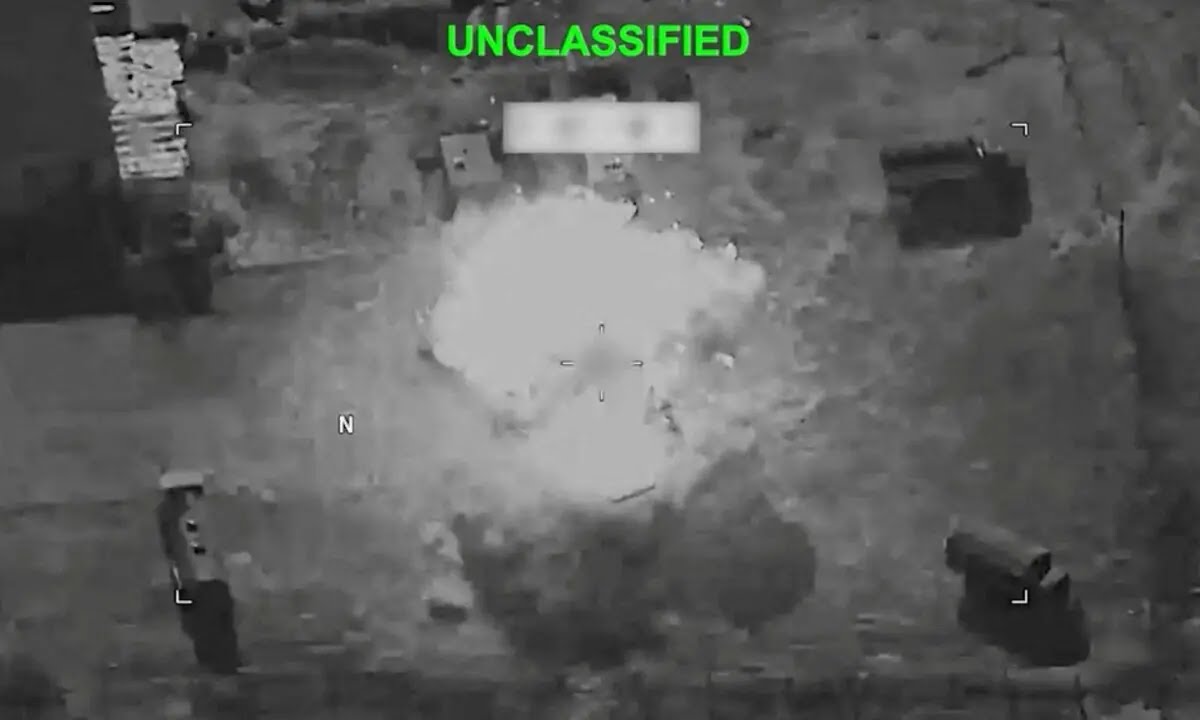
strikes irgc bases
| | | |

US strikes IRGC bases after Iran missile attack

The Middle East moved a step closer to a broader regional conflict after the United States launched large-scale airstrikes against dozens of Islamic Revolutionary Guard Corps (IRGC) facilities across Iran in retaliation for Tehran’s ballistic missile attack targeting American forces stationed in the region.

According to the US Central Command (CENTCOM), the operation targeted military command centers, drone infrastructure, weapons depots and other strategic IRGC installations during a coordinated two-hour campaign. US officials said the strikes were intended to weaken Iran’s ability to threaten American troops, commercial shipping lanes and allied Gulf nations.

Iranian state media reported that at least three people were killed during strikes on Qeshm Island, while authorities vowed that the country would continue defending its territory against what it described as “American aggression.”

The crisis quickly spread beyond Iran’s borders. Jordan announced that its air defence systems intercepted five missiles following Iran’s confirmed launch toward US military installations in the kingdom. Washington maintained that all missiles directed at American bases were successfully intercepted, preventing casualties among US personnel.

In another major development, US and Saudi forces carried out coordinated strikes against Iran-backed armed groups operating in eastern Iraq after drone attacks launched from Iraqi territory targeted Saudi oil facilities. The joint operation marked the first publicly acknowledged military action conducted together by Washington and Riyadh against Iran-aligned militias.

Regional instability deepened further after a fire broke out aboard a US-owned gas storage tanker at Egypt’s Mediterranean port of Damietta. Although maritime security experts suggested the blaze may have resulted from a drone strike, Egyptian officials confirmed only the fire and said investigations into its cause were continuing.

The latest escalation comes against the backdrop of months of confrontation between Iran, the United States and Israel. Fighting resumed after disputes over the strategically important Strait of Hormuz ended a short-lived ceasefire reached in June.

US President Donald Trump reiterated that America would respond decisively to attacks on its forces while insisting diplomatic efforts remained active. However, continued military exchanges around the Strait of Hormuz have complicated negotiations and increased concerns over global energy supplies.

Iran has claimed it targeted three tankers attempting to pass through what it called an unauthorized route in the strait, while rejecting an Omani-backed proposal supported by Gulf states for joint management of the crucial waterway.

The conflict has also rattled global energy markets, with Brent crude prices climbing above $90 per barrel before easing later in trading.

Meanwhile, Iraq’s Iran-backed Popular Mobilisation Forces said at least 20 of their fighters were killed in the US-Saudi strikes, prompting Baghdad to condemn the attacks as a violation of its sovereignty while urging all armed groups to halt cross-border military operations.

Saudi Arabia has also intensified diplomatic efforts, with Defence Minister Prince Khalid bin Salman meeting US Vice President JD Vance in Washington to urge restraint. Saudi officials reportedly warned that expanding military operations against Yemen’s Houthis and Iran-backed militias in Iraq could trigger unpredictable consequences across the Middle East, highlighting growing fears that the conflict could widen even further.

Similar Posts

  • | | |

    North West apologises to fans after debut Kimokawa…

    North West has addressed fans after the unexpected cancellation of her first headlining tour, expressing disappointment over a setback that came just days before the opening performance. The 13-year-old daughter of Kim Kardashian and Kanye West was scheduled to launch the Kimokawaii Tour alongside rapper Molly Santana on August 5 in Dallas. The North American tour was announced shortly after the release of North’s debut EP, N-O-R-T-H 4EVR, and was expected to mark a major milestone in her budding music career.  However, fans recently noticed that the Dallas opening show and the August 17 stop in Toronto had been marked as cancelled on Ticketmaster. At the same time, the tour’s official website became unavailable, fueling speculation about the future of the concert series. As of now, no official explanation has been given for the cancellations, although one San Francisco show was still listed by its venue at the time of reporting.  Following the announcement, both North and Molly Santana shared messages expressing how saddened they were by the development. While neither artist revealed the reason behind the decision, they thanked fans for their support and said they hoped to perform together in the future. Their statements reflected disappointment rather than frustration, with both acknowledging the excitement that had surrounded the tour. The Kimokawaii Tour was set to take the pair across the United States and Canada with 14 scheduled dates, including performances in Houston, New York, Chicago, Boston, Phoenix and Los Angeles. The tour had generated significant interest after North’s successful festival appearances earlier this year and the release of her debut project in May.  North’s music career has steadily gained momentum over the past year. In addition to releasing N-O-R-T-H 4EVR, she has performed at major music festivals and collaborated with established artists, attracting attention beyond her famous family. Her mother, Kim Kardashian, had enthusiastically promoted the tour on social media, encouraging fans to attend the shows.  Although the cancellation has disappointed fans eager to see North’s first headlining performances, many have responded with supportive messages online, encouraging the young artist to focus on future opportunities. With no official reason announced, supporters are now waiting for further updates regarding possible rescheduled dates or new tour plans. For now, North’s debut tour may be on hold, but her growing music career appears far from over.

  • | |

    Akbar Islam exposes reality of working with Sana Javed

    Sana Javed’s reputation within the Pakistani entertainment industry has been complicated for several years. Before her marriage to cricketer Shoaib Malik, a wave of allegations from colleagues and crew members described her as rude and difficult to work with on set, a controversy that temporarily cost her significant public goodwill. Following her marriage, she stepped away from acting for a period, and her return to screens in the ongoing drama Bas Tera Saath Ho has been watched closely by audiences curious about how the comeback would land. Now, a co-star from the same production has stepped forward to share his firsthand experience of working alongside her, and what he had to say runs contrary to the narrative that had built up around her. Akbar Islam, who plays a supportive neighbour uncle in Bas Tera Saath Ho, was asked directly about his experience working with Sana Javed and whether the stories about her difficult behaviour on set reflected the reality he had encountered. His response was thoughtful and contextual rather than simply defensive of the actress. He said that what people interpret as rudeness is not always what it appears to be. Actors, he explained, need to maintain a certain aura on set. A professional distance, a sense of presence and composure, is part of how performers protect the quality of the work and the integrity of their characters. What some people read as aloofness or arrogance may simply be an actor holding that professional boundary. He said this was the context in which he understood what had previously been said about Sana Javed, and about her co-star Farhan Saeed as well. As for his own experience working with them on Bas Tera Saath Ho, he described it plainly as a great one. He added that dynamics differ from set to set and production to production, suggesting that past accounts may have reflected specific circumstances rather than a fixed truth about either actor’s character. Sana Javed’s performance in Bas Tera Saath Ho has been receiving positive attention from viewers, marking a steady rehabilitation of her public image following the controversy that preceded her comeback. The drama itself has been well received, with Akbar Islam’s own performance drawing warm feedback from audiences who appreciate the warmth and depth he brings to his supporting role. His remarks offer a counterpoint to the accounts that once dominated the conversation about Sana Javed, framing the earlier criticism through the lens of professional behaviour rather than personal failing, and suggesting that the version of her colleagues have encountered during the filming of Bas Tera Saath Ho has been a different and more positive experience altogether.

  • | |

    World Cup conspiracies weaponised as Javier Milei blames foreign leftists for online backlash

    Following Argentina’s defeat by Spain in the World Cup final, President Javier Milei has alleged that a coordinated, foreign-funded anti-Argentina campaign was launched to undermine his nation and its football team. The far-right libertarian president claimed during a radio interview that the US Democratic party, alongside the governments of Mexico and Brazil, financed widespread online hostility, fan racism accusations, and rumours of favorable treatment towards Lionel Messi’s squad. Milei specifically targeted Brazilian President Luiz Inácio Lula da Silva, alleging that Brazil provided the largest share of funding for these attacks, a statement he reiterated while attending a campaign launch for far-right senator Flávio Bolsonaro in São Paulo. The president’s claims come amidst online friction and high-profile international criticism, including an Instagram post by actor Samuel L. Jackson urging fans not to support Argentina due to historical racism in the country. Whilst digital communications researchers acknowledge a genuine surge of transnational hostility online, experts note there is no public evidence supporting Milei’s claims of an organised international funding plot. Instead, political analysts view the narrative as a calculated tactic to stoke culture wars and divert public attention away from domestic corruption scandals, rising unemployment, and the severe impact of his austerity measures, which have pushed the administration’s popularity to its lowest level since taking office.

  • |

    South Korea records highest-ever temperature as extreme heatwave intensifies

    South Korea has experienced its hottest day since national weather records began more than 100 years ago, as an intense heatwave continues to grip the country and raise concerns over the growing impact of climate change. According to reports, the southeastern city of Yangsan recorded a temperature of 42.5 degrees Celsius (108.5 degrees Fahrenheit) at 1:26 p.m. local time on Sunday, setting a new national record. The Korea Meteorological Administration (KMA) confirmed that the reading surpassed all previously recorded temperatures since the country began maintaining official weather data more than a century ago. The latest milestone comes amid a prolonged period of extreme heat across South Korea. Yangsan has now recorded temperatures above 40 degrees Celsius (104 degrees Fahrenheit) for five consecutive days, highlighting the severity of the current heatwave. Weather officials have warned that the scorching conditions are expected to continue, with temperatures in many parts of the country remaining well above seasonal averages. Heatwave warnings remain in place across much of South Korea, where daytime temperatures have climbed into the upper 30s Celsius in numerous cities. More than 20 regions were placed under emergency heatwave alerts on Sunday, reflecting the widespread nature of the dangerous weather conditions. The emergency heatwave warning is the highest level of heat alert introduced by South Korean authorities this year to better respond to increasingly intense summer temperatures. The alert is issued when weather forecasts predict either a perceived temperature of at least 38 degrees Celsius (100.4 degrees Fahrenheit) or an actual air temperature of 39 degrees Celsius (102.2 degrees Fahrenheit) or higher, even if only for a single day. Meteorological data also indicates that South Korea has experienced a dramatic rise in the frequency of extreme heat over recent decades. According to the KMA, the average number of annual heatwave days has more than doubled over the past five years, increasing to 19 days compared with an average of just eight days during the 1970s. The weather agency defines a heatwave day as one in which the highest daytime temperature reaches at least 33 degrees Celsius (91.4 degrees Fahrenheit). It also classifies a tropical night as one in which overnight temperatures remain above 25 degrees Celsius (77 degrees Fahrenheit), preventing residents from receiving relief from the daytime heat. Climate scientists have repeatedly warned that human-driven climate change is increasing the frequency, intensity, and duration of heatwaves around the world. Rising global temperatures are contributing to more severe weather events, placing additional pressure on public health systems, infrastructure, agriculture, and energy supplies.South Korea’s record-breaking temperatures come during a year marked by numerous climate-related disasters across the globe. Several countries have experienced devastating droughts, destructive wildfires, severe flooding, and powerful storms, underscoring the growing challenges posed by extreme weather. Elsewhere, Europe continues to battle its own climate-related emergencies. Wildfires fueled by scorching temperatures and strong winds have spread across parts of Greece, forcing authorities to evacuate residents from threatened communities. Meanwhile, Spain and France remain under hot and dry conditions, increasing the risk of additional wildfires as firefighters remain on high alert. Experts say the latest record in South Korea serves as another reminder of the urgent need to address climate change and strengthen preparedness for increasingly frequent and intense extreme weather events.

  • |

    Ashley Callingbull calls out cultural appropriation at pageant

    Ashley Callingbull has opened up about her decision to speak out during the Miss Universe Canada 2026 pageant, saying she felt a responsibility to use her platform to raise awareness about cultural appropriation and encourage greater accountability. The 36-year-old pageant contestant became involved in a controversy after contestants Karisa Haverkamp and Jasleen Kaily were photographed wearing outfits that featured prominent elements inspired by traditional Indigenous clothing. The images sparked criticism, with concerns being raised about the use of Indigenous cultural symbols in a pageant setting. Callingbull, who is known for representing and advocating for Indigenous communities, said the situation was deeply upsetting. She explained that seeing the outfits felt disrespectful and described the incident as “a slap in the face to the Indigenous community.” Rather than remaining silent, Callingbull decided to address the issue publicly during the live pageant. She found an unexpected opportunity when she and fellow host Sonny Borelli were preparing to announce the top 20 contestants. At that moment, the teleprompter stopped working, leaving the presenters without their prepared script. Instead of simply waiting for the technical problem to be resolved, Callingbull used the unscripted moment to speak directly to the audience. She delivered a brief but powerful message, saying, “It’s 2026, we should know better.” Her comments immediately drew attention because they came during a highly visible moment of the competition. Callingbull made it clear that she wanted to use the platform to encourage people to think more carefully about cultural representation and respect. Following the controversy, Miss Universe Canada responded to the criticism and stated that causing offense, hurt or misunderstanding was never the organization’s intention. The response came amid wider discussion about cultural sensitivity and the responsibility of public events to ensure that Indigenous traditions and symbols are treated respectfully. Callingbull has since received significant support from people who appreciated her decision to speak up. She said the response has reinforced her belief that public figures can play an important role in encouraging meaningful conversations. For Callingbull, the incident was about more than a pageant or a particular outfit. She believes it was an opportunity to highlight the importance of respecting Indigenous culture and challenging behavior that may be considered inappropriate or insensitive. She hopes the situation will encourage others to find the courage to speak out when they witness something they believe is wrong. By using an unexpected moment on stage to address the controversy, Callingbull showed that even an unscripted statement can draw attention to important social issues and encourage broader conversations about respect, representation and cultural awareness.

  • | |

    Wildfires keep Spain and France on alert amid extr…

    Firefighters battling wildfires across Spain and France warned Wednesday that the risk of additional blazes remains very high in the coming days, even as a major fire in Spain’s central Guadalajara province eased enough to allow some residents to return home. Wildfires have already scorched more land across Europe this year than the continent’s average over the past two decades, according to available data, as the world’s fastest warming continent endures its third stifling heatwave in close succession this year. In France, where two firefighters died Tuesday after their truck became engulfed in flames in the southwestern Gironde region, authorities urged residents in areas affected by the heat to avoid using barbecues, stressing that nine out of ten wildfires start as a result of human activity, whether accidental or not. Meanwhile, in the Western Balkans, the nature of the threat has shifted from heat to hailstorms, with several people injured in North Macedonia and eastern Kosovo. Scientists say human driven climate change continues to intensify heatwaves, droughts and wildfires, while also creating conditions that can trigger sudden and destructive storms. Real time data from a climate monitoring tool showed the average high temperature across Western Europe is forecast to reach 26.6 degrees Celsius, about 3 degrees above the historical norm for July 22 based on the 1961 to 1990 reference period. Spain’s most severe wildfire so far this year has burned an estimated 32,000 hectares in the Guadalajara region. The fire began to stabilize Tuesday after forcing evacuations across 34 municipalities and confinement orders in 14 others. Castilla La Mancha’s regional fire service, INFOCAM, said residents of five villages have been allowed to return home, though other restrictions remain in place. Visiting the affected region Wednesday, Prime Minister Pedro Sanchez said Spain has already experienced 22 major wildfires this year. He said the country has already surpassed 100,000 hectares burned before even reaching the most critical period of the wildfire season, noting that figure matches Spain’s annual average over the past decade. He added that more action is needed to prevent future fires. Spain’s national weather agency, AEMET, said wildfire danger remains very high or extreme across most of mainland Spain and the Balearic Islands and is expected to climb further in the coming days. The agency urged extreme caution as the ongoing heatwave combines with dry thunderstorms and Saharan dust blowing into the region. While temperatures are expected to ease slightly in some areas Thursday, forecasters expect a dry westerly wind to drive a fresh surge of heat into Mediterranean regions, where highs of 42 to 44 degrees Celsius could be recorded in some locations. The back to back heatwaves and wildfires this summer add to a growing pattern of extreme weather events across southern Europe, with officials in both Spain and France continuing to stress prevention measures as the region moves deeper into what is traditionally its most dangerous period for wildfire activity.

Leave a Reply

Your email address will not be published. Required fields are marked *