texas governor targets
|

Texas governor targets Muslim airport facilities

Texas Governor Greg Abbott has ordered a review of state grants provided to Dallas Fort Worth International Airport (DFW) and Houston’s George Bush Intercontinental Airport (IAH), alleging that facilities for Muslim passengers to perform ablution and pray could amount to religious discrimination.

Abbott’s office said the matter has also been referred to the US Department of Transportation for investigation and possible action.

According to a statement from the governor’s office, state grants provided to entities operating airports in Texas will be reviewed to determine whether existing funding should be withdrawn or whether the airports should be denied future state funding.

Abbott has argued that providing facilities specifically associated with one religion at government-owned facilities could raise concerns under religious discrimination laws.

The governor’s office said DFW International Airport is planning to establish a dedicated ablution facility for Muslim passengers. At George Bush Intercontinental Airport, a similar facility has reportedly already been established, along with a designated space for prayer.

Abbott has written to US Transportation Secretary Sean Duffy, asking the Department of Transportation and the Federal Aviation Administration (FAA) to immediately review the existing or proposed religious facilities at both airports.

He has also called for corrective or legal action if federal authorities determine that any violations have occurred.

The Texas governor maintains that both airports receive federal funding and are therefore required to comply with federal laws prohibiting discriminatory practices.

In his statement, Abbott said the proposed ablution facilities appear to provide a special accommodation to a particular section of the population based on religion, which he considers potentially unlawful.

He further argued that because the airports are publicly owned, government authorities cannot give preference to one religious viewpoint over others.

Abbott reiterated his position on social media, saying that government facilities funded by taxpayers should not allow what he described as unlawful religious discrimination.

Similar Posts

  • |

    Michael Jackson estate wins ruling in child trafficking lawsuit

    Michael Jackson’s estate has secured a significant legal victory in a lawsuit filed by four siblings who accused the late pop icon of sexually abusing and trafficking them when they were minors. The case was brought earlier this year by siblings Edward, Dominic, Marie-Nicole and Aldo Cascio against the estate of Jackson, who died in 2009 at the age of 50. The siblings claimed that the singer had groomed and brainwashed them during their childhood and alleged that they were subjected to sexual abuse and trafficking. The Cascio siblings had a close relationship with Jackson while growing up and have previously described themselves as part of his “second family.” Their connection with the singer became the focus of legal proceedings after they made allegations against him and subsequently reached a settlement with his estate. In 2019, Jackson’s estate agreed to pay the siblings $3.5 million as part of a settlement. The agreement did not include any admission of wrongdoing by the estate or acknowledge the allegations made against the late singer. The siblings later attempted to challenge the settlement, arguing that the agreement should be declared invalid and unenforceable. They claimed they had been pressured or coerced into signing the deal and sought to pursue their allegations through the court system. However, their effort to bring the dispute before a public trial has now been rejected. On Wednesday, August 12, Judge Hernán D. Vera ruled that the legal dispute must be resolved through confidential arbitration instead of proceeding as a public court case. The decision represents a major victory for Jackson’s estate, as arbitration generally keeps legal proceedings private and limits the matter from moving forward through a public trial. According to court papers obtained by Billboard, Judge Vera acknowledged the seriousness of the allegations but concluded that the existing agreement required the dispute to be handled through arbitration. “Although the allegations are horrific, the court is without discretion to do aught but enforce the language of the arbitration clause,” the court stated. The ruling does not determine whether the allegations made by the Cascio siblings are true or false. Instead, it focuses on the legal terms of the 2019 settlement and whether the dispute must follow the arbitration provision contained in that agreement. The siblings’ allegations have nevertheless brought renewed attention to Jackson’s relationships with children and families who were close to him during his lifetime. Jackson, one of the most influential entertainers in music history, faced allegations of sexual misconduct during his career, though he consistently denied wrongdoing. The latest ruling means that the Cascio siblings’ dispute with Jackson’s estate will now continue, if at all, through a private arbitration process rather than a public courtroom trial. The outcome of that process could determine whether their challenge to the 2019 settlement has any further legal consequences.

  • | | | |

    HRCP, PFUJ slam new foreign media rules

    The Human Rights Commission of Pakistan (HRCP) and the Pakistan Federal Union of Journalists (PFUJ) have strongly criticised the government’s newly introduced Foreign Media Facilitation Guidelines 2026, describing the policy as a serious threat to press freedom and independent journalism. The criticism comes after the Ministry of Information and Broadcasting reminded foreign media organisations that journalists must obtain prior government approval before carrying out reporting assignments outside Islamabad, Lahore and Karachi under the revised External Publicity Guidelines. The ministry issued the reminder following concerns over international coverage related to Azad Jammu and Kashmir. In a statement, the HRCP said the new guidelines could discourage independent reporting on issues of public interest instead of facilitating journalistic work. The commission expressed concern that the policy reflects an increasing trend of restrictions on media freedom, including tighter controls on reporting and growing administrative hurdles for journalists. According to the rights body, requiring official permission before reporting from many parts of the country could create an atmosphere where critical journalism is discouraged. It urged the government to withdraw the new measures and ensure protection of freedom of expression in line with constitutional guarantees and international commitments. The PFUJ also condemned the notification, calling it a direct attack on press freedom. The journalists’ union argued that the policy not only limits the movement of foreign correspondents but also places restrictions on Pakistani journalists working for international media organisations. PFUJ President Afzal Butt and Secretary General Arshad Ansari questioned how journalists would be able to perform their professional responsibilities if access to large parts of the country is restricted. They warned that the policy could affect Pakistan’s international reputation and further weaken its standing in global press freedom rankings. The union also expressed concern that Pakistani journalists employed by foreign media organisations could face job losses if they are prevented from reporting from different regions of the country.

  • | |

    Salma Hayek melts hearts with adorable introductio…

    Salma Hayek has a brand-new reason to smile. The actress has officially stepped into an exciting new role after welcoming her first grandchild, and the heartwarming family moment has melted fans’ hearts. Hayek, 59, has become a grandmother after her stepson, François Pinault Jr., and his wife, Lara Cosima Henckel von Donnersmarck, welcomed a baby boy. The couple named their son François Pinault III, continuing a family tradition. (¡HOLA!⁠) The new arrival marks a major milestone for Hayek, who has often spoken warmly about the importance of family. The actress is married to French businessman François-Henri Pinault and shares her 18-year-old daughter, Valentina, with him. She is also stepmother to François Jr., Mathilde and Augustin from her husband’s previous relationships. Photos shared by the new parents gave fans a glimpse of the family’s happiness. One particularly sweet image showed Hayek holding her grandson in her arms, smiling as she met the newest member of the family. The emotional moment quickly attracted attention because of the obvious joy on the actress’s face. (InStyle⁠) Becoming a grandmother is a new experience for Hayek, but she has already embraced the role with plenty of affection. The arrival comes just weeks before the actress celebrates her 60th birthday, making this year an especially memorable one for her. (¡HOLA!⁠) Hayek’s family life has remained an important part of her world alongside her successful Hollywood career. She has also shared several special moments with her daughter, Valentina, in recent months. The mother-daughter duo recently attended events together and enjoyed a Bad Bunny concert in London, showing their close relationship. (E! Online⁠) At the same time, Hayek continues to remain busy professionally. She is preparing for the release of Without Blood, Angelina Jolie’s upcoming drama in which Hayek stars alongside Demián Bichir and Juan Minujín. The film is scheduled to arrive in theaters on September 18. (People.com⁠) She is also returning for Grown Ups 3, with production now underway. Hayek is reuniting with Adam Sandler, Kevin James, Chris Rock and David Spade for the long-awaited sequel. (EW.com⁠) Still, her newest title may be the one closest to her heart. From actress and producer to mother and now grandmother, Hayek is entering another meaningful chapter. For the Hollywood star, this little arrival brings another generation into an already close-knit family. And judging by her joyful introduction, Salma Hayek is more than ready to enjoy every moment of being a grandmother.

  • | |

    Fahad Sheikh responds to Syed Mohammad Ahmed controversy

    Pakistani actor and host Fahad Sheikh has addressed the controversy surrounding allegations that he mistreated veteran actor Syed Mohammad Ahmed on a drama set. The controversy began after Syed Mohammad Ahmed spoke about an unpleasant experience involving a younger lead actor. Although he did not publicly name the actor, Fahad Sheikh was later identified by social media users as the person allegedly involved in the incident. The allegations quickly attracted attention across social media, with several Pakistani celebrities and fans expressing support for the veteran actor. Fahad also faced criticism over the incident and was urged to explain his side of the story. Responding to the controversy, Fahad Sheikh said the video circulating online was taken from what he described as a joking interaction among members of the cast. He maintained that the actors had developed a family-like bond while working together. Fahad also addressed Syed Mohammad Ahmed directly and offered an apology. He said he was willing to apologise publicly again if the senior actor wanted him to do so. However, Fahad expressed anger over the leaked footage. He warned that legal action could be taken against those responsible for recording or sharing the video without permission. His response has failed to end the controversy, as social media users continue to debate whether the incident should be dismissed as a joke or treated as inappropriate behaviour towards a senior colleague. Some users criticised Fahad for focusing on the leaked video and possible legal action rather than giving a stronger apology. Others argued that the complete context of the incident should be considered before reaching a final conclusion. The controversy has also reignited discussions about workplace behaviour and respect for senior artists in Pakistan’s entertainment industry. Syed Mohammad Ahmed remains a respected figure in Pakistani television and has received considerable support from fellow actors and viewers following his account of the incident.

  • | |

    Rising heat pushes even Africa’s resilient c…

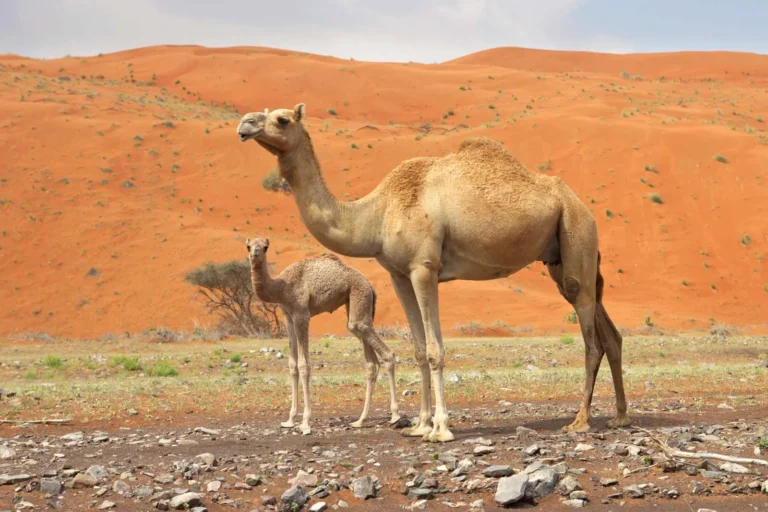
    Camel herders and scientists across Africa say that rising temperatures are now overwhelming animals long regarded as uniquely suited to desert extremes, with herds facing rising death tolls, illness, and shrinking grazing lands. In the Afar region of northeastern Ethiopia, among the hottest and driest places on the planet, nomadic herders traditionally lead camel caravans loaded with salt across the desert. Ali Umer, a 40 year old herder from Semera who owns around 500 camels, said he watches his animals struggle under conditions he has never seen before. He described blistered feet, watery eyes, and burned skin among his herd, and said the sand itself now scorches the animals as they rest. Umer said he lost eight camel calves in a single month due to extreme heat, and added that even the wind no longer brings relief. He said the changes have become noticeably worse in recent years. Umer’s account matches what researchers and veterinarians are documenting across the continent. Scientists and animal welfare specialists point to stress, fatigue, dehydration, and rising disease rates as direct consequences of extreme heat, while indirect effects such as water shortages, vegetation loss, and disappearing shade compound the damage. North Africa and the Horn of Africa are home to roughly 80 percent of the world’s dromedary camel population, the single humped variety that farmers across the region have increasingly relied on because of its reputation for withstanding drought and heat. A 2025 study examining herder perceptions in southern Ethiopia found that climate variability had measurably harmed camel health, productivity, and reproduction. The crisis appears especially acute in Somalia. Research published in June found that drought linked camel deaths have affected nearly 46 percent of camel owning households, based on a survey of almost 6,000 pastoral families. The mortality was heavily concentrated in northern areas, with the Sool region recording a death rate of nearly 73 percent. Experts say extreme heat is the central driver behind the region’s drought conditions, though poor veterinary access and weak herd management make outcomes worse. Atmospheric scientists have linked the severe 2021 to 2022 drought to sustained high temperatures, which accelerate evaporation from soil and water sources and increase the rate at which plants release moisture into the air. Veterinarians on the ground report a growing caseload tied to heat. Hassan Nuya Guyo, a veterinary officer in Marsabit county in northeastern Kenya near the Ethiopian border, said his clinic is seeing a sharp rise in hyperthermia cases that leave camels vulnerable to secondary infections. He said camel deaths in the county have risen more than 15 percent over the past two years due to heat and drought. Separate research from the Horn of Africa links heat stress to higher disease rates and falling milk yields among camel herds. A similar pattern is emerging in North Africa. A study conducted in Algeria and published this year documented a marked rise in camel deaths during summer heatwaves, with researchers noting clear seasonal mortality spikes that they say call for targeted responses such as emergency water supplies, supplemental feeding, and closer disease monitoring during peak summer months. The World Meteorological Organization says extreme heat events have become routine across North Africa, with heatwaves trending upward since 1981. Several countries in the region and the wider Middle East recorded temperatures above 50 degrees Celsius in 2024. The organization’s most recent State of the Climate in Africa report found that North Africa warmed faster than any other subregion on the continent between 1991 and 2025, at a rate of 0.43 degrees Celsius per decade. Camels are naturally equipped to handle heat up to about 40 degrees Celsius. Their bodies allow internal temperature to fluctuate throughout the day, reducing the need to sweat, while concentrated urine, dry waste, and a thick protective coat help limit water loss and block solar radiation. But researchers say those adaptations are no longer enough. Mohammed Bengoumi, a camel health specialist with the United Nations Food and Agriculture Organization who works across North Africa, said summer temperatures in large parts of the Sahara now regularly exceed 50 degrees Celsius, raising the risk of severe heat stress, especially where vegetation, water, and shade are already scarce. Abdelmadjid Chehma, a professor at the University of Ghardaia in Algeria who has conducted experimental research on desert camels, said sustained heat above 41 to 45 degrees Celsius damages the animals at a cellular level, weakening their immune systems and preventing white blood cells from repairing themselves. He said the resulting stress slows the animals’ metabolism as their bodies try to limit internal heat production, which in turn reduces appetite and causes lethargy, lower milk output, and reproductive problems. Mohammed el Khasmi, an animal hydrobiology expert at the University of Casablanca in Morocco, said his team has documented a wide range of heat related harm in camels, including weight loss, inflammation, muscle and bone damage, kidney related chemical imbalances, and parasite driven infections. The combined pressures are forcing some herding communities to abandon land they have used for generations. Daniel Gelan, a pastoralist development researcher at Vision University in Ethiopia, said herders in the country’s north are relocating permanently to southern areas with more reliable water and vegetation, rather than following the seasonal migration patterns of the past, because the northern region can no longer sustain camel herding. The Horn of Africa is still recovering from a severe drought that lasted from 2020 to 2023 and is now facing another period of harsh conditions, according to the charity Oxfam, which reported that water prices in parts of Somalia have jumped by more than 2,000 percent. Back in Afar, Umer said he fears disease could soon begin killing his adult camels as well. Chehma said that concern reflects a broader shift underway across the region, where an animal once seen as the ultimate survivor of desert life is now being pushed toward its own breaking point by the pace and severity of current heatwaves.

  • | |

    Akbar Islam exposes reality of working with Sana Javed

    Sana Javed’s reputation within the Pakistani entertainment industry has been complicated for several years. Before her marriage to cricketer Shoaib Malik, a wave of allegations from colleagues and crew members described her as rude and difficult to work with on set, a controversy that temporarily cost her significant public goodwill. Following her marriage, she stepped away from acting for a period, and her return to screens in the ongoing drama Bas Tera Saath Ho has been watched closely by audiences curious about how the comeback would land. Now, a co-star from the same production has stepped forward to share his firsthand experience of working alongside her, and what he had to say runs contrary to the narrative that had built up around her. Akbar Islam, who plays a supportive neighbour uncle in Bas Tera Saath Ho, was asked directly about his experience working with Sana Javed and whether the stories about her difficult behaviour on set reflected the reality he had encountered. His response was thoughtful and contextual rather than simply defensive of the actress. He said that what people interpret as rudeness is not always what it appears to be. Actors, he explained, need to maintain a certain aura on set. A professional distance, a sense of presence and composure, is part of how performers protect the quality of the work and the integrity of their characters. What some people read as aloofness or arrogance may simply be an actor holding that professional boundary. He said this was the context in which he understood what had previously been said about Sana Javed, and about her co-star Farhan Saeed as well. As for his own experience working with them on Bas Tera Saath Ho, he described it plainly as a great one. He added that dynamics differ from set to set and production to production, suggesting that past accounts may have reflected specific circumstances rather than a fixed truth about either actor’s character. Sana Javed’s performance in Bas Tera Saath Ho has been receiving positive attention from viewers, marking a steady rehabilitation of her public image following the controversy that preceded her comeback. The drama itself has been well received, with Akbar Islam’s own performance drawing warm feedback from audiences who appreciate the warmth and depth he brings to his supporting role. His remarks offer a counterpoint to the accounts that once dominated the conversation about Sana Javed, framing the earlier criticism through the lens of professional behaviour rather than personal failing, and suggesting that the version of her colleagues have encountered during the filming of Bas Tera Saath Ho has been a different and more positive experience altogether.

Leave a Reply

Your email address will not be published. Required fields are marked *