karachi weather update
| | |

Karachi weather update: rainfall cools city amid h…

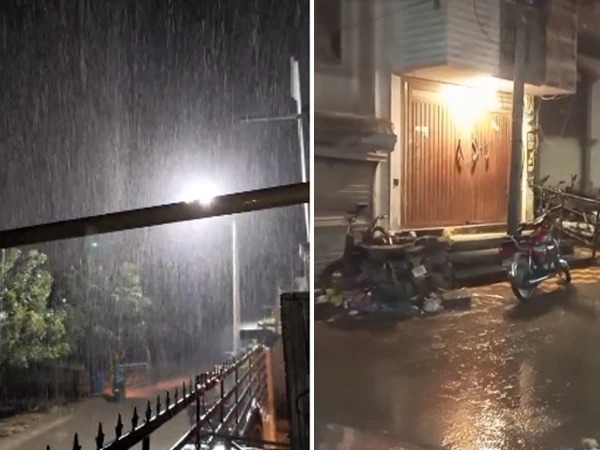
Karachi: Rain accompanied by thunder and strong winds swept across several parts of Karachi on Friday, bringing much-needed relief from the heat as a monsoon weather system moved into the city’s outskirts.

Heavy rainfall was reported in suburban areas, including Gulshan-e-Memar, Manghopir, Ahsanabad, and Gulzar-e-Hijri, where strong winds and thunderstorms marked the arrival of the weather system. Meanwhile, light rain and drizzle were recorded in Nazimabad, New Karachi, Gulistan-e-Jauhar, Gulshan-e-Iqbal, Shahrah-e-Faisal, Orangi Town, Saddar, Defence, Korangi, and several other neighborhoods.

The rainfall significantly lowered temperatures and created pleasant weather conditions across the city.

According to the Pakistan Meteorological Department, dusty winds are also expected in Karachi’s outskirts, while central parts of the city are likely to receive light rain as the weather system continues to move through the region.

In response to forecasts of widespread rainfall across Sindh, Chief Minister Syed Murad Ali Shah placed provincial authorities on high alert. He directed municipal bodies, the Water Board, and district administrations to remain operational around the clock to respond to any rain-related emergencies.

The chief minister instructed authorities to immediately clear stormwater drains and blocked points, deploy dewatering pumps in low-lying areas, and ensure uninterrupted drainage operations. He also ordered the Water Board to clean sewerage lines and arrange backup power for pumping stations.

Power utility K-Electric said its emergency teams had been placed on alert following the rainfall. The company advised residents to stay away from electricity poles, meters, overhead cables, and other electrical infrastructure during and after the rain. It also urged the public to avoid using electrical appliances with wet hands and warned against illegal electricity connections, which can pose serious safety risks during wet weather.

Authorities have also activated provincial and district-level rain emergency control rooms to address public complaints and coordinate emergency response efforts, while traffic police have been directed to maintain smooth traffic flow on major roads and intersections throughout the city.

Similar Posts

  • | | |

    Six policemen among 15 martyred in Swat suicide bl…

    At least 15 people, including six police personnel, were killed in a suicide bombing near Kabal Police Station in Swat on Sunday, according to local administration and police officials. Authorities said the attacker attempted to enter the police station but was intercepted by security personnel stationed at the entrance. After failing to gain access, the suicide bomber detonated the explosives near the main gate, triggering a powerful explosion that caused multiple casualties. The blast occurred near Kabal Chowk, where a protest by local youths was also taking place at the time. The explosion spread panic throughout the area, with emergency teams and security forces rushing to the scene to launch rescue and relief operations. Police officials said several people sustained injuries in the attack and were shifted to nearby hospitals for medical treatment. Authorities fear the number of casualties could rise as some of the injured remain in critical condition. During the search operation, investigators recovered human remains from the blast site, including a severed head believed to belong to the suicide bomber. Forensic experts have collected evidence to help identify the attacker and determine the nature of the explosives used. Security forces immediately cordoned off the area and launched a comprehensive search operation to ensure no further threats remained. Bomb disposal teams also inspected the site while investigators gathered evidence for the ongoing inquiry. Officials said the timely action of police personnel prevented the attacker from entering the police station, a move they believe avoided even greater loss of life and damage. The attack has once again highlighted the security challenges facing law enforcement agencies, which continue to remain on high alert amid renewed militant violence in parts of Khyber Pakhtunkhwa.

  • | |

    Balochistan lawmakers condemn Nushki killings

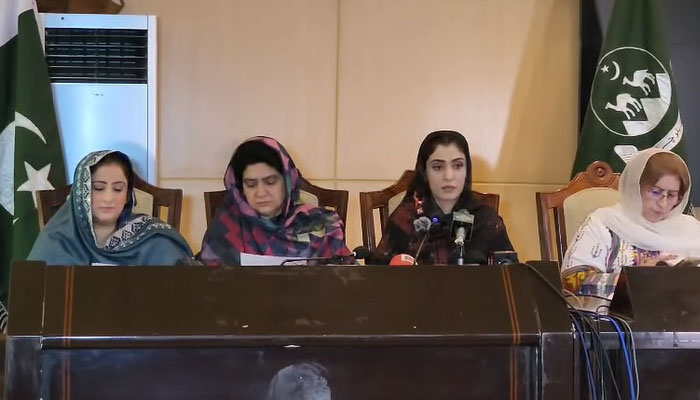
    Women parliamentarians in Balochistan have strongly condemned the killing of a mother and daughter in Nushki. The victims were reportedly killed after militants entered their home. The lawmakers described the incident as deeply tragic. They said the attack was also against Baloch traditions and social values. They expressed concern over the targeting of civilians, especially women. Speaking at a press conference in Quetta, Balochistan government adviser Meena Majeed said the victims were identified as Bibi Hanifa and Hafsa. She alleged that the two women were killed by militants linked to what the authorities describe as Fitna al-Hindustan. Majeed questioned why the mother and daughter were targeted. She asked what their crime was. She said ordinary Baloch citizens were now facing threats from militants. She also expressed concern about the targeting of women. Majeed said the government and security forces were continuing operations against militants in the province. She assured that those involved in the Nushki attack would be identified and brought before the law. She said the government would continue efforts to protect civilians. Balochistan Assembly Deputy Speaker Ghazala also condemned the incident. She said women parliamentarians would not remain silent over the killing of the mother and daughter. Ghazala stressed that women must be protected everywhere. She said their safety should remain a priority under all circumstances. Provincial Education Minister Raheela Durrani also expressed strong concern over the incident. Durrani questioned the message being sent about Balochistan when women were targeted and killed. She said such incidents damage the image of the province and create fear among local communities. The women lawmakers said violence against civilians could not be tolerated. They called for effective action against those responsible for the killings. They also stressed the need for stronger security measures to protect women and other vulnerable citizens. The lawmakers expressed solidarity with the victims’ families. They said the government and security institutions must ensure that those responsible for the attack face justice.

  • | | |

    Fatima Zahra secures Pakistan’s first Commonweal…

      Pakistan received its first major success at the Commonwealth Games as national boxer Fatima Zahra secured a place in the women’s boxing semifinals, guaranteeing the country’s first medal of the tournament. Competing in the women’s 60kg weight category, Fatima Zahra delivered a dominant performance in the quarterfinals, defeating New Zealand’s Jordan Wilson by a unanimous 5-0 decision. With the victory, the Pakistani boxer advanced to the semifinals and ensured at least a bronze medal for her country under the competition’s boxing format. The quarterfinal bout took place at the SEC Hall Five in Glasgow, where Fatima Zahra displayed confidence, composure, and technical superiority throughout the contest. She controlled all three rounds with disciplined boxing, combining effective footwork, accurate punches, and strong defensive skills to keep her opponent under pressure from the opening bell until the final round. Her impressive display left no room for doubt among the judges. All five judges scored the contest in her favor, awarding her a comprehensive unanimous decision victory over Jordan Wilson. The result marked one of Pakistan’s most significant achievements at the ongoing Commonwealth Games and provided an early boost to the country’s medal hopes. According to the boxing competition rules, every athlete who reaches the semifinals is guaranteed at least a bronze medal, as there is no third-place playoff. By advancing to the last four, Fatima Zahra officially secured Pakistan’s first medal of the Games, regardless of the outcome of her semifinal contest. The achievement is another milestone in Fatima Zahra’s growing international career. She has consistently represented Pakistan on the global stage and has already established herself as one of the country’s leading female boxers. Her latest success reflects both her dedication and the steady progress she has made through years of hard work and international competition. This is not the first time Fatima Zahra has won a medal for Pakistan at a major sporting event. She previously claimed a bronze medal at the Islamic Solidarity Games, where her performances earned widespread praise and highlighted her potential to compete against some of the best boxers in the region. That experience has helped strengthen her confidence and prepared her for bigger challenges on the international stage. Following her convincing victory in the quarterfinals, Fatima Zahra has now set her sights on the semifinal, where she will aim to continue her winning run and secure a place in the gold medal match. A victory in the next round would guarantee Pakistan either a silver or gold medal, making it one of the country’s most notable boxing achievements in recent years. Her qualification for the semifinals has been welcomed as an encouraging moment for Pakistan’s sporting community, particularly for women’s boxing, which continues to grow despite facing limited resources and opportunities. Fatima Zahra’s success is expected to inspire aspiring female athletes across the country and demonstrate that Pakistani women can compete successfully at the highest levels of international sport. With a guaranteed bronze medal already secured, all eyes will now be on Fatima Zahra as she prepares for the semifinal showdown. Pakistani fans will be hoping she can maintain her outstanding form, overcome her next opponent, and move one step closer to winning the Commonwealth Games title, adding another memorable chapter to Pakistan’s sporting history.

  • | | |

    AJK election results: PML-N, PPP in close contest

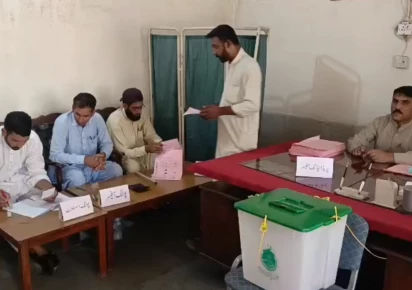
    Unofficial and preliminary results from the first phase of the Azad Jammu and Kashmir (AJK) Legislative Assembly elections have started to emerge, with the Pakistan Muslim League-Nawaz (PML-N) and Pakistan Peoples Party (PPP) locked in a close contest across several constituencies. The first phase covered 13 constituencies in Mirpur Division, including the districts of Mirpur, Kotli and Bhimber. Vote counting began after polling ended. The preliminary results from the constituencies are as follows: LA-1 Mirpur-I: Results from 17 of the 139 polling stations have been received. PML-N candidate Azhar Sadiq is leading with 1,692 votes. PPP candidate Muhammad Afsar Shahid is in second place with 1,482 votes. LA-2 Mirpur-II: Results from 34 of 149 polling stations have been reported. PPP candidate Qasim Majeed is ahead with 3,103 votes. PML-N’s Azeem Bakhsh Chaudhry has secured 2,409 votes and is in second place. LA-3 Mirpur-III: Results from 18 of 161 polling stations show PML-N candidate Chaudhry Muhammad Saeed leading with 2,265 votes. PPP candidate Chaudhry Yasir Sultan is second with 1,470 votes. LA-4 Mirpur-IV: Results from only two of 162 polling stations have been received. PML-N candidate Chaudhry Rukhsar Ahmed is leading with 327 votes. PPP candidate Chaudhry Sohaib Arshad has 223 votes. LA-5 Bhimber-I: Results from 15 of 176 polling stations show PPP candidate Chaudhry Parvez Ashraf in the lead with 2,310 votes. PML-N candidate Waqar Ahmed Noor is second with 1,767 votes. LA-6 Bhimber-II: Results from six of 195 polling stations have been received. Istehkam-e-Pakistan Party candidate Ali Shan Chaudhry is leading with 1,313 votes. PML-N candidate Chaudhry Muhammad Razzaq is second with 585 votes. LA-7 Bhimber-III: Results from 27 of 237 polling stations show PML-N candidate Chaudhry Tariq Farooq leading with 5,331 votes. Independent candidate Chaudhry Anwar-ul-Haq is second with 2,598 votes. LA-8 Kotli-I: Results from 10 of 155 polling stations show PPP candidate Zafar Iqbal Malik ahead with 1,221 votes. PML-N candidate Malik Muhammad Nawaz Khan is close behind with 1,174 votes. LA-9 Kotli-II: Results from one of 178 polling stations have been received. PML-N candidate Umair Naeem is leading with 534 votes, while PPP candidate Javed Iqbal Budhanvi has 25 votes. LA-10 Kotli-III: Results from 12 of 169 polling stations show PML-N candidate Fateh Mahmood-ul-Hassan leading with 1,649 votes. PPP candidate Chaudhry Muhammad Yasin has 1,330 votes. LA-11 Kotli-IV: Results from three of 206 polling stations have been received. PPP candidate Chaudhry Muhammad Akhlaq is leading with 489 votes. PML-N candidate Muhammad Asif has 294 votes. LA-13 Kotli-VI: Results from 67 of 193 polling stations show PML-N candidate Raja Ayaz Ahmed Khan leading with 10,389 votes. PPP candidate Muhammad Waleed Inqalabi is second with 8,785 votes. The results remain unofficial and could change as counting continues and results from the remaining polling stations are received. Claims of disruption in Bhimber PPP AJK Election Cell in-charge Sardar Abdul Shakoor claimed that disturbances took place at polling stations 119, 120 and 121 in LA-5 Barnala. He said the disruption affected the polling process. According to Shakoor, voting resumed after security forces reached the area. However, he said polling remained slow afterward. Raja Pervez Ashraf calls for action PPP leader Raja Pervez Ashraf expressed concern over alleged irregularities in several constituencies. He called for additional security personnel at sensitive polling stations, including locations in Gulpur, Thurochi and Muhajir Camp. Ashraf urged the Election Commission to take immediate and impartial notice of all complaints. He also called for steps to ensure that the elections remain free, transparent and fair. Police say polling remained peaceful The spokesperson for the AJK inspector general of police said polling in the first phase across Mirpur Division remained peaceful. The spokesperson said residents had rejected a call for a long march by a banned committee. Instead, voters chose to exercise their democratic right. Voters began arriving at polling stations soon after voting opened at 8am. AJK Inspector General of Police Liaquat Ali Malik thanked residents for cooperating with authorities and helping maintain peace during the electoral process. He warned that no one, including political workers, would be allowed to take the law into their own hands.

  • | |

    PPP, PML-N hold unity talks over AJK polls

    Senior leaders of the Pakistan Peoples Party (PPP) and the Pakistan Muslim League-Nawaz (PML-N) held a high-level meeting in Muzaffarabad on Thursday to defuse growing political tensions over the ongoing Azad Jammu and Kashmir (AJK) elections. The meeting came after days of heated exchanges between the two coalition partners following the Mirpur election. The PPP had accused the electoral process of being marred by widespread irregularities and raised concerns over the credibility of the results. According to sources, the talks were aimed at preventing the election dispute from affecting the working relationship between the two parties in the federal coalition government. The meeting was reportedly arranged after consultations at the federal level. Some sources claimed that the initiative received support from both the Presidency and the Prime Minister’s Office. However, this could not be independently verified. The PPP delegation included Qamar Zaman Kaira, Nadeem Afzal Chan, AJK Prime Minister Faisal Rathore and Nayyar Bukhari. They met with senior PML-N leaders Rana Sanaullah and Amir Muqam. During the meeting, both sides openly discussed their concerns over statements made during the election campaign and after the announcement of the Mirpur results. PML-N leaders asked the PPP to present evidence supporting its allegations of organised election rigging. In response, PPP leaders said their objections were limited to four constituencies — LA-5, LA-9, LA-11 and LA-12 — where they believe serious irregularities took place. PML-N leaders argued that by restricting its objections to only four constituencies, the PPP had effectively accepted the results of the remaining nine seats. They noted that PML-N won five of those seats, while the PPP secured four. After detailed discussions, both parties agreed that political tensions should not be allowed to escalate further. They also agreed that the dispute should not affect the remaining phases of the AJK elections. The meeting also reviewed security arrangements for polling in the remaining constituencies, particularly in Muzaffarabad. Both parties agreed that no individual should be allowed to carry weapons inside or around polling stations. They stressed that strict security measures were necessary to ensure peaceful, transparent and orderly polling. Political observers view the meeting as the first major reconciliation effort by the two coalition partners to contain the election dispute

  • | |

    Pakistan’s military tightens grip on Islamis…

    Munir’s family background feeds into this shift as well. He is the son of an imam and considers himself a devout, conservative Muslim, and religious identity remains deeply woven into Pakistan’s state institutions. Even so, he has pushed the country toward international engagement through cryptocurrency partnerships, foreign investment deals, a mediating role in the conflict between the United States and Iran, and a mutual defence pact with Saudi Arabia. Data shared with a foreign news agency by the Armed Conflict Location and Event Data Project, a group that tracks conflict incidents worldwide, shows the scale of the shift. Pakistan averaged more than seven blasphemy related riots or attacks annually between 2021 and 2024, but recorded only one such incident over the past twelve months. Economic pressure appears to have played a significant role in prompting the crackdown. Two Pakistani government sources said officials grew alarmed during the summer of 2025 that rising hostility from fundamentalist groups toward France and other European countries threatened to jeopardize a European Union duty waiver covering Pakistani exports. Nearly a third of Pakistan’s total exports go to the EU, and losing that preferential access could have dealt a severe blow to the national economy. Neither the European Commission nor Pakistan’s commerce ministry responded to requests for comment on the matter. Washington has added its own pressure over religious freedom concerns. The US Commission on International Religious Freedom, a government watchdog, recommended last year that Pakistan be placed back on a list of countries of particular concern due to its blasphemy laws, a designation Islamabad has firmly rejected. Analyst Abdul Basit of Singapore’s S. Rajaratnam School of International Studies said worsening insurgent violence in Balochistan and Khyber Pakhtunkhwa, Pakistan’s two most mineral rich provinces, likely added urgency to Munir’s campaign, particularly since he has pitched foreign investment in the country’s mining sector to American officials over the past year. Basit noted that religious groups have lost favor within the state’s priorities, though he cautioned that the militias driving these regional insurgencies are not formally tied to the newly banned Islamist organizations, even if both draw recruits from the same pool of young, radicalized men. Elizabeth Threlkeld, who directs the Stimson Center’s South Asia program, said the open question going forward is whether Pakistan can sustain this level of focus over time. Crackdown targets country’s largest fundamentalist movement The largest of the groups swept up in the crackdown, Tehreek e Labbaik Pakistan, built its identity around the slogan “Death to blasphemers” before authorities banned it late last year. Many of its leaders now sit in jail, its mosques have been sealed shut and its financial accounts frozen. A previously undisclosed government document that laid the groundwork for the ban argued the organization had become a serious threat to Pakistan by damaging both domestic stability and the country’s standing internationally. A spokesperson for the group pointed to a statement it issued last year describing the ban as illegal and unconstitutional. The move against Tehreek e Labbaik follows earlier crackdowns on groups such as Lashkar e Taiba and Jaish e Muhammad, which Pakistan pursued under pressure from the Financial Action Task Force, the international body that monitors terrorism financing. Basit linked the newest crackdown to a period of internal reflection within Pakistan over its historical backing of the Afghan Taliban, whom Islamabad now blames for stoking Islamist insurgencies against the Pakistani state from across the border. The Taliban government in Kabul has dismissed that accusation as baseless, and a spokesperson for its foreign ministry declined to comment further, describing Pakistan’s crackdown as an internal matter. For Pakistan’s Christian, Shia and Ahmadi communities, the change in atmosphere has been dramatic. In the past, suspects in blasphemy related killings, including police officers, were sometimes greeted with rose petals or celebratory receptions, and individuals accused of burning churches or minority mosques often received public praise. Blasphemy remains a capital offense under Pakistani law, and even a rumor of an accusation has historically been enough to spark riots or lynchings. Human rights organizations say victims’ families have rarely obtained justice, since judges and lawyers have often been too frightened to take on such cases. Officer Malik said everyone who confronted the crowd during last month’s incident in Karachi felt genuine fear. The Christian family targeted that day was eventually moved to safety, and an initial investigation has since found the accusations against them to be false. Group’s military links trace back a decade Tehreek e Labbaik formed in 2015 while its founder was imprisoned for shooting and killing a Pakistani provincial governor in 2011 over his support for a Christian woman accused of blasphemy. That gunman, a former police bodyguard, was later convicted and executed months after the group’s founding. Analysts have long suspected the group’s creation received at least tacit support from Pakistan’s military establishment, including its intelligence services, as a tool to keep civilian governments and mainstream political parties in check. Following violent riots led by the group in 2017, then army chief General Qamar Javed Bajwa referred to its protesters as the country’s own people. Pakistan’s Supreme Court later ordered the military and intelligence agencies to stay out of politics but stopped short of directly tying them to the organization. Analysts and former officials say the effects of years of tolerance for the group will not disappear simply because of a ban, and that the shock felt by its supporters could still trigger backlash. Ihsan Ghani, who served as Pakistan’s counter terrorism chief during the 2017 riots, said he worries the group could resurface at full strength if its usefulness to the state changes again. He compared decades of state backed nurturing of the movement to something that cannot simply be switched on and off at will. Within Pakistan’s minority communities, the sudden shift still feels fragile. One of the Christian women rescued during last month’s incident in Karachi said she and her family are now physically safe, but admitted the fear has not fully faded.

Leave a Reply

Your email address will not be published. Required fields are marked *