pakistan8217s military tightens
| |

Pakistan’s military tightens grip on Islamis…

Munir’s family background feeds into this shift as well. He is the son of an imam and considers himself a devout, conservative Muslim, and religious identity remains deeply woven into Pakistan’s state institutions. Even so, he has pushed the country toward international engagement through cryptocurrency partnerships, foreign investment deals, a mediating role in the conflict between the United States and Iran, and a mutual defence pact with Saudi Arabia.

Data shared with a foreign news agency by the Armed Conflict Location and Event Data Project, a group that tracks conflict incidents worldwide, shows the scale of the shift. Pakistan averaged more than seven blasphemy related riots or attacks annually between 2021 and 2024, but recorded only one such incident over the past twelve months.

Economic pressure appears to have played a significant role in prompting the crackdown. Two Pakistani government sources said officials grew alarmed during the summer of 2025 that rising hostility from fundamentalist groups toward France and other European countries threatened to jeopardize a European Union duty waiver covering Pakistani exports. Nearly a third of Pakistan’s total exports go to the EU, and losing that preferential access could have dealt a severe blow to the national economy. Neither the European Commission nor Pakistan’s commerce ministry responded to requests for comment on the matter.

Washington has added its own pressure over religious freedom concerns. The US Commission on International Religious Freedom, a government watchdog, recommended last year that Pakistan be placed back on a list of countries of particular concern due to its blasphemy laws, a designation Islamabad has firmly rejected.

Analyst Abdul Basit of Singapore’s S. Rajaratnam School of International Studies said worsening insurgent violence in Balochistan and Khyber Pakhtunkhwa, Pakistan’s two most mineral rich provinces, likely added urgency to Munir’s campaign, particularly since he has pitched foreign investment in the country’s mining sector to American officials over the past year. Basit noted that religious groups have lost favor within the state’s priorities, though he cautioned that the militias driving these regional insurgencies are not formally tied to the newly banned Islamist organizations, even if both draw recruits from the same pool of young, radicalized men. Elizabeth Threlkeld, who directs the Stimson Center’s South Asia program, said the open question going forward is whether Pakistan can sustain this level of focus over time.

Crackdown targets country’s largest fundamentalist movement

The largest of the groups swept up in the crackdown, Tehreek e Labbaik Pakistan, built its identity around the slogan “Death to blasphemers” before authorities banned it late last year. Many of its leaders now sit in jail, its mosques have been sealed shut and its financial accounts frozen. A previously undisclosed government document that laid the groundwork for the ban argued the organization had become a serious threat to Pakistan by damaging both domestic stability and the country’s standing internationally. A spokesperson for the group pointed to a statement it issued last year describing the ban as illegal and unconstitutional.

The move against Tehreek e Labbaik follows earlier crackdowns on groups such as Lashkar e Taiba and Jaish e Muhammad, which Pakistan pursued under pressure from the Financial Action Task Force, the international body that monitors terrorism financing. Basit linked the newest crackdown to a period of internal reflection within Pakistan over its historical backing of the Afghan Taliban, whom Islamabad now blames for stoking Islamist insurgencies against the Pakistani state from across the border. The Taliban government in Kabul has dismissed that accusation as baseless, and a spokesperson for its foreign ministry declined to comment further, describing Pakistan’s crackdown as an internal matter.

For Pakistan’s Christian, Shia and Ahmadi communities, the change in atmosphere has been dramatic. In the past, suspects in blasphemy related killings, including police officers, were sometimes greeted with rose petals or celebratory receptions, and individuals accused of burning churches or minority mosques often received public praise. Blasphemy remains a capital offense under Pakistani law, and even a rumor of an accusation has historically been enough to spark riots or lynchings. Human rights organizations say victims’ families have rarely obtained justice, since judges and lawyers have often been too frightened to take on such cases. Officer Malik said everyone who confronted the crowd during last month’s incident in Karachi felt genuine fear. The Christian family targeted that day was eventually moved to safety, and an initial investigation has since found the accusations against them to be false.

Group’s military links trace back a decade

Tehreek e Labbaik formed in 2015 while its founder was imprisoned for shooting and killing a Pakistani provincial governor in 2011 over his support for a Christian woman accused of blasphemy. That gunman, a former police bodyguard, was later convicted and executed months after the group’s founding. Analysts have long suspected the group’s creation received at least tacit support from Pakistan’s military establishment, including its intelligence services, as a tool to keep civilian governments and mainstream political parties in check. Following violent riots led by the group in 2017, then army chief General Qamar Javed Bajwa referred to its protesters as the country’s own people. Pakistan’s Supreme Court later ordered the military and intelligence agencies to stay out of politics but stopped short of directly tying them to the organization.

Analysts and former officials say the effects of years of tolerance for the group will not disappear simply because of a ban, and that the shock felt by its supporters could still trigger backlash. Ihsan Ghani, who served as Pakistan’s counter terrorism chief during the 2017 riots, said he worries the group could resurface at full strength if its usefulness to the state changes again. He compared decades of state backed nurturing of the movement to something that cannot simply be switched on and off at will.

Within Pakistan’s minority communities, the sudden shift still feels fragile. One of the Christian women rescued during last month’s incident in Karachi said she and her family are now physically safe, but admitted the fear has not fully faded.

Similar Posts

  • Two Thai Soldiers Injured in Border Skirmish with Cambodian Forces in Si Sa Ket

    SISAKET – Two Thai soldiers sustained injuries during a border clash with Cambodian troops in Si Sa Ket province on Sunday, escalating tensions in a long-disputed frontier area. The firefight occurred in the Phupha Lek-Plarn Hin Paed Korn border zone of Kantharalak district at approximately 2:15 p.m. Chinese National Seriously Injured by Landmine While Illegally […]

  • | | |

    99 years of PLA: Pakistan reaffirms China defence …

    The 99th anniversary of the founding of China’s People’s Liberation Army (PLA) was commemorated at General Headquarters (GHQ) in Rawalpindi, with senior Pakistani and Chinese officials reaffirming their commitment to strengthening bilateral defence cooperation. Chinese Ambassador to Pakistan Jiang Zaidong attended the ceremony as the chief guest. China’s Defence Attaché Major General Wang Zhong, officials from the Chinese Embassy, and senior officers from Pakistan’s armed forces were also present at the event. Chief of Army Staff and Chief of Defence Forces Field Marshal Syed Asim Munir welcomed the Chinese delegation and congratulated the PLA on completing 99 years of service. He praised the Chinese military’s role in strengthening China’s defence capabilities, supporting national development and contributing to international peace and security. Highlighting the close relationship between Pakistan and China, Field Marshal Munir said the friendship between the two countries is based on mutual trust and has remained strong despite changing regional and global challenges. He described the Pakistan Armed Forces and the PLA as reliable partners, saying both sides share a commitment to regional stability, peace and the protection of common strategic interests. During the ceremony, Ambassador Jiang Zaidong thanked the Pakistani leadership for hosting the event and appreciated the role of the Pakistan Armed Forces. He also acknowledged Pakistan’s sacrifices and efforts in the fight against terrorism. The Chinese ambassador reaffirmed Beijing’s support for Islamabad and expressed commitment to further expanding the “All-Weather Strategic Cooperative Partnership” between the two countries. The ceremony reflected the longstanding defence ties between Pakistan and China, with both sides emphasizing continued cooperation, strategic coordination and joint efforts to promote regional security.

  • | |

    Zelensky removes army chief Syrskyi after week of …

    Ukrainian President Volodymyr Zelensky has dismissed the country’s commander in chief, Oleksandr Syrskyi, just days after removing popular Defence Minister Mykhailo Fedorov in a move that triggered widespread street protests across Ukraine. Early speculation that Fedorov’s removal stemmed from tension between him and Syrskyi was soon confirmed. Fedorov, 35, has drawn broad praise for reenergizing the defence ministry, driving reforms across the armed forces and pushing an anti corruption campaign. Syrskyi, 60, has been viewed by many in Ukraine as a Soviet trained commander resistant to sweeping changes within the military. In a farewell message posted on Telegram, Syrskyi defended his record, noting that the army he led through a difficult defensive campaign two years ago now stands on the offensive. He said he was handing over to his successor a force that is not just holding ground but advancing, and expressed hope that the offensive would continue. Zelensky named Mykhailo Drapatyi, 43, a popular and battle tested general, as Syrskyi’s replacement. Drapatyi said on Facebook that he would approach the role with full focus, responsibility and respect for those currently defending the country. He also thanked Syrskyi for his consistent work strengthening the Ukrainian army, saying he had grown up within it professionally. In a video posted late Tuesday, Zelensky thanked Syrskyi for his military leadership, including his role defending Kyiv during the earliest days of Russia’s full scale invasion in 2022. Zelensky also said he met with Fedorov earlier that day and offered him a worthy position within the government, though he did not specify whether Fedorov had accepted. Fedorov had been replaced last week by Yevhenii Khmara, a former senior official at Ukraine’s Security Service. Zelensky said all decisions would be formalized the following day. Fedorov congratulated Drapatyi on his new role, describing the appointment as a new source of hope in the broader fight of free people for freedom and justice, and calling it the voice of change that could no longer be ignored. Fedorov also said he called Syrskyi personally to thank him for defending the Kyiv region and for other significant battles, while adding that Ukraine needs to move even faster and correct past mistakes. Fedorov had only taken over as defence minister in January but quickly earned praise for using data driven analysis to improve battlefield performance. A former minister of digital transformation, he built a volunteer cyber unit known as the IT Army of Ukraine early in the full scale invasion. He later led a successful fundraising initiative called the Army of Drones and introduced elements of gamification into the war effort, creating a system that rewarded Ukrainian military units with credits for striking Russian targets. Fedorov’s removal sparked six days of widespread protests, placing mounting pressure on Zelensky to dismiss Syrskyi. Zelensky appeared to respond to that pressure by replacing him with Drapatyi, viewed as a younger and more innovative commander who is also considered a close friend of Fedorov’s. Fedorov’s clear support for Drapatyi’s appointment is likely to help ease the political tension that built up over the past week. Acting Defence Minister Khmara remains in his position for now, with Zelensky asking him and Drapatyi to develop a new defence strategy addressing issues including reform of the military corps system, weapons supply and drone capabilities. In an op-ed published Monday on the Militarny website, Syrskyi described his relationship with Fedorov as strictly professional and offered an apology if he had offended him. He said decisions surrounding military contracts, procurement and mobilization involve far more complexity than most people recognize, arguing that real progress, not public drama, ultimately determines the outcome of the war. Protesters are expected to continue pushing for Fedorov’s return to a position of genuine authority where he can keep driving innovation in Ukraine’s fight against Russia. Should that happen, Zelensky may succeed in repairing much of the immediate political damage, though many Ukrainians remain unlikely to forgive what they viewed as his original misstep in removing Fedorov in the first place.

  • | | |

    Pakistan, Malaysia agree to boost cooperation agai…

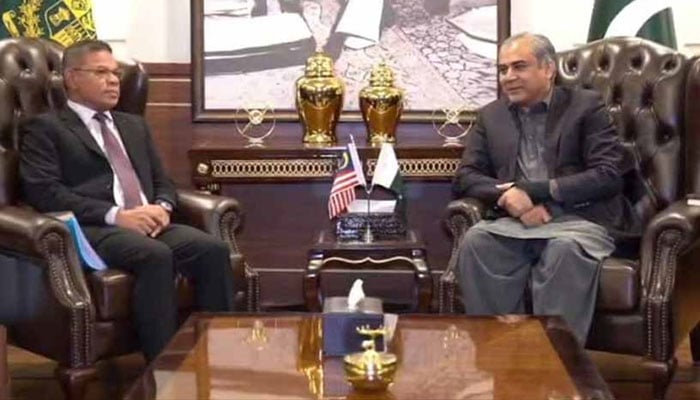
    Pakistan and Malaysia have agreed to strengthen joint efforts against terrorism, drug trafficking and human trafficking while enhancing intelligence sharing between the two countries. Malaysian Interior Minister Saifuddin Nasution Ismail met his Pakistani counterpart, Mohsin Naqvi, in Islamabad. The two ministers also held delegation-level talks during which they discussed a range of security and law-enforcement issues. The two sides agreed to increase cooperation to prevent drug trafficking, illegal immigration and cybercrime. They also discussed greater intelligence sharing to support action against terrorists and drug traffickers. Both countries agreed to develop a more effective joint strategy to counter terrorism, narcotics and human trafficking. They also expressed their commitment to improving coordination to prevent illegal immigration and cyber-related crimes. During the meeting, Pakistan and Malaysia decided to establish a joint working group to strengthen institutional ties between their interior ministries. The two sides also agreed to expand cooperation between Pakistan’s National Police Academy and the Royal Malaysia Police College. Training programmes and the exchange of expertise in law enforcement were also discussed. Cooperation between the two countries’ coast guard authorities was another key area discussed during the meeting. Mohsin Naqvi said Pakistan wanted to benefit from Malaysia’s experience in the coast guard sector. Speaking during the meeting, the Pakistani interior minister said Pakistan was committed to playing its role in the global fight against terrorism. He also described Malaysia as one of the rapidly developing countries in the Muslim world. The two ministers also discussed ways to promote tourism between Pakistan and Malaysia and improve visa facilities for travellers. Naqvi said Malaysia was an attractive tourism destination for Pakistani citizens and stressed the importance of making travel easier between the two countries. He also said an increase in Malaysia’s work quota for Pakistanis would allow more Pakistani workers to travel to the country through legal channels. According to a statement issued by Pakistan’s Ministry of Interior, a high-level Pakistani delegation will visit Malaysia soon to further strengthen bilateral cooperation.

  • | |

    Hailey Bieber steals the show at Kylie Jenner’s birthday party

    Hailey Bieber turned heads with a playful party moment during Kylie Jenner’s 29th birthday celebrations in Beverly Hills. Kylie hosted a pink-themed gathering over the weekend as part of her early birthday celebrations. The party brought together several members of her close circle, including Hailey, Kim Kardashian and Khloe Kardashian. Guests followed a “princess kitty” theme. They were seen wearing tiaras and colourful feather boas as they joined the celebrations. Hailey shared several glimpses of the party with her followers on Instagram. However, one unusual photo quickly became a talking point among fans. In the picture, Hailey appeared in a silver and pink tiara with a fluffy pink feather boa. She was seen playfully posing behind a friend in a cheeky and unexpected manner. The photo was initially shared by Kylie and Hailey’s close friend Devon Lee Carlson. Hailey later reposted the image on her own Instagram account. For the celebration, Hailey kept her outfit casual. She wore a pink tank top with khaki trousers and completed the look with the party accessories. Kylie began celebrating her birthday ahead of the actual date. She turned 29 on Monday, making the weekend gathering part of her early birthday festivities. Hailey’s husband, Justin Bieber, also attended the celebration. The event featured several people from Kylie’s close friendship group. Kylie’s sister Kendall Jenner was also seen in a group photograph from the party. She wore a light pink tank top with black wide-leg trousers, along with a tiara and feather boa.

  • |

    25 US states challenge Trump’s new tariffs in court

    NEW YORK: A coalition of 25 US states has filed a lawsuit against the administration of President Donald Trump, seeking to block a new round of tariffs imposed on imports from dozens of countries. The legal challenge was submitted to the US Court of International Trade in New York, where the states asked the court to suspend the tariffs, declare them unlawful and order the federal government to refund businesses that have already paid the import duties. The coalition argued that the administration exceeded its legal authority by introducing sweeping tariffs under Section 301 of the Trade Act of 1974. According to the lawsuit, the investigations cited by the administration as justification for the tariffs were used as a pretext to impose broad trade restrictions. The disputed tariffs, ranging from 10% to 12.5%, were introduced last month and apply to imports from 60 trading partners, covering a significant share of goods entering the United States. The Trump administration has defended the measures, saying they are intended to address concerns related to forced labour in international supply chains and to protect American trade interests. The White House maintains that the tariffs were imposed within the government’s legal authority and remain an important tool for securing fair trade practices. A White House spokesperson said the administration is using powers granted under US trade law to respond to what it considers unfair policies and practices affecting American commerce. Officials also argued that Section 301 tariffs have previously withstood legal scrutiny and continue to be a lawful instrument of trade policy. The lawsuit follows earlier legal disputes over President Trump’s tariff policies. Previous tariffs introduced under emergency economic powers were struck down by the US Supreme Court earlier this year, prompting the administration to replace them with the current Section 301 measures after a temporary global tariff expired in July. The states involved in the case contend that the latest tariffs are arbitrary and unlawful, arguing that while they support efforts to combat forced labour worldwide, such concerns cannot be used to justify what they describe as an illegal expansion of presidential tariff powers.

Leave a Reply

Your email address will not be published. Required fields are marked *