balochistan lawmakers condemn
| |

Balochistan lawmakers condemn Nushki killings

Women parliamentarians in Balochistan have strongly condemned the killing of a mother and daughter in Nushki.

The victims were reportedly killed after militants entered their home. The lawmakers described the incident as deeply tragic.

They said the attack was also against Baloch traditions and social values. They expressed concern over the targeting of civilians, especially women.

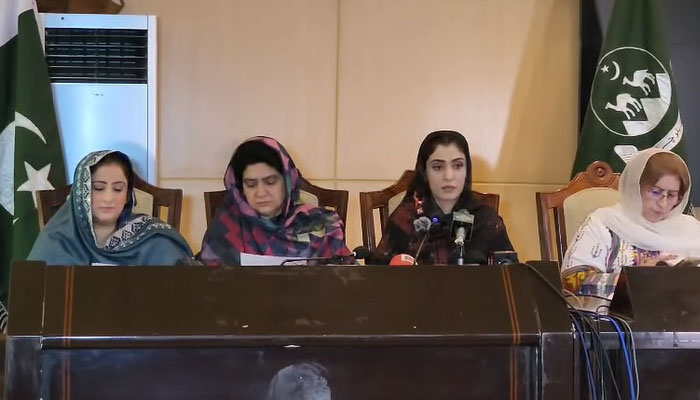
Speaking at a press conference in Quetta, Balochistan government adviser Meena Majeed said the victims were identified as Bibi Hanifa and Hafsa.

She alleged that the two women were killed by militants linked to what the authorities describe as Fitna al-Hindustan.

Majeed questioned why the mother and daughter were targeted. She asked what their crime was.

She said ordinary Baloch citizens were now facing threats from militants. She also expressed concern about the targeting of women.

Majeed said the government and security forces were continuing operations against militants in the province.

She assured that those involved in the Nushki attack would be identified and brought before the law. She said the government would continue efforts to protect civilians.

Balochistan Assembly Deputy Speaker Ghazala also condemned the incident. She said women parliamentarians would not remain silent over the killing of the mother and daughter.

Ghazala stressed that women must be protected everywhere. She said their safety should remain a priority under all circumstances.

Provincial Education Minister Raheela Durrani also expressed strong concern over the incident.

Durrani questioned the message being sent about Balochistan when women were targeted and killed. She said such incidents damage the image of the province and create fear among local communities.

The women lawmakers said violence against civilians could not be tolerated. They called for effective action against those responsible for the killings.

They also stressed the need for stronger security measures to protect women and other vulnerable citizens.

The lawmakers expressed solidarity with the victims’ families. They said the government and security institutions must ensure that those responsible for the attack face justice.

Similar Posts

  • | | |

    Initial report suggests Mir Raza Ali was shot from…

    KARACHI: An initial medical report has reportedly indicated that businessman Mir Raza Ali sustained a gunshot wound from behind, while several signs of physical violence were also found on his body following his exhumation for a fresh post-mortem examination. According to investigation sources, the preliminary report has addressed all 14 questions raised by police surgeon Dr Summaiya Syed during the medical examination. The findings reportedly include a gunshot injury to the rear of the body, fractured ribs and multiple injuries to Ali’s head and face. The report also noted marks of violence on different parts of the deceased’s body. However, investigators have yet to officially receive the medical findings. SSP SIU Samiullah Somroo, who is leading the police investigation, said the investigation team had not been informed about the report or its findings. The exhumation process lasted around three hours and was conducted under the supervision of forensic experts. During the procedure, 17 samples were collected from the body for further examination. Four samples were preserved for DNA testing, while the remaining samples were collected for chemical analysis. Two additional reference samples were obtained from Ali’s parents to assist with DNA matching. Investigators said the collected samples have been preserved and will be submitted to the forensic laboratory at the University of Karachi on Monday. The chemical and DNA examination reports are expected to be available within three to four days. Ali’s body was exhumed earlier as part of efforts to determine the circumstances surrounding his death. After the medical examination was completed, his remains were reburied at a graveyard near Tariq Road. Ali, an IBA graduate and businessman, had returned home from his shop on the night of July 28. He later left the house again, telling his family that he would return within 10 minutes. He did not return, and his body was subsequently recovered from Gulistan-e-Jauhar. His father, Mir Hussain, has maintained that his son was murdered and rejected suggestions that he died by suicide. During the latest proceedings, members of the medical board collected various samples from Ali’s grave as part of the renewed examination. His family members and their lawyer, Jibran Nasir, were present at the graveyard, while a heavy police contingent was deployed to maintain security. The authorities had restored the original eight-member medical board responsible for supervising the exhumation after the family objected to the replacement of the panel with a five-member board. The disagreement had earlier prevented officials from carrying out the scheduled exhumation. Mir Hussain later said he was satisfied with the latest proceedings. He expressed hope that the fresh examination would provide clarity about what happened to his son. The family has also alleged that a fake audio recording attributed to Ali was circulated in an attempt to influence the case and create confusion around the circumstances of his death. The family’s lawyer had earlier raised concerns about changes to the medical board and questioned the decision to replace the original panel. He later said the family was satisfied with the renewed proceedings, which were conducted in the presence of the judicial magistrate, investigation officer and members of the medical team.

  • |

    Palace fears Harry could reach King Charles while Camilla’s away

    Prince Harry’s ongoing push to rebuild ties with the royal family may be approaching a pivotal moment. A new development has insiders within the Firm reportedly on edge. The concern centres around Queen Camilla’s upcoming girls’ trip, which happens to overlap with King Charles’s time at Balmoral in Scotland. According to celebrity reporter Rob Shuter and a Palace insider, this overlap has become a genuine point of worry. Camilla is widely believed to play a key role in tempering Charles’s emotional responses when it comes to Harry. She’s even reportedly rearranged her own schedule in the past just to be present during Harry’s summer meeting at Highgrove. A Palace source told Shuter that Harry is well aware of exactly when his father is most emotionally vulnerable. With Camilla away, one of the strongest steadying influences on Charles would temporarily be missing. The source explained that Harry understands his father on a deeply emotional level. According to the insider, Harry knows Charles misses him and senses that beneath the tension, the King still wants his son back. The source added that while Charles can be firm and composed in his role as monarch, Harry knows exactly how to reach him as a father. That emotional vulnerability is reportedly what worries palace insiders the most. Shuter noted that no dramatic gesture would even be necessary to make an impact. Even a simple phone call, he suggested, could open a door that officials would then struggle to close again. The timing adds another layer of complexity to the already delicate relationship between Harry and his father. With Camilla’s steadying presence temporarily out of the picture, palace insiders appear to be bracing for the possibility of an unplanned reconciliation attempt. Whether Harry chooses to act during this window remains to be seen, but the concern within palace circles suggests his opportunity is being taken seriously behind the scenes.

  • | |

    Punjab University Town-III project faces fresh scr…

    LAHORE: A Pakistan Muslim League-Nawaz (PML-N) lawmaker has submitted an adjournment motion in the Punjab Assembly, calling for a comprehensive investigation into alleged financial and administrative irregularities surrounding the Punjab University Town-III housing scheme. According to the motion submitted by MPA Raja Shaukat Aziz, the housing project was allegedly launched in 2017 by a Punjab University professor without fulfilling the required legal and regulatory formalities. It further claims that the professor entered into a development agreement with his own brother, who was appointed as the project’s developer despite the alleged absence of due legal procedures. The motion alleges that payments amounting to Rs2.70 billion were made to the developer. However, despite the release of funds, no significant development work was carried out at the project site, and plot holders have yet to receive possession of their plots. The document states that nearly 900 affected families have been waiting for justice for the past nine years, claiming they have suffered financial losses and uncertainty due to the stalled housing scheme. It further alleges that, despite repeated complaints, no effective legal action has been taken against those purportedly responsible. Seeking legislative intervention, Raja Shaukat Aziz has urged the Punjab Assembly to establish a special committee to investigate the Town-III project, determine responsibility for the alleged irregularities, and ensure appropriate legal action against those found accountable. The Punjab University Town-III housing scheme has previously remained under public and academic scrutiny over allegations of administrative and financial mismanagement. The latest move is expected to renew debate over accountability and transparency in public housing projects.

  • | |

    300 children die daily due to poor healthcare: Mus…

    Federal Health Minister Mustafa Kamal has said that nearly 300 children die every day in Pakistan because of inadequate healthcare facilities, stressing the need for urgent reforms and greater investment in the country’s health sector. Speaking at a ceremony held at a private hospital in Karachi, the health minister said Pakistan is moving in the right direction but acknowledged that significant challenges remain in improving healthcare services across the country. Mustafa Kamal said the nursing curriculum must be updated to meet modern healthcare standards and international requirements. He added that strengthening the skills of healthcare professionals is essential to improving the quality of medical services. Highlighting demographic challenges, the minister said Pakistan’s population is growing at an annual rate of 2.55 percent, placing increasing pressure on education, healthcare and other public services. He noted that the rapidly expanding population has left millions of children without access to education. The minister said the government’s primary focus is to prevent diseases through vaccination and public awareness rather than relying solely on treatment. He added that Pakistan spends millions of dollars every year on vaccination programmes and warned that the cost could rise to $1.2 billion by 2030 if current trends continue. Mustafa Kamal said a lack of public awareness remains one of the biggest obstacles to successful immunisation campaigns. He noted that vaccination teams often face resistance, with some families refusing to cooperate by not allowing health workers into their homes. He said the government is working to improve awareness about the importance of vaccines and strengthen preventive healthcare programmes to reduce the burden of infectious diseases. The health minister also announced that the government is expected to sign agreements within the next few weeks to begin local vaccine production. He expressed hope that Pakistan would start manufacturing vaccines domestically before 2030, reducing dependence on imports and strengthening the country’s public health system.

  • |

    Three Pakistanis killed in Houthi attack on Red Sea commercial vessel

    At least three Pakistani nationals were killed and another sustained injuries after Houthi forces attacked a commercial vessel in the Red Sea, according to Deputy Prime Minister and Foreign Minister Ishaq Dar. The incident has raised fresh concerns over the safety of Pakistani nationals working aboard commercial ships and the wider security of one of the world’s most important maritime trade routes. Dar confirmed the deaths on Wednesday and strongly condemned the attack, saying that targeting a civilian commercial vessel posed a serious threat to maritime security and international navigation. In a statement posted on X, the deputy prime minister said Pakistan rejected attacks on non-combatant commercial shipping, warning that such incidents put innocent lives at risk and amounted to a violation of international law. He said attacks of this nature could also disrupt freedom of navigation and create further risks for international trade passing through the Red Sea. Pakistan contacts Saudi, Yemen authorities Dar said the Pakistani government was coordinating with Saudi authorities and the internationally recognised government of Yemen to establish further details surrounding the attack. He also instructed the Pakistani embassy in Riyadh to remain in close contact with the relevant authorities and take all necessary steps regarding the deceased Pakistani nationals. The embassy has been directed to facilitate the recovery and repatriation of the victims’ remains to Pakistan, while efforts are also underway to ensure that the injured Pakistani receives all possible assistance. The foreign minister said Islamabad was closely monitoring developments and would maintain contact with the concerned authorities as more information emerged. Islamabad raises concern over Red Sea security Pakistan has repeatedly expressed concern over attacks and threats against commercial shipping in the Red Sea, particularly amid growing instability across the Middle East. On July 22, the Foreign Office warned that continued threats to maritime traffic could undermine freedom of navigation, weaken the rules-based international maritime order and disrupt global commerce. The following day, Pakistan and Saudi Arabia agreed to strengthen coordination aimed at supporting regional peace and security and ensuring the continued movement of legitimate commercial shipping through the Red Sea. The understanding was reached during a telephone conversation between Prime Minister Shehbaz Sharif and Saudi Crown Prince and Prime Minister Mohammed bin Salman. During the conversation, Sharif strongly condemned Houthi attacks targeting Saudi oil tankers operating in the Red Sea and reiterated Pakistan’s concerns over the potential consequences for regional stability and international trade. Makkah defence pact adds regional dimension The latest attack also comes against the backdrop of growing security cooperation between Pakistan, Saudi Arabia and Turkiye. The three countries recently signed the Makkah Joint Defence Agreement, establishing a collective security arrangement under which an armed attack against one member would be treated as an attack against all three. Dar has described the agreement as defensive in character, stressing that its objective is to contribute to peace, stability and prosperity rather than escalate regional tensions. Naqvi visits Iran amid diplomatic efforts The latest Red Sea incident occurred as Pakistan stepped up diplomatic efforts to reduce tensions in the wider Middle East. Interior Minister Mohsin Naqvi is currently in Iran, where he held meetings with Iranian President Masoud Pezeshkian and Foreign Minister Abbas Araghchi. During his meeting with Pezeshkian, Naqvi conveyed a special message from Prime Minister Shehbaz Sharif and Chief of Defence Forces and Chief of Army Staff Field Marshal Asim Munir, according to sources. Sources said Naqvi also briefed the Iranian president about the Makkah Joint Defence Agreement and discussed regional security developments. Pakistan and Qatar have been involved in diplomatic efforts to help de-escalate the conflict, which has resulted in thousands of deaths, particularly in Iran and Lebanon, following US and Israeli attacks on Iran on February 28. Shipping attacks fuel fears over global trade The latest violence comes as tensions surrounding critical maritime routes remain elevated. The United States and Houthi forces reported separate attacks involving shipping on Tuesday, adding to concerns that diplomatic efforts to end the broader Middle East conflict could face further obstacles. The Gulf of Oman and the Red Sea are strategically important waterways, with the Strait of Hormuz and the Red Sea serving as major routes for global energy and commercial shipments. Any prolonged disruption to these routes could increase transportation costs, affect energy markets and create further pressure on international supply chains. Iran has reiterated that the Strait of Hormuz will remain closed unless Washington accepts its conditions, adding to uncertainty surrounding the future of maritime traffic through the strategically vital waterway. Despite the worsening security environment, Defence Minister Khawaja Asif said on Tuesday that the United States and Iran were moving closer to a possible agreement. Speaking to Bloomberg News, Asif said recent developments suggested that negotiations could again be moving in the direction of a peace arrangement. Qatar, which has also been involved in mediation efforts, has said discussions concerning the management of maritime traffic through the Strait of Hormuz had reached an advanced stage.

  • |

    Pakistani mountaineers successfully cross historic phargam An Pass 

      A team of Pakistani mountaineers has successfully crossed the historic Phargam An Pass in the Hindu Kush mountain range for the first time in 27 years, marking a significant milestone in the country’s mountaineering history. Standing at an altitude of 5,100 meters (16,732 feet), the challenging pass was successfully summited by the expedition team after navigating some of the region’s most demanding terrain. The expedition also made history by becoming the first to include female mountaineers who successfully reached the summit of Phargam An Pass. Their achievement represents a major step forward for women’s participation in Pakistan’s adventure tourism and mountaineering community, highlighting the growing presence of female athletes in high-altitude expeditions. The expedition was organized with the support of the Khyber Pakhtunkhwa Culture and Tourism Authority and took place in Upper Chitral, an area renowned for its spectacular mountains, glaciers, and remote landscapes. The mission aimed not only to revive a historic route but also to promote adventure tourism in the region while showcasing Pakistan’s rich natural beauty. During the expedition, the team made another remarkable discovery by locating the memorial of Austrian mountaineer George Kronberger, who tragically lost his life in the area in 1975. Finding the memorial added historical significance to the expedition, connecting the modern-day climbers with an important chapter in the history of mountaineering in the Hindu Kush. The journey to Phargam An Pass was far from easy. Team members crossed vast glaciers, climbed steep snow-covered slopes, traversed rocky mountain trails, and carefully navigated areas threatened by avalanches. Despite these hazardous conditions, the climbers successfully completed the expedition through careful planning, teamwork, and determination. Expedition guide Zamrud Khan noted that climate change has significantly altered the route to Phargam An Pass over the years. According to him, melting glaciers, changing snow conditions, and shifting mountain landscapes have made the route considerably different and more challenging compared to previous decades. His observations underline the visible impact of global climate change on Pakistan’s high-altitude regions and the increasing challenges faced by mountaineers. A particularly inspiring aspect of the expedition was the participation of three sisters from Chitral—Mahrosh Akhtar, Ismeel Roz, and Madhu Shala Akhtar—who became part of this historic journey and set a new example for aspiring female adventurers across Pakistan. Their achievement demonstrates that women are increasingly breaking barriers in fields traditionally dominated by men and encouraging future generations to pursue outdoor sports and exploration. The expedition team included Kamran Khan, Mahrosh Akhtar, Samar Khan, Nauman Khan, Noorul Rahman, Zohaib Khan, Umar Khattab Sherani, Sahnia Babar, Amina Shabbir, and Madiha Syed. Their successful completion of this demanding mission not only revived a historic mountain pass after nearly three decades but also highlighted Pakistan’s immense potential for adventure tourism. The expedition serves as a testament to the resilience, courage, and teamwork of Pakistani mountaineers while drawing attention to the need for preserving the fragile mountain environment in the face of climate change.

Leave a Reply

Your email address will not be published. Required fields are marked *