hrw says israeli
| |

HRW says Israeli strike that killed journalist was war crime

Human Rights Watch (HRW) has accused Israel of carrying out a deliberate airstrike that killed Lebanese journalist Amal Khalil, saying the attack may amount to a war crime under international law.

In a report released on Wednesday, the international rights organisation said the strike targeted Amal Khalil and her camerawoman, Zainab Faraj, while they were covering Israeli military operations in southern Lebanon earlier this year.

Amal Khalil, a reporter for the Lebanese newspaper Al-Akhbar, was killed in an Israeli airstrike on April 22 in the town of Al-Tayri. Her colleague, camerawoman Zainab Faraj, was seriously injured in the same attack.

According to HRW, the available evidence suggests the Israeli military knew journalists were inside the building before launching the strike. The organisation said information gathered during its investigation indicates the attack was intentional and violated international humanitarian law.

The report also referred to requests made by the United Nations Interim Force in Lebanon (UNIFIL) and the International Committee of the Red Cross for access to the area. HRW said these requests support evidence that authorities were aware of the presence of journalists at the location.

Human Rights Watch further stated that Amal Khalil remained alive for some time after the strike. However, it alleged that Israeli forces prevented rescue workers from reaching the site, delaying emergency medical assistance that could have improved her chances of survival.

The organisation said deliberately targeting journalists performing their professional duties and blocking humanitarian access are serious violations of international law. It added that such actions could constitute war crimes and should be investigated independently.

HRW called for a transparent and impartial investigation into the incident and urged those responsible to be held accountable. It also stressed that journalists covering armed conflicts are civilians protected under international humanitarian law and must not be targeted during military operations.

Similar Posts

  • | |

    IHC seeks answers over delay in judicial appointme…

    ISLAMABAD: The Islamabad High Court (IHC) has asked the federal government to explain the constitutional implications of keeping Prime Minister Shehbaz Sharif’s advice on judicial appointments pending with President Asif Ali Zardari. Justice Arbab Muhammad Tahir issued notices to the president, the federal government and the attorney general on Monday while hearing a petition challenging the delay in approving appointments to the superior courts. The court also directed the respondents to submit separate concise reports detailing when the prime minister’s advice was sent to the president and what action had been taken on it. The case has been fixed for hearing on August 11. The petition was filed by lawyer Luqman Zafar through his counsel Zahid Asif Chaudhry, who questioned the prolonged delay in completing the constitutional process for judicial appointments. The Judicial Commission of Pakistan, headed by Chief Justice Yahya Afridi, had recommended 19 additional judges and the confirmation of five judges for the high courts during meetings held on July 20 and 21. The recommendations were subsequently forwarded by the prime minister to President Zardari for approval under Article 48 of the Constitution. During Monday’s proceedings, the petitioner’s lawyer argued that the use of the word “shall” in Article 48(1) placed a constitutional duty on the president to act on the prime minister’s advice. He maintained that although the president could return the advice for reconsideration within the prescribed period, the Constitution did not permit an indefinite delay. The counsel further argued that the delay was affecting the administration of justice at a time when the superior courts were already struggling with a growing backlog of cases. According to the petitioner, prolonged vacancies could also undermine the public’s constitutional right to timely access to justice. Justice Tahir directed that notices be served through all available modes. Additional Attorney General Rashid Hafeez was also asked to ensure that the respondents provide the court with clear timelines regarding the submission and handling of the judicial appointments summary. The presidential delay has already had consequences for the high courts. Four additional judges of the Peshawar High Court whose confirmation had been recommended by the Judicial Commission ceased to hold office on August 4 after their terms expired without formal notifications. A similar situation arose in the Sindh High Court, where an additional judge left office after his extended tenure ended on July 29. The oath-taking ceremony for the newly recommended judges had originally been scheduled for July 27 but was postponed indefinitely after the president neither approved the summary nor returned it for reconsideration. With the matter now coming under judicial scrutiny, the Islamabad High Court is set to examine whether the continued delay in acting on the prime minister’s advice is constitutionally permissible.

  • |

    20,000 flee as fast-moving wildfire engulfs British Columbia

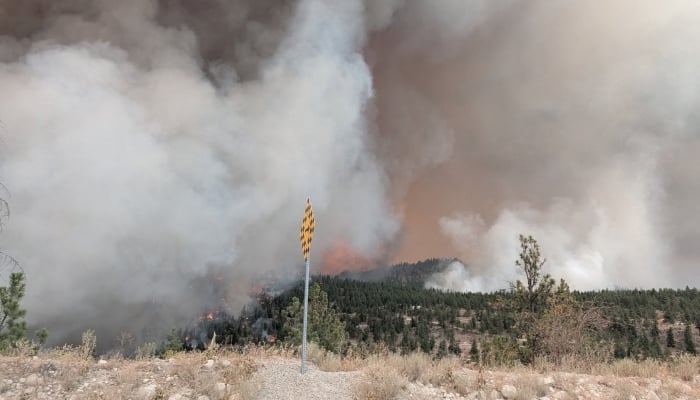
    VANCOUVER: More than 20,000 people have been forced to leave their homes in British Columbia as a fast-moving wildfire tore through communities around Okanagan Lake, prompting provincial authorities to declare a state of emergency. The Bald Range wildfire exploded in size within hours, driven by hot, dry and windy conditions, sending residents scrambling for safety and creating an increasingly dangerous situation for firefighters and emergency crews. The blaze had expanded to roughly 9,500 hectares (23,500 acres) by Saturday, according to Reuters. Premier David Eby announced the state of emergency on Saturday as more than 100 wildfires were burning across the province. The emergency declaration gives authorities additional powers to restrict travel, coordinate resources and secure accommodation for people displaced by the fires. Thousands ordered to evacuate The communities of Summerland and Peachland were among those heavily affected. Summerland, home to around 12,000 people, was placed under an evacuation order, while thousands more residents in surrounding areas were also told to leave. Officials have warned that conditions remain extremely dangerous, with rapidly changing winds and intense flames making it difficult to assess the full extent of the damage. A number of homes and other properties have already been destroyed, although authorities have yet to determine the total number of structures lost because some affected areas remain inaccessible. The wildfire has also disrupted essential services. Power outages have been reported, while Summerland issued a boil-water advisory after untreated water entered part of the system. Highway 97, an important transportation route through the region, was also closed as the fire threatened nearby communities. Residents rescued by helicopter The rapidly spreading flames left some residents trapped after escape routes became unsafe. Emergency crews used helicopters to reach people who could no longer evacuate by road, while search-and-rescue teams continued checking areas behind the fire lines for anyone who may have been left behind. The intensity of the fire has created exceptionally dangerous conditions. Officials said the blaze generated its own weather, including lightning, making firefighting operations even more challenging. Authorities are also investigating a possible wildfire-related death near Summerland. The Royal Canadian Mounted Police said hazardous conditions were making it difficult to confirm details immediately. Why the situation is so severe British Columbia entered the 2026 wildfire season with significant concerns about drought and unusually warm conditions. The BC Wildfire Service had warned earlier this summer that much of the province could experience elevated wildfire activity because of persistent drought, below-average snowpack and warmer-than-normal temperatures. The Okanagan was among the areas facing above-average drought conditions. The District of Peachland had already raised its local fire danger rating to extreme in July, warning that dry forests and grasslands could allow any new fire to spread rapidly. A growing national wildfire crisis The emergency in British Columbia is part of a wider wildfire crisis affecting Canada this summer. Thousands of firefighters are battling blazes across multiple provinces, while smoke from major fires has repeatedly affected air quality and visibility. For residents forced from their homes, the immediate priority remains safety as emergency crews work to contain the Bald Range fire. With flames moving quickly and weather conditions remaining difficult, officials continue to urge residents in threatened areas to follow evacuation orders and avoid returning until authorities declare it safe. For British Columbia, the latest disaster is another stark reminder of how quickly a wildfire can transform from a remote blaze into a community-wide emergency.

  • |

    India alarmed by Pakistan-Saudi-Türkiye alliance

    The defence agreement between Pakistan, Saudi Arabia and Türkiye has emerged as a major strategic concern for India. The three countries signed the Makkah Joint Defence Agreement on August 7. Under the pact, an armed attack against any one of the three countries would be treated as an attack against all three. The agreement has attracted significant attention in New Delhi. Indian analysts are assessing its possible impact on the regional balance of power. An Indian media analysis recalled comments made by Indian Army Deputy Chief Lieutenant General Rahul R Singh in 2025. He had said that during the military confrontation between India and Pakistan in May, India faced several forms of support for Pakistan. The analysis claimed that Pakistan was directly involved in the conflict. It also alleged that China provided satellite information to Pakistan. Türkiye was accused of providing military assistance to Pakistan. The assistance reportedly included drones and other defence equipment. Saudi Arabia’s participation has now added another dimension to India’s concerns. Indian analysts fear that Riyadh could support Pakistan if another armed conflict breaks out between India and Pakistan. The concern comes despite India’s strong relations with Saudi Arabia. The two countries have extensive economic and strategic ties. India and Saudi Arabia cooperate in oil, trade, investment, security and cultural affairs. Their bilateral trade is estimated at around $43 billion. Saudi Arabia also remains an important supplier of crude oil to India. It reportedly meets around 14% of India’s crude oil requirements. Pakistan and Saudi Arabia also have a long history of defence cooperation. Pakistan has provided military training to Saudi forces. Pakistani military personnel have also been deployed in Saudi Arabia at different times. The Indian analysis claimed that Pakistan sent around 8,000 military personnel and 16 JF-17 fighter jets to Saudi Arabia during 2026. It also referred to reports about possible Pakistani drone support and Chinese-made air defence systems. These developments were reportedly linked to Saudi Arabia’s security concerns and attacks involving drones. The relationship between Pakistan and Türkiye has also expanded significantly in recent years. The two countries have increased cooperation in defence technology and military production. Pakistan has acquired Turkish-made warships and other defence equipment. Türkiye has also supported the modernisation of Pakistan’s naval capabilities. The two countries are also cooperating in the field of unmanned aerial systems. Pakistan has acquired Turkish Bayraktar Akıncı drones. Both sides have discussed and worked on expanding cooperation in drone technology. Türkiye’s KAAN stealth fighter has also attracted interest from Pakistan. However, no final purchase agreement for the aircraft has been confirmed.

  • | | |

    Free entry announced for national champions cup in…

      MULTAN: The Pakistan Cricket Board (PCB) has announced free entry for cricket fans attending the upcoming National Champions Cup, which is scheduled to take place from 11 to 18 August at the Multan Cricket Stadium. The PCB confirmed the decision through an official promotional flyer shared on its social media platforms. The move is expected to encourage cricket supporters to attend the matches and watch some of the country’s leading domestic players in action. The tournament will feature seven matches all of which will be played under day-night conditions. According to the schedule, the matches are expected to begin at around 3 pm local time. The National Champions Cup is a new 50-over List-A domestic competition and will also officially mark the beginning of Pakistan’s 2026-27 domestic cricket season. Four teams will participate in the tournament: Pakistan Greens, Pakistan Whites, Pakistan Blues and Pakistan Gold. The competition will follow a single-league round-robin format meaning each team will compete against the other participating sides during the league stage. At the conclusion of the league matches, the two teams with the highest points will qualify for the final, where they will compete for the tournament title. The PCB has also finalised the playing XIs for all four teams. In addition, a 13-player reserve pool has been selected for the competition. The reserve players will remain with their respective teams during training sessions and match days. According to the PCB’s arrangements, reserve players can be included in the playing XI if a team faces an injury or concussion-related replacement requirement after announcing its original XI. This arrangement is intended to ensure that teams have adequate cover throughout the competition. The tournament will feature several prominent Pakistan players as captains. Shaheen Shah Afridi will lead Pakistan Gold, while Shadab Khan has been appointed captain of Pakistan Greens. Saim Ayub will captain Pakistan Whites, whereas Sahibzada Farhan will lead Pakistan Blues. The Champions Cup is particularly important as the PCB continues its preparations for the 2027 ICC Men’s Cricket World Cup. The board has selected a wider pool of 44 players along with reserve players, to provide opportunities for cricketers to demonstrate their abilities and strengthen their claims for future national selection. The domestic competition will therefore serve as an important platform for players seeking to establish themselves at the national level. Performances during the tournament could help the selectors assess the form, fitness and consistency of players ahead of future international assignments. With free admission, a strong line-up of players and the opening of the new domestic season, the National Champions Cup is expected to attract considerable interest from cricket fans in Multan and across Pakistan. The tournament will provide supporters with an opportunity to watch emerging and established players compete in a competitive 50-over format while the PCB continues its broader preparations for the next World Cup cycle.

  • | | |

    Supreme Court bars fresh claims after final contra…

    ISLAMABAD: The Supreme Court of Pakistan has ruled that contractors cannot pursue additional financial claims or seek arbitration after voluntarily accepting a final settlement, reinforcing the binding nature of contractual agreements. A three-member bench headed by Chief Justice Yahya Afridi, alongside Justice Irfan Saadat Khan and Justice Aqeel Ahmed Abbasi, dismissed a petition seeking permission to appeal against an earlier ruling of the Peshawar High Court. Justice Irfan Saadat Khan authored the judgment. The dispute originated from a construction contract awarded in December 1993 for the Hayatabad Medical Complex in Peshawar. During the project, the contractor sought additional payments, citing delays and funding shortages. According to the judgment, the company later accepted Rs88.555 million as final payment and signed a No Demand Certificate, formally giving up its right to pursue further financial claims under the contract. Despite the settlement, the contractor subsequently approached the courts seeking arbitration over additional demands. The trial court and the Peshawar High Court rejected the request, and the Supreme Court has now upheld those decisions. The apex court clarified that once a party willingly accepts final payment and signs a No Demand Certificate, it cannot reopen financial claims or invoke arbitration unless it can establish that the settlement was secured through fraud, coercion or undue influence. The court stressed that voluntarily concluded agreements must remain enforceable, particularly in public-sector development projects where contractual certainty is essential. It warned that allowing settled disputes to be reopened without evidence of wrongdoing could weaken confidence in contracts and create uncertainty in commercial dealings.

  • | |

    Pakistan, Jordan express deep concern over escalat…

    Deputy Prime Minister and Foreign Minister Senator Ishaq Dar and Jordanian Foreign Minister Ayman Safadi held a telephone conversation on Tuesday to discuss the worsening humanitarian and security situation in the Palestinian territories, expressing deep concern over the continued escalation of violence in Gaza and the occupied West Bank. According to Pakistan’s Foreign Office, the two leaders reviewed the latest developments, focusing on the ongoing Israeli military operations, intensified airstrikes, ground offensives, and the deteriorating conditions faced by Palestinian civilians. They emphasized the urgent need for international efforts to reduce tensions and prevent further loss of life. During the discussion, both foreign ministers strongly condemned repeated incursions by Israeli settlers and far-right groups into the Al-Aqsa Mosque compound in occupied East Jerusalem. They also criticized restrictions imposed on Palestinian worshippers, describing such measures as a violation of the sanctity and religious significance of one of Islam’s holiest sites. Dar and Safadi agreed that actions affecting the Al-Aqsa Mosque compound not only inflame tensions on the ground but also undermine regional stability and diminish prospects for a peaceful resolution to the long-standing conflict. They stressed the importance of respecting the historical and legal status of the holy site and ensuring freedom of worship for Palestinians. The conversation also focused on diplomatic efforts aimed at addressing the crisis. The Jordanian foreign minister briefed Ishaq Dar on Jordan’s proposal to convene a meeting of Arab and Islamic countries to review the rapidly evolving situation and coordinate a collective diplomatic response. The proposed gathering is expected to explore ways to strengthen international engagement, promote humanitarian assistance, and support efforts to achieve a peaceful settlement. Both leaders agreed that close coordination among Muslim and Arab countries remains essential in responding to the ongoing crisis. They emphasized the importance of maintaining diplomatic momentum to encourage dialogue and prevent further escalation in the region. Foreign Minister Ayman Safadi acknowledged Pakistan’s consistent role in advocating for regional peace and stability. He appreciated Islamabad’s diplomatic efforts and expressed hope that ongoing international initiatives would contribute to reducing tensions and creating conditions conducive to lasting peace. During the call, Ishaq Dar reaffirmed Pakistan’s unwavering support for the legitimate rights of the Palestinian people. He reiterated Pakistan’s long-standing position that a just, comprehensive, and durable peace can only be achieved through a negotiated political solution based on international law and relevant United Nations resolutions. Dar once again emphasized Pakistan’s support for the two-state solution, calling for the establishment of an independent, sovereign, contiguous, and viable Palestinian state based on the pre-1967 borders. He said East Jerusalem, referred to by Muslims as Al-Quds Al-Sharif, should serve as the capital of the future Palestinian state. The deputy prime minister also stressed the need for the international community to intensify diplomatic efforts to end the violence, protect civilians, and facilitate humanitarian assistance for those affected by the conflict. He underscored that meaningful dialogue and respect for international law remain essential for achieving lasting peace and stability in the Middle East. The telephone conversation reflected the close cooperation between Pakistan and Jordan on issues concerning Palestine and highlighted their shared commitment to supporting diplomatic initiatives aimed at ending the conflict. Both countries reaffirmed their determination to continue working with regional and international partners to promote peace, safeguard holy sites, and uphold the rights and aspirations of the Palestinian people.

Leave a Reply

Your email address will not be published. Required fields are marked *