dar araghchi discuss
| | |

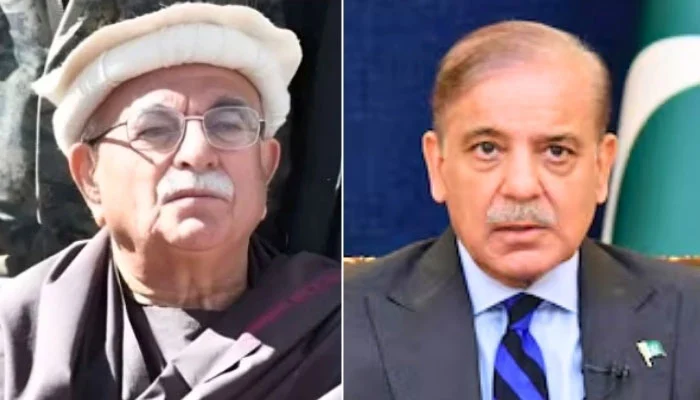
Dar, Araghchi discuss regional tensions and Makkah…

Pakistan’s Deputy Prime Minister and Foreign Minister Ishaq Dar held a telephone conversation with Iranian Foreign Minister Abbas Araghchi.

The two leaders discussed the latest situation in the region. They also exchanged views on the recently concluded Makkah Defence Agreement between Pakistan, Saudi Arabia and Türkiye.

The conversation comes as the regional security situation remains sensitive. Both sides discussed developments in the region and efforts to promote peace and stability.

According to reports, Araghchi briefed Dar on recent discussions with Oman. The talks focused on a proposed new trade corridor in the Strait of Hormuz.

The Strait of Hormuz remains an important international trade and energy route. Developments in the area have raised concerns about regional security and the movement of commercial shipments.

During the telephone call, Dar also explained Pakistan’s position on the Makkah Defence Agreement.

He told his Iranian counterpart that the agreement was aimed at strengthening strategic cooperation between the participating countries.

Dar also stressed that the pact was intended to support peace and stability in the region.

The agreement involving Pakistan, Saudi Arabia and Türkiye has attracted regional attention. Questions have also been raised about its possible impact on the wider security environment.

Iran has previously sought clarification about the nature and objectives of the defence cooperation. Pakistani officials have maintained that the agreement is focused on strategic cooperation and regional stability.

The latest conversation between Dar and Araghchi provided an opportunity for both countries to discuss these developments directly.

The two foreign ministers also discussed diplomatic efforts aimed at preventing further instability in the region.

Their conversation highlights the importance of continued engagement between Pakistan and Iran. Both countries share close regional ties and have an interest in maintaining peace and stability.

Similar Posts

  • |

    Kremlin claims capture of two key eastern Ukrainian villages

    Russian military forces have claimed control over two settlements in Ukraine’s eastern Donetsk region, according to statements released by the Russian Defence Ministry via state media. The ministry reported that its troops captured Vasyutinske, located near Kramatorsk, alongside Toretsk, situated southwest of Druzhkivka. Ukrainian authorities have not confirmed the loss of either location, and battlefield reports remain unverified independently. While frontlines across the 1,200-kilometre border have experienced minimal overall shifts in recent months, Russian forces continue an incremental westward push through the region. Ukrainian war-monitoring group DeepState reported additional Russian advances near Illinivka outside Kostiantynivka, as well as movements near Chasiv Yar, west of Bakhmut. The General Staff of the Ukrainian Armed Forces stated that its troops successfully repelled 24 individual assaults around Kostiantynivka and Illinivka. Russian commanders previously claimed control of Kostiantynivka, a statement contested by Ukrainian officials. Ukrainian President Volodymyr Zelenskiy did not address frontline shifts directly in his nightly address, but commended Ukrainian units engaged in heavy combat around Dobropillia, Kostiantynivka, and Kramatorsk.

  • |

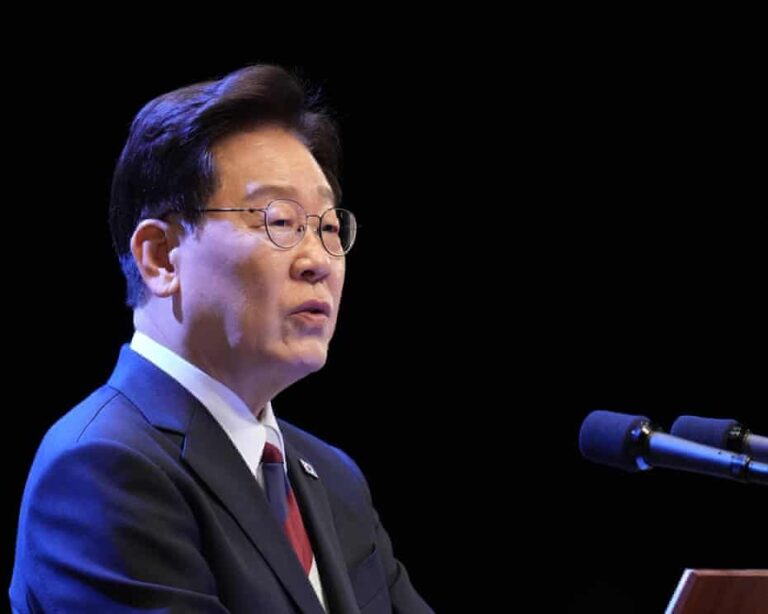
    South Korean President Lee Jae Myung calls for peace talks with North Korea

    South Korean President Lee Jae Myung has urged North Korea to return to dialogue to establish a permanent peace regime and formally conclude the 1950–53 Korean War. Delivering a speech to mark the anniversary of Korea’s liberation from Japanese colonial rule, Lee emphasised the necessity of peaceful coexistence and proposed diplomatic discussions to address Pyongyang’s nuclear capabilities alongside regional security safeguards. The Korean War concluded with an armistice agreement rather than a formal peace treaty, leaving the peninsula in a technical state of conflict for decades. Lee affirmed that Seoul is prepared to implement pre-emptive measures to reduce military friction and prevent escalation, building upon earlier pledges to respect North Korea’s governance system. Diplomatic relations between the two nations remain strictly frozen, with North Korean leader Kim Jong-un officially abandoning reunification goals and designating South Korea as a primary adversary. Pyongyang has repeatedly rejected previous diplomatic overtures from Seoul while criticising joint US–South Korean military exercises. Additionally, Lee addressed regional affairs with Tokyo, advocating for an approach that confronts historical grievances while fostering future cooperation with Japan as a neighbouring state.

  • | | |

    IHC asked to frame rules for social media use by c…

    ISLAMABAD: The Islamabad High Court has been petitioned to direct the federal government to introduce legislation and a comprehensive regulatory framework governing social media access by children below the age of 16. The petition, filed by advocates Muhammad Jalal Haider and Yahya Farid Khawaja, calls for a reliable age-verification system to prevent minors from creating or operating social media accounts without appropriate safeguards. The petitioners argue that children face growing risks online, including cyberbullying, harassment, exposure to inappropriate material and other forms of digital harm. They have urged the government to establish clear policies covering children’s digital rights, privacy and physical and psychological safety. They have also sought specific legal responsibilities for social media companies, including stronger safeguards for minors and the creation of an institutional mechanism dedicated to protecting children in the digital environment. The petition refers to measures adopted or proposed in countries including Australia, France, Britain, New Zealand and Spain, where authorities have considered age limits, parental consent and age-verification requirements for children’s social media use. Citing the United Nations Convention on the Rights of the Child and General Comment No. 25, the petitioners maintain that protecting children’s best interests is a legal responsibility of the state rather than merely a policy choice. They argue that the absence of an effective age-verification mechanism leaves minors exposed to online dangers and makes it difficult to enforce protections designed specifically for children. The Ministry of Information Technology and Telecommunication, Ministry of Information and Broadcasting, Ministry of Interior, Ministry of Law and Justice, Pakistan Telecommunication Authority and Pakistan Electronic Media Regulatory Authority have been named as respondents. Punjab Assembly Resolution The development follows a resolution submitted to the Punjab Assembly last month calling for restrictions on social media accounts operated by children under 16 without parental consent. The resolution, moved by Punjab lawmaker Sarah Ahmad, urged the provincial government to recommend federal legislation aimed at regulating minors’ access to social media and strengthening online protection. It highlighted concerns over cyberbullying, online exploitation, inappropriate content, digital addiction and psychological distress among children, stressing that safeguarding their physical, mental and moral development is a responsibility of the state. The resolution proposed prohibiting children below 16 from creating or maintaining social media accounts without verified parental or legal guardian consent. It also called on the PTA to develop and enforce effective age-verification mechanisms across platforms operating in Pakistan. It further recommended holding social media companies accountable for child-safety standards, including the timely removal of harmful content and measures to provide a safer online environment for minors.

  • |

    UET Lahore sees record undergraduate admission dem…

    LAHORE:The University of Engineering and Technology (UET) Lahore has announced the first merit list for its undergraduate admissions, following a strong response from students seeking admission to the university’s various degree programmes. According to data shared by the university administration, UET Lahore received 21,066 applications for undergraduate programmes this year. The applicants also submitted 288,166 programme preferences, highlighting the intense competition among students and the growing demand for engineering and other undergraduate programmes offered by the university. The release of the first merit list marks the beginning of the admission process for the new academic session. Students who applied for admission can now check their selection status and review the details of the admission process through the university’s official admissions portal. UET Lahore has also announced the schedule for the upcoming merit lists. The university will publish the second merit list on August 7, followed by the third merit list on August 14. The fourth merit list will be announced on August 21. The university has advised applicants to regularly check the official admission platform for updates regarding merit lists, fee submission, admission confirmation and other important requirements. Students selected in the merit lists must complete the required admission formalities within the specified deadlines to secure their places in their respective programmes. Meanwhile, UET Lahore plans to begin regular classes for all selected undergraduate students on September 7. The start of the academic session will follow the completion of the admission process and the finalization of student selections. With more than 21,000 applicants competing for admission, the latest figures reflect the continued popularity of UET Lahore among students pursuing higher education in engineering and related disciplines.

  • | |

    Pakistan enters AI era with inauguration of larges…

    Pakistan has taken a major step towards becoming a regional digital technology hub with the inauguration of Sky47 Karakoram-01, the country’s largest AI-ready data centre and cloud platform, at Capital Smart City near Islamabad. The facility was jointly inaugurated by Prime Minister Muhammad Shehbaz Sharif and Chief of Army Staff and Chief of Defence Forces, Field Marshal Syed Asim Munir, during a ceremony attended by federal ministers, senior government officials, business leaders, technology experts and representatives of the IT sector. Developed by Sky47 in collaboration with the Habib Rafiq Group, the state-of-the-art facility has been designed to deliver artificial intelligence computing, cloud services, secure data hosting, cybersecurity and high-performance computing infrastructure. The project is expected to strengthen Pakistan’s digital economy by enabling businesses, financial institutions, government organisations and technology companies to securely host and process data within the country while supporting the rapid growth of AI applications. The project also reinforces Capital Smart City’s ambition to become Pakistan’s premier destination for data centres, cloud computing and advanced technology investment. With its modern infrastructure, strategic location and dedicated technology zones, the city is positioning itself as a future hub for digital innovation and AI-led development. Addressing the inauguration ceremony, Prime Minister Shehbaz Sharif described Sky47 as a landmark project that would help shape Pakistan’s future and strengthen the country’s digital capabilities. He said the successful completion of the project within a short period reflected extraordinary commitment, professional expertise and determination. The Prime Minister said projects such as Sky47 were essential for building a dynamic, progressive and technologically advanced Pakistan. Referring to Pakistan’s recent achievements, he said that when the nation confronts challenges with determination, optimism and resilience, it is capable of accomplishing historic milestones. He described the project as an important guarantee for Pakistan’s future and said it would provide robust digital security for the country. He also paid tribute to Field Marshal Syed Asim Munir for his visionary leadership and acknowledged the support of technology partner ZTE, Federal Minister for Information Technology Shaza Fatima Khawaja, the Ministry of IT and all stakeholders involved in making the project a reality. The Prime Minister announced that similar state-of-the-art facilities would also be developed in Karachi and Lahore and called for government institutions to make full use of the new infrastructure. The Habib Rafiq Group, under the leadership of Zahid Rafiq, has played a pivotal role in delivering the project and expanding Capital Smart City’s vision beyond real estate into technology-led infrastructure. Industry observers believe the initiative will help attract further domestic and international investment in artificial intelligence, cloud computing and digital services. Speaking at the ceremony, Federal Minister for Information Technology Shaza Fatima Khawaja said the inauguration of Sky47 marked the beginning of a new era of artificial intelligence in Pakistan. She said the project would open the door to a new phase of economic growth by enabling the country to make better use of its digital resources, skilled workforce and data-driven innovation. She added that the future global AI race would depend on the secure, efficient and intelligent use of data. Sky47 Chief Executive Officer Hassan Abbas said there are around 12,000 data centres worldwide but only 22 in Pakistan, highlighting the country’s significant growth potential. He said Pakistan’s e-commerce sector is expanding by around 25 to 30 per cent annually and that Sky47 would provide a strong foundation for the country’s digital economy. The Sky47 data centre has the capability to support artificial intelligence, machine learning and high-performance computing while providing cloud computing, secure data hosting and enterprise digital services. It is also expected to play an important role in safeguarding sensitive national and commercial information. The inauguration is being viewed as one of Pakistan’s most significant technology milestones in recent years, reflecting the country’s ambition to build sovereign digital infrastructure and reduce reliance on overseas data hosting. Supporters of the initiative describe it as a major breakthrough achieved under the leadership of Prime Minister Shehbaz Sharif, with the support of Field Marshal Syed Asim Munir, and an important step towards positioning Pakistan as a regional hub for artificial intelligence, cloud computing and next-generation digital technologies.

  • | |

    Achakzai urges PM to appoint new chief election co…

      ISLAMABAD: National Assembly Opposition Leader Mahmood Khan Achakzai has urged Prime Minister Shehbaz Sharif to initiate the process of appointing a new Chief Election Commissioner (CEC) and fill the vacant positions of two Election Commission of Pakistan (ECP) members from Sindh and Balochistan. Achakzai made the request in a letter addressed to Prime Minister Shehbaz Sharif on August 10. The opposition leader, who also heads the Tehreek Tahafuz Ayeen-i-Pakistan (TTAP) and serves as chairman of the Pakhtunkhwa Milli Awami Party, asked the premier to give immediate attention to what he described as an important constitutional responsibility concerning the composition of the country’s electoral watchdog. According to Achakzai, the official terms of the Chief Election Commissioner and the ECP members representing Sindh and Balochistan expired on January 26, 2025. He stressed that the vacant positions should be filled without further delay to ensure the commission continues to function effectively. The opposition leader argued that the timely appointment of officials to these constitutional positions was essential for maintaining the ECP’s operational continuity, institutional independence and credibility. In his communication, Achakzai referred to relevant provisions of the Constitution that outline the procedure for appointing the Chief Election Commissioner and members of the Election Commission. He cited Article 213(2A) under which the prime minister is required to consult the leader of the opposition in the National Assembly before forwarding three candidates for the post of CEC to a parliamentary committee. The committee then considers the proposed names before making the appointment through the constitutional process. Achakzai also referred to Article 218(2)(b), arguing that the appointment of ECP members from the provinces is subject to the same constitutional principle of consultation between the prime minister and the opposition leader. The opposition leader consequently called on Prime Minister Shehbaz to hold a formal meeting with him so that both sides could consult and agree on suitable candidates for the vacant constitutional positions. The demand comes against the backdrop of a prolonged delay in completing the composition of the electoral body. It is worth recalling that Prime Minister Shehbaz Sharif had previously invited former National Assembly Opposition Leader Omar Ayub for consultations regarding the appointment of a new Chief Election Commissioner. The invitation was extended in June last year as part of the constitutional process for filling the position. However, the parliamentary situation subsequently changed after the National Assembly removed Omar Ayub and several other Pakistan Tehreek-e-Insaf (PTI)-backed leaders from important parliamentary positions. The move followed their disqualification by the Election Commission of Pakistan in connection with the May 9 cases in August last year. As a result, the consultation process concerning appointments to key positions within the ECP remained stalled. Achakzai’s latest letter has brought renewed attention to the issue, with the opposition leader emphasising that the vacant positions should be filled through the constitutional procedure and without further delay. The appointment of a CEC and provincial ECP members is considered crucial for ensuring the electoral watchdog remains fully functional and retains public confidence. Achakzai has therefore sought an immediate consultation process with the prime minister to resolve the matter and complete the appointments in accordance with the Constitution.

Leave a Reply

Your email address will not be published. Required fields are marked *