bank punjab board
|

Bank of Punjab Board approves Up to Rs30bn equity injection by Punjab government

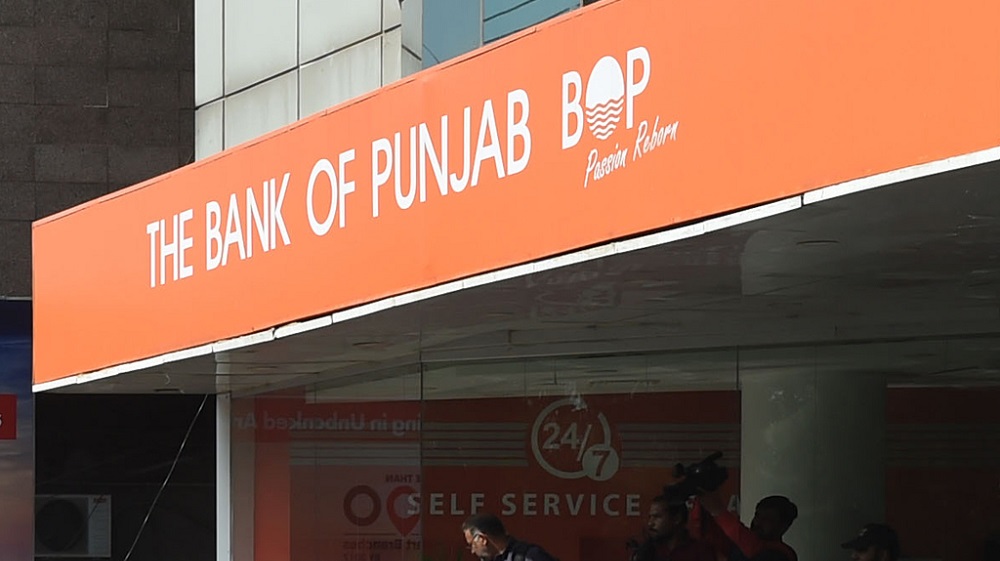
LAHORE: The Board of Directors of The Bank of Punjab (BOP) has approved a proposal for an equity injection of up to Rs30 billion by the Government of Punjab, a move aimed at strengthening the bank’s capital position and supporting its next phase of expansion.

The decision was taken at a board meeting held on August 7, 2026. Under the proposal, the Punjab government will subscribe to ordinary shares to be issued by the bank through a mechanism other than a rights issue.

The proposed transaction will not take effect immediately and remains conditional on obtaining all required statutory, corporate, shareholder and regulatory approvals.

According to the bank, the planned capital injection is an important step in its broader transformation strategy and will provide additional financial capacity to support sustainable growth across its key business segments.

Share issuance price

The ordinary shares will initially be issued at Rs38.20 per share. However, if the market price of BOP shares is higher than this amount at the time of issuance, the shares will be issued at the prevailing market price plus a premium of 5 percent.

As a result, Rs38.20 will serve as the minimum or floor price for the proposed share issuance.

The transaction is expected to reinforce the bank’s capital base and provide greater flexibility to manage balance-sheet expansion while maintaining prudent financial and risk-management standards.

BOP expands its market presence

The Bank of Punjab has undergone significant changes in recent years, with the institution expanding its balance sheet, improving financial performance and strengthening its position across several sectors of Pakistan’s economy.

The bank has developed a strong presence in areas including small and medium-sized enterprise (SME) financing, agricultural lending, affordable housing, digital banking and credit cards. It has also increased its focus on women’s participation and leadership in banking and financial services.

BOP is further expanding its activities in commercial and corporate banking, particularly in areas linked to export-oriented businesses.

The bank said these business segments have positioned it as an important participant in supporting economic activity, employment creation and financial inclusion across the country.

Capital requirements rise with expansion

Despite the bank’s growth, the rapid expansion of its operations has increased pressure on its existing capital base.

BOP said its capital position has historically remained relatively limited compared with the size of its operations and the growth opportunities available to the institution.

The proposed Rs30 billion injection is therefore expected to provide the bank with additional capacity to expand its core businesses while maintaining financial resilience.

The additional capital could also enable BOP to increase its low-cost deposit base and grow lending operations without facing the same level of capital constraints.

The bank said strengthening its capital position would allow it to pursue growth while maintaining a balanced and prudent approach to balance-sheet management.

Strong financial performance

The proposed capital injection comes as BOP continues to report strong underlying financial performance.

During 2025, the bank recorded revenue growth of around 29 percent, while its earnings increased by more than 40 percent year on year. The bank also witnessed significant appreciation in the value of its shares during the period.

According to the bank, the proposed capital raise should therefore be viewed primarily as growth capital rather than a measure aimed at addressing immediate financial weakness.

The additional equity is expected to provide the financial foundation required for BOP to continue expanding its operations and investing in new business opportunities.

International expansion in focus

Another important component of the bank’s future strategy is its international expansion.

The capital injection is expected to support the next phase of BOP’s growth, including an international venture that has recently received approval from the State Bank of Pakistan.

The move could provide the bank with an opportunity to broaden its geographical footprint and develop new sources of business and revenue.

With the proposed equity injection, BOP aims to strengthen its financial position, support expansion in priority sectors and improve its ability to serve businesses, consumers and other customers as demand for banking and financial services continues to grow.

Similar Posts

  • | |

    Khuzdar triple murder rocks Balochistan Assembly

    The alleged murder of a young woman’s fiancé, uncle and father in Balochistan’s Khuzdar district over a marriage dispute echoed in the Balochistan Assembly, where lawmakers demanded the immediate arrest of the main suspect. During the assembly session chaired by Speaker Abdul Khaliq Achakzai, Provincial Minister Ali Madad Jatak informed the house that the suspect allegedly killed the woman’s fiancé after his marriage proposal was rejected. He said the victim’s uncle was also murdered, while the woman was allegedly abducted before being recovered by police. According to the minister, the woman’s father was later shot dead after her video statement highlighting security threats surfaced on social media. Jatak told the assembly that despite two days having passed since the father’s killing, a first information report (FIR) had not yet been registered. He expressed concern over the delay in legal proceedings and called for immediate action against the accused. Opposition Leader Younis Zehri warned that if the suspect was not arrested, the provincial chief minister and the home minister would be held responsible. In protest over the lack of progress, both Zehri and Provincial Minister Ali Madad Jatak staged a walkout from the assembly. Member of the Provincial Assembly Maulana Hidayatur Rehman also voiced serious concern over the incident and demanded the resignation of the provincial home minister. He claimed that those responsible for the crime were widely known and criticised the prevailing law and order situation in the province. Responding to the criticism, Home Minister Zia Langove assured lawmakers that the government was in contact with the affected family and that police had been directed to arrest the suspect without delay. The speaker instructed the Inspector General of Police, the Deputy Inspector General and the Khuzdar district police chief to ensure the suspect’s arrest within two days. He also sought daily progress reports on the investigation before adjourning the assembly session until August 28.

  • |

    UoG reviews over Rs6bn budget for FY2026-27

    GUJRAT: The Finance and Planning Committee of the University of Gujrat (UoG) has reviewed a proposed budget exceeding Rs6 billion for the fiscal year 2026-27, with a focus on financial sustainability, institutional reforms, student welfare and infrastructure development. The proposed budget was discussed during the committee’s 36th meeting held at the Hafiz Hayat Campus under the chairmanship of Vice Chancellor Prof Dr Zahoor Ul Haq, recipient of the Tamgha-e-Imtiaz. The budget will now be placed before the university syndicate for final approval. During the meeting, the committee was informed that the university had strengthened its financial position through improved governance and prudent resource management. Officials said the institution generated nearly Rs3.75 billion through its own resources, reducing dependence on external financial support. The meeting was told that governance reforms and administrative measures implemented during the previous financial year resulted in savings of around Rs400 million. University management said these savings had been redirected towards student welfare initiatives and development projects. According to the budget proposal, around Rs370 million has been allocated for scholarships, enabling financial assistance for nearly one-third of the university’s enrolled students. Officials said the move reflects the institution’s commitment to ensuring that deserving students continue their education despite financial constraints. The committee also approved plans to invest Rs450 million in the purchase of 18 new buses to improve transport facilities for students and staff. The university estimates the new fleet will reduce annual transportation expenses by nearly Rs60 million through improved operational efficiency. Members were further informed that the university is expanding the use of solar energy across its campuses. The initiative is expected to significantly reduce electricity costs while supporting environmentally sustainable operations. The meeting also reviewed reforms related to faculty workload management, which reportedly generated savings of Rs119 million. University officials said the measures were designed to optimise academic resources without affecting the quality of teaching and learning. Vice Chancellor Prof Dr Zahoor Ul Haq emphasised the importance of financial discipline, transparency and efficient utilisation of resources to ensure the university’s long-term growth. He said the proposed budget reflects the institution’s priorities of academic excellence, student support and sustainable development. The meeting was attended by Additional Treasurer Ghulam Safdar Malik, Additional Secretary Higher Education Department Zahida Azhar, Section Officer Finance Department Asghar Ali, who joined online, Registrar Muhammad Naeem Butt, Dean Faculty of Social Sciences Prof Dr Faisal Mahmood Mirza, Academic Council members Dr Ashfaq Ahmad Mirza and Dr Bushra Akram, Deputy Treasurer Muhammad Fawaz Khokhar, Director ORIC Prof Dr Audil Rashid and other committee members.

  • |

    OPEC+ expected to approve another oil output increase for September

    OPEC+ is widely expected to approve another increase in oil production when its members meet virtually on Sunday, as the alliance continues to adjust supply while global energy markets remain affected by ongoing geopolitical tensions. According to market analysts, Saudi Arabia, Russia and several other key members of the alliance are likely to raise their combined production target by around 188,000 barrels per day for September. If approved, the increase would continue a series of monthly production hikes introduced this year and is expected to mark the final step in the group’s current plan to gradually restore previously reduced output. OPEC+, which includes members of the Organization of the Petroleum Exporting Countries and allied producers, introduced major production cuts between late 2022 and 2023 after concerns that falling oil prices could weaken global energy markets. Those reductions removed nearly six million barrels of oil per day from the market in three separate phases. As demand gradually recovered, the group shifted its strategy by slowly increasing production, beginning in 2025, to balance supply while supporting market stability. A September increase would complete the reversal of the second package of production cuts introduced during that period. However, analysts note that higher production targets do not necessarily mean actual oil output will increase by the same amount. Several member countries are currently unable to reach their assigned quotas because of declining production capacity, ageing infrastructure or operational challenges. Energy analyst Giovanni Staunovo of UBS said many producers are already pumping below their official targets, making further quota increases less significant in practical terms. He noted that production capacity has declined in several member states, limiting their ability to take full advantage of higher output allowances. Regional tensions have also affected oil exports. Gulf producers continue to face challenges because shipping through the Strait of Hormuz has been disrupted during the conflict involving Iran. Although maritime traffic briefly improved after a memorandum of understanding between the United States and Iran was signed in June, transport through one of the world’s busiest oil routes remains uncertain. Russia is also dealing with production difficulties as repeated Ukrainian drone attacks have targeted parts of its energy infrastructure. Current Russian oil production remains close to nine million barrels per day, well below its official production target of 9.8 million barrels per day, highlighting the gap between quotas and actual output. Some OPEC+ members, including Iraq, have indicated they want to increase production significantly once conditions allow. At the same time, the alliance is reviewing the maximum sustainable production capacity of each member to help determine future output allocations. These discussions are expected to play an important role in setting production quotas for 2027 and beyond. Analysts believe negotiations over future production targets could become more challenging after the September meeting. While they say the alliance remains united for now, the departure of the United Arab Emirates from OPEC+ earlier this year has raised questions about the group’s long term cohesion. The UAE said its decision to leave was based on national interests and long term strategic goals, pointing to major investments aimed at expanding its oil production capacity beyond the limits previously set by the alliance. Despite these challenges, OPEC+ is expected to continue coordinating production policies in an effort to maintain stability in the global oil market as economic uncertainty and geopolitical tensions continue to influence energy demand and supply.

  • |

    Thank you for calling us Cockroaches’: activist reacts to Indian Education Minister’s resignation

    Following the resignation of Indian Education Minister Dharmendra Pradhan, Cockroach Janta Party (CJP) chief Abhijit Dipke addressed a protest rally at Jantar Mantar and thanked those who had referred to young people as “cockroaches.” Speaking at the demonstration, Dipke directly addressed Chief Justice of India Surya Kant, saying that if the chief justice had not used the term, he would not have returned to India and the protest movement would never have begun. According to Indian media reports, the youth-led campaign began after a Supreme Court hearing on May 15. During a case concerning the designation of senior advocates, Chief Justice Surya Kant reportedly compared some young people to cockroaches, saying they struggled to find employment and opportunities in their professions. The chief justice later clarified that his remarks were directed at people holding fake law degrees and were not intended to describe unemployed youth generally. However, the statement quickly spread across social media and triggered widespread criticism. The following day, Abhijit Dipke, a student based in Boston and a former communications strategist for the Aam Aadmi Party, announced the formation of the Cockroach Janta Party in a satirical social media post. Dipke presented the group as a platform for young people who considered themselves “cockroaches” — including unemployed youth, active social media users and those critical of the existing system. The campaign gained momentum as public anger increased over allegations surrounding a National Eligibility Test (NET) paper leak. Dipke returned to India in early June and began leading protests at Jantar Mantar. The protesters’ main demand was the resignation of Education Minister Dharmendra Pradhan over alleged irregularities in examinations. The movement later received wider attention when social activist Sonam Wangchuk began an indefinite hunger strike on June 28. He ended the hunger strike after 26 days following written assurances from the government. The assurances included a commitment that peaceful protesters would not face criminal cases. The government also agreed to consider examination reforms and accountability measures in Parliament. It further agreed to consider a proposal for compensation for families of students who allegedly died by suicide following the reported paper leak. Despite the end of Wangchuk’s hunger strike, the Cockroach Janta Party continued demanding Pradhan’s resignation. The protests continued even after demonstrators were reportedly subjected to a baton charge on July 20. Growing pressure eventually led to Pradhan stepping down. In his resignation, Pradhan said he was leaving his position with the future of students in mind. He also said the decision was necessary to prevent anti-national elements from taking advantage of the situation at Jantar Mantar and elsewhere across the country.

  • |

    India’s top court orders release of minors amid exam protests

    NEW DELHI: India’s Supreme Court has ordered authorities to release minors detained during protests over examination paper leaks and directed officials to preserve evidence linked to allegations of excessive police force. Chief Justice Surya Kant reportedly issued the interim directions while hearing petitions filed by student protesters and activists. The petitions accuse police and paramilitary personnel of using excessive force, including baton charges and other crowd-control measures, against demonstrators. The court also directed authorities to preserve all available surveillance material from the protests. This includes CCTV recordings, drone footage and body-camera video. Officials were further told to protect the personal and digital information of protesters and ensure that it is not publicly disclosed. The court reportedly barred authorities from taking coercive action against protesters while the matter remains under consideration. Justice Kant stressed the importance of an independent investigation into allegations of mistreatment. He said accountability must be established if wrongdoing occurred. The government has defended the security forces’ response, describing the measures as necessary for crowd control. Solicitor General Tushar Mehta told the court that around 250 police officers were also injured during the unrest. He reportedly said the government had no objection to an investigation into allegations involving protesters. The protests erupted after question papers for a national medical college entrance examination were leaked. The controversy triggered demonstrations in New Delhi and several other parts of India. Protesters demanded reforms to the examination system, withdrawal of cases against demonstrators and compensation for families of students who died by suicide following the controversy. The demonstrations ended after the education minister resigned and the government agreed to several demands raised by the protesters. Meanwhile, the Indian government has proposed tougher penalties for examination paper leaks. Under the proposed amendments, the maximum prison sentence could be increased to 10 years, while fines could rise to more than $1 million. The government says the proposed changes are intended to strengthen the examination system, speed up legal proceedings and restore confidence among students and young people. The issue has also created political tension in parliament. Opposition lawmakers have repeatedly raised concerns about the police response to the protests and demanded accountability. In several cities, clashes between demonstrators and security personnel led to tear gas and baton charges. Authorities also suspended a police officer in an eastern state after he allegedly fired rounds into the air while attempting to disperse student protesters. Concerns have additionally emerged over the use of artificial intelligence-powered surveillance during demonstrations. Activists have questioned the deployment of police surveillance equipment capable of providing wide-area monitoring of protest gatherings. A protest group that helped lead the movement has claimed that hundreds of students were arrested in different states. However, the figure has not been independently verified.

  • | | |

    Aurangzeb, Baker discuss stronger Pak-US economic …

    Federal Minister for Finance Muhammad Aurangzeb met US Chargé d’Affaires Natalie Baker on Monday to discuss ways to strengthen Pakistan-US economic relations, trade and investment cooperation. According to the Finance Ministry, Aurangzeb briefed the US diplomat on his recent visit to Washington and meetings with senior American officials, including the US Treasury secretary. He also shared details of discussions with officials from the International Monetary Fund (IMF), US International Development Finance Corporation (DFC) and US Export-Import Bank. The meeting focused on increasing US investment and financing for commercially viable projects in Pakistan. Both sides also discussed improving Pakistan’s access to US markets and expanding Pakistani exports. The two sides agreed to advance a framework aimed at increasing bilateral trade and investment. They also discussed Pakistan’s participation in international capital markets and efforts to diversify the country’s sources of financing. According to the ministry, discussions also covered measures to strengthen foreign exchange reserves and improve Pakistan’s credit profile. Opportunities for greater investment by US financial institutions in Pakistan were reviewed. Cooperation in key sectors, including ports, logistics, energy and telecommunications, also came under discussion. The two sides explored potential collaboration in digital technology and artificial intelligence. Aurangzeb said significant progress had been made in negotiations on a bilateral trade framework between Pakistan and the United States. He said the government was working to create a more favourable environment for private-sector investment. The finance minister welcomed the interest of US companies and investors in Pakistan. He said the government was continuing reforms aimed at improving the business and investment climate. Aurangzeb also briefed the US chargé d’affaires on Pakistan’s new system for daily adjustments in petroleum product prices. He explained that the mechanism was designed to align domestic prices more closely with developments in the international market. He said the government’s priorities included maintaining fiscal discipline, strengthening foreign exchange reserves and increasing exports. He added that reforms were underway to improve economic stability and attract investment. Natalie Baker appreciated Pakistan’s efforts to manage its economic situation during a period of regional tensions. She also praised the country for maintaining economic and financial stability despite rising energy prices.

Leave a Reply

Your email address will not be published. Required fields are marked *