pti holds nationwide
| |

PTI holds nationwide protests to mark three years


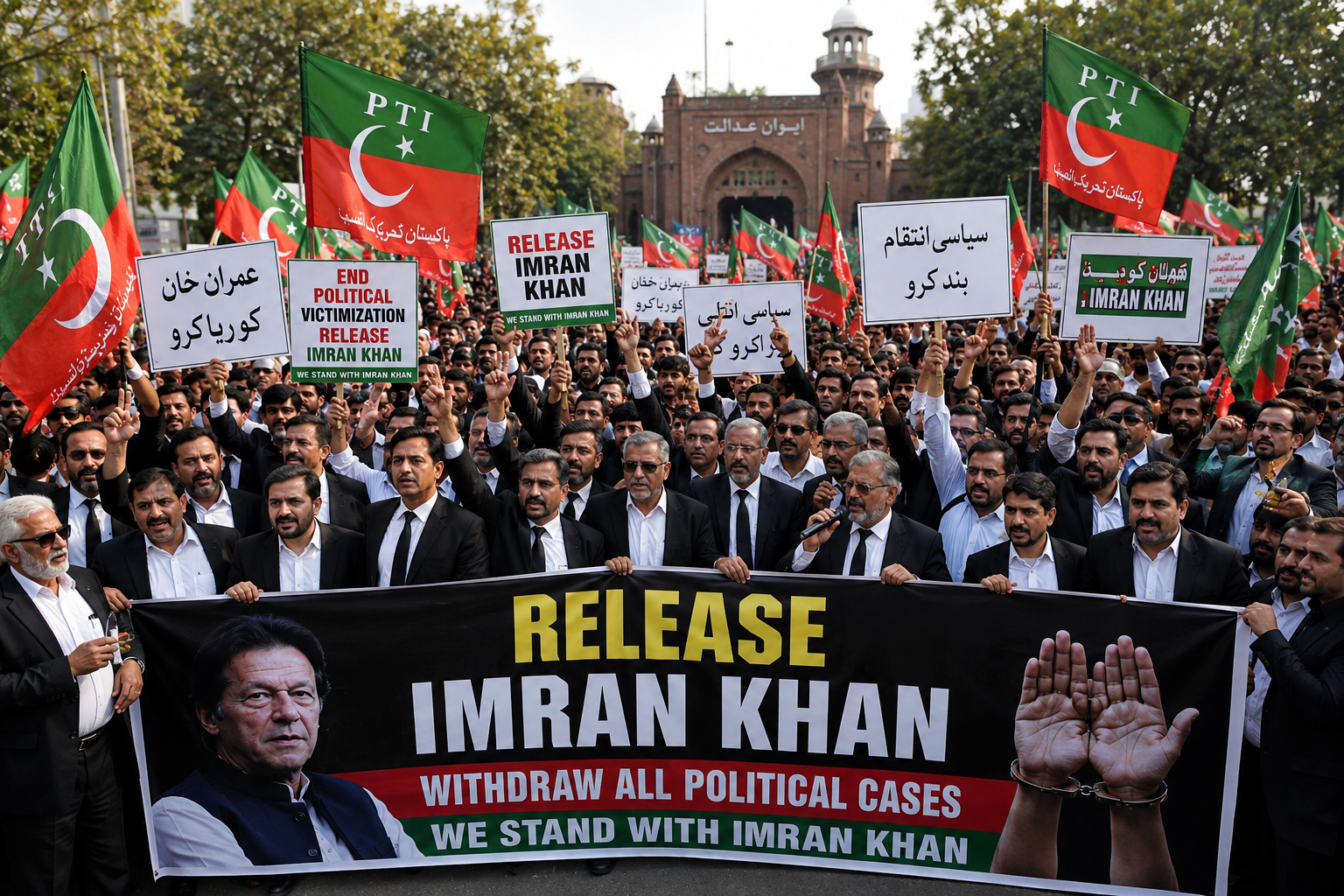
Supporters of Pakistan Tehreek-e-Insaf (PTI) staged demonstrations across Pakistan on Wednesday to mark three years since former prime minister Imran Khan was first taken into custody. One of the largest gatherings was held outside Lahore’s Aiwan-e-Adl, where members of the Insaf Lawyers Forum, along with party leaders, lawyers and supporters, demanded Khan’s release and called for an end to the legal cases against him.

The Lahore protest took place on Upper Mall, outside the court complex, where participants waved party flags and chanted slogans in support of the jailed PTI founder. Demonstrators maintained that the cases filed against Imran Khan were politically motivated and urged authorities to withdraw all charges. They insisted that the legal proceedings were intended to prevent him from participating in politics, an allegation that both the government and state institutions have consistently denied, maintaining that the judicial process is independent and conducted in accordance with the law.

Several senior PTI leaders, including Salman Akram Raja, Ali Aijaz Butta, Rehan Dar and Shaukat Basra, addressed the gathering. During their speeches, they called for Imran Khan’s immediate release and vowed that the party would continue its campaign until he was freed and all cases against him were resolved. Protesters repeatedly chanted slogans demanding his release and described the demonstrations as peaceful expressions of public support.

The Lahore rally formed part of a nationwide protest campaign announced by PTI to coincide with the anniversary of Khan’s imprisonment. Similar demonstrations were organised in different cities across Pakistan, while overseas PTI supporters also held rallies in several countries to express solidarity with the former prime minister and draw attention to his continued detention.

Imran Khan has remained in prison since August 2023, when he was convicted in a corruption case. Since then, he has faced several additional prosecutions and convictions, including cases involving corruption allegations, the disclosure of official secrets and marriage-related legal matters. Khan and his party have consistently rejected all accusations, describing them as politically driven. The government, however, maintains that the cases are being handled through an independent legal process and rejects claims of political interference.

Wednesday’s demonstrations were the latest in a series of protests organised by PTI following Khan’s arrest. The party has repeatedly demanded his release and called for fresh general elections. Previous protests have at times faced restrictions imposed by authorities, while some demonstrations have also witnessed incidents of violence and clashes.

Separately, PTI leader Shaukat Basra alleged that journalist Natiq Rehan was assaulted by Punjab Police while reporting on the Lahore protest. According to Basra, the journalist was attacked despite performing his professional duties. Punjab Police did not immediately issue a response to the allegation.

A day before the nationwide protests, Amnesty International issued a statement urging Pakistani authorities to safeguard Imran Khan’s fundamental rights as his detention entered its third year. Isabelle Lassee, the organisation’s Acting Regional Director for South Asia, expressed concern over what Amnesty described as the denial of a fair trial, prolonged solitary confinement, and restrictions on family visits, legal representation and medical care.

The human rights organisation also called on the authorities to respect the right to peaceful assembly and avoid arbitrary action against demonstrators. It further urged that Imran Khan and his wife, Bushra Bibi, be granted regular access to their families, legal counsel and appropriate medical treatment in accordance with international human rights standards.

Similar Posts

  • |

    Nepra approves Rs21.4bn investment plan for SEPCO, sets loss targets

    The National Electric Power Regulatory Authority (Nepra) has approved a Rs21.436 billion Distribution Investment Plan (DIP) for Sukkur Electric Power Company Limited (SEPCO), covering its transmission and distribution operations for the five-year Multi-Year Tariff (MYT) period from fiscal year 2025-26 through FY2029-30. Along with the investment plan, the regulator has also set provisional targets for transmission and distribution (T&D) losses, while directing SEPCO to improve project execution, digitalise operational data and strengthen its planning and monitoring mechanisms. SEPCO had originally requested approval for an investment programme worth Rs90.563 billion. However, after Nepra raised several questions regarding the proposed projects, costs, utilisation of existing assets and investment requirements, the power utility submitted revised details. Following the revisions, SEPCO reduced its proposed investment to Rs40.191 billion in information submitted to Nepra on June 19, 2026. The revised proposal included changes in investment priorities and network development requirements based on updated demand projections. The company also revised project costs in light of the latest Purchase Orders (POs). Nepra, however, found substantial weaknesses in SEPCO’s original investment submission. According to the regulator, the initial proposal did not adequately reflect actual field conditions and lacked a comprehensive assessment of the utility’s requirements. It also contained gaps in cost calculations and information concerning the utilisation of existing assets. The regulator stressed that future investment planning should be based on reliable data, realistic demand assessments and proper evaluation of existing infrastructure rather than relying solely on projected requirements. Low utilisation of previous investments raises concerns Nepra also raised concerns over SEPCO’s ability to execute projects and utilise approved investment funds effectively. During the previous control period, SEPCO had been allowed investment of Rs39.509 billion. However, the company utilised only Rs14.231 billion, representing around 36% of the approved amount. The regulator said the low utilisation rate raised questions about SEPCO’s project implementation capacity and the efficiency with which approved investments were being converted into infrastructure and operational improvements. Delays were particularly noted in projects falling under the STG head. Nepra attributed the slow progress to difficulties in acquiring land, procurement-related problems and inadequate coordination between relevant departments. The regulator indicated that these issues point towards weaknesses in project planning, monitoring of milestones and implementation. SEPCO asked to improve network performance Nepra has also expressed concern over SEPCO’s technical and operational performance, particularly its transmission and distribution losses and reliability indicators, including the System Average Interruption Frequency Index (SAIFI) and System Average Interruption Duration Index (SAIDI). The authority directed the company to strengthen preventive maintenance programmes, improve energy accounting and introduce stronger system controls. These measures, Nepra said, are necessary to reduce losses, improve reliability and ensure consumers receive a more stable electricity supply. SEPCO’s approved investment priorities include expansion and strengthening of its 132-kilovolt network, augmentation of the existing system to accommodate future electricity demand and the deployment of modern technologies. The proposed technological improvements include Advanced Metering Infrastructure (AMI), Supervisory Control and Data Acquisition (SCADA) systems and Geographic Information System (GIS)-based mapping. These technologies are expected to support better monitoring of the electricity network, improve operational efficiency and enhance safety and service quality. Independent consultant made mandatory In a significant condition attached to the investment approval, Nepra has required SEPCO to engage an independent third-party consultant to review and validate its future investment plans before they are submitted to the regulator. SEPCO has also been instructed to prepare detailed Terms of Reference (ToRs) for the consultant and obtain Nepra’s approval before beginning the procurement process. The regulator said independent validation would help ensure that future investment proposals are based on actual requirements and that proposed projects are properly justified. Nepra pushes digitalisation of SEPCO operations Nepra has further directed SEPCO to move away from manual data-management practices and establish a comprehensive digital system for its operational information. The authority noted that dependence on manual systems can result in errors, delays and inefficient decision-making. A fully integrated digital platform, according to Nepra, would allow the company to monitor its network in real time, improve demand forecasting and make investment decisions based on reliable data. The regulator has also adopted a dynamic approach to the approved investment programme, allowing adjustments on an annual basis as well as a mid-term review. SEPCO has been directed to submit its mid-term review by December 2027. The review will include updated electricity demand forecasts, progress on approved projects and the company’s financial performance. Provisional T&D loss target set at 16.31% For FY2025-26 and FY2026-27, Nepra has approved a provisional T&D loss target of 16.31% for SEPCO. The target includes a 1% allowance related to law-and-order conditions. The regulator has also ordered SEPCO to commission an independent third-party assessment of its T&D losses through an international consultant or consortium. The study is required to be completed within nine months, with the timeline taking effect from January 7, 2026, in accordance with the tariff rebasing decision. Nepra warned that failure to submit the required independent study within the prescribed period could result in the regulator applying benchmark loss levels. Under the benchmark framework, the applicable levels would include 5.32% high-tension (HT) losses and 1.85% low-tension (LT) losses, resulting in total distribution losses of 7.17%. Transmission losses would be set at 1%, while the overall technical loss ceiling would remain within the range of 8% to 10%.

  • | |

    Karachi braces for drizzle as humidity persists

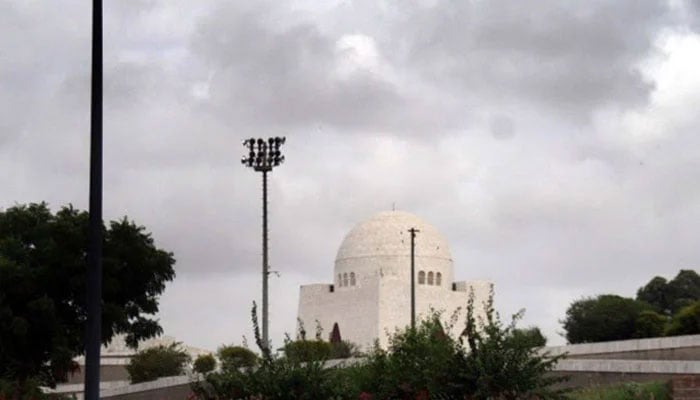
    KARACHI: Karachi is expected to experience partly cloudy and humid weather over the next 24 hours, with the Meteorological Department forecasting a possibility of light drizzle in the city tonight. Temperatures are likely to remain between 32 and 34 degrees Celsius during the day, while the minimum temperature recorded over the past 24 hours was 27.5°C. The weather is expected to remain humid as sea breezes continue to sweep across the city from the southwest at around 15 kilometres per hour. The humidity level has been recorded at 75 per cent. Residents may experience some relief from the persistent heat if the forecast drizzle occurs, although the overall weather is expected to remain warm and humid.

  • | | |

    Rain-bearing weather system ends in Karachi, monso…

    The weather system responsible for recent rainfall in Karachi has weakened and dissipated, bringing an end to the latest spell of rain in the city. However, the Pakistan Meteorological Department (PMD) has indicated that Karachi is still likely to receive more monsoon showers during the month of August. On Monday, the city experienced stronger-than-usual southwesterly sea breezes, helping to keep temperatures slightly lower than the previous day. According to the PMD, wind speeds reached 42 kilometers per hour, while the maximum temperature settled at 34.4°C, around 0.8°C lower than the previous day’s reading. Meteorologists said the strong sea breeze played a key role in moderating daytime temperatures despite the prevailing humid conditions. Residents continued to experience warm and sticky weather, although the increased wind speed provided some relief from the heat. The Early Warning Center has forecast partly cloudy, hot, and humid conditions for the next three days. During this period, daytime temperatures are expected to range between 34°C and 36°C, with no immediate indication of widespread rainfall. According to PMD spokesperson and Deputy Director Anjum Nazir, the weather system that triggered recent rain across Karachi has now completely weakened. He noted that it is too early to determine whether a developing low-pressure area over the Bay of Bengal will have any direct impact on Karachi’s weather. Despite the end of the current system, weather experts remain optimistic about the city’s monsoon outlook. They expect Karachi to receive additional rainfall during August as seasonal monsoon activity continues across the region. The timing and intensity of future rain spells will depend on the movement and strength of upcoming weather systems. Karachi typically experiences high humidity during the monsoon season, and changing weather patterns can result in sudden showers even after dry periods. Residents are advised to stay updated with official weather forecasts, especially if they plan to travel or participate in outdoor activities. The latest update offers a brief pause in rainfall while highlighting that the monsoon season is far from over. Authorities will continue to monitor developing weather systems and issue forecasts as conditions evolve, helping residents prepare for any significant changes in the coming weeks.

  • | |

    Petrol price reduced slightly as diesel price incr…

    The State Bank of Pakistan (SBP) has decided to keep its benchmark policy interest rate unchanged at 11.50% following the latest meeting of its Monetary Policy Committee (MPC). The decision reflects the central bank’s cautious approach as it continues to monitor inflation, economic growth, and global developments that could influence Pakistan’s financial outlook. The policy rate has remained at 11.50% since April 27, with policymakers choosing to maintain the current stance despite recent inflationary pressures. During the meeting, the committee reviewed key economic indicators, inflation trends, and the potential impact of geopolitical tensions in the Middle East on Pakistan’s economy. Speaking at a press conference, SBP Governor Jameel Ahmad said inflation had eased significantly during the first half of the fiscal year. Average inflation between July and February stood at 5.5%, remaining within the lower end of the central bank’s target range. However, rising global oil prices, higher food costs, and increased shipping expenses triggered by tensions in the Middle East placed renewed pressure on prices in the following months. According to the central bank, inflation rose to 11.7% in May before easing slightly to 11.1% in June. The governor expressed optimism that inflation would begin to decline again from July, with a more noticeable improvement expected after September. For the current fiscal year, the SBP projects average inflation to remain close to 7%. The governor also highlighted improvements in Pakistan’s broader economic indicators. He noted that the country’s current account deficit narrowed significantly during the previous fiscal year to $139 million, while the current fiscal year’s deficit is expected to remain between zero and one percent of GDP. Strong remittance inflows have played a major role in supporting the external sector, with overseas Pakistanis expected to send around $44 billion this fiscal year, up from $41.6 billion in the previous year. The SBP also expects exports to improve gradually with government support, stronger performance from the information technology sector, and growth in food exports. While imports have increased, improved external financing has helped meet the country’s payment needs without creating excessive pressure on foreign exchange reserves. Pakistan’s foreign exchange reserves are projected to remain around $20.2 billion by the end of the year, while the country is expected to meet its external debt obligations through a combination of repayments, refinancing arrangements, and continued financial inflows. The central bank reaffirmed that it will continue to monitor domestic and international economic developments before making any future changes to monetary policy.

  • | |

    Petrol pumps shut nationwide from August 15

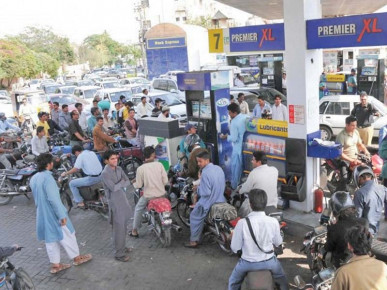
    Pakistan’s petrol dealers have announced an indefinite nationwide strike from August 15 after talks with the government failed to resolve their concerns over the fuel pricing mechanism. The Pakistan Petroleum Dealers Association (PPDA) said on Thursday that negotiations with government representatives did not produce a breakthrough. The association maintained that its major demand regarding the daily adjustment system for petroleum product prices remained unresolved. PPDA Chairman Malik Khuda Baksh said the government was unwilling to change the existing mechanism during the talks. However, officials reportedly assured the dealers that an increase of Rs1.34 in their profit margin would be considered, subject to approval from the federal cabinet. The assurance failed to convince the dealers to withdraw their strike call. According to the association, its delegation left the negotiations following the unsuccessful talks and travelled back to Karachi. An emergency meeting of the PPDA executive committee was also convened to discuss the situation. The association subsequently reaffirmed its decision to shut petrol pumps across the country from Saturday morning. The proposed shutdown could create difficulties for motorists and businesses if it continues for an extended period, particularly as another major transport strike is already affecting movement of goods across Pakistan. The All Pakistan Goods Transport Alliance has also decided to continue its nationwide strike after negotiations with the federal and Sindh governments failed to resolve transporters’ demands. Alliance President Malik Shahzad Awan said the strike had entered its sixth day and would continue until the government formally accepted the transporters’ demands and issued the required notification. He accused both the federal and provincial governments of failing to take the issue seriously. Awan said transporters would not end their protest merely on the basis of verbal assurances. At the same time, he appealed to transporters to remain peaceful and avoid blocking roads during the protest. The petrol dealers had initially announced their planned shutdown earlier this week after giving the government a 72-hour deadline to address their concerns. They had warned that the existing fuel pricing arrangement was making it increasingly difficult for dealers to operate their businesses. The dispute centres largely on the mechanism used to determine petroleum prices and the margins available to petrol pump owners. Earlier, another petrol dealers’ body had postponed a planned nationwide shutdown following talks with the petroleum ministry. The dealers had called for reforms to the fuel pricing mechanism and expressed concerns over delays in implementing previously agreed measures.

  • | | |

    Iraq orders investigation into alleged drone attac…

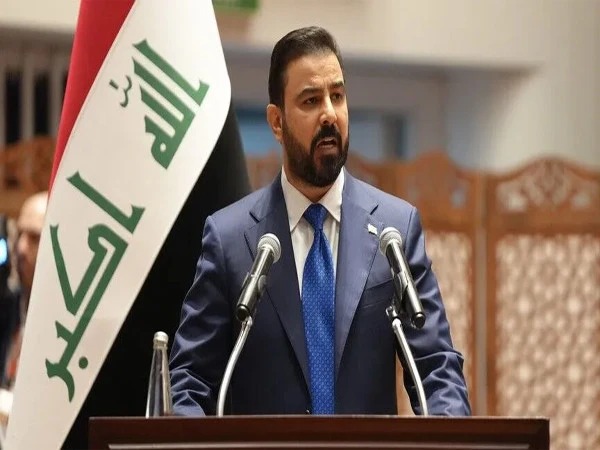
    The Iraqi government has launched an official investigation into allegations that drones used in attacks on Saudi Arabia were launched from Iraqi territory. The move follows information shared by Saudi authorities and reflects Baghdad’s commitment to ensuring its land is not used to threaten neighboring countries. According to a statement issued by the office of the Iraqi prime minister, Prime Minister Ali Al-Zaidi, who also serves as the Commander-in-Chief of the Iraqi Armed Forces, has instructed the relevant security agencies to conduct a comprehensive investigation into the reported drone incidents. The government said the investigation will examine all evidence and information provided by Saudi Arabia to determine whether Iraqi territory was used in planning or carrying out the attacks. Officials emphasized that the inquiry will be conducted thoroughly and that any individuals or groups found responsible will face legal action in accordance with Iraqi law. Baghdad reiterated its constitutional commitment to maintaining good relations with neighboring countries and stressed that it does not permit its territory to be used for attacks against friendly or brotherly nations. The statement underlined Iraq’s policy of respecting the sovereignty and security of regional partners while working to preserve stability across the Middle East. The Iraqi government also described its relationship with Saudi Arabia as strong and based on mutual respect and cooperation. Officials said they are determined to protect these ties and will not allow any actions that could damage bilateral relations or create unnecessary regional tensions. The investigation comes at a time when security concerns remain high across the Middle East. Governments in the region continue to cooperate on intelligence sharing and border security to address threats posed by cross-border attacks and other security challenges. By launching the investigation promptly, Iraqi authorities aim to clarify the circumstances surrounding the alleged drone attacks and demonstrate their commitment to accountability. The government has pledged to take appropriate legal measures if the investigation confirms that Iraqi territory was misused for hostile activities. The latest development also highlights the importance of regional cooperation in addressing shared security concerns. Iraq has reaffirmed that maintaining peaceful relations with neighboring states remains a key priority and that it will continue working with Saudi Arabia and other regional partners to promote stability, strengthen diplomatic ties, and prevent incidents that could escalate tensions in the region. The move follows information shared by Saudi authorities and reflects Baghdad’s commitment to ensuring its land is not used to threaten neighboring countries. According to a statement issued by the office of the Iraqi prime minister, Prime Minister Ali Al-Zaidi, who also serves as the Commander-in-Chief of the Iraqi Armed Forces, has instructed the relevant security agencies to conduct a comprehensive investigation into the reported drone incidents. The government said the investigation will examine all evidence and information provided by Saudi Arabia to determine whether Iraqi territory was used in planning or carrying out the attacks. Officials emphasized that the inquiry will be conducted thoroughly and that any individuals or groups found responsible will face legal action in accordance with Iraqi law. Baghdad reiterated its constitutional commitment to maintaining good relations with neighboring countries and stressed that it does not permit its territory to be used for attacks against friendly or brotherly nations. The statement underlined Iraq’s policy of respecting the sovereignty and security of regional partners while working to preserve stability across the Middle East. The Iraqi government also described its relationship with Saudi Arabia as strong and based on mutual respect and cooperation. Officials said they are determined to protect these ties and will not allow any actions that could damage bilateral relations or create unnecessary regional tensions. The investigation comes at a time when security concerns remain high across the Middle East. Governments in the region continue to cooperate on intelligence sharing and border security to address threats posed by cross-border attacks and other security challenges. By launching the investigation promptly, Iraqi authorities aim to clarify the circumstances surrounding the alleged drone attacks and demonstrate their commitment to accountability. The government has pledged to take appropriate legal measures if the investigation confirms that Iraqi territory was misused for hostile activities. The latest development also highlights the importance of regional cooperation in addressing shared security concerns. Iraq has reaffirmed that maintaining peaceful relations with neighboring states remains a key priority and that it will continue working with Saudi Arabia and other regional partners to promote stability, strengthen diplomatic ties, and prevent incidents that could escalate tensions in the region.

Leave a Reply

Your email address will not be published. Required fields are marked *