iraq orders investigation
| | |

Iraq orders investigation into alleged drone attac…

The Iraqi government has launched an official investigation into allegations that drones used in attacks on Saudi Arabia were launched from Iraqi territory. The move follows information shared by Saudi authorities and reflects Baghdad’s commitment to ensuring its land is not used to threaten neighboring countries.

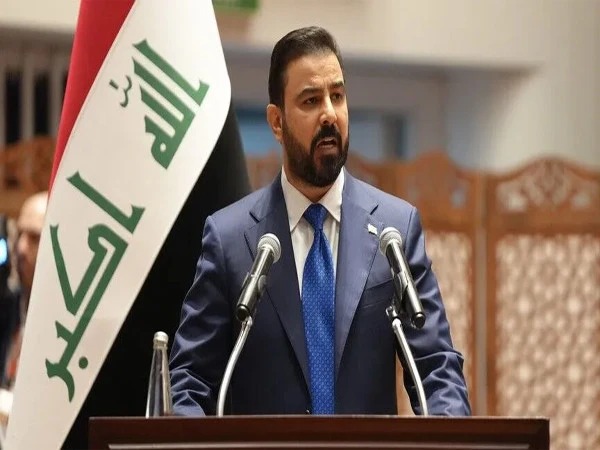
According to a statement issued by the office of the Iraqi prime minister, Prime Minister Ali Al-Zaidi, who also serves as the Commander-in-Chief of the Iraqi Armed Forces, has instructed the relevant security agencies to conduct a comprehensive investigation into the reported drone incidents.

The government said the investigation will examine all evidence and information provided by Saudi Arabia to determine whether Iraqi territory was used in planning or carrying out the attacks. Officials emphasized that the inquiry will be conducted thoroughly and that any individuals or groups found responsible will face legal action in accordance with Iraqi law.

Baghdad reiterated its constitutional commitment to maintaining good relations with neighboring countries and stressed that it does not permit its territory to be used for attacks against friendly or brotherly nations. The statement underlined Iraq’s policy of respecting the sovereignty and security of regional partners while working to preserve stability across the Middle East.

The Iraqi government also described its relationship with Saudi Arabia as strong and based on mutual respect and cooperation. Officials said they are determined to protect these ties and will not allow any actions that could damage bilateral relations or create unnecessary regional tensions.

The investigation comes at a time when security concerns remain high across the Middle East. Governments in the region continue to cooperate on intelligence sharing and border security to address threats posed by cross-border attacks and other security challenges.

By launching the investigation promptly, Iraqi authorities aim to clarify the circumstances surrounding the alleged drone attacks and demonstrate their commitment to accountability. The government has pledged to take appropriate legal measures if the investigation confirms that Iraqi territory was misused for hostile activities.

The latest development also highlights the importance of regional cooperation in addressing shared security concerns. Iraq has reaffirmed that maintaining peaceful relations with neighboring states remains a key priority and that it will continue working with Saudi Arabia and other regional partners to promote stability, strengthen diplomatic ties, and prevent incidents that could escalate tensions in the region.
The move follows information shared by Saudi authorities and reflects Baghdad’s commitment to ensuring its land is not used to threaten neighboring countries.

According to a statement issued by the office of the Iraqi prime minister, Prime Minister Ali Al-Zaidi, who also serves as the Commander-in-Chief of the Iraqi Armed Forces, has instructed the relevant security agencies to conduct a comprehensive investigation into the reported drone incidents.

The government said the investigation will examine all evidence and information provided by Saudi Arabia to determine whether Iraqi territory was used in planning or carrying out the attacks. Officials emphasized that the inquiry will be conducted thoroughly and that any individuals or groups found responsible will face legal action in accordance with Iraqi law.

Baghdad reiterated its constitutional commitment to maintaining good relations with neighboring countries and stressed that it does not permit its territory to be used for attacks against friendly or brotherly nations. The statement underlined Iraq’s policy of respecting the sovereignty and security of regional partners while working to preserve stability across the Middle East.

The Iraqi government also described its relationship with Saudi Arabia as strong and based on mutual respect and cooperation. Officials said they are determined to protect these ties and will not allow any actions that could damage bilateral relations or create unnecessary regional tensions.

The investigation comes at a time when security concerns remain high across the Middle East. Governments in the region continue to cooperate on intelligence sharing and border security to address threats posed by cross-border attacks and other security challenges.

By launching the investigation promptly, Iraqi authorities aim to clarify the circumstances surrounding the alleged drone attacks and demonstrate their commitment to accountability. The government has pledged to take appropriate legal measures if the investigation confirms that Iraqi territory was misused for hostile activities.

The latest development also highlights the importance of regional cooperation in addressing shared security concerns. Iraq has reaffirmed that maintaining peaceful relations with neighboring states remains a key priority and that it will continue working with Saudi Arabia and other regional partners to promote stability, strengthen diplomatic ties, and prevent incidents that could escalate tensions in the region.
Similar Posts

  • | |

    Pakistani hostages make desperate appeal after 100…

    Pakistani crew members held by Somali pirates have made another emotional appeal for government help. The hostages have been in captivity for more than 100 days. They are seeking urgent action for their release. The crew members are aboard the MT Honour 25. The Palau-flagged oil tanker was hijacked by armed pirates off the coast of Puntland, Somalia, on April 21. The vessel was carrying between 17 and 19 crew members. Ten of them are Pakistani nationals. Seven Indonesians, an Indian and a Sri Lankan are also among those being held. In newly released video messages, several hostages appeared weak and unwell. They appealed to the Pakistani government to intervene. Yasir Khan, one of the Pakistani hostages, said several crew members had fallen ill. He said they were facing difficulties in obtaining medicines. Khan urged Prime Minister Shehbaz Sharif to take immediate action. He also appealed to Foreign Minister Ishaq Dar and Maritime Affairs Minister Junaid Anwar Chaudhry. He asked the authorities to secure their release before their health situation became more serious. Khan also appealed to Jamaat-i-Islami chief Hafiz Naeemur Rehman. He requested him to continue efforts for the hostages. Another hostage, Hussain Yousuf, said more than 100 days had passed since their capture. He said the crew still had no clear information about when they would be released. Yousuf appealed to the prime minister and Chief of Defence Forces and Army Chief Field Marshal Asim Munir to intervene. He warned that further delays could lead to serious consequences. The crew has released several messages since the hijacking. In previous appeals, the hostages reported shortages of food, clean water and medicines. Their deteriorating condition has increased concerns among their families. The pirates have reportedly demanded a ransom of around $3 million. However, no confirmed breakthrough has been reported in negotiations. Pakistan’s Foreign Office said the government was closely monitoring the situation. Foreign Office spokesperson Tahir Andrabi said several government departments were involved in efforts to secure the crew’s release. The process includes the Ministry of Human Rights, the Ministry of Maritime Affairs and other relevant agencies. Andrabi said the case was particularly difficult because the hostages were being held in an autonomous region of Somalia. He said local tribal structures and influential figures had also complicated negotiations with the pirates. Pakistan, he added, remained in contact with the Somali government and relevant authorities. It was also coordinating with international organisations involved in the matter. The Foreign Office expressed sympathy with the families of the hostages. It said their concerns were understood and that the case remained a priority. The government said all possible efforts were being made to secure the crew’s release and bring them home safely. The case has also been complicated by uncertainty surrounding the ownership of the tanker. Questions remain over who legally owns the vessel. The person previously believed to be its owner was later reportedly identified as a middleman who had helped hire the crew. Meanwhile, the latest distress messages have renewed pressure for urgent action.

  • | | | |

    Trump reportedly left Türkiye on secret flight amid Iran threat

    US President Donald Trump reportedly left Türkiye on a military aircraft during a covert security operation last month. The move was allegedly made because of an Iranian assassination threat. According to a report citing US officials and people familiar with the operation, Trump initially boarded the older Air Force One aircraft in Ankara. Television cameras were present as he departed. Minutes later, however, Trump was reportedly moved to a smaller Air Force C-32A aircraft. The transfer was allegedly carried out using an airport catering truck. The unusual operation was designed to keep Trump’s actual location hidden. The report said the information was not shared publicly. Some journalists and even members of the White House staff were also reportedly unaware of the change. Trump had travelled to Ankara for a NATO summit held on July 7 and 8. The reported security threat emerged during his visit. The operation reportedly took place shortly after US forces resumed strikes against Iran. The strikes followed the collapse of negotiations between Washington and Tehran. White House Communications Director Steven Cheung defended the security arrangements. He said the aircraft being used as Air Force One had been equipped with advanced security measures. Cheung said the president faced threats from several enemies of the United States. He added that the administration was using all available measures to protect him. The reported security operation comes as tensions between the United States and Iran remain high. Trump has continued to leave open the possibility of stronger military action against Tehran. Oil prices rise amid escalation fears Global oil prices also climbed sharply as markets reacted to Trump’s latest comments on Iran. Brent crude rose around 5% on Monday. It reached about $87.70 per barrel, its highest level in nearly two weeks. US West Texas Intermediate crude also gained around 5.1%. It reached approximately $82.20 per barrel. The rise came after Trump said the United States still had the option of taking stronger action against Iran. Trump told reporters that Washington had the capability to pursue a major escalation if it decided to do so. His comments increased uncertainty over efforts to end the conflict. They also raised concerns about the future of shipping through the Strait of Hormuz. Trump has claimed that the strategic waterway is open and fully under US control. However, he acknowledged that Iran could still attempt to interfere with maritime traffic. Iran has taken a different position. Tehran has reportedly demanded that the US lift its blockade before it agrees to fully restore the waterway’s operations. The Strait of Hormuz is one of the world’s most important energy routes. Large volumes of crude oil and liquefied natural gas pass through the waterway. Any prolonged disruption could therefore put further pressure on global energy prices. Oil prices were also supported by reports of attacks involving energy infrastructure in Saudi Arabia and a tanker operated by Abu Dhabi National Oil Company. Meanwhile, US crude reserves remained under pressure. Stocks in the Strategic Petroleum Reserve fell below 300 million barrels last week. The reserve was reported at around 298.7 million barrels. It was the lowest level recorded since 1983.

  • |

    IMF-backed move to End EPZ local sales Quota sparks concerns over textile recycling, jobs

    KARACHI: A proposed move to withdraw the permission allowing factories operating in Pakistan’s Export Processing Zones (EPZs) to sell up to 20% of their output in the domestic market has triggered concerns among exporters, investors and international textile-recycling organisations, who fear the policy could disrupt investment, employment and a wider global circular-economy supply chain. The controversy has emerged after Pakistan committed to the International Monetary Fund (IMF) that it would amend the existing rules governing EPZs and prohibit sales from these zones into the domestic tariff area. According to the IMF’s latest programme review, Pakistan has committed to introduce amendments aimed at ending domestic sales by EPZ-based manufacturers. The report states that the amendments were to be placed before the federal cabinet for approval by September 2026. However, exporters and industry representatives have challenged the move, arguing that the existing 80:20 arrangement was part of the investment and regulatory framework under which many businesses established operations in the zones. Under the existing system, EPZ manufacturers can export 80% of their production while selling up to 20% in Pakistan after payment of applicable duties and taxes. Industry stakeholders say the domestic-sale provision is particularly important for products that have limited commercial demand in overseas markets. The proposed abolition has also attracted attention in the United States because American companies supply raw materials and used textiles to Pakistani businesses operating in the EPZs. The US-based Secondary Materials and Recycled Textiles Association (SMART) has approached IMF Mission Chief to Pakistan Iva Petrova, warning that eliminating the domestic-sales provision could have consequences extending beyond Pakistan’s industrial sector. The association has argued that Pakistan occupies an important position in the global textile circular economy, particularly in the sorting, grading, reuse and recycling of used textiles collected in North America and Europe. According to SMART, used clothing and textile materials collected in the United States, Canada and European countries are sent to Pakistan, where they are sorted and graded before being channelled into reuse, recycling, manufacturing and affordable consumer markets. The association has warned that ending the 80:20 mechanism could reduce demand for recovered textiles and place downward pressure on their prices. Such a development, it said, could weaken textile-collection programmes in North America and reduce the income generated by charitable organisations from donated clothing. Organisations including Goodwill, the Salvation Army and St Vincent de Paul depend partly on revenues generated from donated goods to finance a range of social programmes, including workforce training, employment assistance, food support, recovery services, youth programmes and housing assistance. SMART has therefore cautioned that a major disruption in Pakistan’s used-textile market could have financial consequences for charitable organisations in North America, with potential losses running into tens of millions of dollars. The association also warned that reduced demand for used textiles could ultimately result in a greater volume of reusable material being sent to landfills or incinerators rather than being recycled or reused. US exporters raise objections US exporters have also expressed concern over the proposed withdrawal of the 20% domestic-sale allowance. Their concerns are significant because American suppliers form part of the upstream supply chain that feeds Pakistani recycling and manufacturing units located in EPZs. Abid Iqbal, representing Nashmia Industries, said during Express News programme The Review that US exporters had communicated their concerns to Pakistani counterparts. According to Iqbal, US exporters had also been told informally that the IMF itself had not initiated the proposal to remove the 20% quota. The development has consequently raised questions within the industry about how the condition was incorporated into Pakistan’s commitments under the IMF programme and whether sufficient consultation took place with affected stakeholders. Industry representatives have also warned of possible legal and contractual disputes, maintaining that the 20% domestic-sales provision was part of the regulatory and investment framework under which businesses made their investment decisions. They argue that companies entered the zones with an understanding that they would be able to export the bulk of their production while disposing of a limited portion in the domestic market after meeting applicable tax and customs obligations. EPZ rules and proposed amendment The Export Processing Zones Authority (EPZA) operates under the legal framework established through the EPZ Act of 1980. The law enables the establishment of export processing zones with approval from the federal government. Under Rule 228(5) of the Customs Rules, EPZ-based factories have historically been allowed to sell up to 20% of their production in the domestic tariff area, subject to applicable duties and taxes. A higher limit of 30% had been applicable to the Resalpur area. EPZA has reportedly forwarded a proposal to the Federal Board of Revenue (FBR) to eliminate the 20% quota from October 1 in line with the IMF-related commitment. The proposal, however, has exposed differences within the government over the scope and interpretation of the IMF condition. Proceedings of the Senate Standing Committee on Industries held last month indicate that the Ministry of Industries and Production maintained that abolition of the 20% domestic-sales quota was not included in the original IMF agreement. According to the ministry’s position, the initial IMF requirement was restricted to preventing the introduction of new fiscal incentives, including tax concessions and subsidies, rather than immediately eliminating the existing domestic-sales mechanism. The ministry has reportedly argued that the later addition of the quota-related condition requires further clarification. Assessment of EPZs The issue is also linked to an assessment of Special Economic Zones (SEZs) and EPZs that Pakistan was required to undertake under the IMF programme. The government engaged consultancy firm AT Kearney to assess the zones and determine whether their operations were creating distortions in the domestic market. According to records presented before the Senate Standing Committee on Industries, the assessment completed last year concluded that EPZs were not creating significant market distortions. The report, according to the parliamentary proceedings, did not recommend withdrawing existing fiscal incentives. The issue has therefore become a point of discussion between government officials and the IMF as authorities seek to reconcile the lender’s programme requirements with

  • | |

    A once-wary Hollywood slowly warms to AI

    Once fiercely resistant to artificial intelligence, Hollywood is increasingly embracing the technology through major studio deals, strategic investments, and streamlined production workflows—all while insisting that core human storytelling remains at the heart of filmmaking. ​The shift marks a noticeable departure from early industry hostility, which peaked during the 2023 labor strikes when actors and writers rallied against algorithmic displacement, copyright infringement, and digital likeness exploitation. Early generative AI tools also suffered from obvious visual glitches, such as distorted hands and unnatural lip movements, reinforcing widespread skepticism among creative professionals. ​However, recent technological leaps and major corporate investments have rapidly normalized AI integration. A major catalyst occurred in March when Netflix acquired Ben Affleck’s AI startup, InterPositive, for $587 million to enhance production workflows. Soon after, Lionsgate acquired a stake in AI video generator Runway, and Google invested in independent powerhouse A24. Executives note that AI has now been utilized across approximately 300 Netflix titles—primarily during post-production and for complex visual effects sequences—allowing creative teams to work faster and more efficiently. ​Rather than replacing human performers, filmmakers are pivoting toward “hybrid” and non-linear production techniques. Director Jon Erwin’s production company, The Wonder Project, partnered with AI platform Luma to create hyper-realistic, real-time background environments without traditional green screens or motion-capture suits, leaving actors free to perform naturally. Their recent release Young Washington, starring Oscar winner Ben Kingsley, successfully demonstrated the commercial viability of this approach by grossing over $40 million against a $20 million budget. ​While major legacy studios remain cautious, industry experts suggest that broader adoption is inevitable. Visual effects creators and directors emphasize that while AI serves as an amplifying tool for scope, scale, and pre-visualization, the essential emotional connection between actor, director, and camera remains irreplaceable.

  • | | |

    Shaheen Shah Afridi leaves Lanka Premier League du…

    Pakistan’s star fast bowler Shaheen Shah Afridi has returned home after leaving the Lanka Premier League (LPL) due to personal reasons. The left-arm pacer, who was representing the Kandy Royals in the tournament, departed from the event before its conclusion, ending his participation in the ongoing competition. During his time in the Lanka Premier League, Shaheen Afridi was also involved in a disagreement with his team management over his exclusion from the playing squad for a match on July 19. The incident reportedly created tension between the player and the franchise during the tournament. In the match against the Colombo Capitals, Shaheen Afridi was informed that he would be used as an impact player. However, his name was not included in the official team sheet submitted for the match. The omission reportedly upset the Pakistani fast bowler, who expressed his disappointment over the situation. The issue was later addressed after the Kandy Royals management apologized to Shaheen Afridi. Following the apology and discussions with the team officials, the fast bowler returned to action and participated in subsequent matches for the franchise. Despite the disagreement, Shaheen Afridi continued to contribute to his team’s campaign in the tournament. He played six matches in the Lanka Premier League and took seven wickets, demonstrating his effectiveness as one of the leading fast bowlers in the competition. Shaheen Afridi is regarded as one of Pakistan’s most important international cricketers and has established himself as a key figure in the national team’s bowling attack. Known for his pace, swing, and ability to take early wickets, he has represented Pakistan across all formats of international cricket and has earned recognition as one of the world’s top fast bowlers. His participation in overseas T20 leagues has provided him with valuable experience and exposure against international players. The Lanka Premier League was another opportunity for him to showcase his skills and maintain competitive form ahead of future international assignments. The Kandy Royals management’s decision to apologize after the team sheet controversy helped resolve the matter, allowing Shaheen Afridi to continue his involvement in the tournament. However, his early departure due to personal reasons means that he will no longer be available for the remaining matches of the league. The exact nature of the personal reasons behind Shaheen Afridi’s return to Pakistan has not been disclosed. His decision comes as part of his personal commitments, and there has been no official indication that his departure is related to any injury or cricketing issue. Fans and cricket analysts have closely followed Shaheen Afridi’s performances in the tournament, particularly because of his reputation as a match-winning bowler. His seven wickets in six matches highlighted his continued ability to perform at the highest level in franchise cricket. The Pakistan Cricket Board and supporters will now be hoping that Shaheen Afridi returns refreshed and prepared for upcoming international challenges. His fitness, form, and availability remain important factors for Pakistan’s future cricketing plans.

  • |

    Pakistan Stock Exchange ends week lower as KSE-100 falls 1,325 points

    The Pakistan Stock Exchange (PSX) witnessed a relatively volatile trading week, with the benchmark KSE-100 Index ending lower after losing 1,325 points over the five trading sessions. The benchmark index settled at 180,104 points at the close of the week, compared with its previous level, reflecting a decline in investor sentiment and selling pressure across the market. During the week, the KSE-100 Index moved within a range of 2,568 points. The index touched a weekly high of 182,347 points, while its lowest level stood at 179,778 points, highlighting fluctuations in trading activity throughout the period. Despite the overall decline in the benchmark, trading activity remained substantial. A total of approximately 3.41 billion shares changed hands during the week, with the combined traded value reaching around Rs152 billion. The market’s overall capitalization also came under pressure during the reporting period. According to the weekly market data, total market capitalization declined by approximately Rs107 billion, falling to Rs20.13 trillion. Market participants continued to monitor developments affecting domestic economic conditions, investor confidence and broader market sentiment. The movement in the benchmark index reflected a cautious approach among investors, with fluctuations in buying and selling activity contributing to the week’s overall performance. The decline in the KSE-100 Index comes despite continued interest in equities, as investors assessed market valuations and economic indicators while keeping a close watch on developments that could influence the direction of the stock market in the coming sessions.

Leave a Reply

Your email address will not be published. Required fields are marked *