court summons former
|

Court summons former Lebanon Central Bank governor

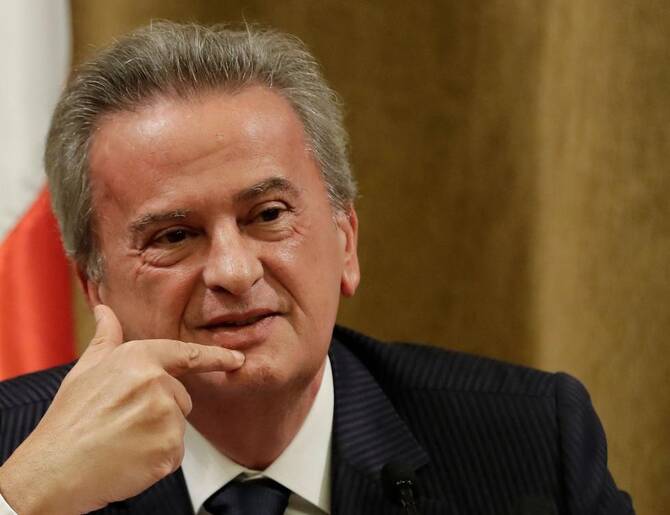
Lebanese judicial authorities have issued a court summons for former Central Bank governor Riad Salameh after he failed to appear at a scheduled hearing in a high-profile financial corruption case, marking another major development in one of the country’s most closely watched legal investigations.

According to a judicial source, prosecutors ordered security forces to locate Salameh at his residence and escort him to Beirut’s Palace of Justice after he did not attend Thursday’s hearing. The case stems from a complaint filed by current Central Bank Governor Karim Soueid, who has accused his predecessor of embezzlement of institutional funds, illicit enrichment and money laundering.

Salameh, 76, led Lebanon’s central bank from 1993 until July 2023, overseeing the country’s monetary policy for three decades. Once regarded as one of the Middle East’s most influential financial figures, he later became a central figure in the controversy surrounding Lebanon’s devastating financial collapse.

The Central Bank has alleged that it was the victim of an embezzlement scheme involving several hundred million euros, claiming the funds were misappropriated by Salameh with assistance from individuals close to him. However, the former governor has repeatedly denied all allegations, insisting he has committed no wrongdoing.

The first hearing in the case took place in June at Salameh’s home because of his reported health condition, where he was questioned by an investigating judge. On Thursday, former banking executive Samir Hanna appeared before the court in connection with the same investigation, while Salameh remained absent.

The former governor has faced growing legal pressure both inside Lebanon and abroad. He was arrested in September 2024 over allegations that he embezzled $44 million from the institution he once headed. After spending a year in detention, he was released on bail exceeding $14 million, one of the largest ever imposed in Lebanon, but remains banned from leaving the country.

International investigations have also intensified. French authorities issued an international arrest warrant for Salameh in 2023, while prosecutors in Paris continue examining allegations linked to cross-border financial transactions. In May this year, the Swiss subsidiary of British banking giant HSBC was formally indicted as investigators examined claims that it may have facilitated financial activities connected to the former governor.

The latest court summons underscores Lebanon’s efforts to pursue accountability for the country’s prolonged financial crisis. As investigations continue at home and overseas, the case against Salameh remains one of the most significant legal battles tied to Lebanon’s economic collapse, with many citizens viewing it as a crucial test of the country’s commitment to transparency and judicial reform.
Similar Posts

  • | |

    PM, Dar hand over official gifts to Toshakhana

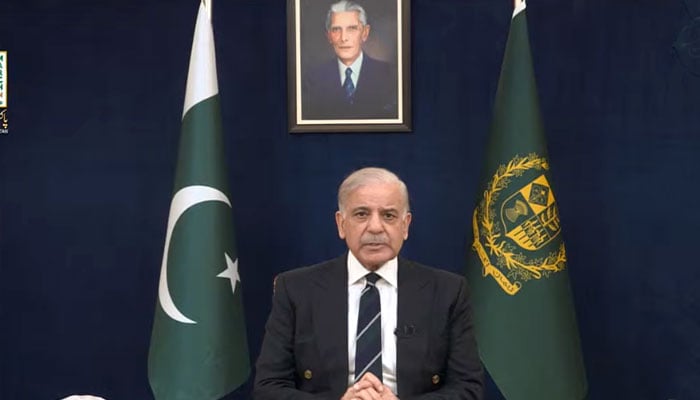
    Prime Minister Shehbaz Sharif, Deputy Prime Minister Ishaq Dar and several other senior government officials received a total of 21 official gifts during the April to June period, according to the latest Toshakhana record released by the Cabinet Division. The official record shows that the prime minister and deputy prime minister were among the senior officeholders who received gifts from foreign dignitaries and officials during official meetings and state engagements. In line with the Toshakhana rules, both leaders deposited all the gifts with the Toshakhana instead of retaining them. According to the Cabinet Division, Prime Minister Shehbaz Sharif received several gifts, including a decorative sugar bowl, a luxury pen, a model of Masjid-e-Nabawi (PBUH), a shield and a tie. He also received a model of the Chinese Space Station, a commemorative cup, a wristwatch and another shield during separate official engagements. The records further show that Deputy Prime Minister Ishaq Dar received a Chinese leather belt, a model of an Egyptian statue and a pair of cufflinks as official gifts. These items were also submitted to the Toshakhana in accordance with the prescribed procedure. The Cabinet Division said all gifts received by the prime minister and deputy prime minister have been deposited with the Toshakhana. It added that the process of assessing the monetary value of the gifts is currently in progress. The estimated value will be determined before the record is finalized, following the standard rules governing official gifts received by public officeholders. The Toshakhana maintains a record of gifts presented to government officials by foreign leaders, diplomats and visiting delegations during official visits and meetings. Under the applicable rules, such gifts must be declared and deposited, while their valuation is carried out through the prescribed official mechanism.

  • Thailand Accuses Cambodia of Laying Fresh Landmines, Violating Treaty

    BANGKOK – The Thai Mine Action Centre (TMAC) has accused Cambodian forces of continuing to lay PMN-2 anti-personnel landmines along the shared border, alleging a blatant violation of the Ottawa Convention and recent peace agreements. The condemnation follows a landmine explosion that severely injured a Thai soldier on Saturday. Thai Soldier Loses Leg to Landmine […]

  • | |

    Kylie Kelce shuts down pregnancy rumors with blunt…

    Kylie Kelce shuts down pregnancy rumors with blunt message: ‘Stop it’ By Amna Malik Kylie Kelce has made one thing crystal clear—she is not expecting baby number five. The 34-year-old podcast host and wife of former NFL star Jason Kelce addressed the growing speculation during the latest episode of her Not Gonna Lie podcast after online rumors claimed she was pregnant again. Kylie, who shares four daughters with Jason, did not hold back as she responded to the claims with her trademark honesty and humor.  “We have four kids,” Kylie said before delivering a direct message to those fueling the rumors. “Stop trying to get me to have more. Stop it. That’s between me and my husband and my motherf—ing uterus.”  The rumors reportedly gained traction after photos from the family’s recent vacation in Paris showed Kylie wearing a loose-fitting dress. Some social media users quickly began speculating that the outfit was hiding a baby bump. Kylie, however, rejected those assumptions and explained why people should stop commenting on women’s bodies.  During the podcast, Kylie stressed that wearing comfortable or oversized clothing should never be viewed as proof that someone is pregnant. She argued that people need to stop making assumptions based solely on appearance, adding that such comments can be hurtful and intrusive.  Kylie and Jason Kelce are parents to four daughters: Wyatt, Elliotte, Bennett and Finnley. The couple has often shared funny and heartfelt parenting moments with fans, but Kylie made it clear that decisions about expanding their family remain private.  This is not the first time Kylie has spoken out against pregnancy speculation. In the past, she revealed that she had experienced a miscarriage before welcoming her children, making false pregnancy rumors especially painful. Her previous comments encouraged people to think twice before asking women whether they are expecting, as they never know what someone may be going through behind the scenes.  Fans praised Kylie for addressing the rumors so openly, with many applauding her for speaking about body image and personal boundaries. Her candid remarks also sparked a wider conversation online about respecting women’s privacy and avoiding unnecessary speculation about pregnancy. For now, Kylie says her family is complete with four children, and she hopes people will stop turning every outfit or vacation photo into another round of baby rumors. Her message was simple, firm and impossible to misunderstand: decisions about having children belong to her and Jason alone—not the internet. 

  • |

    Former Turkish PM Davutoglu quits politics

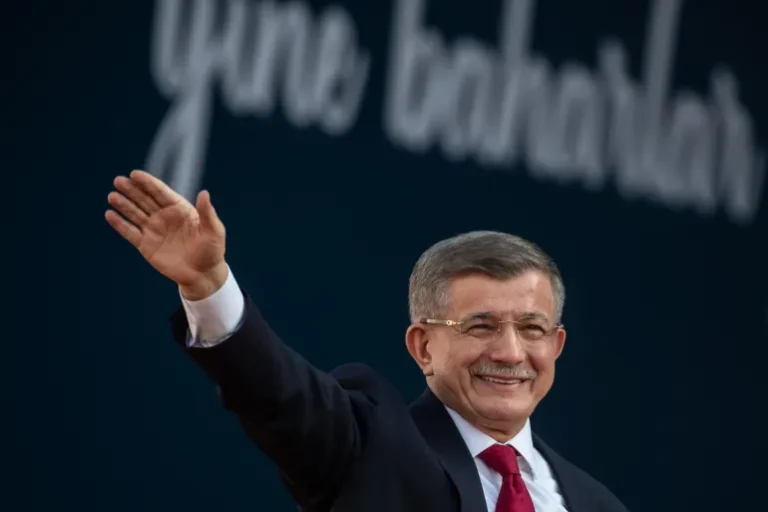
    ISTANBUL: Former Turkish prime minister Ahmet Davutoglu has announced his decision to step away from politics and dissolve his Future Party, ending a decades-long political career that saw him rise as one of President Recep Tayyip Erdogan’s closest allies before becoming a vocal critic. Davutoglu announced the decision this week, saying he wanted to distance himself from what he described as a “dirty political climate” in Turkiye. He said the move was not a surrender but a step taken on moral grounds and a call for a broader rethink of politics. The former premier criticized issues including corruption, favouritism and weak accountability, saying these challenges had damaged public trust. He also raised concerns over the country’s presidential system introduced in 2018, arguing that it weakened checks and balances. Davutoglu began his career as an academic before entering politics. Born in Konya in 1959, he studied political science and international relations at Bosphorus University and later earned a doctorate in the same field. Before joining government, he worked as a professor and wrote several books on foreign policy. His academic reputation helped him become a key figure in shaping Turkiye’s international strategy. After the Justice and Development Party (AKP) came to power in 2002, Davutoglu joined the party and became a close adviser to Erdogan. He played an influential role in developing the “zero problems with neighbours” foreign policy approach, which aimed to improve relations with regional countries. He served as Turkiye’s foreign minister from 2009 to 2014 and became prime minister after Erdogan moved to the presidency in 2014. However, relations between the two leaders gradually weakened due to differences over governance, foreign policy and the distribution of political power. In 2016, Davutoglu resigned as prime minister and was replaced by Binali Yildirim. Three years later, Davutoglu left the AKP and launched the Future Party, presenting it as a conservative alternative focused on democracy and reforms. However, the party struggled to gain major public support and received a small share of votes in the 2024 elections.

  • | | |

    Kuwait’s foreign minister arrives in Pakistan on…

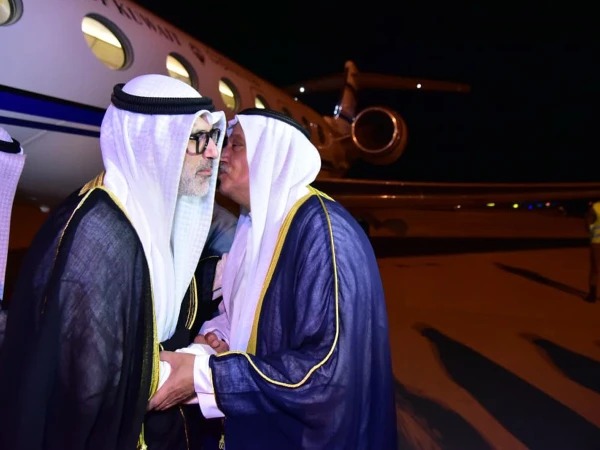
    Kuwait’s Foreign Minister, Sheikh Jarrah Jaber Al-Ahmad Al-Sabah, arrived in Islamabad on Tuesday for an official visit to Pakistan at the invitation of Deputy Prime Minister and Foreign Minister Ishaq Dar. The visit highlights the longstanding friendship and growing diplomatic cooperation between the two countries. According to Pakistan’s Ministry of Foreign Affairs, the Kuwaiti foreign minister received a warm welcome upon his arrival at Islamabad International Airport. Additional Secretary for the Middle East, Zahid Hussain, welcomed the distinguished guest on behalf of the Pakistani government. During the visit, senior officials from both countries are expected to hold high-level discussions on a wide range of bilateral, regional, and international issues of mutual interest. The talks will focus on strengthening political cooperation, expanding economic partnerships, enhancing trade and investment opportunities, and promoting collaboration in various sectors. The Foreign Office stated that the visit reflects the deep-rooted brotherly relations between Pakistan and Kuwait, built on a shared history, mutual trust, and close cooperation over the years. Both nations have maintained friendly diplomatic ties and regularly work together on regional and international platforms. Pakistan and Kuwait enjoy strong cooperation in labor, energy, investment, and defense, while a large Pakistani expatriate community continues to contribute significantly to Kuwait’s economy. The leadership of both countries has repeatedly expressed a commitment to further strengthening these ties through increased engagement and high-level exchanges. Officials believe the visit will provide an opportunity to review the progress made in bilateral relations and identify new areas for collaboration. Discussions are also expected to cover regional developments in the Middle East and South Asia, as well as other international issues of common concern. The official visit underscores the shared commitment of Pakistan and Kuwait to enhancing diplomatic relations, promoting economic cooperation, and expanding strategic partnerships. It also reaffirms both countries’ desire to deepen engagement through regular dialogue and continued collaboration for mutual benefit. The outcomes of the meetings are expected to contribute to stronger Pakistan-Kuwait relations and pave the way for future initiatives aimed at boosting trade, investment, and regional cooperation.

  • | |

    Australian court denies India exclusive claim over…

    The Federal Court of Australia has thrown out an appeal by India’s Agricultural and Processed Food Products Export Development Authority seeking to register Basmati as a certification trademark for rice in the country, a ruling Pakistan’s Ministry of Commerce welcomed in a statement issued Wednesday. The Indian authority, known as APEDA, had originally applied to register Basmati as a certification trademark for rice sold in Australia. A delegate of the Australian Registrar of Trade Marks rejected that application on December 22, 2022, finding that the word Basmati could not distinguish rice certified by APEDA from Basmati rice legitimately grown and sold by other producers. APEDA then appealed the decision to the Federal Court of Australia, which has now upheld the original rejection. Pakistan’s commerce ministry said the ruling confirms its longstanding position that Basmati functions as a geographical indication tied to a historically recognized growing region spanning parts of both Pakistan and India, rather than a term any single country can claim exclusively. The ministry noted that the original registrar’s decision had already acknowledged that Basmati rice is grown in Pakistan as well, and that Pakistani traders hold an equally legitimate claim to use the name. By dismissing APEDA’s appeal, the ministry said, the Federal Court affirmed those earlier findings. The ministry added that the Australian court also ordered APEDA to cover the respondent’s legal costs, either through agreement or a formal assessment. Islamabad described the ruling as a significant setback to Indian efforts to secure exclusive international rights over the Basmati name. The ministry said no single national authority can claim sole ownership of the term while excluding producers and exporters who have an equally valid right to use it, adding that Pakistan has consistently pushed back against Indian attempts to monopolize the Basmati name and has worked with relevant institutions and industry stakeholders to protect the interests of the country’s growers, millers and exporters. According to the ministry, the outcome safeguards the commercial and intellectual property interests of Pakistan’s Basmati sector and preserves the right of Pakistani producers to market authentic Basmati rice in the Australian market. Officials said they intend to keep protecting Basmati as a core part of Pakistan’s agricultural heritage and export identity, pursuing similar protections in other foreign jurisdictions on the basis of the rice variety’s historical origin, established reputation and distinctive qualities. Commerce Minister Jam Kamal Khan praised ministry officials and other stakeholders involved in the case, calling the ruling an important win for Pakistan’s agricultural heritage, commercial interests and export identity. India and Pakistan have long disputed the origins of Basmati rice, which both countries grow extensively. The rice traces its roots to the Punjab region, which was split into East Punjab, now part of India, and West Punjab, now part of Pakistan, following partition in 1947. In 2006, the European Union formally recognized Basmati as a joint product of both countries under its special geographical indication rules.

Leave a Reply

Your email address will not be published. Required fields are marked *