late gcu physicist8217s

Late GCU physicist’s family endows Rs14m for scholarships

LAHORE: The family of the late Prof. Faizan-ul-Haq, a distinguished physicist and an unsung hero of Pakistan’s nuclear programme, has donated Rs14 million to establish 14 golden scholarships at Government College University (GCU) Lahore.

According to details, the endowment will fund 14 scholarships, worth Rs1 million each, for BS and MPhil students at the university’s Centre for Advanced Studies in Physics (CASP) and Department of Economics. The scholarships were sponsored by Mr. Rizwan-ul-Haque Rana and his family to honour his brother, Prof. Faizan-ul-Haq, who devoted his 60-year career to teaching and research at GCU-CASP.

Prof. Faizan-ul-Haq, who passed away on Nov 23, 2023, completed his MSc in Physics from GC Lahore in 1962. He was a direct student of Prof. Dr. Rafi Muhammad Chaudhary, the founder of CASP and widely regarded as the father of nuclear physics in Pakistan.

Prof. Faizan played a pivotal role in training 45 Old Ravians who were part of the 150-member expert team that launched Pakistan’s atomic programme on May 28, 1998. He also prepared the PC-1 for the installation of a second Pelletron Accelerator at CASP in 2009.

GCU Vice Chancellor Prof. Dr. Muhammad Omer Chaudhry commended the family’s philanthropy, stating: “Prof. Faizan-ul-Haq’s legacy goes beyond his immense scientific contributions; it lives on in the generations of students he mentored. This generous endowment ensures that his mission of empowering young scholars will continue uninterrupted. We are deeply grateful to Mr. Rizwan-ul-Haque Rana and Mrs. Eloisa Rana for this noble cause, which will profoundly support our talented students in CASP.”

The scholarships at GCU Lahore have been categorised into the Prof. Faizan Ul Haq Golden Scholarship, the Shah Begum & Ghulam Dastgir Golden Scholarship, and the Mr. Rizwan Ul Haque Rana & Mrs. Eloisa Rana Golden Scholarship.

In addition to the endowment at GCU Lahore, the family has also established six golden scholarships, backed by a Rs6 million endowment, for physics students at Government College Women University (GCWU) Sialkot.

Prof. Dr. Shazia Bashir, former GCU Vice Chancellor and current Vice Chancellor of GCWU Sialkot, said Prof. Faizan believed in combining theoretical physics with real hands-on experience, training students in techniques ranging from glass blowing and spot welding to fabricating nuclear detectors.

“He was an unsung hero who produced skilled, trained, talented, and well-groomed students,” Dr. Bashir stated. “This tremendous contribution to such a noble cause confirms that his good work will continue shaping the futures of thousands of students.”
Similar Posts

  • | |

    50,000 cusecs surge through Ravi River

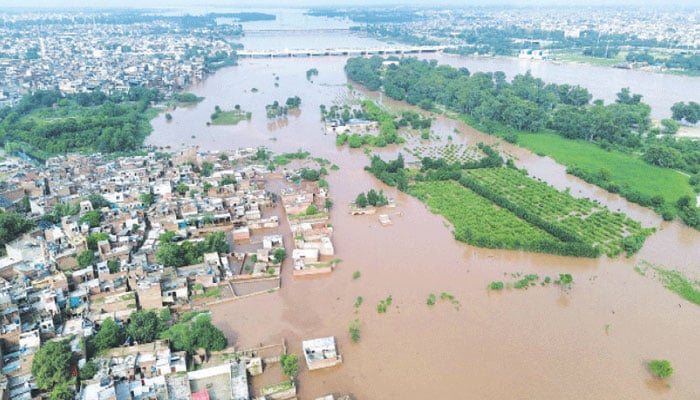
    A low-level flood has been recorded in the Ravi River near Kamalia after water levels increased at the Mil Fatyana point. Authorities have stepped up monitoring and emergency preparations as floodwater continues to move downstream. According to the Sub-Divisional Officer (SDO) Irrigation, around 50,000 cusecs of water is flowing through the Mil Fatyana section of the Ravi River. Officials are closely monitoring the river to assess any further rise in water levels and to ensure timely action if conditions worsen. The district administration has established flood relief camps in several vulnerable areas. The camps have been set up in Mil Fatyana, Kot Pathana, Adda Kalaira, Mauza Tara, Haveli Mai Safuran, Kot Karam Shah and Dedi. These facilities are intended to provide temporary shelter, food and emergency assistance to residents if evacuations become necessary. As part of efforts to improve disaster preparedness, Punjab has launched drone-based flood monitoring for the first time. The technology is being used to monitor river conditions, identify vulnerable locations and issue early warnings before floodwaters reach populated areas. Officials believe the system will help improve response times and reduce the impact of flooding. The rising water has already affected nearby agricultural land. Standing crops in Mil Fatyana, Khan Da Chak, Jhalar Sigla, Shahabal Shah, Basti Peepal Wala and Mauza Darsana have been submerged, raising concerns about crop losses and the financial impact on local farmers. The Irrigation Department has urged people living along the river belt to remain alert and cooperate with local authorities. Residents in low-lying areas have been advised to move to safer locations as a precaution against any further increase in water levels. Officials said surveillance of the Ravi River will continue around the clock. Rescue teams and local administration remain on standby to respond quickly if the flood situation intensifies. Authorities have also appealed to the public to follow official advisories and avoid unnecessary movement near the river until conditions become safe.

  • | | |

    PM Shehbaz orders scientific system to assess tax …

    Prime Minister Shehbaz Sharif has directed the Federal Board of Revenue (FBR) to develop a scientific and comprehensive method to assess tax potential in different sectors of the economy. The new system is aimed at improving tax collection. It will also help identify sectors with untapped revenue potential. The government wants to strengthen tax administration and reduce tax evasion. The prime minister issued the directives during a meeting on FBR reforms in Islamabad on Wednesday. He directed the FBR to work with the power sector to identify businesses and individuals involved in the informal economy. Authorities will also identify those suspected of avoiding taxes. Shehbaz instructed officials to take legal action against people and businesses found involved in tax evasion. The prime minister said improvements in the FBR’s monitoring system were already producing results. He pointed out that sugar production data had matched FBR records for the first time in Pakistan’s history. He described the development as an important sign of improved monitoring and tracking. Shehbaz praised FBR Chairman Rashid Mahmood Langrial and his team for their efforts. He also appreciated taxpayers and businesses that were following tax laws. The prime minister said the government had provided maximum possible support to export-oriented and domestic industries. He said the government would continue facilitating businesses while ensuring compliance with tax regulations. He directed the FBR chairman and senior officials to spend the first week of every month in Karachi. They will meet business representatives and address their concerns. Shehbaz also ordered the expansion of digital production monitoring. He directed officials to make tracking systems operational in the textile, beverages, steel, poultry, edible oil and ghee, and tyre sectors by December. He also stressed that appointments and transfers within the FBR must be made strictly on merit. The prime minister praised the new system for evaluating officers. He said merit and transparency must remain central to FBR reforms. He directed authorities to prepare a list of high-performing officers. The best-performing officials will be considered for awards on Independence Day. Shehbaz also ordered an immediate third-party audit of customs bonded warehouses. The audit will examine the warehouses and identify possible irregularities. Officials will then be required to take corrective measures where necessary. The meeting was informed about progress on production tracking systems and human resource reforms. Officials said tracking systems were already fully operational in the sugar, cement, tobacco, tiles and fertiliser sectors. Work in five additional sectors was also nearing completion. These sectors have an estimated tax potential of more than Rs700 billion. Officials said tracking systems were also being developed for nine other production sectors. These sectors are estimated to have an additional tax potential of around Rs560 billion. The prime minister directed authorities to complete indirect tax tracking across the production sector by the end of the year. The meeting also reviewed reforms in the FBR’s workforce. Newly recruited officers are receiving specialised training. Existing officers are also undergoing training. The programmes have been designed around merit and performance. Officials said the training modules were aligned with international standards and Pakistan’s tax requirements. A new performance evaluation system has also been introduced. Under the system, high-performing officers can receive recognition. Officials who fail to meet performance standards can face penalties. The government has also appointed 957 third-party auditors. The move is intended to improve transparency and strengthen tax-related processes. Recruitment of 280 goods evaluators is also under way. The evaluators will work under the customs faceless assessment system. The meeting also discussed measures to reduce unnecessary tax disputes. A Case Scrutiny Committee is being established for this purpose. The committee will determine whether tax cases should proceed based on their merits. Officials also provided an update on Alternative Dispute Resolution Committees. By June 2026, 152 out of 377 applications had been resolved within 90 days. The process resulted in the recovery of Rs54 billion in tax revenue. Digital reforms also reviewed Prime Minister Shehbaz Sharif separately reviewed progress on the national digital vision. He ordered immediate measures to make the newly established Sky47 AI national central data centre available to federal government institutions. The prime minister said the initiative would help modernise government services. He said citizens would eventually be able to use a single digital identity to access multiple public services. These services could include government document verification, banking, healthcare and transfers. The prime minister said a central national data centre would bring information from federal institutions together. He said this would reduce the need for separate data centres. It could also help save public resources. Shehbaz said the national digital vision was important for building a more integrated society. He highlighted three key areas of the programme. These include the digital economy, digital citizen services and digital government services. He directed authorities to initially focus on health, agriculture, utilities, housing and small and medium-sized enterprises. The aim is to ensure that citizens begin receiving improved digital services as quickly as possible. Officials said digital implementation was already under way in agriculture, food, health, energy, housing and SMEs. Work has also started in 14 additional priority sectors. The housing component will introduce a central identification number for public and private properties. The SME component will create an integrated system of unique legal identities for businesses. The government believes these measures can improve transparency and economic activity. Shehbaz also ordered an early meeting of the National Digital Commission. The meeting will include key stakeholders. Provincial governments will also be consulted. The commission was established under the Digital Nation Pakistan Act 2025. It is chaired by the prime minister and includes the chief ministers of all provinces. The prime minister said consultation with federal and provincial institutions was essential for effective implementation. He also stressed the importance of international standards and global best practices.

  • 10 police personnel martyred in Hangu terror attack laid to rest

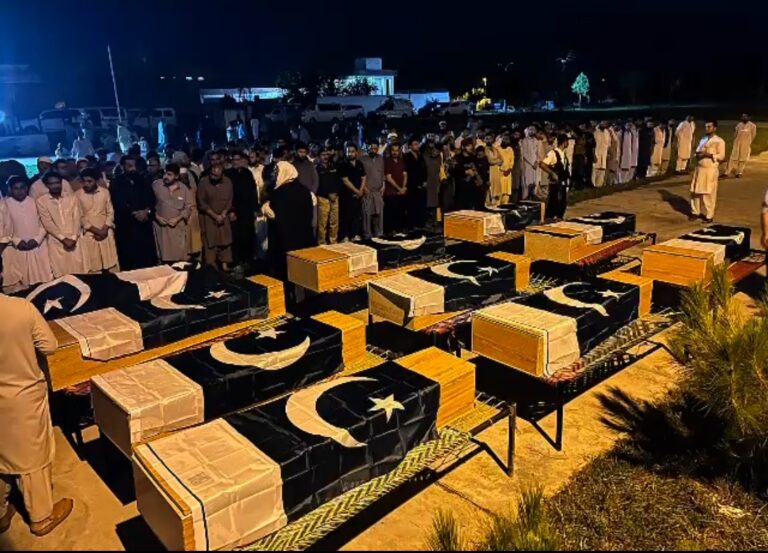
    HANGU: Ten police personnel, including DSP City Diyar Khan, who embraced martyrdom in the terrorist attack on the Khazina Banda Check Post in Hangu, were laid to rest with full state honours on Wednesday. The funeral prayers were offered at the Police Lines, Hangu, where senior police officers, government officials, fellow policemen and local dignitaries paid tribute to the fallen heroes. Commandant Police Training College Hangu, Shaukat Abbas, Deputy Commissioner Basir Ali Rehman, senior police officials and a large number of citizens attended the funeral. Floral wreaths were laid on the coffins of the martyrs in recognition of their supreme sacrifice. After the funeral, the bodies were dispatched to their native towns for burial with full official honours. According to police officials, terrorists belonging to the banned Fitna Al-Khawarij launched a coordinated assault on the Khazina Banda Check Post late Tuesday night. The attackers reportedly used quadcopters before laying siege to the check post. Police personnel stationed at the post resisted the assault bravely and continued fighting until the last moment. Upon receiving information about the attack, DSP City Diyar Khan led a reinforcement party comprising personnel from the Elite Force, RRF and Al-Barq Force. However, the police convoy was ambushed near the Khazina Banda Bridge, where heavily armed militants had already taken positions. Despite the surprise attack, the police fought courageously in defence of the country. The attack claimed the lives of 10 police personnel, including DSP Diyar Khan, while around 30 others were injured. Police officials said that during the exchange of fire, 12 to 15 terrorists were killed or wounded, and their accomplices reportedly carried the casualties towards the Zargari area. Following the incident, police and security forces launched a large scale search operation in the area. Funeral prayers for the martyrs were also held in their respective hometowns. Police Constable Nadeem was laid to rest in Sheikhan, while Constable Sanaullah was buried in Lachi, both with full state honours. Smartly turned out police contingents presented ceremonial salutes, and senior police officers, political leaders, social figures and hundreds of residents attended the funerals. Similarly, the funeral prayer of martyred police constable Abdul Saeed, a resident of Lower Dir, was offered in his native village Katan Pyan. District Police Officer Lower Dir Syed Talal Ahmad Shah and other police officers attended the ceremony and paid tribute to the martyr, assuring his family that the sacrifices of police personnel would never be forgotten. Meanwhile, Khyber Pakhtunkhwa Chief Minister Sohail Afridi paid a brief visit to Hangu and stayed at the Police Club, where he offered prayers for the departed souls of the martyrs and the early recovery of the injured personnel. However, the Chief Minister left Hangu without visiting the injured policemen undergoing treatment in hospital. His decision not to meet the wounded officers has drawn criticism and raised questions in various circles, as several injured personnel remain admitted to hospitals following the attack. In contrast, Additional IG Elite Force Muhammad Ali Gandapur visited the hospital to inquire about the health of the injured policemen. He was accompanied by Regional Commander Elite Hafiz Nazir and DSP CTD Imranuddin. Inspector General of Police Zulfiqar Hameed, Chief Secretary Shahab Ali Shah, and Special Assistant to the Chief Minister Tariq Saeed Marwat also visited the hospital and met the injured officers. Speaking to the media, IG Zulfiqar Hameed said the police fought the terrorists with exceptional courage for several hours despite facing drone attacks. He stated that 12 to 14 terrorists were killed during the operation and confirmed that all injured policemen were in stable condition and receiving the best available medical treatment. The IG announced that recommendations would be forwarded for gallantry awards, including the Tamgha-e-Shujaat, for the martyrs and other officers who displayed extraordinary bravery during the operation. He vowed that those responsible for the attack would be brought to justice. Chief Secretary Shahab Ali Shah praised the courage of the police force, saying their sacrifice demonstrated their unwavering commitment to protecting the people despite grave danger. He also appreciated the district administration and hospital management for ensuring timely medical treatment for the injured. Special Assistant Tariq Saeed Marwat reaffirmed the provincial government’s commitment to supporting the police force financially and administratively. He said the nature of terrorism had evolved with the use of drones, adding that the government was working to equip the police with anti drone technology and other modern capabilities to effectively counter emerging security threats.

  • | | |

    Karachi water crisis: Munem Zafar Khan says citize…

    Jamaat-e-Islami Karachi chief Munem Zafar Khan has expressed concern over the worsening civic problems in Karachi, saying that residents of the city are struggling even for basic necessities such as clean water. Addressing a press conference in Karachi, Munem Zafar Khan criticized the provincial government over issues related to water supply, electricity, infrastructure, and public services. He said that the city continues to face serious challenges despite repeated promises of improvement. The Jamaat-e-Islami leader claimed that shortly after the first drops of rain fell in Karachi, around 200 power feeders were affected, causing electricity disruptions in several areas. He questioned the performance of K-Electric, stating that despite receiving significant government support, improvements in power generation and transmission systems had not met public expectations. Munem Zafar Khan also criticized the Sindh government over urban infrastructure issues, claiming that Karachi lacks adequate facilities and that residents are facing difficulties due to shortages of essential services. He raised concerns about drainage problems and safety issues, stating that several people had lost their lives after falling into open gutters. He questioned why proper maintenance and safety measures had not been implemented despite repeated incidents. The JI Karachi chief also criticized the pace of development projects, claiming that funds allocated for drainage cleaning and infrastructure improvements were often utilized shortly before the monsoon season instead of through year-round planning. Discussing the city’s water shortage, he said that a significant portion of Karachi’s coastal population continues to face difficulties accessing water. He also raised concerns about delays in the K-IV water project, saying that the project remains crucial for meeting the city’s growing water needs. Munem Zafar Khan further criticized delays in road and transport projects, including water pipeline work and other development schemes, alleging that political interests and poor management have affected progress. He also mentioned health-related concerns, referring to reports of HIV cases among children and calling for accountability and improvements in healthcare systems. The Sindh government and other relevant authorities have faced repeated criticism from opposition parties over Karachi’s civic challenges, including water shortages, electricity problems, waste management, and infrastructure development. Karachi, Pakistan’s largest city and economic hub, continues to face pressure from rapid population growth and increasing demand for public services. Experts have emphasized the need for long-term planning, better governance, and effective implementation of development projects to address the city’s growing challenges.

  • |

    Maj Gen (R) Dr. Rajih Al-Baqami needs to go beyond defence diplomacy

    ISLAMABAD: For the second consecutive time, the Kingdom of Saudi Arabia has appointed a career military veteran as its ambassador to Islamabad, inaugurating a compelling new chapter in Pakistan-Saudi defense diplomacy. The recent designation of Major General (R) Dr. Rajih bin Tami Al-Baqami as the Saudi envoy comes at a pivotal geopolitical juncture. Smaller Gulf states like Qatar, Bahrain, and particularly Kuwait are increasingly turning their strategic gaze toward Riyadh for defense assurances. In response, Saudi Arabia has conspicuously integrated Pakistan into the its defensive calculus, both specifically within the Gulf and more broadly across the Middle East. This deepening collaboration signifies the beginning of the end of an era characterized by blind, unilateral reliance on the United States for regional security. Whether through multinational maritime security coalitions or trilateral defense pacts, Riyadh has unequivocally positioned Islamabad as a trusted strategic partner. Crucially, while Washington has not been entirely excluded from the new arrangements, the table that once seated only the US now accommodates Pakistan and Turkey’s president states that more seats will soon be filled. His hint is for Egypt. Turkey is playing a big game and Egypt is part of his plans for Sahel and Middle East. Moreover, Saudi Arabia has extended its supportive hand to facilitate Pakistan’s major defense agreements with Somalia, further expanding Islamabad’s footprint in Riyadh’s sphere of influence. This rapidly evolving landscape demands an exceptionally shrewd Saudi diplomat in Islamabad, given that intellectual powerhouses like the United States are unlikely to passively observe these seismic shifts in the affluent Gulf region. One could argue that defense diplomacy has cycled back to the fervor of the 1970s but the stark difference is that the towering strategic minds of that era, such as Zulfikar Ali Bhutto, Ardeshir Zahedi, and Henry Kissinger, are no longer among us and on the other hand China of today is 100 times more important than China of 1970s. However, Crown Prince Mohammed bin Salman has proven himself uniquely adept at this high-stakes game. Without jeopardizing ties with Washington, he has fortified relations with Beijing to an unprecedented degree; in fact, Riyadh is now expanding its commercial and strategic footprint with China more aggressively than with the US. According to the Saudi Foreign Ministry, Dr. Al-Baqami is among eight newly appointed ambassadors who recently took their oath before the Crown Prince in Jeddah. Despite this formal announcement, frequent winner of government awards for his services in journalism, Saleh Zaafir, curiously attributed the news to his “sources.” Meanwhile, leading AI chatbots and search engines like ChatGPT, DeepSeek, and Gemini draw a blank regarding the nature of Dr. Al-Baqami’s specific postings in Saudi diplomatic missions London and Jordan, which strongly suggests a classified, defense-oriented portfolio. Dr. Al-Baqami hails from the warrior Al-Baqami tribe, a lineage renowned for its formidable resilience and esprit de corps. Yet, a note of caution is urgently warranted. Misleading and unrealistic commentary regarding Saudi-Pakistan defense pacts has become rife. These agreements will not automatically neutralize Pakistan’s internal existential threats, specifically, the escalating bureaucratic corruption and spiraling crime rates. The historical precedent is sobering: the practice of deploying military officers to diplomatic roles is ancient, tracing back to the Roman and Byzantine empires, yet it has no inherent correlation with a nation’s prosperity or moral standing. Napoleon formalized this tradition in the pre-WWI era, but French military envoys failed to stave off famine and destitution in France. Subsequently, professional foreign ministries emerged, and bureaucrats, much like termites, consumed diplomacy from the inside, burying interstate relations beneath classified files. When opacity became the norm, civil society rebelled, giving rise to digital media and public diplomacy, a trend recently taken to extremes by former US President Donald Trump. For the new Saudi ambassador, public diplomacy will prove a formidable challenge. Although several Saudi-funded media outlets operate in Pakistan, they have largely been hijacked by populist scribes who have reduced them to ashes of sensationalism. Reclaiming these platforms from the clutches of journalistic mediocrity must be an immediate priority. Dr. Al-Baqami’s predecessor, Nawaf bin Malik Al-Maliki, a retired Saudi Navy officer, remained in Islamabad for nearly twelve years. Pakistan’s navy has historically played a pivotal role in the formation and training of the Saudi Naval Forces. Al-Maliki initially arrived as defense attaché in 2014, the very year MBS ascended to a high office before being appointed Defense Minister in 2015. When MBS became Crown Prince in 2017, Al-Maliki assumed the ambassadorship. He retained this position for a decade indicating that he was a trusted confidant of the Crown Prince. Intriguingly, Al-Maliki’s next posting is Algeria—a nation where military dominance permeates business and governance, ensnaring the country in poverty and bloodshed. As Algeria remains a Saudi ally, it is premature to forecast the trajectory of his new mission. To conclude, one can only hope that Major General (Retd) Dr. Rajih Al-Baqami’s tenure in Pakistan transcends the narrow confines of defense diplomacy. The true test of his legacy will lie in revitalizing public diplomacy, fostering people-to-people connections, and navigating the intricate socio-political fabric of Pakistan with the same dexterity he brings to the strategic chessboard.

  • | |

    Lahore police decide polygraph test for ASI in all…

    Lahore police have decided to conduct a polygraph test on an Assistant Sub-Inspector (ASI) in connection with allegations that a young woman was sexually assaulted at Ghaziabad police station. According to police sources, ASI Imran, who is currently in custody, will undergo the test as investigators continue examining the allegations and conflicting accounts surrounding the incident. Police said the alleged victim has already undergone a psychiatric assessment. The report from the assessment is expected to be received on August 18, while additional medical and forensic examinations have also been conducted. According to the police, ASI Imran has denied the allegations. He reportedly told investigators that he had brought the woman to the police station because she was allegedly involved in begging. He claimed that he did not assault her and instead provided her with food and counselled her before sending her away. Investigators said the initial medical report contains some ambiguity regarding the allegations of sexual assault. Police officials said a detailed report from the Punjab Forensic Science Agency (PFSA) is expected to provide further findings that could help investigators establish what happened. The case is being closely monitored by DIG Investigation Lahore Zeeshan Raza, who said he is personally supervising the investigation. He assured that anyone found responsible would be punished according to the law. Police sources said further tests of the alleged victim have also been conducted, but their results are still awaited. Investigators are expected to consider the medical evidence, forensic findings, statements and other available material before reaching conclusions about the case. The investigation is being conducted under the direction of DIG Investigation Lahore. A team comprising Ghaziabad Investigation Incharge Inspector Nasir Hameed, Gender Cell Incharge Inspector Fatima and Investigation Officer Faryal is working on the case. The decision to conduct a polygraph test on the detained ASI comes as investigators attempt to establish the facts surrounding the allegations. However, the reported initial medical ambiguity means that the final medical and forensic findings will be important in determining the direction of the investigation. Authorities have said that the investigation remains ongoing and that legal action will be taken on the basis of the evidence collected.

Leave a Reply

Your email address will not be published. Required fields are marked *