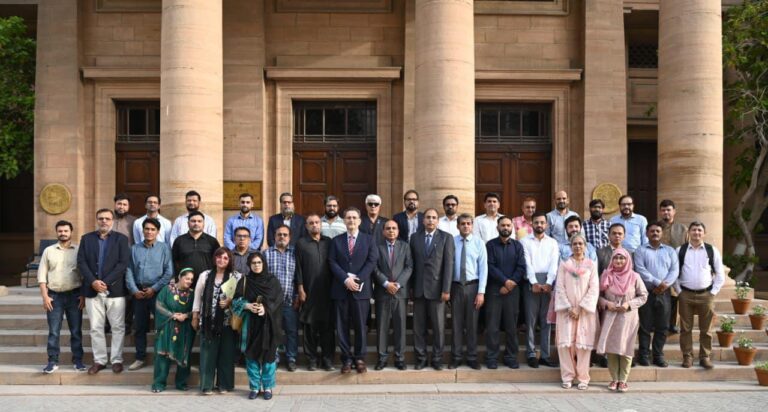
karachi water crisis
| | |

Karachi water crisis: Munem Zafar Khan says citize…

Jamaat-e-Islami Karachi chief Munem Zafar Khan has expressed concern over the worsening civic problems in Karachi, saying that residents of the city are struggling even for basic necessities such as clean water.

Addressing a press conference in Karachi, Munem Zafar Khan criticized the provincial government over issues related to water supply, electricity, infrastructure, and public services. He said that the city continues to face serious challenges despite repeated promises of improvement.

The Jamaat-e-Islami leader claimed that shortly after the first drops of rain fell in Karachi, around 200 power feeders were affected, causing electricity disruptions in several areas. He questioned the performance of K-Electric, stating that despite receiving significant government support, improvements in power generation and transmission systems had not met public expectations.

Munem Zafar Khan also criticized the Sindh government over urban infrastructure issues, claiming that Karachi lacks adequate facilities and that residents are facing difficulties due to shortages of essential services.

He raised concerns about drainage problems and safety issues, stating that several people had lost their lives after falling into open gutters. He questioned why proper maintenance and safety measures had not been implemented despite repeated incidents.

The JI Karachi chief also criticized the pace of development projects, claiming that funds allocated for drainage cleaning and infrastructure improvements were often utilized shortly before the monsoon season instead of through year-round planning.

Discussing the city’s water shortage, he said that a significant portion of Karachi’s coastal population continues to face difficulties accessing water. He also raised concerns about delays in the K-IV water project, saying that the project remains crucial for meeting the city’s growing water needs.

Munem Zafar Khan further criticized delays in road and transport projects, including water pipeline work and other development schemes, alleging that political interests and poor management have affected progress.

He also mentioned health-related concerns, referring to reports of HIV cases among children and calling for accountability and improvements in healthcare systems.

The Sindh government and other relevant authorities have faced repeated criticism from opposition parties over Karachi’s civic challenges, including water shortages, electricity problems, waste management, and infrastructure development.

Karachi, Pakistan’s largest city and economic hub, continues to face pressure from rapid population growth and increasing demand for public services. Experts have emphasized the need for long-term planning, better governance, and effective implementation of development projects to address the city’s growing challenges.
Similar Posts

  • | |

    Ishaq Dar, Kuwait FM discuss Middle East tensions

    Deputy Prime Minister and Foreign Minister Ishaq Dar met Kuwait’s Foreign Minister Sheikh Jarrah Jaber Al-Ahmad Al-Sabah in Islamabad on Wednesday. The two officials discussed the evolving situation in the Middle East. They also reviewed Pakistan-Kuwait relations and ways to strengthen bilateral cooperation. The Kuwaiti foreign minister is visiting Pakistan on an official trip. He arrived in Islamabad on Tuesday at the invitation of Ishaq Dar. According to Pakistan’s Foreign Office, Dar and Sheikh Jarrah held a warm and productive meeting at the Ministry of Foreign Affairs. The two sides reviewed the full range of bilateral relations between Pakistan and Kuwait. They reaffirmed their commitment to further strengthening the longstanding ties between the two countries. The officials described Pakistan and Kuwait as brotherly nations. Their relations are based on shared history, mutual trust and close cooperation. The meeting also focused on regional and international developments. The Middle East situation was a major part of the discussions. The two officials exchanged views on the rapidly changing regional environment. The visit comes at a time of heightened tensions in the Middle East. Pakistan has continued to engage with regional countries on developments affecting peace and stability. The Kuwaiti minister’s visit is also expected to provide an opportunity for both countries to deepen diplomatic coordination. The Foreign Office said the visit reflects the close and longstanding relationship between Islamabad and Kuwait. The visiting minister was received at Islamabad International Airport after arriving in the capital on Tuesday. Zahid Hussain, an additional secretary at the Foreign Office, welcomed him. The Kuwaiti foreign minister is also expected to meet Pakistan’s senior leadership during his stay. The visit comes amid discussions between Pakistan and Kuwait on expanding cooperation in several areas. Pakistan has reportedly been negotiating a broader defence arrangement with Kuwait. Energy cooperation and investment are also part of the discussions. The proposed cooperation could further expand the strategic and economic relationship between the two countries. Both sides have maintained close ties for decades. Kuwait has also remained an important partner for Pakistan in the Gulf region. The latest meeting between Dar and his Kuwaiti counterpart highlights the importance Islamabad attaches to its relations with Kuwait. It also signals continued diplomatic engagement between the two countries on regional and international issues.

  • | |

    Jamaat-e-Islami protest enters second day

    Jamaat-e-Islami Karachi chief Munim Zafar Khan has called for an immediate reduction in petrol prices, saying the government must end what he described as excessive petroleum levies that are placing an unfair financial burden on the public. Speaking to Geo News, Zafar said the Jamaat-e-Islami’s sit-in outside the Governor House in Karachi had entered its second day. He said the protesters had presented clear demands and would continue their demonstration until the government addressed their concerns. According to Zafar, a large number of women will join the protest at 3pm today, adding further momentum to the demonstration. He said the party plans to maintain pressure on the government over rising fuel prices, electricity bills and other issues affecting ordinary citizens. The JI Karachi chief also demanded a forensic audit of Independent Power Producers (IPPs), arguing that the government should investigate power-sector agreements and costs to identify areas where consumers may be facing unnecessary financial pressure. Zafar said controlling inflation should remain the government’s top priority, as rising prices continue to affect household budgets across the country. He maintained that the public should not have to bear what he termed excessive charges and levies. He further said Jamaat-e-Islami had launched sit-ins in all four provinces and would continue its protests until the government accepted its demands. The ongoing Karachi demonstration focuses on petroleum levies, electricity bills and broader public concerns. The party has vowed to continue the sit-in at the Governor House as part of its campaign for relief from rising living costs.

  • |

    Pakistan, Qatar review security cooperation as Naq…

    Interior Minister Mohsin Naqvi on Monday reviewed security cooperation and discussed ways to further expand collaboration with Qatar’s Minister of Interior and Commander of the Internal Security Force (Lekhwiya) Sheikh Khalifa bin Hamad bin Khalifa Al Thani in Doha . A statement by Qatar’s Ministry of Interior said Sheikh Khalifa received Naqvi at his office, where the two sides reviewed cooperative relations between the two countries in the security field . “They discussed ways to further strengthen and develop them, in addition to exchanging views on several issues of mutual interest,” the statement added . The high-level meeting came amid escalating tensions in the Middle East following the US-Iran conflict . In the past 10 days, the United States has intensified strikes on Iranian infrastructure, while Iran has targeted US military bases in the region . Since then, Pakistan and Qatar have stepped up diplomatic efforts aimed at promoting dialogue and regional stability . Mediators Pakistan and Qatar have intensified the exchange of messages between the US and Iran after the two warring sides communicated their responses to a joint formula to end their months-long war . Earlier this week, Islamabad and Doha proposed a joint de-escalation formula, urging the US and Iran to return to their pre-July 9 positions “as a first step” to resume stalled talks to permanently end the conflict, according to an official familiar with the matter . The de-escalation proposal, jointly drafted by Islamabad and Doha after consulting representatives, called on both sides to halt further military advances and create conditions for renewed negotiations . The diplomatic push reflects the growing role of Pakistan and Qatar as key mediators in the conflict, leveraging their relationships with both Washington and Tehran to bridge divides .

  • | | |

    Monsoon rains, floods disrupt life across Pakistan

    Monsoon rains and flooding have disrupted daily life in several parts of the country, with rising water levels and overflowing streams causing damage and cutting off road links. In Mianwali, the rising water level of the Indus River caused a protective embankment to breach, allowing floodwater to enter nearby residential areas. Meanwhile, low-level flooding continues along the Ravi River. In Dadu, rising water levels in the Gaj River have cut off road access to more than 10 villages, leaving residents facing difficulties in travelling and accessing essential supplies. Heavy rain is also continuing in Nangarparkar, Tharparkar, where more than 150 millimetres of rain has been recorded over the past two days. The Pakistan Meteorological Department has also released rainfall figures for Karachi, showing that several parts of the city received rain overnight. In Gilgit-Baltistan, rain in Chilas and surrounding areas has caused streams and waterways to swell, raising concerns about further disruption. The Astore Valley Road has remained closed for the past six days, creating shortages of essential food and other supplies in affected areas. The Meteorological Department has forecast heavy rain in parts of Sindh and southern Punjab today. Authorities have advised residents in vulnerable areas to remain cautious as further rainfall could worsen the flooding situation.

  • | | |

    Naqvi’s remarks backed administrative reforms, s…

    ISLAMABAD: Interior Minister Mohsin Naqvi’s recent remarks about Pakistan’s governance system reflected ongoing discussions on improving administrative efficiency through the creation of new provinces or administrative units, according to informed sources. Naqvi made the comments while addressing the Pakistan Economic Summit 2026 on Thursday. During his speech, he described the country’s governance system as “broken” and urged political parties to develop a consensus on the issue of creating new provinces. His remarks triggered widespread debate among political leaders, analysts and journalists, with many questioning the message behind his statement. According to sources familiar with the matter, the minister’s comments should not be viewed as criticism of the federal government or as a sign of differences within the state institutions. Instead, they said the remarks were aimed at highlighting the need for administrative reforms to improve governance and ensure better delivery of public services. Speaking at the summit, Naqvi said the existing governance structure was no longer capable of addressing Pakistan’s growing challenges. He warned that unless major reforms were introduced, the country would continue discussing the same problems even after another 10 years. The interior minister stressed that Pakistan needed a long-term solution rather than temporary measures. He said the issue of creating new administrative units should be placed before the people so that a national consensus could be developed through public debate. Naqvi also referred to the prime minister’s reported long working hours, saying that working 18 to 20 hours a day reflected commitment but could not permanently solve structural governance problems. He said such efforts were similar to dealing with emergencies instead of addressing the root causes of the country’s administrative challenges. His remarks immediately sparked political speculation in Islamabad. Some observers interpreted the statement as an acknowledgment that the current governance model was not delivering the desired results. Others suggested the comments reflected dissatisfaction with the existing administrative structure. Some political analysts also linked the statement to speculation about differences between the civil government and the military establishment. However, informed sources firmly rejected that interpretation. A source with knowledge of the matter said there was no disagreement between Islamabad and Rawalpindi regarding the issue. The source emphasized that Naqvi’s speech was focused solely on promoting the idea of administrative reforms through the establishment of additional administrative units. According to the source, the purpose of the remarks was to encourage discussion among policymakers, political parties and the public about whether Pakistan should adopt a new administrative framework to improve governance across the country. Observers believe supporters of the proposal argue that Pakistan’s existing provincial structure has become too large and complex to effectively manage the country’s administrative and development needs. They maintain that smaller provinces or administrative units could bring government institutions closer to the people, improve service delivery, strengthen local administration and make governance more efficient.

  • |

    Oil prices climb amid US-Iran tensions as markets brace for supply risks

    LONDON: Global oil prices moved higher on Friday and were set to post strong weekly gains as investors closely monitored escalating tensions between the United States and Iran, raising fears of potential disruptions to energy supplies from the Middle East. Brent crude futures advanced by 1.45%, reaching $88.33 per barrel, while US West Texas Intermediate (WTI) crude rose 1.26% to $82.27 a barrel. The gains came as diplomatic efforts aimed at easing regional conflict showed little progress, increasing uncertainty in global energy markets. Market participants remained focused on reports that Washington could intensify economic pressure on Tehran, including the possibility of expanding maritime restrictions and tightening sanctions. Analysts said any further deterioration in relations between the two countries could have a significant impact on global crude exports, particularly given the Middle East’s critical role in oil production. Energy analysts noted that concerns over supply interruptions have become a key driver of recent price movements. While no major disruption has yet occurred, traders are pricing in the risk that a broader conflict could affect shipping routes and regional oil infrastructure. “Geopolitical developments continue to dominate market sentiment,” analysts said, adding that a major escalation could trigger a sharper increase in oil prices and add to inflationary pressures worldwide. Meanwhile, economic data from the United States added another dimension to market activity. A survey released on Friday indicated that consumer sentiment weakened in early August as households faced higher living costs, partly linked to rising energy prices and global uncertainty. US retail sales data also came in weaker than expected, leading investors to scale back expectations of another interest rate increase by the Federal Reserve next month. The softer economic outlook pushed the US dollar lower and reduced Treasury yields, offering support to commodities priced in dollars, including gold and oil. Spot gold prices climbed 0.69% to $4,380.03 per ounce, while US gold futures settled 0.4% higher at $4,437.30 an ounce as investors sought safe-haven assets amid geopolitical concerns. In currency markets, the Japanese yen strengthened slightly against the US dollar, trading near 159.37 per dollar. The movement followed reports that the Bank of Japan may consider raising interest rates as early as September. However, traders continued to watch the key 160-yen level, which could prompt intervention by Japanese authorities. Global equity markets showed mixed performance. On Wall Street, technology stocks weighed on major indexes after recent gains. The Dow Jones Industrial Average slipped 73.41 points, while the S&P 500 and Nasdaq Composite also closed lower. Despite Friday’s decline, both the S&P 500 and Nasdaq remained on course for a third consecutive weekly gain. European markets also ended lower, snapping a four-week winning streak as rising oil prices and geopolitical risks overshadowed generally positive corporate earnings. MSCI’s global equity index edged down 0.09%, reflecting cautious investor sentiment, while Asia-Pacific shares outside Japan recorded modest gains. Market strategists said investors are increasingly balancing optimism over corporate earnings and expectations of easier monetary policy against uncertainty surrounding international conflicts. John Sidawi, Senior Portfolio Manager at Federated Hermes, observed that financial markets have recently shown resilience despite geopolitical shocks, but warned that this calm may not last indefinitely. He noted that either a significant escalation in conflict or a clear diplomatic breakthrough could lead to a much stronger market reaction than current asset prices suggest.

Leave a Reply

Your email address will not be published. Required fields are marked *