houthis claim strike
|

Houthis claim strike on Saudi oil tanker

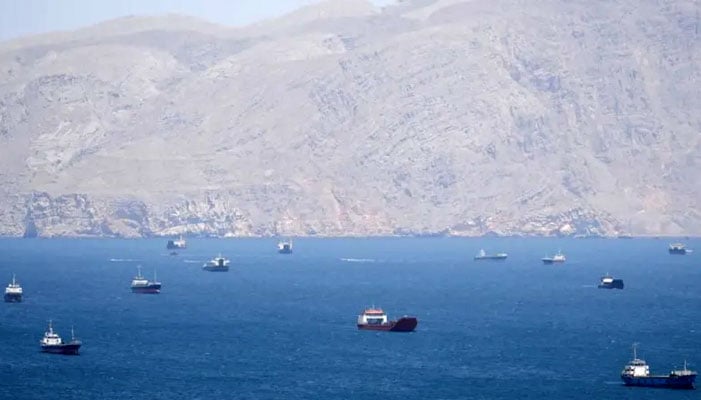
Yemen’s Houthi movement, Ansar Allah, has claimed responsibility for a missile attack on a Saudi oil tanker in the Red Sea, marking another escalation in regional maritime tensions.

Houthi military spokesperson Yahya Saree said the group targeted the tanker with ballistic missiles near the Saudi coastal city of Yanbu. However, he did not specify the exact time of the attack or provide details about the extent of the damage or any casualties.

Saree also claimed that Houthi forces have attacked eight vessels accused of violating the Saudi naval blockade imposed on July 22. According to him, the operations forced 29 other ships to alter their routes to avoid Houthi-controlled waters.

The spokesperson vowed that the group would continue enforcing what it described as a naval blockade against Saudi Arabia, warning that vessels breaching the restrictions could face further attacks.

The latest claim comes as security concerns continue to grow in the Red Sea, a vital international shipping route that has witnessed repeated attacks on commercial and energy-related vessels in recent months. Independent verification of the Houthi claims was not immediately available.

Similar Posts

  • | |

    US vows unprecedented economic pressure on Iran

    WASHINGTON: The United States hUS vows unprecedented economic pressure on Iranas warned that it will introduce an unprecedented package of economic measures against Iran as Washington prepares to intensify pressure on Tehran amid stalled ceasefire negotiations and rising tensions around the Strait of Hormuz. US Treasury Secretary Scott Bessent said further announcements were expected next week, describing the planned measures as unlike anything previously used against a country facing economic isolation. Bessent said the new strategy would combine tougher economic restrictions with continued efforts to prevent Iranian ports from receiving or sending goods. He indicated that Washington intended to use economic pressure alongside restrictions on maritime traffic through the strategic Strait of Hormuz. US Defence Secretary Pete Hegseth, meanwhile, said the American military was capable of maintaining a naval presence in the region for an indefinite period to enforce the blockade. He said US naval vessels could be rotated in and out of the region to sustain the operation. The confrontation comes as attempts to revive a ceasefire agreement have faltered. Iran has sought to use its position around the Strait of Hormuz as leverage against Washington, while the United States has continued to tighten economic pressure on Tehran. The waterway has become a major flashpoint because of its importance to global energy supplies. Before the conflict began, roughly one-fifth of the world’s oil and liquefied natural gas shipments passed through the strait. Shipping activity has since fallen sharply, raising concerns over supplies, prices and the wider global economy. Two vessels belonging to Abu Dhabi National Oil Company were also attacked while transiting the strait, according to the United Arab Emirates’ state news agency. The UAE government blamed Iran for the incident. US President Donald Trump has repeatedly claimed that Washington has control over the strategic waterway. Iran, however, has rejected that assertion and maintained that the strait will not fully reopen unless its demands are addressed. Tehran has called for the removal of economic sanctions and the release of frozen Iranian assets. The prolonged confrontation is also putting pressure on the global energy market. The International Energy Agency has revised its forecast for global oil supply, warning that production could fall by about 4.3 million barrels per day this year. Oil prices declined by more than 2% on Thursday as markets reacted to expectations of weaker demand and a rise in US crude inventories. However, renewed attacks in the region continued to fuel fears that the conflict could spread further. The economic consequences are becoming increasingly serious. Economists have warned that a prolonged war could weaken global growth and increase the risk of recession in some economies. Hegseth declined to say whether declaring a ceasefire earlier in the year had been a mistake. He said the administration remained focused on preventing Iran from obtaining a nuclear weapon and insisted that the United States was taking the steps it considered necessary to achieve that objective.

  • |

    Renowned mountaineer Nirmal Purja amongst ten missing after avalanche on Pakistan’s Broad Peak

    A ten-member international climbing expedition led by world-renowned Nepali-born mountaineer Nirmal “Nims” Purja has gone missing after a massive avalanche struck Broad Peak in Pakistan’s Karakoram range. Communication with the group was completely cut off following the impact near the 8,047-metre summit. The missing team comprises five Nepalese guides, Pakistani mountaineer Sohail Sakhi, Omani climber Nadhira Al Harthy, American climber Mallory Geis, Chinese national Wang Zhong, and another foreign national. Search and rescue operations were launched as weather conditions permitted, with the Pakistan Army dispatching helicopters to assist ground crews and rescue teams ascending from nearby mountains. Initial tracking data from Purja’s device registered downhill movement following the slide, offering a faint glimmer of hope as emergency teams race against time in high-altitude conditions. The expedition was part of Purja’s attempt to become the first person in history to summit all fourteen of the world’s 8,000-metre peaks twice without supplemental oxygen.

  • |

    Saudi Arabia introduces major education reforms under new school law

    Saudi Arabia has approved the executive regulations for its new General Education Law, introducing wide ranging reforms that will reshape the country’s education system from nursery through Grade 12. The new legislation creates a comprehensive legal framework for public and private education and is designed to support the goals of Saudi Arabia’s Vision 2030 by improving educational quality, expanding opportunities and strengthening oversight across the sector. One of the most notable changes allows private schools to decide whether boys and girls can study together, while public schools will continue to separate male and female students after the early childhood stage. The move marks a significant shift in education policy for the Kingdom and gives private institutions greater flexibility in organizing their academic programmes. The law also establishes a new General Education Affairs Council that will oversee key education policies. The council will be chaired by the Minister of Education and include representatives from several government ministries, the Education and Training Evaluation Commission and the private sector. Officials say the body will help coordinate education reforms and ensure that policies are aligned with national development goals. Compulsory education will continue for children between the ages of six and 15. The Ministry of Education will have the authority to take legal action against parents or guardians who prevent children from attending school or who contribute to students leaving education before completing the compulsory stage. Officials say the measure is intended to improve school attendance and reduce dropout rates. Arabic will remain the main language of instruction throughout the general education system. However, schools will be allowed to teach in another language when appropriate, giving educational institutions greater flexibility while preserving the country’s cultural and linguistic identity. The legislation also confirms that classroom teaching will remain the primary method of education across all grade levels. At the same time, the Ministry of Education plans to expand digital learning by developing programmes that include live online classes, self paced learning and other flexible educational options. Regulations will also be introduced for lifelong learning certificates to encourage continuous education beyond traditional schooling. Students will have access to more diverse educational pathways under the new framework. The ministry will be able to introduce specialized academic and vocational tracks designed to better prepare students for future careers and meet the changing demands of the labor market. The law places greater emphasis on supporting students with disabilities by requiring schools to provide suitable educational services, assistive technology and assessment methods that match individual learning needs. It also strengthens programmes for gifted students through specialized schools, enrichment centers, improved identification systems, teacher training and partnerships with universities and research institutions. Private schools will face stricter quality standards under the reforms. Educational institutions must obtain accreditation from the Education and Training Evaluation Commission or another internationally recognized accreditation body approved by Saudi authorities. The Ministry of Education will oversee licensing procedures, ownership transfers, school operations and the introduction of international curricula while ensuring that subjects related to national identity remain part of every approved curriculum. The new rules also introduce a clearer process for education licences. Applications must receive a written decision within 30 days, and institutions whose applications are rejected will have the right to appeal. The government says these measures are intended to improve transparency and encourage investment in the education sector. Private and nonprofit education providers will also benefit from a more defined regulatory framework. Under certain conditions, the ministry may provide financial assistance, staffing support or other resources to eligible institutions as part of efforts to expand educational services under Vision 2030. Teachers will have broader professional responsibilities under the new law. They will be expected to follow approved curricula, meet the learning needs of individual students, encourage creativity and innovation, identify gifted learners, uphold national values and participate in continuous professional development programmes. The legislation also introduces stricter disciplinary procedures for teachers, administrators and private schools that violate regulations. Authorities will have the power to temporarily remove staff from duty while investigations are carried out. Serious violations could result in dismissal and permanent disqualification from working in the education sector. Private schools that fail to comply with the law may receive warnings, face financial penalties, lose the right to admit new students or have their operating licences revoked. If a licence is cancelled, the school must ensure that enrolled students are able to complete the academic year without disruption at the owner’s expense.

  • |

    Russian missile attack kills nine in Kyiv

    KYIV: At least nine people were killed and 28 others injured after Russian ballistic missile strikes hit Ukraine’s capital, Kyiv, on Saturday morning, Ukrainian officials said. The attack caused heavy damage in several areas of the city. Multiple explosions were reported as missiles struck residential areas and other locations. Emergency teams rushed to the affected sites to rescue people and control fires. Kyiv Mayor Vitali Klitschko said the capital came under a major missile attack. He said several explosions were heard across the city, while fires broke out and some areas faced power disruptions. Officials said the Darnytskyi district was among the worst-hit areas. At least seven people were killed there, while 14 others were injured. Two children were among those wounded in the strike. Another missile strike hit the Solomyanskyi district, killing two people and injuring eight others. A five-storey residential building was partially destroyed, trapping some residents inside. Rescue workers carried out operations to search for survivors and clear the damaged structure. The attack also affected the area around the Lithuanian embassy. Lithuania’s Foreign Ministry said a missile landed nearby, damaging windows and spreading debris inside the embassy compound. No casualties were reported among diplomatic staff. The latest strikes are part of an increase in Russian missile attacks on Kyiv in recent weeks. Ukrainian officials say Moscow has intensified the use of ballistic missiles, creating greater pressure on the country’s air defence systems. President Volodymyr Zelensky has repeatedly called for additional air defence support, especially Patriot missile interceptors, which Ukraine says are essential for stopping ballistic missile attacks. Zelensky raised the issue during his recent meeting with US President Donald Trump in Washington. He urged greater support for Ukraine’s air defence capabilities as Russian attacks continue. Trump said discussions over Ukraine’s request to produce Patriot interceptors are still ongoing. However, he expressed concerns about sharing advanced US military technology and said such decisions require careful consideration. Ukraine has faced shortages of Patriot systems as Russian air attacks have increased. Kyiv says these systems remain among the few weapons capable of intercepting high-speed ballistic missiles. Meanwhile, Ukraine has continued launching retaliatory strikes against Russian targets. Ukrainian officials say their operations are aimed at disrupting military supply routes and damaging facilities linked to Russia’s war efforts.

  • | | | | |

    Iran issues stark warning to US over ground troops

    TEHRAN: Iran has issued a stark warning to the United States, saying any American ground troops attempting to enter Iranian territory would face fierce resistance. The warning was delivered by Iranian Army Ground Forces Commander Brigadier General Ali Jahanshahi, as tensions between Tehran and Washington remain high and the region continues to watch closely for signs of further military escalation. According to Iranian media reports, Jahanshahi said Iran’s armed forces were fully prepared to respond to any hostile action. He stressed that the country’s ground forces remained at a high state of readiness and were closely monitoring Iran’s borders. The Iranian commander made clear that Tehran would not take any threat to its territory lightly. Any attempt by an enemy to launch military action on Iranian soil, he said, would trigger an immediate and forceful response. The remarks underline Iran’s long-standing position that a direct ground intervention would represent a major escalation. Iranian officials have repeatedly warned that foreign troops entering the country would encounter strong resistance from the country’s armed forces. Jahanshahi also emphasized that Iran’s military units were prepared to respond to a range of potential scenarios. Security measures along the country’s borders, he said, remain active as authorities continue to assess possible threats. The latest warning comes against the backdrop of continued tensions between Iran and the United States, with military developments and diplomatic efforts both shaping the rapidly changing regional situation. For Tehran, the message appears aimed at drawing a clear red line around Iranian territory: while the country may face external pressure, any attempt to send foreign ground forces across its borders would be treated as a direct threat to national security. Analysts say such statements also reflect Iran’s effort to strengthen deterrence and signal military readiness at a time when uncertainty remains over the future course of US-Iran relations. With tensions already running high, any direct military confrontation could have consequences far beyond Iran and the United States, potentially triggering a wider regional crisis. For now, the sharp warning from Iran adds another layer of uncertainty to an already fragile security situation, while international attention remains focused on whether diplomacy can prevent another escalation.

  • |

    Ocean Winner sinks off India, 22 crew missing as r…

    NEW DELHI: A major search-and-rescue operation was underway off eastern India on Sunday after a Panama-flagged bulk carrier sank in the Bay of Bengal, leaving 22 of its 24 crew members unaccounted for. The vessel, Ocean Winner, was carrying 24 crew members, including 20 Chinese nationals, three Myanmar nationals and one Bangladeshi, when communication with the ship was lost, according to the Indian Coast Guard. Two people have so far been rescued from life rafts. The vessel was transporting iron ore to Singapore after leaving India’s eastern Paradip port on Thursday. It sank about 240 nautical miles from the port, far from the Odisha coastline, prompting Indian authorities to mobilise ships for the rescue mission. The Coast Guard dispatched vessels from Sri Vijaya Puram, formerly known as Port Blair, to search the waters and locate other survivors. Nearby commercial vessels were also alerted and asked to assist in the operation as authorities raced against time to find the missing seafarers. The sinking has raised concerns for the safety of the remaining crew, particularly because the incident occurred in open waters. The cause of the vessel’s sinking was not immediately known, and officials had not provided an explanation for why communication with the ship was lost. The two rescued crew members were found in life rafts, providing a small but significant breakthrough in the search. Authorities continued to scan the surrounding waters for additional rafts, debris or signs of other survivors. The incident also highlighted the risks faced by seafarers travelling along busy international shipping routes in the Bay of Bengal. The Ocean Winner had departed Paradip carrying a commercial cargo of iron ore and was bound for Singapore when the voyage ended abruptly. Captain Alekha Charan Sahoo, deputy conservator of the Paradip Port Authority, expressed hope for the safety of those still missing and said he was praying for the crew. Indian authorities have continued coordinating the operation, with the Coast Guard and other vessels involved in the search. The focus remained on locating the missing sailors and bringing them to safety. For families and colleagues waiting for news, every hour of the operation carries enormous significance. With two crew members already rescued, authorities are hoping the ongoing search will lead to more survivors as teams continue combing the waters around the sunken vessel.

Leave a Reply

Your email address will not be published. Required fields are marked *