israeli prime minister
|

Israeli Prime Minister Netanyahu travels quietly to Washington


JERUSALEM: Israeli Prime Minister Benjamin Netanyahu departed for Washington under extraordinary security measures amid growing concerns over potential threats from Iran. According to media reports, Netanyahu traveled discreetly and avoided the country’s main international airport, reflecting heightened security precautions ahead of his meeting with U.S. President Donald Trump.

Reports stated that instead of departing from the usual Ben Gurion International Airport, Netanyahu left Israel aboard a special aircraft from Nevatim Air Base, a military facility in southern Israel. The unusual departure arrangements were reportedly made due to security concerns related to possible threats from Iran.

The Israeli Prime Minister’s Office did not announce the departure time in advance and did not issue an official explanation for the extraordinary security measures. However, Israeli media cited security sources as saying that the changes were implemented because of concerns about potential Iranian threats.

According to the reports, security precautions were also tightened within Israel before Netanyahu’s departure. Sources said that Sunday’s Israeli cabinet meeting was not held at the Prime Minister’s Office, as is customary. Instead, the meeting reportedly took place at a secret underground location for security reasons. Officials did not publicly disclose the exact location or provide additional details about the decision.

Media also reported another unusual step taken during the visit preparations. Unlike previous foreign trips, Israeli authorities did not allow members of the Israeli diplomatic press corps to accompany Prime Minister Netanyahu aboard the official government aircraft. No formal explanation was given for excluding journalists from the flight, although reports suggested that the decision was linked to heightened security concerns.

Netanyahu has now arrived in Washington, where he is expected to hold high-level talks with U.S. President Donald Trump. The meeting is anticipated to focus on several major regional and international issues, with Iran expected to dominate the agenda.

Following his departure for the United States, Netanyahu shared a statement on social media outlining the objectives of his visit. He said that his discussions with President Trump would cover a wide range of issues affecting Israel and the Middle East. According to the Israeli leader, Iran would be the top priority during the meeting because of ongoing regional tensions and security concerns.

Netanyahu stated that Israel’s primary goal remains ensuring the country’s security, strengthening its national defense, and expanding what he described as the “circle of peace” around Israel. He emphasized that cooperation with the United States continues to play a vital role in addressing regional challenges and promoting stability.

The visit comes at a time of continued tensions between Israel and Iran, with both countries accusing each other of actions that threaten regional security. Analysts believe that discussions between Netanyahu and President Trump are likely to include Iran’s nuclear program, regional security, military cooperation, and broader strategic relations between the United States and Israel.

In his statement, Netanyahu also said that he intends to express his condolences to President Trump over the passing of Lindsey Graham whom he described as a true friend of Israel.
The Washington meeting is expected to be closely watched by international observers, as its outcomes could influence future U.S.-Israel cooperation and regional diplomatic developments.

Similar Posts

  • | |

    Russia calls for immediate end to Yemen blockade

    UNITED NATIONS: Russia has called for the immediate and complete lifting of the maritime and land blockade imposed on Yemen, urging an end to restrictions on the delivery of food, medicines and other essential supplies. Speaking at the United Nations Security Council, Russian representative Yulia Zhdanova blamed the United States and Israel for contributing to the growing tensions surrounding Yemen, according to Arab media reports. Zhdanova said restrictions affecting the movement of humanitarian supplies should be removed to prevent further suffering among Yemen’s population. She stressed that civilians should not bear the consequences of the wider regional conflict. The Russian diplomat also argued that the prolonged deadlock in Yemen’s peace process had created conditions in which the Houthis became increasingly drawn into the regional confrontation. Moscow urged the immediate resumption of peace negotiations, saying there was no lasting military solution to the conflict. Zhdanova said a political settlement could only be achieved through dialogue involving Yemen’s key political forces. She called for the legitimate interests of all major stakeholders, including the Houthis, to be taken into account during negotiations. Russia’s appeal comes as Yemen remains caught in a wider regional crisis, with concerns growing over humanitarian access and the disruption of essential supplies. Moscow said renewed diplomacy and an inclusive political process were necessary to move Yemen towards lasting peace and reduce the risk of further escalation.

  • | | | | |

    Iran issues stark warning to US over ground troops

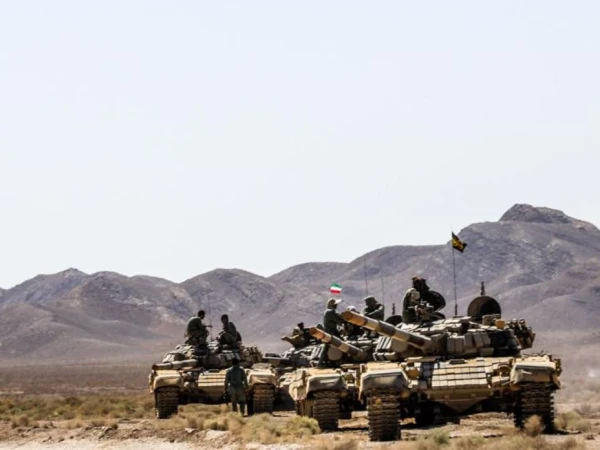
    TEHRAN: Iran has issued a stark warning to the United States, saying any American ground troops attempting to enter Iranian territory would face fierce resistance. The warning was delivered by Iranian Army Ground Forces Commander Brigadier General Ali Jahanshahi, as tensions between Tehran and Washington remain high and the region continues to watch closely for signs of further military escalation. According to Iranian media reports, Jahanshahi said Iran’s armed forces were fully prepared to respond to any hostile action. He stressed that the country’s ground forces remained at a high state of readiness and were closely monitoring Iran’s borders. The Iranian commander made clear that Tehran would not take any threat to its territory lightly. Any attempt by an enemy to launch military action on Iranian soil, he said, would trigger an immediate and forceful response. The remarks underline Iran’s long-standing position that a direct ground intervention would represent a major escalation. Iranian officials have repeatedly warned that foreign troops entering the country would encounter strong resistance from the country’s armed forces. Jahanshahi also emphasized that Iran’s military units were prepared to respond to a range of potential scenarios. Security measures along the country’s borders, he said, remain active as authorities continue to assess possible threats. The latest warning comes against the backdrop of continued tensions between Iran and the United States, with military developments and diplomatic efforts both shaping the rapidly changing regional situation. For Tehran, the message appears aimed at drawing a clear red line around Iranian territory: while the country may face external pressure, any attempt to send foreign ground forces across its borders would be treated as a direct threat to national security. Analysts say such statements also reflect Iran’s effort to strengthen deterrence and signal military readiness at a time when uncertainty remains over the future course of US-Iran relations. With tensions already running high, any direct military confrontation could have consequences far beyond Iran and the United States, potentially triggering a wider regional crisis. For now, the sharp warning from Iran adds another layer of uncertainty to an already fragile security situation, while international attention remains focused on whether diplomacy can prevent another escalation.

  • |

    Progressive outsider Abdul El-Sayed claims victory in Michigan Senate primary

    In a dramatic outcome that has sent shockwaves through the Democratic establishment, progressive public health advocate Dr Abdul El-Sayed has secured the Democratic nomination for the United States Senate in Michigan, narrowly defeating establishment-backed Representative Haley Stevens. The contest to replace retiring Democratic Senator Gary Peters had emerged as a central battleground between the party’s moderate and progressive factions. Stevens, a four-term congresswoman with deep ties to Washington leadership, had entered the primary with formidable institutional backing and substantial financial support, including over $30 million (£23.5 million) spent on her behalf by political action committees affiliated with the American Israel Public Affairs Committee (AIPAC). Despite being outspent by a margin of roughly nine to one, El-Sayed built a coalition anchored by strong turnout among young voters, working-class communities, and urban centres such as Detroit and Ann Arbor. Backed by prominent progressive figures including Senator Bernie Sanders and Representative Alexandria Ocasio-Cortez, El-Sayed campaigned on a platform of universal healthcare, campaign finance reform, higher taxes on wealthy corporations, and an immediate end to foreign military aid. “We built this campaign brick by brick”, El-Sayed told cheering supporters at his election night watch party in Detroit, emphasising that grassroots engagement ultimately proved more powerful than dark-money political action committees. The progressive momentum extended down-ballot across the state. In Michigan’s 13th Congressional District, Democratic Socialist Donavan McKinney unseated incumbent Representative Shri Thanedar, an outspoken supporter of military aid to Israel, while progressive activist William Lawrence clinched the nomination in another competitive congressional district. The primary result sets up a high-stakes November general election against Republican nominee Mike Rogers, a former congressman who ran unopposed. Rogers and national Republican strategists have already signalled plans to paint El-Sayed’s left-wing platform as out of touch with Midwestern swing-state voters. For Democrats, the contest will serve as an ultimate test of whether a bold progressive message can unite the party base and retain a seat vital to determining control of the US Senate.

  • | |

    Vance pledges military, diplomatic pressure on Iran

    The United States will use military, economic and diplomatic measures to bring the conflict with Iran to an end, Vice President JD Vance has said, stressing that Washington remains committed to preventing Tehran from acquiring nuclear weapons. In a television interview, Vance said negotiations with Iran remain difficult due to internal divisions within the country’s leadership. He claimed that while some factions in Iran want to end the conflict through diplomacy, others continue to support confrontation, making negotiations more complicated. Despite the challenges, Vance expressed confidence that a settlement could eventually be reached, although he acknowledged the process would take time. He said the US hopes regional stability will improve and global oil prices will ease once tensions decline. The vice president reiterated that the United States would continue using every available tool, including military strength, economic sanctions and diplomatic engagement, to achieve what he described as a lasting resolution. Meanwhile, President Donald Trump said he still prefers diplomacy over military action. Speaking at a public event, Trump said he would rather reach an agreement with Iran than resort to war, but warned that military action remains an option if negotiations fail. Trump also dismissed reports suggesting the United States is facing shortages of key military ammunition. He insisted that the country has substantial stockpiles of weapons and said defence manufacturers are rapidly expanding production to meet future requirements. The president further warned that individuals responsible for leaking classified information about US military capabilities would face legal action, saying authorities were actively pursuing those involved. The developments come as tensions remain high around the Strait of Hormuz, one of the world’s most important shipping routes for oil exports. At the same time, eight leading international shipping organisations have urged the United Nations to oppose any proposal to impose mandatory transit fees on vessels passing through the Strait of Hormuz. In a joint letter addressed to the UN and the International Maritime Organization (IMO), the organisations warned that introducing tolls would undermine the internationally recognised principle of free navigation and could increase shipping costs, fuel prices and inflation worldwide. The maritime groups also cautioned that allowing such charges could create a dangerous precedent for other international waterways and disrupt global trade. The appeal follows recent discussions between Iran and Oman on future arrangements for the Strait of Hormuz. Iranian officials said the two countries have reached preliminary understandings on several issues related to maritime traffic, although they clarified that the agreement does not mean the waterway will be fully reopened under a new system. Separately, reports in US media claimed President Trump had questioned senior defence officials over alleged shortages of military munitions during a recent Cabinet meeting. According to the reports, concerns over weapon supplies had influenced military planning regarding Iran.

  • |

    Iran condemns Israeli minister’s remarks over Gaza killings

        Iran’s Deputy Foreign Minister Kazem Gharibabadi has strongly condemned remarks attributed to Israeli National Security Minister Itamar Ben-Gvir regarding the killing of Palestinians in Gaza, accusing him of openly advocating mass violence and the forced displacement of Palestinians. According to media reports, Gharibabadi said Ben-Gvir had set a daily target of killing between 30 and 40 people in Gaza. He described the remarks as further evidence of what Iran considers systematic violence against Palestinians and called for such statements to be preserved as evidence for possible future legal proceedings. Gharibabadi said that Israeli officials were openly discussing the expulsion of Palestinians from Gaza and the establishment or expansion of Jewish settlements in Palestinian territory. He argued that these statements should not simply be treated as political rhetoric but should be documented carefully because they could potentially become important evidence in future cases involving alleged violations of international law. “The statements and admissions made by Israeli officials should be preserved as evidence,” Gharibabadi said, according to the reports. He added that such evidence could be presented when Israeli officials are held accountable and legal proceedings are initiated against those accused of crimes against Palestinians. The Iranian official’s comments came in response to statements attributed to Ben-Gvir concerning Israel’s military campaign in Gaza. Media reports said the Israeli minister had spoken about killing between 30 and 40 people in Gaza every night. He was also reported to have said that the people of Gaza should not remain alive. Ben-Gvir, a far-right Israeli politician, has repeatedly faced international criticism over his statements and positions concerning Palestinians and the Gaza conflict. His remarks have frequently generated controversy, particularly when he has discussed military operations, Palestinian displacement and the future of Gaza. Gharibabadi’s response reflects Iran’s broader criticism of Israel’s military operations in Gaza. Iranian officials have repeatedly accused Israel of committing serious violations against Palestinians and have called for international action against Israeli leaders and officials. Tehran has also consistently supported the establishment of an independent Palestinian state and opposed the expansion of Israeli settlements in Palestinian territories. The issue of accountability has become increasingly prominent amid the continuing conflict in Gaza. Palestinian officials and international organizations have reported extensive civilian casualties and destruction in the territory since the outbreak of the war. Israel, meanwhile, has maintained that its military operations are aimed at Hamas and other armed groups and has defended its actions as necessary for national security and the release of hostages. The latest exchange between Iran and Israel comes amid continued regional tensions. Iranian officials have frequently used international forums and diplomatic statements to call attention to the humanitarian situation in Gaza and to demand accountability for alleged violations of international humanitarian law. Gharibabadi’s call to preserve statements made by Israeli officials highlights Iran’s argument that public comments by political and military figures could later be examined in legal proceedings. He suggested that remarks regarding killings, forced displacement and settlement expansion should be documented so they can potentially be used when questions of responsibility and accountability are considered. The controversy surrounding Ben-Gvir’s reported remarks is therefore likely to add to international scrutiny of Israel’s conduct in Gaza and the statements of its political leaders. As the conflict continues to generate diplomatic and legal debate, allegations concerning civilian killings, displacement and settlement policies remain major points of contention between Israel and its critics, including Iran.

  • |

    Iran’s Supreme leader sets ‘Primary Conditions’ for ending war with US

    Iran’s Supreme Leader Ayatollah Seyyed Mojtaba Khamenei has declared that the “preservation of Lebanon’s territorial integrity and the absolute, unconditional termination of the Zionist regime’s aggression are the primary conditions for any agreement to end the imposed war against the aggressive US” . In a letter to Hezbollah’s Secretary-General Sheikh Naim Qassem, the Iranian leader described Hezbollah as standing “like an unyielding rock as the forerunner of groups engaged in jihad against the savage aggression of the Zionist regime and its supporters” . He also affirmed that the Islamic Republic considers the defense of Hezbollah fighters to be its “strategic mandate” . The remarks came as part of a wider diplomatic backdrop, with a trilateral framework agreement signed by the US, Israel, and Lebanon on June 26 establishing a process for the Lebanese Armed Forces to disarm Hezbollah and dismantle its infrastructure in exchange for a gradual Israeli withdrawal from Lebanese territory . The Khamenei statement follows the June 15 finalization of an Iran-US memorandum of understanding, which brought a permanent halt to military operations on all fronts, including Lebanon, and ended the US naval blockade against Iran . The new trilateral framework agreement has been described by US Secretary of State Marco Rubio as a “first step” on a difficult journey, with a “trust, but verify” mechanism requiring Lebanon to demonstrate that it can effectively rein in Hezbollah . However, the agreement has faced opposition from within Lebanon. Hezbollah lawmaker Hassan Fadlallah warned that Lebanese authorities would not be able to enforce the disarmament commitments without triggering conflict, stating that Hezbollah would “hold on to its weapons even more” . Netanyahu has previously claimed that Israeli forces have pushed Hezbollah back 5 to 8 miles from the border and destroyed approximately 94 percent of its missile arsenal . Nevertheless, with Hezbollah and its Iranian backers setting firm conditions and opposing the framework’s core terms, the path to a final resolution remains fraught with challenges.

Leave a Reply

Your email address will not be published. Required fields are marked *