iran8217s supreme leader
|

Iran’s Supreme leader sets ‘Primary Conditions’ for ending war with US

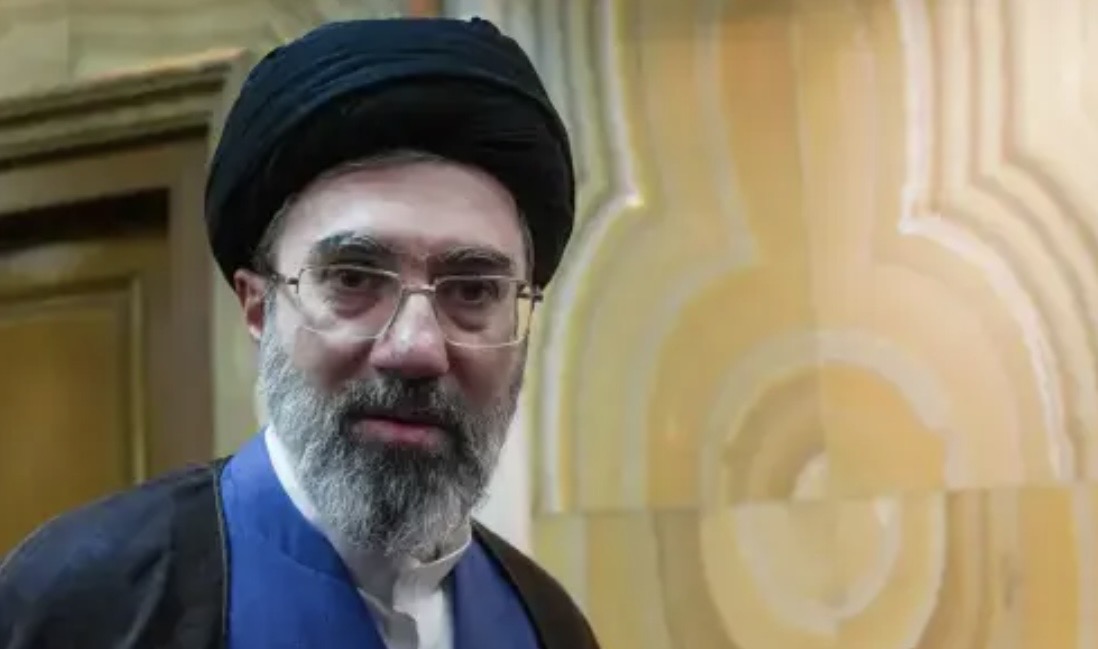
Iran’s Supreme Leader Ayatollah Seyyed Mojtaba Khamenei has declared that the “preservation of Lebanon’s territorial integrity and the absolute, unconditional termination of the Zionist regime’s aggression are the primary conditions for any agreement to end the imposed war against the aggressive US” .

In a letter to Hezbollah’s Secretary-General Sheikh Naim Qassem, the Iranian leader described Hezbollah as standing “like an unyielding rock as the forerunner of groups engaged in jihad against the savage aggression of the Zionist regime and its supporters” . He also affirmed that the Islamic Republic considers the defense of Hezbollah fighters to be its “strategic mandate” .

The remarks came as part of a wider diplomatic backdrop, with a trilateral framework agreement signed by the US, Israel, and Lebanon on June 26 establishing a process for the Lebanese Armed Forces to disarm Hezbollah and dismantle its infrastructure in exchange for a gradual Israeli withdrawal from Lebanese territory .

The Khamenei statement follows the June 15 finalization of an Iran-US memorandum of understanding, which brought a permanent halt to military operations on all fronts, including Lebanon, and ended the US naval blockade against Iran .

The new trilateral framework agreement has been described by US Secretary of State Marco Rubio as a “first step” on a difficult journey, with a “trust, but verify” mechanism requiring Lebanon to demonstrate that it can effectively rein in Hezbollah . However, the agreement has faced opposition from within Lebanon. Hezbollah lawmaker Hassan Fadlallah warned that Lebanese authorities would not be able to enforce the disarmament commitments without triggering conflict, stating that Hezbollah would “hold on to its weapons even more” .

Netanyahu has previously claimed that Israeli forces have pushed Hezbollah back 5 to 8 miles from the border and destroyed approximately 94 percent of its missile arsenal . Nevertheless, with Hezbollah and its Iranian backers setting firm conditions and opposing the framework’s core terms, the path to a final resolution remains fraught with challenges.

Similar Posts

  • | | |

    Pakistan seeks early refinancing of $1.3 billion C…

    ISLAMABAD: Pakistan has formally requested China to speed up the refinancing of a $1.3 billion commercial loan as Islamabad seeks to strengthen its foreign exchange reserves and ease pressure on its external financing position. According to sources, Pakistani authorities are currently holding discussions with their Chinese counterparts to complete the refinancing process at the earliest. The two sides are working to finalize the required terms, conditions, and procedural requirements. Officials expect the refinancing arrangements to conclude soon, with the funds likely to reach Pakistan within the current month if the remaining formalities are completed on schedule. Sources within the Ministry of Finance said the government expects the timely arrival of the funds to provide much-needed support to the country’s foreign exchange reserves. The refinancing would also help Pakistan manage its external debt obligations without placing additional pressure on its existing reserve position. Pakistan made external payments of around $2.2 billion in July, including the repayment of approximately $1.3 billion in Chinese commercial financing. The government now seeks to refinance the repaid amount to maintain liquidity and strengthen its financial position. The move comes as Pakistan continues to manage its external financing requirements and maintain adequate foreign exchange reserves to meet upcoming debt repayments and other international payment obligations. The successful completion of the refinancing deal with China would offer temporary relief to the country’s external account and support overall financial stability.

  • | | |

    Khamenei’s resurfaced message explains Iran’s …

    Tehran: A message previously shared by Iran’s Supreme Leader, Ayatollah Ali Khamenei, has resurfaced on social media during the Chehlum commemorations of Hazrat Imam Hussain (RA), drawing renewed attention to Iran’s stance against reaching a deal with the United States. The post, published on the social media platform X from Ayatollah Khamenei’s account, quotes a saying attributed to Imam Hussain (RA), emphasizing the duty to stand against oppression. The message states that those who fail to confront tyranny risk sharing the same fate as the oppressor. It concludes by saying that this principle is the reason Iran refuses to compromise with the United States, linking the country’s political position to its ideological beliefs. The message was originally posted on October 13, 2019, but has now been republished to coincide with the Chehlum observance honoring the martyrs of Karbala, highlighting the continued significance of its message in Iran’s political narrative.

  • The US-brokered security framework between Lebanon and Israel

    In a historic geopolitical turn of events, representatives from Lebanon and Israel signed a milestone, United States-brokered framework agreement in Washington. The landmark accord aims to establish a structured pathway toward ending ongoing armed conflict, restoring territorial integrity, and enforcing a lasting cessation of hostilities across their shared southern border. While diplomats have hailed the deal as an unprecedented step forward for regional stability, it has simultaneously ignited fierce domestic political debates and public outcry over sovereignty, security, and national defense. Negotiated over several rounds of high-level talks overseen by American officials, the framework establishes a phased operational roadmap designed to reshape the security dynamic along the border. The Israeli Defense Forces (IDF) are slated to progressively pull back from designated areas in southern Lebanon. Initial security sectors, known as pilot zones, will be created where control is formally transferred to standard state forces. Units from the Lebanese Armed Forces (LAF) will assume exclusive security responsibilities in these cleared zones, asserting the government’s monopoly on weapons and defense operations. Under international oversight, the Lebanese government commits to consolidating armed power under state institutions and overseeing the eventual dismantling of non-state armed infrastructure, specifically targeting Hezbollah’s military apparatus. Despite the diplomatic milestone celebrated in Washington, the agreement has met intense polarization within Lebanon. Opponents and vocal social commentators accuse the state leadership of capitulating to foreign pressure, arguing that making Israeli withdrawal contingent upon the disarming of local resistance groups compromises national defense while Israeli troops remain stationed on Lebanese territory. Critics assert that such concessions disproportionately favor foreign security interests at the expense of displaced southern residents who have borne the brunt of military strikes and displacement. Conversely, supporters of the Lebanese central authority emphasize that the country cannot endure perpetual conflict and economic paralysis. Proponents argue that reclaiming exclusive state sovereignty over military decisions is essential for securing international financial assistance, starting the rebuilding of devastated infrastructure, and allowing hundreds of thousands of displaced civilians to safely return to their homes in the south. Beyond the immediate security perimeter, the framework signals a broader effort by international mediators to reconfigure security structures in the Levant. By tying economic revitalization and diplomatic normalization to strict military compliance, Western nations hope to dismantle non-state proxy networks and prevent wider regional war spillover. However, significant hurdles remain. The execution of the agreement depends heavily on whether the Lebanese military possesses sufficient operational capability and political backing to execute its mandate without sparking internal civil strife. Furthermore, continuous monitoring mechanisms led by international entities will be critical to verify that both parties adhere to the standstill terms and avoid accidental escalations during the delicate troop transition phases. As diplomatic delegations prepare for follow-up implementation rounds, the coming months will test whether this framework represents a genuine turning point toward lasting peace or merely a brief intermission in a long-standing regional feud.  

  • | | | |

    Iranian president rejects resignation rumours

    TEHRAN: Iranian President Masoud Pezeshkian has firmly denied reports claiming he had submitted his resignation, saying he remains fully committed to leading the country despite ongoing regional tensions and recent military escalation involving the United States. Speaking in a televised address, Pezeshkian dismissed speculation about stepping down, stating that he would publicly announce such a decision if it were ever made. He emphasized that he has no intention of resigning and will continue carrying out his responsibilities. The Iranian president also rejected reports suggesting differences with Mojtaba Khamenei and the country’s armed forces. He said the government, military leadership and state institutions were working in close coordination and remained united on national issues. His remarks came after opposition-linked media claimed that he had submitted his resignation several times amid growing political and security challenges. Iranian officials have not confirmed those reports. Meanwhile, diplomatic efforts to ease tensions between Lebanon and Israel continued as the two sides launched the seventh round of direct negotiations in Rome under United States sponsorship. According to Lebanese media reports, delegations from both countries are discussing the implementation of a US-backed framework agreement reached in June. The agreement outlines a gradual Israeli withdrawal from occupied Lebanese territory in exchange for the deployment of the Lebanese army and the disarmament of armed groups operating in those areas. The latest negotiations follow six previous rounds of talks aimed at reducing border tensions and advancing the implementation of the agreement. Separately, a report published by The New York Times claimed that Iran and Oman are close to reaching an arrangement to restore normal commercial shipping through the Strait of Hormuz, one of the world’s most important energy transit routes. According to the report, the proposed arrangement would establish separate shipping channels for vessels entering and leaving the Gulf. Iranian officials reportedly said the plan would include a service fee to cover environmental protection, maritime security and operational costs, with revenue shared between Iran and Oman.

  • | | |

    Ukraine claims strike on Russian weapons factory a…

    Ukraine has claimed responsibility for a series of long-range strikes targeting key Russian military infrastructure, including a weapons components factory, a warship, and a cargo vessel allegedly linked to the transportation of Iranian military equipment. The announcement was made by Ukrainian President Volodymyr Zelensky, who said the operations were part of Kyiv’s continued efforts to weaken Russia’s military capabilities. In a statement posted on the social media platform X, Zelensky said Ukrainian forces carried out precision strikes overnight against facilities that support Russia’s ongoing military campaign. He described the attacks as a response to continued Russian assaults on Ukrainian cities and infrastructure. According to the Ukrainian president, one of the primary targets was a factory in Russia’s Kirov region that manufactures components used in weapons deployed against Ukraine. Zelensky noted that the facility is located approximately 1,200 kilometers (745 miles) from the Ukrainian border, highlighting the growing range of Ukraine’s strike capabilities. Ukraine also claimed to have targeted an oil refinery in Tyumen, a logistics facility in Yekaterinburg, and a fuel and supply depot in Rostov-on-Don. These locations are considered strategically important for supporting Russian military operations and logistics. In addition to the strikes inside Russia, Zelensky said Ukrainian forces achieved significant results in the Caspian Sea. He claimed that a Russian warship and vessels allegedly involved in transporting Iranian military-related cargo were also targeted during the operation. Ukraine has not released further details regarding the extent of the damage. Meanwhile, Iran’s Foreign Ministry confirmed that one of its commercial ships was hit in the Caspian Sea and strongly condemned the incident. Iranian officials said the attack caused an explosion aboard the vessel, killing one civilian and injuring another. Tehran described the strike as an act of aggression and accused Ukraine of attempting to broaden the Russia-Ukraine conflict. Iran also stated that it would safeguard its national interests and security while condemning any attacks on its civilian maritime assets. The incident has added another layer of tension to an already complex regional situation involving Russia, Ukraine, and Iran. The claims made by Ukraine and Iran have not been independently verified, and Russian authorities have not issued a detailed public response regarding the reported strikes. As the conflict continues, long-range attacks on military and logistical targets remain a significant feature of the ongoing war, reflecting the evolving nature of the battlefield and the growing strategic reach of both sides.

  • |

    Six planets to grace the sky before sunrise today

    Karachi: Skywatchers will have an opportunity to witness a rare planetary gathering before sunrise today, as six planets are expected to appear across the eastern horizon. According to experts from the Pakistan Space and Upper Atmosphere Research Commission (SUPARCO), Jupiter, Mercury, Mars, Saturn, Uranus and Neptune will be positioned in the morning sky during the pre-dawn hours. The planetary display is expected to be visible approximately 45 to 60 minutes before sunrise, with observers advised to look towards the eastern horizon for the best chance of spotting the celestial bodies. Experts said Mars, Saturn and Jupiter should be visible to the naked eye under suitable weather and viewing conditions. However, Mercury will appear very close to the horizon, making it comparatively more difficult to observe, particularly if there are buildings, trees or haze obstructing the view. The remaining two planets, Uranus and Neptune, are much fainter and will require a telescope or binoculars for observation. Astronomy experts have clarified that although the planets may appear to form a line or group from Earth, they are not actually arranged in a straight line in outer space. The apparent alignment is the result of the viewing angle from Earth and the planets’ positions along their respective orbits around the Sun. For those hoping to observe the phenomenon, experts recommend choosing a location with a clear view of the eastern horizon and minimal light pollution. Early morning skies with clear weather will provide better viewing conditions.

Leave a Reply

Your email address will not be published. Required fields are marked *