kashmir activist journalist
|

Kashmir activist and journalist released on bail after years in custody

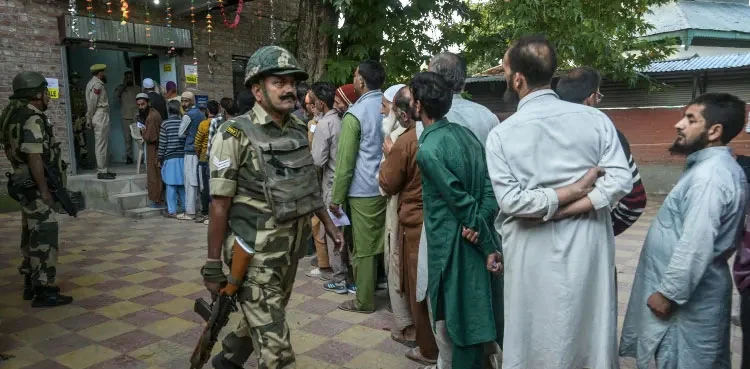
Indian authorities have released Kashmiri human rights activist Khurram Parvez and journalist Irfan Mehraj on bail after they spent years in custody under terrorism related charges. Their families confirmed that both men were released from a prison in New Delhi late on Wednesday following a court order, although strict bail conditions will keep them in the capital while their trial continues.

Parvez, a well known human rights defender and programme coordinator of the Jammu Kashmir Coalition of Civil Society, was arrested by India’s National Investigation Agency in November 2021 from his home in Srinagar. Mehraj, a freelance journalist who also worked with the same rights organisation, was arrested in 2023.

Both men have been charged under India’s anti terrorism laws with allegedly financing terrorism and promoting separatist activities. The legislation allows authorities to detain suspects for long periods without trial and has frequently been criticised by rights organisations for its broad powers.

Although they have now been granted bail, their freedom remains limited. Court conditions require both Parvez and Mehraj to stay in New Delhi during the legal proceedings. They are not permitted to return to Kashmir and must arrange their own accommodation in the capital while attending court hearings. Indian investigators had challenged the decision to grant bail, but a higher court upheld the order.

The Jammu Kashmir Coalition of Civil Society has spent many years documenting alleged human rights violations in the region. The organisation has published reports on cases involving torture, unlawful killings, enforced disappearances, and unmarked graves in areas affected by the long running conflict. Its work has often drawn international attention and placed it at the centre of debates over human rights in Kashmir.

Parvez has received support from several international human rights organisations that have repeatedly called for his release. In 2023, the United Nations Working Group on Arbitrary Detention described his arrest as retaliation for his human rights activities. The UN experts said the detention appeared intended to silence both Parvez and wider civil society efforts in Kashmir.

The case has also renewed attention on press freedom in the region. Journalists working in Indian administered Kashmir have reported increasing restrictions, surveillance, and legal action since the Indian government revoked the region’s special constitutional status in 2019. Several media workers and activists say they have faced questioning, arrests, or pressure while reporting on political and security issues.

The Indian government maintains that its actions are necessary to combat terrorism and protect national security. Officials argue that the anti terrorism laws are an essential tool in dealing with militant groups operating in the region. However, critics say the legislation has increasingly been used against journalists, activists, and civil society members who peacefully document human rights concerns.

Government figures show that more than 3,600 people were arrested under anti terrorism laws in Kashmir between 2019 and 2023. More than half of those detained remain in prison while awaiting legal proceedings, highlighting concerns over lengthy pre trial detention.

The release of Parvez and Mehraj has been welcomed by rights advocates, but legal proceedings against both men continue. They will remain in New Delhi under the conditions set by the court until their trial reaches its conclusion. Their cases are expected to remain closely watched by international human rights organisations and press freedom groups as they continue to raise concerns about civil liberties and legal protections in Indian administered Kashmir.

Similar Posts

  • | |

    Khanewal farmers protest delay in lease letters

      KHANEWAL: Eleven farmers selected under Punjab Chief Minister Maryam Nawaz Sharif’s “Apna Khet, Apna Rozgar” initiative have protested over the delay in receiving lease letters for approximately 950 kanals of agricultural land in Chak 63/10-R. The farmers allege that the transfer process is being delayed because of the influence of an influential local figure who, they claim, is supporting people occupying the land. The affected farmers recently held a demonstration outside the Revenue Department office at the District Complex in Khanewal. They demanded that the authorities issue their lease documents immediately and complete the process of handing over the land allotted to them through the government’s official balloting process. According to the protesting farmers, nearly 950 kanals of agricultural land in Chak 63/10-R was designated for lease to 11 deserving applicants who were selected through a formal draw under the provincial government’s scheme. However, they claimed that the land has remained in the possession of alleged illegal occupants for almost 40 years. The farmers said the occupants had earlier approached the Lahore High Court and obtained a stay order regarding the disputed property. They claimed that the relevant bench of the Lahore High Court dismissed the stay order on August 3, 2026, which, according to them, removed a major legal hurdle in the way of implementing the government’s allotment decision. Despite the dismissal of the stay, the protesting farmers alleged that the Punjab Revenue Department and the Khanewal district administration had not yet issued the required lease letters. They further alleged that the individuals occupying the land had the support of an influential political figure in the area. The farmers claimed that political pressure was contributing to the delay and preventing the concerned departments from completing the formalities required for the transfer of the land. The applicants also pointed out that their names and allotment information are already available on the Punjab government’s official online portal for the “Apna Khet, Apna Rozgar”scheme. They questioned why the authorities had not issued the lease documents despite their successful selection through balloting and the reported dismissal of the court stay. The Additional Deputy Commissioner (Revenue), Khanewal, was contacted to obtain the administration’s position on the matter, including the delay in issuing the lease letters, the current legal status of the disputed land and the allegations of political interference. However, an official response from the ADCR was not available at the time of filing the report. The administration’s version will be included once an official response is received. The affected farmers have appealed to Chief Minister Maryam Nawaz Sharif, Deputy Commissioner Khanewal Dr Hina Arshad Commissioner Multan Aamir Karim and the Senior Member Board of Revenue Punjab to take immediate notice of the issue. They demanded that the lease letters be issued without further delay and that possession of the allotted land be handed over to the successful applicants according to the balloting results, government policy and applicable legal procedures. The protesters also urged the provincial government to ensure transparent implementation of the “Apna Khet, Apna Rozgar” scheme and prevent any political or external influence from affecting the rights of successful applicants.

  • | | | |

    Pakistan repays $1.4bn China loan

    Pakistan has repaid a $1.4 billion commercial loan to China, with refinancing expected within the next few weeks, State Bank of Pakistan (SBP) Governor Jameel Ahmad said on Wednesday. Speaking to reporters after attending a meeting of the Senate Standing Committee on Finance at Parliament House, the SBP governor said the country had made external debt repayments worth $2.2 billion during July 2026. The repayments included the $1.4 billion commercial loan to Chinese banks, while the remaining $800 million was used to settle other external liabilities. Ahmad said the refinancing from Chinese banks had not yet been received but was expected shortly, adding that the funds would be made available to Pakistan after a brief delay. The central bank governor also revealed that the SBP had purchased $28 billion over the past three years to strengthen the country’s foreign exchange reserves. He said Pakistan’s external debt repayment requirement had declined from $26.5 billion to $21.5 billion, easing pressure on the country’s finances during the current fiscal year. According to Ahmad, around $3.5 billion of the remaining repayments will be used to service interest obligations. He said the government would continue its strategy of increasing foreign exchange reserves while maintaining external financial stability. The SBP governor further noted that Pakistan would require the rollover of nearly $12 billion in deposits from Saudi Arabia and China to support its external financing position. He expressed confidence that the country’s debt repayment burden would remain lower this year compared with previous years, helping improve Pakistan’s overall economic outlook.

  • |

    Major US financial firms targeted in extensive phone-phishing campaign

    Ransom-seeking cybercriminals have launched a coordinated campaign targeting high-profile US financial institutions, including Blackstone, Apollo Global Management, KKR, Bain Capital, and CME Group. A technical report from Google’s Threat Intelligence Group revealed that hackers created 72 malicious websites designed to steal corporate login credentials. Operatives used social engineering tactics, reaching employees directly on personal mobile phones while spoofing corporate IT helpdesk numbers. Under the guise of urgent system updates, callers guided staff to fraudulent domains such as “passkeyhelpdesk” or “secure-passkey” to capture login credentials and multi-factor authentication passcodes in real time. According to threat intelligence analysis, the campaign represents a strategic pivot toward private equity firms, law practices, and financial rating agencies, driven by the assessment that these targets hold sensitive commercial data worth paying substantial ransoms to protect. While digital intelligence data identified fake portals created for over 200 organisations, including Uber, Levi Strauss, and several major law firms, it remains unconfirmed which specific financial targets experienced compromised systems. The threat actors operating under names such as Redact, Falcon, Helix, and Pink share common digital infrastructure. Analysts noted that despite advanced enterprise perimeter security, direct voice-phishing techniques exploiting human trust continue to rank among the most effective cyber-intrusion vectors.

  • |

    Kriti Sanon urges people to prioritise mental health

    Bollywood actress Kriti Sanon has opened up about the importance of mental and emotional well-being, urging people to pay as much attention to their minds as they do to their physical health. The National Award-winning actress reflected on how her experiences while working on films such as Mimi and Do Patti changed her perspective on acting and the emotional impact of portraying complex characters. According to Kriti, she once believed that the characters she played remained confined to the world of cinema and did not have any lasting effect on her personal life. However, her experiences with these two films made her realise that characters can leave an unconscious emotional impact on actors. Kriti explained that the effect of a demanding role does not always become apparent immediately. Sometimes, an actor may complete filming and only begin noticing emotional changes several days later. She said that a character can continue to influence a person’s mood, behaviour and thoughts even after the cameras stop rolling. The actress said this experience taught her the importance of consciously separating herself from the characters she portrays. While actors are expected to completely immerse themselves in their roles, Kriti believes that it is equally important to know when to step away from the emotional world created for a film. She also recalled times when she was personally dealing with difficult or emotionally challenging situations while having to continue working on a comedy project. Despite going through personal struggles, she still had to portray cheerful and entertaining characters in front of the camera. Kriti pointed out that actors repeatedly draw upon their own emotions while performing. They have to access different feelings and sometimes revisit difficult emotional spaces to make their performances believable. Because of this, she believes that maintaining good mental and emotional health should be an important part of an actor’s life. The actress encouraged people to find healthy ways of managing their emotions and maintaining mental balance. She suggested practices such as meditation, therapy and other activities that help individuals feel mentally grounded and emotionally stable. Kriti also shared that she personally turns to meditation from time to time and finds it beneficial. For her, taking a pause and reconnecting with herself helps maintain emotional balance, particularly after working on emotionally demanding projects. Her comments highlight a broader reality of the entertainment industry, where performers are often required to move between intense emotions and different personalities within a short period of time. While professional commitment is important, Kriti believes that taking care of one’s mental health should never be overlooked. Kriti Sanon was most recently seen alongside Shahid Kapoor and Rashmika Mandanna in Cocktail 2. The actress continues to remain one of Bollywood’s prominent performers, balancing commercially successful projects with roles that require emotional depth and versatility.

  • | |

    Over 60,000 Gaza children lose parents amid ongoing war

    More than 60,000 children in Gaza have lost at least one parent since the conflict began in October 2023, according to figures released by the Palestinian health ministry on Wednesday. The ministry reported that 60,737 children had either been orphaned or left with only one surviving parent. Of these, 52,095 children lost their fathers, while 5,929 lost their mothers. Another 2,713 children lost both parents during the conflict. The figures highlight the devastating impact of prolonged violence on children across the Gaza Strip. The ministry also reported that thousands of families had been completely erased from Gaza’s civil registry. According to its figures, 2,276 families comprising 8,858 people have been wiped out during the conflict. The overall death toll in Gaza has also exceeded 73,000 since the start of the war, the ministry said. A ceasefire reached in October has failed to end all violence in the territory. Palestinian authorities say Israeli forces have continued carrying out strikes, with more than 1,100 people reportedly killed since the truce began. The latest figures have renewed concerns over the humanitarian consequences of the conflict. Thousands of children have been left without one or both parents, while many families have lost multiple members. The United Nations Independent International Commission of Inquiry has also documented serious violations involving Palestinian children. In a report released in June, the commission said Israeli authorities and security forces had deliberately targeted Palestinian children. It alleged that violations amounted to genocide, crimes against humanity and war crimes in Gaza, as well as war crimes in the occupied West Bank. The commission examined alleged violations against Palestinian children since the conflict began on October 7, 2023. It found that children accounted for around 30 per cent of those killed in the Gaza war. In an earlier report released in September, the commission concluded that Israel had committed genocide in Gaza and said senior Israeli officials, including Prime Minister Benjamin Netanyahu, had contributed to incitement. Israel has rejected the accusations, describing them as unfounded and deeply offensive. The latest Palestinian figures underline the long-term consequences of the conflict for Gaza’s youngest population. Beyond the immediate loss of life, thousands of children are now facing life without parents, while entire families have disappeared from official records.

  • |

    Power sector circular debt rises by Rs364 billion in FY2025-26

    ISLAMABAD: Pakistan’s power sector circular debt increased by Rs364 billion during fiscal year 2025-26, highlighting persistent weaknesses in the electricity supply chain despite substantial government subsidies and efforts to contain the buildup of unpaid liabilities. According to the circular debt report for June 2026, the increase was significantly higher than the previous year, when the debt had risen by around Rs45 billion. The latest increase represents a surge of roughly 709% year-on-year in the annual flow of circular debt. The Power Division has not yet formally uploaded the one-page circular debt report for June 2026 on its official website. The latest figures indicate that structural problems, including distribution company inefficiencies, weak bill recovery, payment disputes and delays in tariff adjustments, continue to generate fresh liabilities in the power sector. The development comes despite the government’s efforts to contain the debt through budgetary support and subsidies. IMF target and government commitments The International Monetary Fund (IMF) had permitted Pakistan to record up to Rs400 billion in circular debt flow during the year, while simultaneously requiring the government to take measures to prevent the accumulation of new liabilities and eventually bring the flow down to zero. Under the IMF programme, the government has been relying on tariff adjustments, subsidy rationalisation and other reforms to improve the financial health of the electricity sector. However, the latest increase suggests that governance and operational problems remain a major obstacle to achieving a sustainable reduction in circular debt. The government provided approximately Rs302 billion in subsidies aimed at supporting the power sector and reducing the debt burden. However, the amount was insufficient to maintain the circular debt stock at the level of Rs1.614 trillion recorded at the end of June 2025. As a result, the debt stock recorded a net increase of around Rs61 billion during the year. The Power Division had earlier stated that the federal government allocated Rs893 billion for the power sector in the FY2025-26 budget. However, around Rs98 billion of the allocated amount was not released, affecting the government’s ability to reduce the outstanding liabilities. A Power Division spokesperson said that if the entire budgeted allocation had been released, the circular debt stock could have fallen further to around Rs1.577 trillion. The funding shortfall, according to the official, contributed to the Rs61 billion increase recorded during the year. Distribution companies remain a major source of losses Inefficiencies within power distribution companies continued to be one of the biggest contributors to the accumulation of circular debt. The government incurred approximately Rs262 billion in losses during FY2025-26 because of inefficiencies in distribution companies. The amount was only around Rs3 billion lower than the previous year, indicating that little progress has been made in addressing operational weaknesses. Another Rs64 billion was added to the circular debt because of lower electricity bill recoveries. Although significant, this amount was around 51% lower than the corresponding figure recorded in the preceding year. The figures underline the financial pressure created by electricity theft, transmission and distribution losses, weak collection systems and inadequate enforcement against non-paying consumers. Privatisation of distribution companies The government has initiated the process of privatising three relatively profitable distribution companies — Faisalabad Electric Supply Company, Gujranwala Electric Power Company and Islamabad Electric Supply Company. However, the proposed privatisation is not expected to immediately resolve the broader circular debt problem because a substantial portion of sector losses originates from other distribution entities. Earlier, the government had considered a model under which profitable distribution companies would be combined with loss-making entities before privatisation. The plan, however, was subsequently abandoned in favour of offering comparatively stronger companies separately. Experts have repeatedly argued that privatisation alone cannot eliminate circular debt unless the underlying issues of electricity theft, poor recoveries, governance and operational losses are addressed across the entire distribution network. K-Electric dispute adds to debt Payment disputes with K-Electric also contributed substantially to the increase. According to the report, approximately Rs194 billion was added to the circular debt because of non-payments by K-Electric. The company’s outstanding payments are linked to a dispute concerning the delayed finalisation of its multi-year tariff by the National Electric Power Regulatory Authority. The prolonged disagreement has created financial pressure throughout the power supply chain, adding to the accumulation of unpaid liabilities. In addition, around Rs75 billion was added to the circular debt because of delays in tariff adjustments. The government, meanwhile, made payments of approximately Rs129 billion against principal loans of the power sector. Without these payments, the annual circular debt flow could have exceeded Rs600 billion, according to the figures. The Power Division also benefited from a reduction of around Rs98 billion in the circular debt flow because of subsidy payments. Interest payments add further pressure Interest charges also contributed to the accumulation of liabilities, adding around Rs14 billion to the circular debt during the fiscal year. These financing costs ultimately increase the burden on consumers because the cost of servicing the sector’s outstanding liabilities is recovered through electricity bills. Consumer groups have frequently criticised the practice, arguing that households and businesses that regularly pay their electricity bills are effectively being charged for inefficiencies, theft and non-payment elsewhere in the system. Subsidies and burden on consumers The government’s continued reliance on subsidies has helped prevent an even larger accumulation of circular debt, but it has also placed pressure on the national budget. The power sector received hundreds of billions of rupees in subsidies during the year, while the government simultaneously pursued tariff increases and other measures intended to improve cost recovery. The contrast has raised questions about whether existing policies are addressing the underlying causes of circular debt or merely shifting the burden between consumers, the federal budget and power-sector entities. The government has also been under pressure to address similar financial problems in the gas sector. Although no comparable subsidy was provided for the gas sector, the authorities were expected to prevent a further increase in its circular debt. The government reportedly refrained from passing the full reduction in gas prices on

Leave a Reply

Your email address will not be published. Required fields are marked *