iran claims victory
| | |

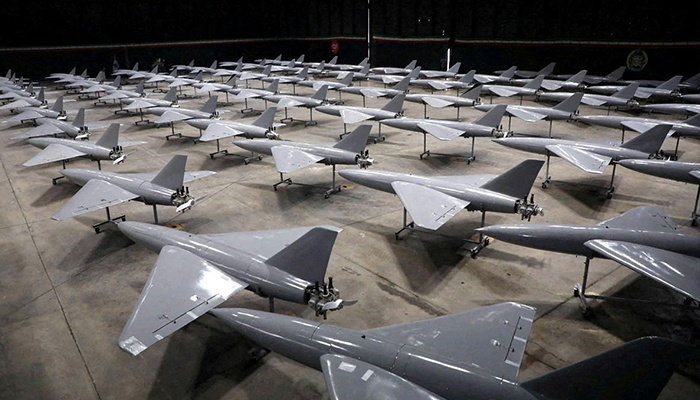
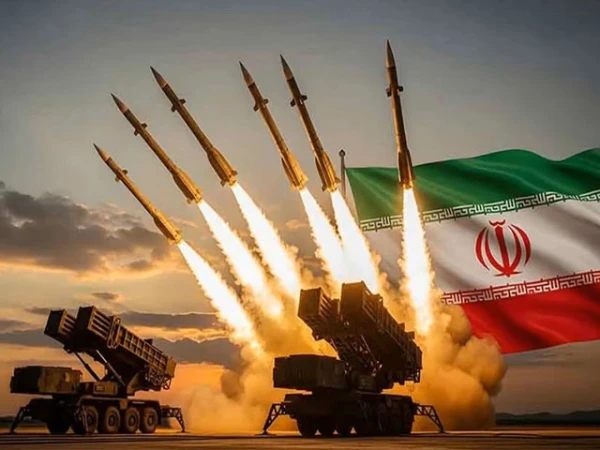
Iran claims victory on military, political fronts

Iranian Parliament Speaker Bagher Ghalibaf has claimed that Iran has emerged victorious on both the military and political fronts of the ongoing conflict.

Speaking about the situation, Ghalibaf said Iran was facing what he described as an unjust war imposed by the United States and Israel.

He said the Iranian nation was confronting the conflict with courage and determination. According to Ghalibaf, Iran had successfully resisted pressure on both the military and political fronts.

Ghalibaf said the Iranian people had remained united despite the challenges created by the conflict. He praised their resistance and said the nation had shown that it could withstand pressure from powerful opponents.

His remarks came after the General Staff of the Iranian Armed Forces said that Iran would not retreat until the United States and Israel were completely defeated.

The Iranian military leadership said resistance had become part of the mindset of Iran’s younger generation. It claimed that the legacy of resistance had been passed from one generation to another.

According to the Iranian Armed Forces, the country’s new generation had remained firm in the face of what it described as the world’s most powerful military forces.

The military leadership also said Iran would continue its struggle to protect what it called its legitimate rights. It said Tehran would not abandon its position until the opposing side surrendered.

The Iranian Armed Forces further accused the United States of continuing its aggression to expand its influence and establish dominance in the region.

Iranian officials have repeatedly presented the conflict as a struggle against foreign aggression. They have also stressed the importance of national unity and resistance in facing military and political pressure.

Similar Posts

  • | |

    State Department report calls for greater civilian…

    The US State Department said Wednesday that Pakistan needs to strengthen civilian oversight of public finances to improve fiscal transparency, releasing findings that highlighted persistent gaps in how the country discloses key financial information. The department’s assessment described fiscal transparency as a core component of effective public financial management, noting that it allows citizens to understand how government revenues and tax dollars are spent. That visibility into budgets, the report said, gives citizens the tools they need to hold their governments accountable. The findings arrive weeks after Pakistan’s National Assembly passed an 18.8 trillion rupee Finance Bill for 2026 to 2027 in June, which included a defence budget of 3 trillion rupees, with at least 335 billion rupees coming from provincial contributions. In its 2026 Fiscal Transparency Report on Pakistan, the State Department said the country continues to fall short in disclosing important financial data, particularly around debt obligations and the budgets of military and intelligence agencies. The report found that Pakistan’s government did not publish its executive budget proposal within a reasonable timeframe and made only limited information available on debt obligations, including debt held by major state owned enterprises. It further noted that military and intelligence budgets remain outside the scope of adequate parliamentary or civilian oversight. The assessment also pointed to areas of progress. During the review period, the report said, Pakistan’s government made its enacted budget and end of year financial reports widely and easily accessible to the public, including through online platforms. It found that publicly available budget documents offered a substantially complete picture of most planned government expenditures and revenues, including revenue generated from natural resources. The report described the information contained in the budget as generally reliable and subject to audit by the country’s supreme audit institution, which it said meets international standards of independence. Audit reports, the department noted, are published within a reasonable period and contain substantive findings. It also found that the government has specified, and largely followed in practice, clear legal criteria and procedures for awarding natural resource extraction contracts and licenses, while making basic information about such awards publicly available. The report added that Pakistan’s sovereign wealth fund operates under a sound legal framework and that the government publishes accessible information on public procurement contracts. Among its recommendations, the State Department urged Pakistan to make its executive budget proposal available to the public within a reasonable timeframe, disclose more detailed information on government debt, including debt tied to state owned enterprises, and bring military and intelligence agency budgets under parliamentary or civilian oversight. Responding to questions about the report during a weekly press briefing, Foreign Office spokesperson Tahir Andrabi acknowledged that the report had been released the previous day. He said Pakistan adheres to internationally recognized best practices around fiscal transparency, budgeting and financial disclosure, while also operating within its own constitutional, legislative and regulatory frameworks. Andrabi noted that Pakistan remains engaged in an ongoing International Monetary Fund program centered on structural reform and improved fiscal management. He said the country has completed three IMF reviews so far, adding that the reform measures taken under the program have drawn broad recognition, including credit rating upgrades from three international rating agencies as well as positive assessments from the IMF itself.

  • | | |

    Gold prices rise in Pakistan

      KARACHI: Gold prices climbed in Pakistan on Monday, even though international gold rates experienced a slight decline. The increase in local prices was mainly attributed to continued uncertainty surrounding the Middle East conflict, concerns over rising inflation, and investor caution ahead of key US economic data expected later this week. According to the All-Pakistan Gems and Jewellers Sarafa Association, the price of 24-karat gold increased by Rs1,700 per tola, taking it to Rs428,436. Similarly, the price of 10 grams of goldrose by Rs1,457, reaching Rs367,314. The latest increase came after a significant decline on Saturday, when gold prices had fallen by Rs3,700 per tola to settle at Rs426,736. In contrast, the international gold market remained under slight pressure. Spot gold slipped by 0.1% to $4,037.01 per ounce, while US gold futures for August delivery declined by 0.3% to $4,035.80 per ounce during trading. Despite the minor drop, analysts believe global investors remain cautious because of ongoing geopolitical tensions and expectations of fresh economic developments in the United States. Silver prices in Pakistan also moved higher. The price of silver gained Rs54 per tola, taking it to Rs6,291, reflecting continued demand for precious metals in the local market. Adnan Agar, Director at Interactive Commodities, said that international gold prices had eased slightly after fluctuating throughout the trading session. According to him, gold touched a high of $4,080 per ounce before falling to a low of$4,019, eventually stabilising near $4,038. He noted that gold remains under pressure and the market is closely monitoring upcoming US economic indicators, particularly employment data, which could influence the Federal Reserve’s future monetary policy decisions. Agar added that gold has remained within a broad trading range of approximately $3,950 to $4,250 per ounce since June. However, he expects this range to break within the next one or two weeks, potentially leading to a stronger upward or downward price movement depending on market conditions. Market participants are now awaiting a series of important US labour market reports, as these will provide further insight into the Federal Reserve’s interest rate outlook. Higher interest rates generally reduce the appeal of non-yielding assets like gold, while expectations of rate cuts tend to support bullion prices. Another factor attracting attention in the global market is reports that South Korea’s central bank intends to purchase gold from domestic producers, a move that could provide additional support to demand in the coming months. Meanwhile, oil markets have also remained highly volatile. Brent crude futures surged by more than 20% last month, driven largely by geopolitical tensions in the Middle East, raising concerns that higher energy prices could fuel inflation worldwide. Edward Meir, an analyst at Marex, said gold has traded within a narrow range of $4,000 to $4,200 per ounce for over a month. He explained that the possibility of inflation picking up again, particularly after July’s economic data, is helping support gold prices despite the recent weakness. Separately, the Pakistani rupee posted another modest gain against the US dollar. The local currency appreciated by 0.01%, closing at Rs277.77 per dollar, compared with Rs277.80 at the end of the previous trading session, reflecting continued stability in the foreign exchange market.

  • | |

    Pakistan announces second consecutive cut in petro…

    The Government of Pakistan has announced another reduction in the prices of petrol and high-speed diesel, marking the second consecutive day of relief for consumers. The revised fuel prices will come into effect from August 5, 2026, according to an official notification issued by the Ministry of Energy’s Petroleum Division. The notification stated that the latest revision has been made under the petroleum pricing mechanism recommended by the Oil and Gas Regulatory Authority (OGRA). The adjustment reflects the government’s ongoing review of petroleum product prices in line with market conditions and regulatory recommendations. Under the new rates, the price of high-speed diesel (HSD) has been reduced by Rs4.07 per litre, bringing the new price down from Rs389.93 to Rs385.86 per litre. Diesel is widely used in Pakistan’s transportation, agriculture, and industrial sectors, making the reduction significant for businesses and consumers alike. Petrol prices have also been lowered by Rs3.39 per litre. Following the latest cut, petrol will now cost Rs328.56 per litre, compared to the previous price of Rs331.95 per litre. The reduction is expected to provide some financial relief to motorists and households dealing with high transportation costs. This announcement comes just a day after the government had already reduced fuel prices. On the previous day, petrol prices were cut by Rs4.08 per litre, while diesel prices were lowered by Rs2.45 per litre. The back-to-back reductions indicate a continued effort to pass on the benefit of changing petroleum market trends to consumers. Fuel prices play a vital role in Pakistan’s economy because they directly influence transportation expenses, production costs, and inflation. Lower fuel prices can help reduce operating costs for businesses, improve supply chain efficiency, and ease the financial burden on consumers. However, the overall economic impact will depend on global oil prices, exchange rate movements, and future government pricing decisions. The Ministry of Energy emphasized that the revised prices are based on the pricing mechanism established by OGRA and approved by the federal government. The new rates will officially take effect on August 5, 2026, and will remain applicable until the next scheduled review. The latest reduction in petrol and diesel prices is expected to be welcomed by consumers, transport operators, and businesses, offering short-term relief amid ongoing economic challenges and fluctuating international oil markets.

  • | |

    Girl killed by brother after choosing to marry, ac…

    RAWALPINDI: A young woman was allegedly shot dead by her brother in Gujar Khan after she had married a man of her choice, police said on Saturday. The accused, who allegedly killed his sister two days ago, has been arrested by police. A case has also been registered at Gujar Khan Police Station on the complaint of the victim’s father. According to the family, the woman had left home in January during her leave and married a man of her choice. She had subsequently been living with her husband in Karachi. Police said the woman’s brother recently brought her back to the family home from Karachi after reconciliation between the two sides. Her father later alleged that his son shot and killed his daughter over her decision to marry according to her own choice. Further investigation into the incident is underway.

  • |

    UAE to charge music licensing fees at cafes, hotels and malls

    DUBAI: The United Arab Emirates is set to introduce licensing fees for playing music at cafes, hotels, malls and other commercial venues. According to UAE authorities, a music licence will be required for commercial use of music from December. The new fee will apply to businesses and commercial establishments that play music for customers. The licence will remain valid for one year. Businesses will be required to renew it annually to continue using music commercially. Authorities said educational institutions and government organisations will be exempt from the licensing fee. Non-commercial events will also not be required to pay the fee. The new licensing system has been introduced to protect the copyright and intellectual property rights of singers and other music creators. Officials said the system is intended to ensure that artists and rights holders receive appropriate protection when their music is used commercially. Authorities have also warned that action may be taken against establishments that play music without obtaining the required licence. The new rules are expected to affect a wide range of commercial venues across the UAE, including hospitality and retail businesses.

  • |

    Gaza oxygen stations face shutdown

    At least 22 of Gaza’s 34 oxygen stations have stopped operating, the Palestinian Health Ministry said Saturday, warning that the remaining facilities could also shut down because of the Israeli blockade and a critical shortage of spare parts. The ministry said the 12 functioning stations are operating under severe technical and mechanical strain. Frequent breakdowns and a lack of maintenance have pushed the facilities beyond their normal capacity, making it increasingly difficult to supply oxygen to hospitals and other healthcare providers. Only four of the 30 machines used to refill oxygen cylinders remain operational, according to the ministry. It warned that these machines could fail at any time because engineering teams lack the parts and equipment needed for emergency repairs. The ministry stressed that oxygen supplies are essential for life-saving hospital departments and patients receiving treatment at home. It urged the immediate opening of channels to allow spare parts, technical equipment and new oxygen stations to enter Gaza. The warning follows a statement by Doctors Without Borders (MSF) on August 12, which said Israeli authorities continued to restrict the entry of engine oil and spare parts needed for hospital generators, ambulances and other critical services. The UN Office for the Coordination of Humanitarian Affairs said in its latest report that Kerem Shalom remains the only operational crossing for goods entering Gaza, while restrictions remain on several essential supplies and types of equipment. The World Health Organisation, in data published on August 11 covering the period through July 31, also reported severe shortages of healthcare resources and services across Gaza’s medical facilities.

Leave a Reply

Your email address will not be published. Required fields are marked *