kpitb selected global
| | |

KPITB selected for Global Digital Government award

The Khyber Pakhtunkhwa Information Technology Board (KPITB) has been selected for an international award in recognition of its efforts to promote digital governance and technology-driven public services in the province.

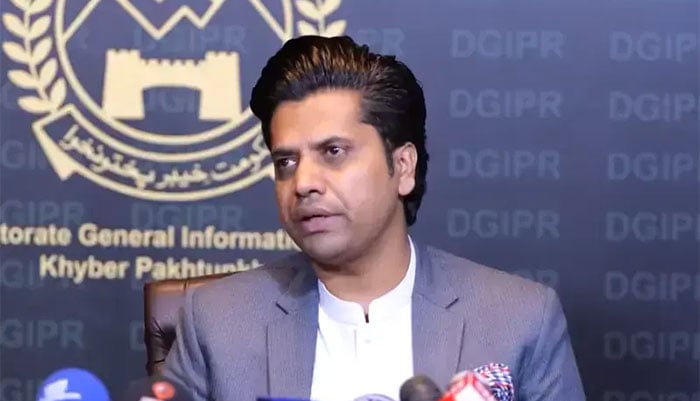
Khyber Pakhtunkhwa Information Minister Shafi Jan announced that KPITB will receive the Digital Government Award during a summit scheduled to take place in Jakarta, Indonesia, from October 5 to 7.

According to Shafi Jan, the international recognition reflects KPITB’s growing contribution to digital transformation and the provincial government’s efforts to modernise governance through technology. He said Khyber Pakhtunkhwa has been strengthening its position as a leading example of digital development in Pakistan.

The minister described KPITB’s selection for the award as an acknowledgment of the province’s initiatives aimed at improving digital governance, expanding technology-based services and creating a more digitally connected public sector.

Shafi Jan also credited Chief Minister Sohail Afridi with giving greater attention to the province’s digital transformation agenda. He said the government remains focused on developing a “Digital Khyber Pakhtunkhwa” by promoting technology, innovation and modern digital solutions across different sectors.

He added that international recognition for KPITB would further highlight Khyber Pakhtunkhwa’s efforts to use technology to improve governance and enhance public service delivery.

Similar Posts

  • |

    Govt increases petrol by Rs1.09, HSD by Rs2.42

    The government on Thursday increased the prices of petrol and high-speed diesel (HSD) by Rs1.09 and Rs2.42 per litre, respectively, passing on the impact of fluctuating global oil prices amid ongoing Middle East tensions. Following the revision, petrol will retail at Rs336.15 per litre, while HSD will cost Rs393.04 per litre. The government continues to levy Rs110 per litre in taxes and duties on petrol and Rs96 per litre on diesel. The Petroleum Division’s notification said the new prices would be applicable for July 31 (Friday). The diesel price has come down from a peak of Rs520.35 recorded on April 3, after beginning its upward trajectory from Rs281 per litre when the US-Iran war broke out on February 28. Similarly, petrol had peaked at Rs458.41 on April 3 after rising from Rs266 in the first week of March. Earlier, Petroleum Minister Ali Pervaiz Malik announced that fuel prices would now be fixed on a daily basis due to fluctuations in international market prices following renewed hostilities between Iran and the US. The government had been announcing weekly revisions since early March, alongside conservation measures amid possible oil supply disruptions due to the ongoing conflict in the Middle East. In April, the federal government also announced targeted relief measures to provide subsidised fuel. The petroleum minister stated that the cabinet and the prime minister had decided to give the Oil and Gas Regulatory Authority (OGRA) the responsibility of deciding fuel prices on a daily basis based on international market trends. The daily pricing decision was rejected by the All Pakistan Dealers Association, which said it would consider a protest plan this week. Petrol is mainly used in private transport, small vehicles, rickshaws and two-wheelers, and changes in its price affect the middle and lower-middle classes. Similarly, diesel price changes impact the public at large, as it is primarily used in the heavy transport sector, power plants and large generators. Petrol and HSD are the major revenue earners, with monthly sales of about 700,000 to 800,000 tonnes, compared to just 10,000 tonnes of monthly demand for kerosene.

  • Rs7.1bn Parliament lodges project faces forensic a…

    Islamabad: Serious questions have been raised over the construction quality and progress of the Rs 7.1 billion New Parliament Lodges Project after the Senate House Committee found major differences between official claims and the actual condition observed during inspection. The committee was informed that although significant progress was claimed, the inspection team found that only around 20 percent of the 104 new Parliament Lodges were functionally complete. Senators raised concerns over construction standards, design changes and the quality of facilities being developed with public funds. The Senate House Committee, chaired by Senator Syedal Khan, Deputy Chairman Senate and Chairman Senate House Committee, expressed concern over the findings and decided to move towards a detailed forensic audit to examine the quality of construction work, repairs and maintenance activities. During the meeting, Senator Kamil Ali Agha informed the committee that several issues were identified during the inspection of the new lodges. These included changes from the originally approved central air conditioning system to individual air conditioning units, poor ventilation arrangements, problems in ceiling fan installation due to design limitations and unsuitable placement of storage areas near lodge entrances. Senators questioned whether the project was being completed according to the originally approved design and whether the quality of construction matched the cost involved. Officials from the Capital Development Authority informed the committee that the grey structure of the lodges had been completed and finishing work was currently underway. They stated that imported lifts were yet to be installed and furniture for the lodges had already been ordered. The CDA representative further informed the committee that an architect had been hired to prepare a model lodge design for the renovation of existing Parliament Lodges. The renovation plan would include improvements in electrical systems and other related facilities. The committee also discussed complaints regarding maintenance and repair work in existing Parliament Lodges. Senator Jan Muhammad highlighted that only limited funds had been allocated for the repair of his allotted lodge despite repeated requests over the past three years. CDA officials informed the committee that funds for the first quarter had been released and the tendering process would begin soon. They expected repair work to start in the first week of September 2026. The Ministry of Planning, Development and Special Initiatives informed the committee that the total cost of the 104 New Parliament Lodges Project stands at Rs 7.1 billion. Out of this amount, Rs 3.5 billion has already been spent, while Rs 1.1 billion has been allocated during the current financial year. The committee also discussed concerns related to transparency and accountability. CDA officials informed members that the Auditor General of Pakistan had already started an external forensic audit of repair and maintenance works, and the final report was awaited. However, the committee decided that a broader independent forensic audit should also be conducted for both the existing Parliament Lodges and the construction of the new 104 lodges. Senator Syedal Khan proposed that a professional consultancy firm led by Syed Shabbar Zaidi should conduct the audit. Senator Kamil Ali Agha supported the proposal, describing the firm as highly professional. The committee unanimously recommended engaging the firm to ensure transparency, accountability and better quality control. The committee stressed that Parliament projects must meet the highest standards because they are funded through public money. Members said timely completion, quality construction and proper use of funds would remain under strict parliamentary monitoring.

  • | |

    Flood surge damages railway bridge near Lahore

    A railway bridge near Mission Caller on the Sheikhupura-Lahore section was damaged after a strong flood surge hit the area, disrupting train services between Lahore and Faisalabad. Railway authorities said train operations on the Lahore-Faisalabad section have been temporarily suspended due to damage to the bridge. Trains travelling from Lahore towards Karachi via Sheikhupura and Faisalabad are being diverted through Sahiwal as an alternative route. Officials said the Badr Express and Ghouri Express have been cancelled due to the disruption. The Shalimar Express and Karakoram Express will operate via Raiwind and Sahiwal, while the Mianwali Express, which normally runs between Lahore and Mianwali, will be diverted through Lala Musa. Several other trains operating on the affected route have also been cancelled. Some services have been shifted to alternative routes to minimise disruption to passengers. According to railway officials, the flood surge that hit the area last night caused 30 of the bridge’s 110 pillars to collapse. Repair work has begun on the damaged structure. Railway authorities are working to restore the track and resume normal train operations as soon as possible. The flooding has also affected nearby communities. Residents said several settlements, including Hadiala Warkan village, were inundated after the flood surge entered the area during the night. The floodwaters have also caused significant damage to standing crops. Local residents expressed concern over losses to agricultural land and crops following the sudden rise in water levels.

  • |

    Karachi receives second day of monsoon rain with l…

    Karachi experienced light to moderate rainfall accompanied by high winds on Saturday evening, marking the second consecutive day of rain in the current monsoon spell. Rain was reported in multiple areas across the metropolis, including Scheme 33, Gulshan-i-Maymar, and adjoining areas, while a light drizzle fell in Hassan Square. Heavy rain was reported in Gulistan-i-Jauhar, and video footage showed commuters travelling through 4K Chowrangi in Surjani Town amid heavy rainfall. Light rainfall was also reported in Saddar, multiple blocks of Clifton, and the Defence Housing Authority. Earlier today, the provincial chief secretary directed provincial and district authorities to activate the Provincial Disaster Management Authority and district control rooms immediately, while ordering the submission of 24-hour situation reports every morning throughout the monsoon season for continuous monitoring. Chairing a meeting on monsoon preparedness, the chief secretary stressed that contingency plans must include the identification of relief camp sites, availability of rescue boats, dewatering pumps, water bowsers, and emergency mechanisms for food and drinking water, as well as adequate stocks of medicines for health and livestock departments. He instructed municipal authorities to remove bottlenecks, complete the cleaning of storm-water drains, and ensure uninterrupted drainage arrangements ahead of heavy rains. The meeting was informed that, according to the Pakistan Meteorological Department, moderate to isolated heavy rainfall was expected until July 27 in several districts, including Tharparkar, Umerkot, Mirpurkhas, Badin, Sanghar, Tando Muhammad Khan, Tando Allahyar, Hyderabad, Matiari, Jamshoro, and Shaheed Benazirabad. Light to moderate rainfall was also forecast for districts including Ghotki, Kashmore, Jacobabad, Shikarpur, Sukkur, Kambar Shahdadkot, Larkana, Khairpur, Naushahro Feroze, and Thatta, while Karachi was likely to experience mostly cloudy weather with chances of light rain and drizzle. Yesterday, the metropolis received this season’s first spell of rain after multiple localities reported light to moderate showers. Earlier this week, on the directives of Sindh Chief Minister Syed Murad Ali Shah, the PDMA placed district administrations across Sindh on high alert and directed all relevant departments to take precautionary and emergency response measures as strong monsoon currents from the Arabian Sea continue to affect the province. The CM directed all deputy commissioners, district administrations, municipal authorities, irrigation officials, health services, rescue agencies, and local government institutions to remain fully vigilant, ensure the preparedness of emergency response teams, maintain drainage systems, and take all necessary steps to protect lives and property. The rain has brought relief to residents after a prolonged dry spell, but authorities remain on high alert to address any potential flooding or rain-related emergencies. The public has been advised to stay updated with weather forecasts and follow official directives to ensure their safety during the monsoon season.

  • | |

    Chris Evans shares good reason to prioritize his w…

    Chris Evans has opened up about the major shift in his perspective on acting, explaining why he has become far more selective about the projects he chooses to take on. The actor, best known for playing Captain America in the Marvel Cinematic Universe, has previously spoken about how fame and the demands of Hollywood affected his personal life. Over time, Evans said he learned that simply staying busy was not enough. The work itself needed to feel meaningful. In a recent discussion about his career, Evans explained that filmmaking requires an enormous level of commitment. From preparation and filming to post-production and promotion, a project can consume months of a person’s life. Because of that, he now believes a role needs to be something he genuinely cares about rather than an opportunity he accepts simply because it is available. (Vanity Fair⁠) That mindset represents a significant change from earlier in his career. Evans previously admitted that he became increasingly anxious in his late 20s as his career grew. He questioned whether Hollywood was bringing him closer to the person he wanted to become or pushing him further away from himself. Those concerns became particularly important when he was considering the role of Captain America. (GQ⁠) Although the role ultimately transformed his career, Evans has never treated acting as something he must do constantly. After completing his Marvel commitments, he took a step back from Hollywood and spent more time away from the intense pressure surrounding blockbuster filmmaking. His approach has also influenced the way he views new projects. Evans has said that directing taught him just how demanding the filmmaking process can be. After directing Before We Go, he realized that a project requires a strong emotional connection to remain fulfilling throughout the long production process. (Vanity Fair⁠) That lesson appears to have shaped his choices today. Evans recently returned to the Marvel universe for Avengers: Doomsday, but his comeback was not something he agreed to immediately. He revealed that Marvel presented him with numerous ideas over several years, but none felt right until the latest opportunity came together. He said he wanted to protect what Captain America meant to him rather than return simply because fans wanted it. (Geo News⁠) His decision highlights a broader change in the actor’s priorities. Evans no longer appears interested in filling his schedule simply to remain visible. Instead, he wants his time and energy to go toward stories that genuinely excite him. For the actor, prioritizing work does not necessarily mean working more. It means choosing better. After years of enormous success, Evans seems comfortable with saying no and waiting for the right opportunity. His career may now move at a slower pace, but his latest perspective suggests that he values purpose, personal happiness and meaningful creative work more than simply being everywhere at once.

  • HSA VC dismissal upheld in harassment case

    Islamabad: The President of Pakistan rejected the appeal of Health Services Academy Vice Chancellor Dr Shahzad Ali Khan and maintained his dismissal from service. The latest order held that retaliatory action against Dr Ayesha Khan created a hostile work environment and amounted to gender based harassment, justifying the punishment of dismissal. The decision creates a major legal twist in the high profile HSA case. The President’s legal forum clearly observed that this was not established as a case of sexual harassment in the manner found earlier by the Federal Ombudsperson for Protection Against Harassment of Women at the Workplace. It said the earlier FOSPAH decision contained serious weaknesses, including failure to properly examine the nature of the relationship between the two parties and failure to frame separate questions on several important parts of the dispute. However, those weaknesses did not save Dr Shahzad Ali Khan from dismissal. The final order stated that his later conduct, especially the abrupt termination of Dr Ayesha Khan, could not be ignored. It held that the retaliatory measures created a hostile work environment for her and amounted to gender-based harassment. The President approved the recommendation to dismiss Dr Shahzad Ali Khan’s representation and maintain the penalty of dismissal from service. The final decision also strongly observed that Dr Shahzad Ali Khan had not approached the President with clean hands. It questioned his claim that he had been honey trapped when that claim was examined together with what the decision described as extreme retaliatory measures taken against Dr Ayesha Khan. One important point was the timing of her removal from service. The record showed that Dr Ayesha Khan registered an FIR and her employment was terminated the following day. The presidential decision said this sequence was important when deciding whether retaliation had occurred. At the same time, the President’s legal forum strongly criticised major parts of the original FOSPAH reasoning. It said FOSPAH failed to properly establish the timeline of the different complaints and legal actions between the two parties. It also found contradictions and unanswered questions in the case. The decision said FOSPAH should have separately examined the exact nature of the relationship, whether any employment benefit was linked to a romantic or sexual demand, whether electronic evidence was reliable, what the financial transactions represented and whether Dr Ayesha Khan’s termination was retaliation. Instead, FOSPAH had mainly framed the broad question of whether harassment had occurred and who was responsible. The President’s legal forum described that approach as inadequate for such a complicated case. The order went further and stated that not a single specific incident of sexual harassment had been identified in the complaint. It said the sexual harassment conclusion was reached through indirect reasoning instead of being linked to a particular incident. The forum therefore concluded that the dispute could not properly be treated as sexual harassment on that basis. The decision described the dispute as involving two people who had remained close for several years before serious differences developed. Dr Ayesha Khan’s position was that the relationship involved marriage or a promise of marriage. Dr Shahzad Ali Khan denied that a marriage existed and claimed he had been honey trapped. The presidential forum said neither honey trapping nor marriage had been established on the record before it. It observed that questions over whether a valid marriage existed should be decided by a competent family court rather than through workplace harassment proceedings. The case originally started with complaints and counter complaints between Dr Shahzad Ali Khan and Dr Ayesha Khan. Dr Shahzad Ali Khan accused Dr Ayesha Khan of blackmail, honey trapping, financial fraud, threats and misuse of authority. He alleged that she extracted Rs 27.44 million from him through threats and manipulation for an alleged property investment. He also alleged that she threatened his wife while demanding Rs 30 million. According to his version, money from the sale of two vehicles, worth around Rs 10 million, was also handed to Dr Ayesha Khan for investment and was not returned. Dr Ayesha Khan denied those accusations. She alleged that Dr Shahzad Ali Khan made personal and inappropriate remarks, discussed private marital matters with her, promised marriage and later took retaliatory action against her. She also accused him of workplace harassment and alleged physical harassment in an official vehicle. She maintained that her termination and other actions followed her resistance to him and her pursuit of legal action. The original FOSPAH order took a much stronger view against Dr Shahzad Ali Khan. It found that he had misused his authority while serving as a teacher and later Vice Chancellor, developed an inappropriate relationship with a student who later became his junior colleague and gave her unusual professional benefits. FOSPAH ordered his removal from service after finding quid pro quo harassment. WhatsApp messages also became an important part of the original case. The record included messages from Dr Shahzad Ali Khan’s number in which Dr Ayesha Khan was addressed with personal names including Zalim Princess and other affectionate expressions. FOSPAH considered these messages important evidence against the honey trap allegation and viewed them as showing personal communication initiated from a position of authority. The Ombudsperson also found that allegations of financial misappropriation against Dr Ayesha Khan had not been proved through enough documentary evidence. Dr Shahzad Ali Khan challenged the FOSPAH decision before the President. His lawyers argued that Dr Ayesha Khan had given different versions of important events before different legal forums. They also challenged the use of WhatsApp screenshots, saying the material was incomplete and had not been properly examined through forensic testing. His side denied any marriage, sexual favour or sexual relationship and argued that the finding of quid pro quo sexual harassment was based on assumptions rather than direct evidence. Dr Ayesha Khan’s lawyers opposed the appeal. They argued that the original order had followed a full inquiry, evidence and cross examination. Her side said the WhatsApp messages came from Dr Shahzad Ali Khan’s registered number and argued that his

Leave a Reply

Your email address will not be published. Required fields are marked *