chris evans shares
| |

Chris Evans shares good reason to prioritize his w…

Chris Evans has opened up about the major shift in his perspective on acting, explaining why he has become far more selective about the projects he chooses to take on.

The actor, best known for playing Captain America in the Marvel Cinematic Universe, has previously spoken about how fame and the demands of Hollywood affected his personal life. Over time, Evans said he learned that simply staying busy was not enough. The work itself needed to feel meaningful.

In a recent discussion about his career, Evans explained that filmmaking requires an enormous level of commitment. From preparation and filming to post-production and promotion, a project can consume months of a person’s life. Because of that, he now believes a role needs to be something he genuinely cares about rather than an opportunity he accepts simply because it is available. (Vanity Fair⁠)

That mindset represents a significant change from earlier in his career.

Evans previously admitted that he became increasingly anxious in his late 20s as his career grew. He questioned whether Hollywood was bringing him closer to the person he wanted to become or pushing him further away from himself. Those concerns became particularly important when he was considering the role of Captain America. (GQ⁠)

Although the role ultimately transformed his career, Evans has never treated acting as something he must do constantly. After completing his Marvel commitments, he took a step back from Hollywood and spent more time away from the intense pressure surrounding blockbuster filmmaking.

His approach has also influenced the way he views new projects. Evans has said that directing taught him just how demanding the filmmaking process can be. After directing Before We Go, he realized that a project requires a strong emotional connection to remain fulfilling throughout the long production process. (Vanity Fair⁠)

That lesson appears to have shaped his choices today.

Evans recently returned to the Marvel universe for Avengers: Doomsday, but his comeback was not something he agreed to immediately. He revealed that Marvel presented him with numerous ideas over several years, but none felt right until the latest opportunity came together. He said he wanted to protect what Captain America meant to him rather than return simply because fans wanted it. (Geo News⁠)

His decision highlights a broader change in the actor’s priorities. Evans no longer appears interested in filling his schedule simply to remain visible. Instead, he wants his time and energy to go toward stories that genuinely excite him.

For the actor, prioritizing work does not necessarily mean working more. It means choosing better.

After years of enormous success, Evans seems comfortable with saying no and waiting for the right opportunity. His career may now move at a slower pace, but his latest perspective suggests that he values purpose, personal happiness and meaningful creative work more than simply being everywhere at once.

Similar Posts

  • |

    IMF-backed move to End EPZ local sales Quota sparks concerns over textile recycling, jobs

    KARACHI: A proposed move to withdraw the permission allowing factories operating in Pakistan’s Export Processing Zones (EPZs) to sell up to 20% of their output in the domestic market has triggered concerns among exporters, investors and international textile-recycling organisations, who fear the policy could disrupt investment, employment and a wider global circular-economy supply chain. The controversy has emerged after Pakistan committed to the International Monetary Fund (IMF) that it would amend the existing rules governing EPZs and prohibit sales from these zones into the domestic tariff area. According to the IMF’s latest programme review, Pakistan has committed to introduce amendments aimed at ending domestic sales by EPZ-based manufacturers. The report states that the amendments were to be placed before the federal cabinet for approval by September 2026. However, exporters and industry representatives have challenged the move, arguing that the existing 80:20 arrangement was part of the investment and regulatory framework under which many businesses established operations in the zones. Under the existing system, EPZ manufacturers can export 80% of their production while selling up to 20% in Pakistan after payment of applicable duties and taxes. Industry stakeholders say the domestic-sale provision is particularly important for products that have limited commercial demand in overseas markets. The proposed abolition has also attracted attention in the United States because American companies supply raw materials and used textiles to Pakistani businesses operating in the EPZs. The US-based Secondary Materials and Recycled Textiles Association (SMART) has approached IMF Mission Chief to Pakistan Iva Petrova, warning that eliminating the domestic-sales provision could have consequences extending beyond Pakistan’s industrial sector. The association has argued that Pakistan occupies an important position in the global textile circular economy, particularly in the sorting, grading, reuse and recycling of used textiles collected in North America and Europe. According to SMART, used clothing and textile materials collected in the United States, Canada and European countries are sent to Pakistan, where they are sorted and graded before being channelled into reuse, recycling, manufacturing and affordable consumer markets. The association has warned that ending the 80:20 mechanism could reduce demand for recovered textiles and place downward pressure on their prices. Such a development, it said, could weaken textile-collection programmes in North America and reduce the income generated by charitable organisations from donated clothing. Organisations including Goodwill, the Salvation Army and St Vincent de Paul depend partly on revenues generated from donated goods to finance a range of social programmes, including workforce training, employment assistance, food support, recovery services, youth programmes and housing assistance. SMART has therefore cautioned that a major disruption in Pakistan’s used-textile market could have financial consequences for charitable organisations in North America, with potential losses running into tens of millions of dollars. The association also warned that reduced demand for used textiles could ultimately result in a greater volume of reusable material being sent to landfills or incinerators rather than being recycled or reused. US exporters raise objections US exporters have also expressed concern over the proposed withdrawal of the 20% domestic-sale allowance. Their concerns are significant because American suppliers form part of the upstream supply chain that feeds Pakistani recycling and manufacturing units located in EPZs. Abid Iqbal, representing Nashmia Industries, said during Express News programme The Review that US exporters had communicated their concerns to Pakistani counterparts. According to Iqbal, US exporters had also been told informally that the IMF itself had not initiated the proposal to remove the 20% quota. The development has consequently raised questions within the industry about how the condition was incorporated into Pakistan’s commitments under the IMF programme and whether sufficient consultation took place with affected stakeholders. Industry representatives have also warned of possible legal and contractual disputes, maintaining that the 20% domestic-sales provision was part of the regulatory and investment framework under which businesses made their investment decisions. They argue that companies entered the zones with an understanding that they would be able to export the bulk of their production while disposing of a limited portion in the domestic market after meeting applicable tax and customs obligations. EPZ rules and proposed amendment The Export Processing Zones Authority (EPZA) operates under the legal framework established through the EPZ Act of 1980. The law enables the establishment of export processing zones with approval from the federal government. Under Rule 228(5) of the Customs Rules, EPZ-based factories have historically been allowed to sell up to 20% of their production in the domestic tariff area, subject to applicable duties and taxes. A higher limit of 30% had been applicable to the Resalpur area. EPZA has reportedly forwarded a proposal to the Federal Board of Revenue (FBR) to eliminate the 20% quota from October 1 in line with the IMF-related commitment. The proposal, however, has exposed differences within the government over the scope and interpretation of the IMF condition. Proceedings of the Senate Standing Committee on Industries held last month indicate that the Ministry of Industries and Production maintained that abolition of the 20% domestic-sales quota was not included in the original IMF agreement. According to the ministry’s position, the initial IMF requirement was restricted to preventing the introduction of new fiscal incentives, including tax concessions and subsidies, rather than immediately eliminating the existing domestic-sales mechanism. The ministry has reportedly argued that the later addition of the quota-related condition requires further clarification. Assessment of EPZs The issue is also linked to an assessment of Special Economic Zones (SEZs) and EPZs that Pakistan was required to undertake under the IMF programme. The government engaged consultancy firm AT Kearney to assess the zones and determine whether their operations were creating distortions in the domestic market. According to records presented before the Senate Standing Committee on Industries, the assessment completed last year concluded that EPZs were not creating significant market distortions. The report, according to the parliamentary proceedings, did not recommend withdrawing existing fiscal incentives. The issue has therefore become a point of discussion between government officials and the IMF as authorities seek to reconcile the lender’s programme requirements with

  • Jennifer Garner shares how insecure she felt financially after divorce from Ben Affleck

    Jennifer Garner has revealed that she faced financial insecurity following her divorce from Ben Affleck in 2015, as she took a step back from acting to focus on raising their three children. She admitted that she was not working as much in the entertainment industry at the time because she was busy raising her children. “I panicked when I was first out of my marriage and realised I had taken such a step back in my work,” Jennifer shared on Emma Grede’s podcast, Aspire. “Suddenly I realised, like, I don’t know how long I’ll be able to work. This isn’t a career that’s like, hey, you’re 60, you’re 55, you’re 43  come on let’s pay you more than you’ve ever made. That’s not been traditionally the role,” she said. Jennifer and Ben were married from 2005 to 2015 and have three children, Violet, Finn and Samuel. The couple finalised their divorce in 2018. “I was suddenly like, wait a minute, I have to take care of myself. I have to take care of these kids. So, what is it going to be?” the actress said. The Elektra star explained that she and her manager became “very calculated” about every project because she wanted to continue working while remaining close to her family. “She was like, how can you work? And I said, I can work in Los Angeles. I can’t leave these kids for six months at a time. I would love to — I love going on location  but that is not this time in my career,” Jennifer shared. She said she and her manager then focused on finding projects that would allow her to balance her career and family responsibilities. In 2017, Garner also co-founded Once Upon a Farm, an organic children’s food company. “Once Upon a Farm was very much a part of that play. It’s just the crazy thing is it’s working,” she said. According to Forbes, the company has grown significantly, while Garner’s stake in the business has been valued at around $50 million. Jennifer also spoke about the realities of managing finances while being a well-known public figure. “It’s not like you can just unfamous yourself. Life is expensive and you still have to kind of figure out how you’re going to live. And just because you’re well-known by people does not mean that there is some great living being provided for you,” she said. Garner said the experience quickly changed her approach to money and made her realise that she needed to take greater responsibility for her financial future. “And it became very serious to me really quickly as someone who had never given a lot of thought to money. Like, oh, I need to be an earner here,” she added.

  • | |

    Azad Kashmir: Police arrest IPP candidate Ali Shan…

    Police in Azad Jammu and Kashmir have arrested Istehkam-e-Pakistan Party (IPP) candidate Ali Shan Soni following allegations of interference in the electoral process during polling in Bhimber district. Authorities say the arrest was made after reports that ballot boxes were removed from multiple polling stations. According to Mirpur Commissioner Tahir Mumtaz, Ali Shan Soni, accompanied by several supporters, allegedly removed ballot boxes from four polling stations during the election. The commissioner confirmed the arrest and said legal action was initiated over the alleged disruption of the voting process. Election officials stated that the incident prompted an immediate response from law enforcement agencies to ensure the integrity of the polling process. Authorities have not released further details regarding the investigation, but officials indicated that the matter will proceed in accordance with the applicable election laws. Ali Shan Soni was contesting the election from LA-6 Samahni on the ticket of the Istehkam-e-Pakistan Party. The constituency witnessed a competitive race, with unofficial election results indicating that Chaudhry Muhammad Razaq secured the lead. Based on unofficial results from 156 polling stations, Chaudhry Muhammad Razaq received more than 30,000 votes, placing him in first position. Ali Shan Soni was reported to have received 17,974 votes, putting him in second place. Election-related incidents are closely monitored by authorities to maintain transparency and public confidence in the democratic process. Any allegations of interference, including the unauthorized handling or removal of ballot boxes, are generally subject to investigation under election regulations. Officials have emphasized that legal proceedings will determine the facts surrounding the incident. No further official statement has been issued regarding the charges or the next stage of the investigation. The arrest has drawn attention to the importance of safeguarding the electoral process and ensuring that voting is conducted in a free, fair, and transparent manner. Election authorities and law enforcement agencies are expected to continue reviewing the incident while maintaining security and order throughout the completion of the electoral process. As the investigation continues, officials have urged the public to rely on verified information from relevant authorities and await the outcome of the legal proceedings before drawing conclusions about the allegations.

  • | |

    UAE opens direct sea route to China, cutting car d…

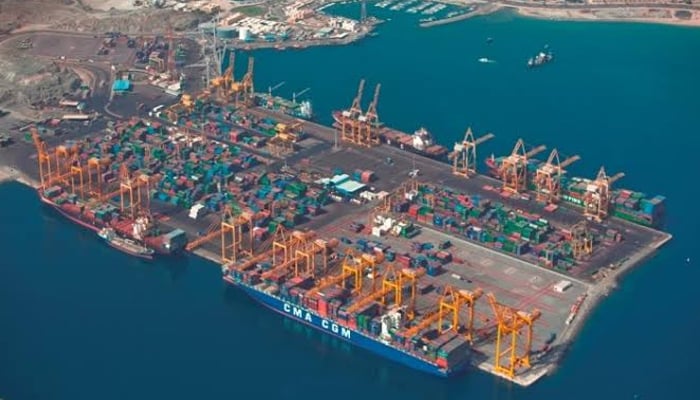
    DUBAI: The United Arab Emirates has launched a new direct maritime trade route with China, creating a faster shipping link between the two countries and reducing the time needed to transport vehicles. The new route connects Khorfakkan Port, located on the Gulf of Oman outside the Strait of Hormuz, with China’s Xiaomo Port. According to the Emirates News Agency, the service will bring large shipments of vehicles directly from the Chinese port to Khorfakkan. The launch is expected to give vehicle importers and logistics companies a quicker option for moving cargo between China and the UAE. The new direct service will reportedly cut vehicle transportation times by three to five days, improving efficiency across the supply chain. Khorfakkan’s strategic location on the Gulf of Oman makes it an important maritime gateway, with direct access to international shipping routes. The new connection could further strengthen the port’s role in handling Chinese goods and automotive shipments bound for the UAE and wider regional markets. The development also reflects growing trade and logistics cooperation between the UAE and China, particularly as demand for faster and more reliable supply chains continues to increase. For the automotive sector, shorter transit times could mean quicker deliveries, smoother inventory planning and greater flexibility for businesses handling vehicles imported from China. With the new route now operational, the UAE is strengthening its position as a regional logistics hub while providing Chinese exporters with a more direct maritime connection to the Gulf. The service is expected to support growing bilateral trade and make vehicle movement between the two markets faster and more efficient.

  • |

    Prince William and Prince Harry could reunite for Princess Diana’s 30th anniversary

    Reports suggest that King Charles III may have received encouraging news regarding the possibility of a reunion between his sons, Prince William and Prince Harry, as preparations begin to mark the 30th anniversary of Princess Diana’s death in 2027. According to reports, the Diana Award charity is planning a series of events to commemorate the late Princess of Wales, whose legacy continues to inspire young people around the world. The organization, which was established in Diana’s memory, is expected to organize special tributes and charitable initiatives to honor her life and humanitarian work. Prince William and Prince Harry both serve as patrons of the Diana Award, making it the only charitable organization that the two brothers continue to support together. Their shared involvement has sparked speculation that the anniversary events could provide an opportunity for them to appear publicly together despite their well-documented differences. According to sources, a reunion between the brothers is certainly possible. He noted that William and Harry have previously set aside their differences for important occasions related to their mother’s legacy. One notable example was the unveiling of Princess Diana’s statue in the Sunken Garden at Kensington Palace in 2021, where the brothers attended the ceremony together. However, Fitzwilliams also acknowledged that much has changed in the years since that event. Relations between the brothers have remained strained following Prince Harry’s decision to step back from royal duties, move to the United States with Meghan Markle, and publicly discuss disagreements within the Royal Family through interviews, documentaries, and his memoir. Despite the ongoing tensions, the upcoming anniversary of Princess Diana’s passing could serve as a meaningful occasion for the brothers to reunite. The event would not only honor their mother’s memory but also demonstrate a shared commitment to the charitable work she inspired. A possible reunion would likely be welcomed by King Charles III, who has reportedly hoped for reconciliation within the family. According to recent reports, the King believes that repairing relationships is important for the future of the monarchy and has been encouraging efforts to ease tensions between Prince William, Prince Harry, and Meghan Markle. Reports have also claimed that King Charles has expressed a desire to restore family unity and has encouraged Prince William to move beyond past disagreements. According to an unnamed source quoted in media reports, the King believes it is time for members of the Royal Family to work towards reconciliation and focus on strengthening family relationships. The source suggested that King Charles has decided to pursue a more peaceful relationship with Prince Harry and Meghan Markle and hopes other family members will support that approach. While these reports remain unconfirmed by Buckingham Palace, they have fueled speculation about possible changes in the family dynamic. The Diana Award’s planned commemorative events are expected to celebrate Princess Diana’s lasting humanitarian legacy, particularly her dedication to young people, charity work, and social causes. If both Prince William and Prince Harry participate, the occasion could become one of the most closely watched royal events of 2027. Although there has been no official confirmation that the brothers will appear together, the possibility has generated considerable interest among royal observers. A joint appearance would not only pay tribute to Princess Diana’s memory but could also signal a positive step toward improving relations within the Royal Family after years of public tension.

  • |

    Romania shuts final nuclear reactor as severe Danube drought forces emergency energy measures

    Romania has completed a full shutdown of its Cernavoda nuclear power plant after severe drought dropped water levels in the Danube River to historic lows. The plant, which relies on the Danube for cooling and typically provides 20% of the country’s electricity generation, took its second reactor offline following the prior closure of its first reactor in late July. State operator Nuclearelectrica stated that the second reactor was shut down due to the ongoing drop in water levels, with no restart anticipated for at least ten days. To mitigate the energy shortfall, Romania declared a state of emergency for August, activated a 330-megawatt lignite-fired power plant, and requested that major industrial consumers and households curb power use during peak hours. Major automakers including Dacia and Ford have paused domestic production to help conserve power. The total shutdown immediately threatens energy security in neighbouring Moldova, which relies on Romanian imports to cover up to 60% of its electricity deficits. Moldovan authorities warned of potential rolling power cuts if alternative supplies cannot be secured from Ukraine or Western Europe. Across Europe, low river levels have similarly forced nuclear output reductions in France and triggered emergency engineering interventions in Hungary.

Leave a Reply

Your email address will not be published. Required fields are marked *