accuses china8217s moonshot
|

US accuses China’s Moonshot AI of stealing technology from American rival

The United States has accused Chinese artificial intelligence company Moonshot AI of illegally using technology from a leading American AI developer, escalating tensions between the world’s two largest technology powers. The allegations were made by White House Science and Technology adviser Michael Kratsios, who claimed the Chinese company copied the capabilities of a US model to develop its own advanced AI system.

Kratsios said Moonshot AI used a technique known as distillation to build its recently unveiled Kimi K3 model. Distillation is a process in which a smaller or less advanced AI model repeatedly interacts with a more powerful model to learn from its responses and improve its own performance. While the technique has legitimate uses within companies that own both models, using it to copy another company’s proprietary system without permission could violate intellectual property rights.

According to Kratsios, the US government has information indicating that Moonshot AI extracted capabilities from Anthropic’s AI technology during the development of Kimi K3. He also alleged that the company gained access to restricted Nvidia servers powered by the advanced GB300 Grace Blackwell computing platform, despite US export controls designed to limit China’s access to cutting edge semiconductor technology.

Moonshot AI has not publicly responded to the accusations. The Chinese embassy in Washington, Anthropic, Nvidia, and the White House had also not issued detailed comments following the allegations.

The claims come just days after Moonshot AI introduced Kimi K3, an advanced open source language model that attracted global attention for its strong performance. Many industry experts said the model significantly narrowed the gap between Chinese and American AI technology. Moonshot described Kimi K3 as being capable of competing with some of the most advanced AI systems developed in the United States.

The allegations have intensified concerns within Washington over the protection of American technology. US Treasury Secretary Scott Bessent recently said authorities are investigating whether Chinese AI companies have copied the capabilities of American competitors through large scale distillation efforts. He warned that sanctions remain an option if Chinese firms are found to have engaged in intellectual property theft.

Bessent said the United States supports open source artificial intelligence because it encourages innovation and wider access to technology. However, he stressed that open source development does not give companies permission to copy protected American research or commercial products.

The dispute comes at a sensitive time in US China relations. President Donald Trump is expected to meet Chinese President Xi Jinping in September as both countries continue negotiations on trade, technology, and security issues. Artificial intelligence has become one of the most important areas of competition between the two nations.

The United States first imposed restrictions on exports of Nvidia’s most advanced AI chips to China in 2022 over concerns that the technology could strengthen China’s military capabilities. Since then, governments have increased efforts to prevent the illegal transfer and smuggling of high performance semiconductor chips into China.

Moonshot AI plans to release Kimi K3 as an open source model on July 27, allowing developers around the world to download, modify, and build applications using the software. The planned release has generated significant interest because it would become one of the largest freely available AI models developed by a Chinese company.

The latest accusations are not the first involving Anthropic. Earlier this year, the American AI company accused Chinese technology giant Alibaba of using similar distillation methods to copy the capabilities of its Claude AI models. Anthropic urged US lawmakers to strengthen legal protections for American AI technology and introduce tougher penalties for companies found to be stealing intellectual property.

The White House has also announced broader measures to protect American innovation from foreign cyber and technology theft. Officials say the government is working more closely with leading AI companies to detect and prevent organised efforts aimed at copying proprietary research. As investigations continue, the allegations against Moonshot AI are expected to become another major issue in the growing technological rivalry between the United States and China.

Similar Posts

  • |

    Progressive outsider Abdul El-Sayed claims victory in Michigan Senate primary

    In a dramatic outcome that has sent shockwaves through the Democratic establishment, progressive public health advocate Dr Abdul El-Sayed has secured the Democratic nomination for the United States Senate in Michigan, narrowly defeating establishment-backed Representative Haley Stevens. The contest to replace retiring Democratic Senator Gary Peters had emerged as a central battleground between the party’s moderate and progressive factions. Stevens, a four-term congresswoman with deep ties to Washington leadership, had entered the primary with formidable institutional backing and substantial financial support, including over $30 million (£23.5 million) spent on her behalf by political action committees affiliated with the American Israel Public Affairs Committee (AIPAC). Despite being outspent by a margin of roughly nine to one, El-Sayed built a coalition anchored by strong turnout among young voters, working-class communities, and urban centres such as Detroit and Ann Arbor. Backed by prominent progressive figures including Senator Bernie Sanders and Representative Alexandria Ocasio-Cortez, El-Sayed campaigned on a platform of universal healthcare, campaign finance reform, higher taxes on wealthy corporations, and an immediate end to foreign military aid. “We built this campaign brick by brick”, El-Sayed told cheering supporters at his election night watch party in Detroit, emphasising that grassroots engagement ultimately proved more powerful than dark-money political action committees. The progressive momentum extended down-ballot across the state. In Michigan’s 13th Congressional District, Democratic Socialist Donavan McKinney unseated incumbent Representative Shri Thanedar, an outspoken supporter of military aid to Israel, while progressive activist William Lawrence clinched the nomination in another competitive congressional district. The primary result sets up a high-stakes November general election against Republican nominee Mike Rogers, a former congressman who ran unopposed. Rogers and national Republican strategists have already signalled plans to paint El-Sayed’s left-wing platform as out of touch with Midwestern swing-state voters. For Democrats, the contest will serve as an ultimate test of whether a bold progressive message can unite the party base and retain a seat vital to determining control of the US Senate.

  • |

    US judge dismisses bribery and fraud case against Gautam Adani despite procedural concerns

    A US federal judge has formally dismissed criminal bribery and fraud charges against Indian billionaire Gautam Adani, bringing an end to a high-profile prosecution while issuing a sharp rebuke over how the Department of Justice handled the case. US District Judge Nicholas Garaufis approved the Justice Department’s request to drop all charges with prejudice, permanently barring prosecutors from refiling the case. The decision closes an investigation launched in 2024 that accused Adani and senior executives of paying over $250 million in bribes to Indian officials to secure solar energy contracts while misleading American investors. In a 47-page order, Judge Garaufis voiced deep concern over procedural irregularities, noting that senior Justice Department official R. Trent McCotter negotiated the dismissal directly with Adani’s defence team without consulting the FBI agents and career prosecutors handling the investigation. The judge also scrutinized whether Adani’s public pledge to invest $10 billion in the United States and create 15,000 jobs influenced the outcome. While Garaufis ultimately concluded the investment promise did not legally dictate the government’s decision, he warned that the unusual handling of the case raised troubling questions about public perception of equal justice. The dismissal follows efforts by Adani’s legal team, led by prominent attorney Robert J. Giuffra Jr., who argued that much of the alleged conduct occurred outside US jurisdiction and no longer aligned with federal enforcement priorities. Adani, who maintained his innocence throughout the proceedings, welcomed the ruling in a statement, expressing deep respect for the judicial process.

  • | | |

    Another promise fulfilled’: PM Shehbaz unveils m…

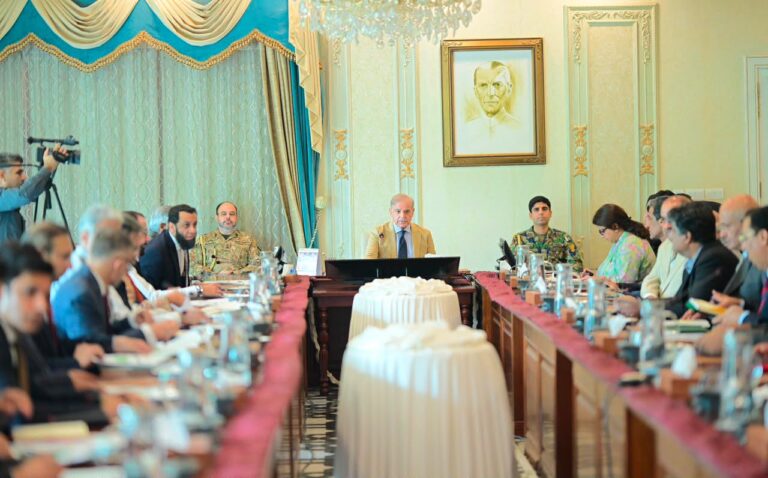
    Prime Minister Muhammad Shehbaz Sharif on Thursday announced a comprehensive package of reforms aimed at modernising consular services for overseas Pakistanis, with government officials describing the measures as the fulfilment of another commitment made to the Pakistani diaspora. The new initiatives are designed to make consular services faster, more transparent and more accessible through digitalisation and streamlined procedures. The reforms include QR code-based complaint registration at Pakistani embassies, a simplified attestation process for Power of Attorney and property-related documents, a one-step Apostille attestation system, an evening shift at the Ministry of Foreign Affairs in Islamabad, and a courier-based document attestation service. The government is also integrating the databases of the Higher Education Commission (HEC), Inter Board Committee of Chairmen (IBCC), NADRA and the National Police Bureau to speed up document verification. In addition, a mobile application is being developed to enable digital verification of birth, death, marriage and family registration certificates, along with other official documents. Prime Minister Shehbaz Sharif said overseas Pakistanis are a valuable national asset and reiterated his government’s commitment to providing efficient, transparent and citizen-friendly services for Pakistanis living abroad. The reforms were welcomed by overseas Pakistanis, many of whom said the initiatives would help reduce delays and simplify access to essential consular services.

  • | |

    ECP backs Punjab polls from December 15

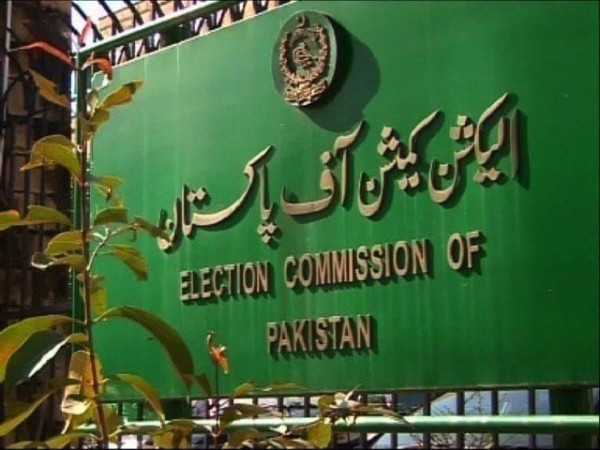
    The Election Commission of Pakistan has agreed in principle to hold long-delayed local government elections in Punjab between December 15, 2026, and January 15, 2027. The decision was reached during an ECP meeting chaired by Chief Election Commissioner Sikandar Sultan Raja on Thursday. The meeting was held to discuss the proposed schedule and preparations for local polls in the province. A Punjab government delegation attended the meeting. The delegation included Local Government Minister Zeeshan Rafiq, Mines and Minerals Minister Sardar Sher Ali Gorchani, Agriculture Minister Syed Muhammad Ashiq Hussain Shah and Education Minister Rana Sikandar Hayat. The Punjab chief secretary and senior local government officials were also present. The ECP was informed that the delimitation process for Punjab had been completed, clearing an important hurdle in preparations for the elections. Chief Election Commissioner Sikandar Sultan Raja stressed that elected local governments are a constitutional requirement under Article 140-A. He also pointed out that election authorities are legally required to conduct local government elections within the prescribed period after the expiry of elected local bodies. Punjab officials said the provincial government needed sufficient time to complete administrative preparations, arrange financial resources and deploy staff for the electoral process. The provincial government proposed the December 15 to January 15 window as the most suitable period for polling. Officials said school examinations would have concluded by then, allowing educational staff to be available for election duties. The government also cited weather conditions as a factor. Holding the elections during the proposed period could help avoid difficulties associated with heavy fog during other parts of the winter season. Punjab authorities further informed the ECP that they preferred conducting the elections in phases. Officials said phased polling would allow better security arrangements and make it easier for the administration to manage the large-scale electoral exercise. The ECP accepted the proposed timeframe in principle and directed the Punjab government to submit a detailed plan promptly if it wanted the elections to be conducted in multiple phases. The commission said the proposed arrangements could help move the province toward fulfilling its constitutional obligation of establishing elected local governments. The Punjab government has already allocated Rs12.52 billion for the local elections. It has also approved the recruitment of 900 Union Council secretaries to support the functioning of local bodies. Punjab has not held local government elections since 2015. The previous polls were conducted in several phases between October and December that year. The elected local councils began functioning in 2017 after mayors and chairpersons were selected through indirect elections. The local governments were dissolved in April 2019 by the then Punjab government before completing their full term. The Supreme Court subsequently ordered their restoration, and the councils eventually completed their tenure on December 31, 2021. Since then, local government elections have remained pending amid repeated changes to Punjab’s local government laws. Successive provincial administrations amended or replaced the relevant legislation, forcing the ECP to repeatedly revise its preparations and carry out fresh delimitation exercises.

  • | | |

    Iran demands Qatar probe over missing pilots

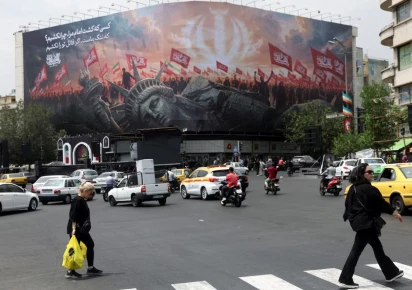
    TEHRAN: Iran has asked Qatar to allow an Iranian military fact-finding team to enter the country to investigate the fate of pilots Tehran says went missing after an incident involving Iranian aircraft, adding another layer of tension to already strained regional relations. Iranian military official Mohammad Baqerzadeh, commander of the Armed Forces General Staff’s Committee for the Search for Missing Persons, said an Iranian Air Force expert team had been waiting for months to travel to Qatar, according to Iranian media. Baqerzadeh accused Qatari authorities of repeatedly delaying the investigation and called on the International Committee of the Red Cross to intervene in the case. Qatar, however, has rejected Iran’s claim that it is holding Iranian pilots. Doha said its search-and-rescue teams recently recovered the remains of one pilot after Iranian aircraft entered Qatari airspace in March and failed to respond to repeated attempts to establish contact. Qatari authorities said they had contacted Tehran to coordinate the transfer of the remains and invited Iranian officials to examine details of the search-and-rescue operation. Qatar said it had not received a response. The dispute comes as Tehran continues to focus heavily on the security of the Strait of Hormuz, one of the world’s most important energy shipping routes. Iran says air defence capacity survived war Separately, an Islamic Revolutionary Guard Corps official claimed that more than 85 per cent of Iran’s air-defence production capacity survived the recent conflict. According to Iranian media reports, the official said attacks on military production facilities had not significantly reduced the production or delivery of missiles and air-defence systems. He also claimed that production in some areas had increased and that Iran’s operational air-defence capabilities were now stronger than at the beginning of the fighting. The claims could not be independently verified. Hormuz shipping talks continue Iran has also announced progress in negotiations with Oman over new shipping routes through the Strait of Hormuz. Foreign Ministry spokesman Esmaeil Baghaei said Tehran and Muscat had reached an agreement on a shipping-route map following weeks of technical discussions. The negotiations began after a memorandum of understanding was signed in June to develop safer navigation arrangements. Foreign Minister Abbas Araghchi stressed that the technical talks with Oman should not be confused with negotiations over reopening the waterway. He said existing maritime routes were no longer functional and that Iran and Oman were working on a temporary route that could eventually become permanent. Tehran links security to US actions Iranian officials continue to insist that the full restoration of security in the strait depends on an end to what Tehran describes as US military pressure, threats and a naval blockade. Deputy Foreign Minister Kazem Gharibabadi also declared that the Strait of Hormuz would remain under Iranian control, while accusing Washington of suffering strategic setbacks. The statements underline the widening gap between Iran and the United States over the strategic waterway, despite technical discussions between Iran and Oman aimed at facilitating maritime navigation. Hezbollah commander reportedly killed Meanwhile, tensions have also continued along Iran’s regional front. Israel’s military said it killed Abu Hassan Alaa, described as a senior Hezbollah commander, in a strike in southern Lebanon. The Israeli army said the attack targeted a Hezbollah headquarters in the Ansar area. Hezbollah had not immediately commented on the claim. The developments show how multiple disputes remain intertwined across the region, from missing military personnel and air-defence claims to the sensitive question of shipping through Hormuz. For Tehran, however, control and security of the strait remain central. While Iran and Oman appear to be making technical progress on navigation arrangements, Iranian officials continue to maintain that any broader reopening of the waterway will depend on wider political and security conditions.

  • |

    Romanian forces execute controlled detonation on Danube to safeguard nuclear energy supply

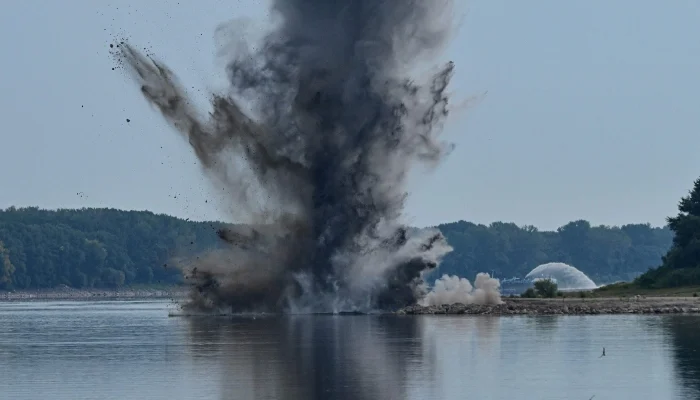
    Romanian naval forces detonated 180 kilogrammes of explosives to clear a massive rock obstruction in the drought-stricken Danube River, attempting to channel essential cooling water towards the country’s sole remaining functional nuclear reactor at Cernavoda. The blast was designed to clear the riverbed and facilitate the construction of a temporary dam to boost water volume heading to the facility. The intervention follows Romania’s declaration of a nationwide state of emergency for August after record-low water levels forced one reactor to shut down entirely. Romanian Defence Minister Radu Miruta defended the costs of the operation, emphasising that maintaining operational capacity at the facility even for a few additional days far outweighs the financial expenditure. Regional energy strains are mounting simultaneously in neighbouring Hungary, where severe water depletion at the Paks nuclear power station has drastically cut output. Prime Minister Peter Magyar warned that a complete plant shutdown could occur next week without weather relief, urging regional coordination and energy restraint to avoid a wider crisis as low rainfall continues across Eastern Europe.

Leave a Reply

Your email address will not be published. Required fields are marked *