judge dismisses bribery
|

US judge dismisses bribery and fraud case against Gautam Adani despite procedural concerns

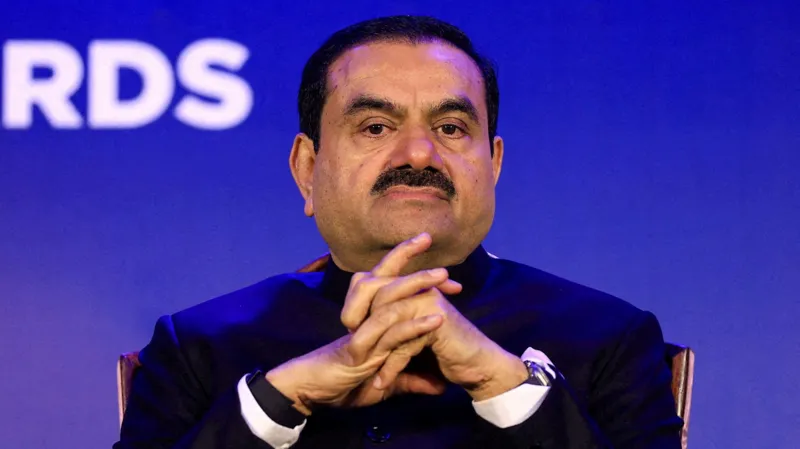
A US federal judge has formally dismissed criminal bribery and fraud charges against Indian billionaire Gautam Adani, bringing an end to a high-profile prosecution while issuing a sharp rebuke over how the Department of Justice handled the case.

US District Judge Nicholas Garaufis approved the Justice Department’s request to drop all charges with prejudice, permanently barring prosecutors from refiling the case.

The decision closes an investigation launched in 2024 that accused Adani and senior executives of paying over $250 million in bribes to Indian officials to secure solar energy contracts while misleading American investors.

In a 47-page order, Judge Garaufis voiced deep concern over procedural irregularities, noting that senior Justice Department official R. Trent McCotter negotiated the dismissal directly with Adani’s defence team without consulting the FBI agents and career prosecutors handling the investigation.

The judge also scrutinized whether Adani’s public pledge to invest $10 billion in the United States and create 15,000 jobs influenced the outcome.

While Garaufis ultimately concluded the investment promise did not legally dictate the government’s decision, he warned that the unusual handling of the case raised troubling questions about public perception of equal justice.

The dismissal follows efforts by Adani’s legal team, led by prominent attorney Robert J. Giuffra Jr., who argued that much of the alleged conduct occurred outside US jurisdiction and no longer aligned with federal enforcement priorities.

Adani, who maintained his innocence throughout the proceedings, welcomed the ruling in a statement, expressing deep respect for the judicial process.

Similar Posts

  • | |

    Noah Kahan slams White House over unauthorised song use.

    Noah Kahan has become the latest musician to publicly push back against the Trump administration after the White House used his music without permission, joining a growing list of artists who have objected to their songs being used in administration social media content. The dispute began when the White House posted photographs and video to both Instagram and TikTok showing President Trump touring General Motors’ Milford Proving Ground in Michigan. The posts were set to Kahan’s song American Cars, taken from his chart-topping album The Great Divide. The pairing was clearly intended to evoke a sense of American pride and manufacturing strength, but the artist whose voice and music gave the posts their soundtrack had not been consulted and had not given his approval. Fans were quick to notice and quickly alerted Kahan by tagging him in the comments. His response was direct and unambiguous. “Would never approve of my music being used in support of you or this administration,” he wrote beneath the post. The comment rapidly accumulated tens of thousands of likes, suggesting the sentiment resonated well beyond Kahan’s own fanbase. His frequent collaborator and co-writer on the track, guitarist Noah Levine, also left a response of his own beneath the White House post. His comment was reportedly more direct in its language than Kahan’s, though it was subsequently removed. At the time of publication, the song itself remained attached to the White House’s video despite both objections. The White House did not respond to requests for comment on Kahan’s objection. The incident is part of a pattern that has become increasingly familiar during the Trump administration’s social media operations. Just days before Kahan spoke out, Katy Perry criticised the White House for using her 2010 hit Firework in a TikTok post featuring footage of military strikes. “I’m deeply appalled and angry,” she wrote, adding that she had not approved its use and had not even been asked. Ariana Grande raised similar concerns in June after a version of her song Bye appeared in a White House TikTok post depicting ICE arrests. The list of artists who have previously objected to the administration’s use of their music is extensive. Sabrina Carpenter, Olivia Rodrigo, Celine Dion, Neil Young and the Rolling Stones have all at various points voiced comparable complaints, reflecting a consistent tension between an administration that appears to deploy popular music as a tool of political imagery and the musicians whose work is being used without their knowledge or consent. For Kahan, the issue was clearly not simply procedural but personal. His response made clear that the objection was not only about the absence of permission but about the specific association itself, one he said he would never willingly choose.

  • |

    DR Congo Ebola outbreak exceeds 4,000 confirmed cases

    The Democratic Republic of Congo is facing the fastest-spreading Ebola outbreak on record, with official data confirming that total infections have surpassed 4,000 cases. According to the national public health institute, recorded infections have reached 4,053, alongside 1,850 deaths across five provinces: Ituri, North Kivu, South Kivu, Haut-Uele, and Tshopo. Research published in the journal Science indicates that the virus was circulating in Ituri as early as January 2026, months before the epidemic was officially declared on 15 May, with over 500 suspected cases occurring during that initial period. Containment efforts continue to be severely hampered by delayed detection, overwhelmed healthcare surveillance, active military conflict, and an absence of vaccines or targeted treatments tailored for the specific viral species involved. Ranking as the world’s second-largest Ebola outbreak in history, the epidemic is surpassed only by the 2014–2016 West African outbreak.

  • | |

    PTI questions Imran Khan’s transfer to Pims

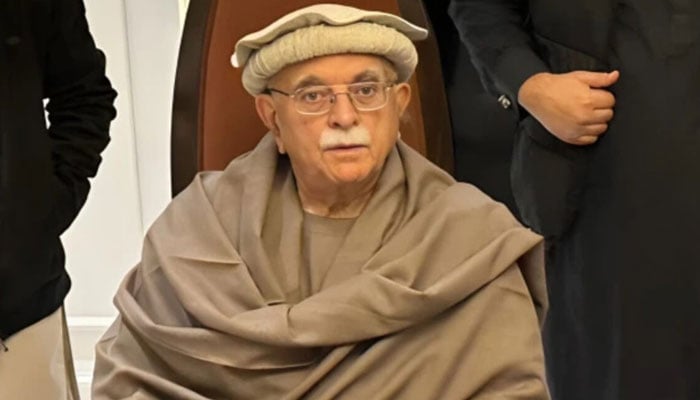
    ISLAMABAD: Opposition leaders have raised serious questions over the decision to take former prime minister and PTI founder Imran Khan to the Pakistan Institute of Medical Sciences (Pims) instead of Shifa International Hospital. The issue has created a fresh political dispute between the government and the Pakistan Tehreek-e-Insaf (PTI). Speaking in the National Assembly, senior politician and Pashtunkhwa Milli Awami Party Chairman Mahmood Khan Achakzai said a positive atmosphere had developed after reports emerged that Imran would be taken to hospital. Achakzai said people across Pakistan were happy to hear that Imran was being taken to hospital for a medical examination. He said his party had instructed its workers not to go to any hospital. The decision was aimed at avoiding any situation that could create security problems, he added. Achakzai also claimed that Imran’s sisters were stopped at Shifa International Hospital. He said the development had caused concern among people across the country. He questioned why the situation changed after an apparently positive atmosphere had developed. Meanwhile, PTI Chairman Barrister Gohar Khan strongly criticised the decision to take Imran to Pims. Speaking to reporters in Islamabad, Gohar said the party had not expected Imran to be taken to another hospital. He also expressed concern over the lack of clear information about the former prime minister’s medical examination. Gohar claimed that the Supreme Court’s order had not been implemented. He said the court’s directive was clear and contained no ambiguity. According to Gohar, failure to implement a clear judicial order was unfortunate. He questioned how democracy could function if court orders could not be implemented. “If implementing a court order is difficult, then how will democracy function?” he asked. Gohar also said political negotiations could not take place under such circumstances. He maintained that democracy required institutions and political actors to respect the law and judicial decisions. Despite his criticism, the PTI chairman said his party remained committed to negotiations. He said the PTI wanted political disputes to be resolved through dialogue. He added that efforts in this regard would continue. The controversy follows Information Minister Attaullah Tarar’s statement about Imran’s medical examination. Tarar said Imran was examined at Pims rather than Shifa International Hospital. He said doctors from Shifa were also present during the medical examination. The government has maintained that security concerns led authorities to take Imran to Pims. The issue has now become a new point of confrontation between the government and PTI. The PTI is questioning the decision to change the hospital and the implementation of the Supreme Court’s directive. The government, meanwhile, is defending the move on security and medical grounds.

  • | |

    Sindh Cabinet approves toll tax for heavy commerci…

      The Sindh provincial cabinet, chaired by Chief Minister Syed Murad Ali Shah, has approved the imposition of a toll tax on heavy commercial vehicles using the Mehran Highway. The decision was made during a cabinet meeting as part of the provincial government’s broader strategy to establish a sustainable financial system for the maintenance and development of road infrastructure across Sindh. According to the cabinet’s decision, the toll tax will apply exclusively to heavy and commercial vehicles traveling on the 135-kilometer-long Mehran Highway. Private passenger vehicles will not be subject to the new toll under the current policy. Officials stated that commercial transport vehicles place greater pressure on road infrastructure due to their size and weight, making it appropriate for them to contribute to the highway’s maintenance through toll payments. During the meeting, cabinet members received a detailed briefing on the ongoing development of the Mehran Highway. Officials informed the cabinet that the project to expand the highway into a dual carriageway is currently underway at an estimated cost of Rs41 billion. The project is intended to improve road safety, increase transportation efficiency, reduce travel time, and accommodate the growing volume of traffic, particularly heavy commercial vehicles that regularly use the route for the movement of goods. The briefing also highlighted the expected financial benefits of the toll collection system. It was estimated that the toll tax would generate approximately Rs2.14 billion in annual gross revenue. After deducting operational and administrative expenses associated with collecting the toll, the government expects a net annual income of around Rs1.48 billion. These funds are intended to support the regular maintenance, repair, and future upgrading of the highway, ensuring that it remains in good condition for years to come. The cabinet further approved a schedule of toll charges based on different categories of vehicles. Under this system, toll rates will vary according to the type, size, and classification of each vehicle. Heavy trucks, trailers, buses, and other commercial transport vehicles will be charged according to predetermined rates. Officials explained that this category-based approach is designed to make the toll system fair and proportionate, with larger vehicles contributing more because of the greater wear and tear they cause to road infrastructure. In another significant administrative decision, the Sindh cabinet approved the restoration of the traditional name of the provincial department responsible for road construction and public infrastructure. The department, which had previously been renamed the Works and Services Department will once again be known as the Communication and Works Department. The government stated that the name change is intended to align Sindh’s administrative structure with that of the federal government and other provinces, where the department is commonly known by the same title. Speaking after the cabinet meeting, Chief Minister Syed Murad Ali Shah emphasized that the Sindh government is committed to introducing a self-sustaining financial model for the long-term maintenance of highways and road networks. He said that relying solely on government budget allocations is not sufficient to meet the increasing costs of maintaining modern transportation jobs infrastructure. According to him, the introduction of toll collection on major highways will provide a stable source of revenue that can be reinvested directly into road maintenance and improvement projects. The Chief Minister added that better roads are essential for economic growth, trade, and public safety. By ensuring a reliable funding mechanism for highway upkeep, the government aims to enhance transportation services, reduce infrastructure deterioration, and improve connectivity throughout the province. The approval of the toll tax and the continuation of the Mehran Highway expansion project represent important steps toward achieving these long-term development objectives while promoting a more efficient and financially sustainable road network in Sindh.

  • | |

    More provinces or better governance? In Sindh, div…

    “Start With Punjab”: Saeed Sarbazi Calls for Pilot Model Karachi: Once again, the demand for new administrative units and provinces has been sparked — this time from within the government itself. Interior Minister Mohsin Naqvi’s recent statement has reignited the debate, raising questions about governance, service delivery, and political intent. Coming at a time when the current setup is widely described as a “hybrid system,” Naqvi is seen by many as representing the other partner in that arrangement. His call therefore carries weight beyond routine political rhetoric, forcing both parliament and the public to ask: is this about bringing the state closer to the people, or about redrawing Pakistan’s political map? MQM-P Backs Demand: “Engine of Pakistan’s Economy” The debate found immediate backing from MQM-Pakistan, which has once again strongly supported the idea of separating Karachi from Sindh. The party argues that the city, which generates the bulk of Pakistan’s revenue, should have control over its own resources so that what is earned in Karachi is spent on Karachi. Calling it the “engine of the entire Pakistan economy,” MQM-P maintains that an independent administrative setup for the metropolis is the only way to fix its decades-old issues of infrastructure, water, transport and governance. Sindh Government Rejects: “Dangerous Precedent” However, the Sindh government has strongly opposed the idea. Provincial leaders and ministers like Sharjeel Memon, Saeed Ghani and Nasir Hussain argue that carving out Karachi from Sindh will only deepen existing fault lines and promote hate and division among communities. They maintain that Karachi is an integral part of Sindh’s history, culture, and economy, and that separating it administratively would set a dangerous precedent for the federation. For them, the solution lies in better governance and resource allocation within the existing provincial structure, not in division. PML-N Opposition: “Will Never Be Approved” The Pakistan Muslim League-Nawaz has also come out in opposition to the proposal. A senior PML-N minister and veteran politician, Rana Sanaullah, Special Assistant to the Prime Minister on Political Affairs, stated in a TV talk show that any legislation aimed at dividing provinces into units would “never be approved” in the National Assembly. He also asserted that such proposals were never discussed in cabinet or in parliament. The party argues that such moves risk destabilizing national harmony, and that the focus should remain on strengthening local government systems within provinces rather than redrawing administrative boundaries. MQM-P Counter: Parliamentary Precedent Cited Commenting on PML-N’s remarks, MQM-Pakistan head Mustafa Kamal fired back, saying those who want to reorganize Pakistan into smaller administrative units have the political strength to do so. He argued whether the 26th or 27th amendment bills were discussed in cabinet before they were floated for approval in parliament. He disclosed that both the bills were presented on the day of passing and were passed unanimously even before discussion. “If a bill for new provinces is brought to the floor of the National Assembly, it would be passed — just as the 26th and 27th constitutional amendments were,” Kamal said. His statement signals MQM-P’s confidence that with the right backing, even a contentious legislative move can sail through parliament. Saeed Sarbazi’s Expert View: Ill-timed Debate, Governance Needed, Not Division Talking to this correspondent, senior journalist, news editor at a reputable daily and former president of the Karachi Press Club, Saeed Sarbazi said raising such a subject at this critical stage was ill-timed. With the country going through a severe economic meltdown amid the Iran-US conflict, he argued, separating Karachi from Sindh would not serve any purpose. Sarbazi pointed out a key administrative fact: “More than 65 percent of Karachi belongs to cantonment areas. So blaming the Sindh government for the state of 34 percent of the infrastructure is not fair.” For him, the debate distracts from the real issue of joint responsibility and better coordination between all stakeholders. Federal Responsibility: Revenue vs Investment Gap Sarbazi, a seasoned union worker turned leader, also highlighted the federal government’s obligations in the debate. “If Karachi is mini Pakistan, where the country’s most important ports are located and the entire Pakistan benefits from its structure and institutions, then it is obligatory on the Federal government to provide monetary support,” he stated. He cited the example of the National Highway M9 — a key CPEC project — which still remains a single lane in parts despite years of promises. “Till to-date the federal government has not completed the double lane highway,” Sarbazi said, arguing that Karachi generates the most revenue but gets the least direct federal investment in return. “Start With Punjab”: A Pilot Model Suggested by Sarbazi The former KPC president further added that the discussion should not be limited to Sindh alone. “Punjab Assembly has already passed a resolution to divide Punjab into South and Central Punjab,” Sarbazi noted. “If those who aspire to see how administrative units will function and become a model, then it should start from Punjab. If it presents a good governance model, then perhaps Sindh will follow.” His remarks suggest that instead of confrontation, a pilot model in Punjab could set the tone for the rest of the country. Power Politics and PPP’s Role in Sindh Saeed Sarbazi, who holds the unprecedented record of being elected unopposed along with his entire panel to the Karachi Press Club, stated that such tactics of creating more administrative units are often ignited by power corridors as a tool for arm-twisting political parties. “Though democratically elected governments have flaws, these can only be corrected through good governance,” he said. “Such arm-twisting only brings political instability in Pakistan.” Sarbazi emphasized that the role of the Pakistan Peoples Party in the Sindh government should not be underplayed. “It is serious about improving infrastructure in the province — by providing people with good transport, water at their doorstep, and by improving the sewage and drainage system.” The Way Forward: Merits, Concerns, and Alternatives As the debate over new provinces resurfaces, both merits and concerns demand attention. Proponents argue that smaller administrative units

  • |

    Bangladesh make history, overtake India in WTC table

    DARWIN: Bangladesh’s stunning nine-wicket victory over Australia in Darwin has not only delivered a landmark moment for the team but also lifted them above India in the ICC World Test Championship 2025-27 standings. Bangladesh secured their first-ever Test victory over Australia, doing so on Australian soil in a result that sent a strong message across the Test cricket world. The win also produced a significant shift in the World Test Championship points table. Australia remain at the top despite suffering their second defeat of the current cycle, holding a points percentage of 77.78. South Africa are second with 75 per cent, while New Zealand sit third on 72.22 per cent. Bangladesh have now climbed to fourth place with an impressive 66.67 per cent, moving ahead of India, who are fifth with 48.15 per cent. The result gives Bangladesh an important boost as they continue their WTC campaign and adds even greater significance to their historic success in Darwin. Sri Lanka occupy sixth position with 41.67 per cent, followed by England on 24.36 per cent. Pakistan are eighth with 22.22 per cent, while the West Indies remain ninth on 20.83 per cent. For Bangladesh, the victory represents more than just two points or a rise in the rankings. It marks their first Test triumph against Australia and could become one of the defining results of their current World Test Championship campaign. WTC Standings Details Bangladesh Position: 4th place Bangladesh Points Percentage: 66.67% (3 wins from 5 matches) India Position: 5th place India Points Percentage: 48.15% (4 wins from 9 Tests) Historic Milestone: Marked Bangladesh’s first Test win on Australian soil.

Leave a Reply

Your email address will not be published. Required fields are marked *