
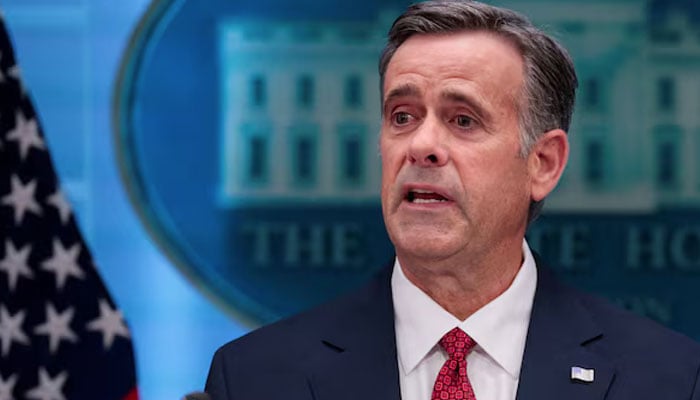
cia chief john
|

CIA chief John Ratcliffe makes surprise Moscow vis…

MOSCOW: CIA Director John Ratcliffe has made an unannounced visit to Moscow, drawing international attention as the United States and Russia remain locked in tensions over the Ukraine war and wider geopolitical disputes.

Ratcliffe reportedly arrived in the Russian capital on Tuesday aboard a US Air Force Boeing C-17A Globemaster III military transport aircraft. The plane had earlier travelled from Andrews Air Force Base near Washington to Riga, Latvia, before continuing to Moscow.

The unusual flight immediately raised questions about the purpose of the visit. US and Russian officials have not publicly disclosed details of Ratcliffe’s schedule, while the CIA has also declined to provide information about his meetings.

US media reports said the CIA chief was in Moscow for discussions with Russian officials. However, the identities of those involved and the subjects discussed remain unclear.

The visit is particularly significant because direct, high-level contacts between senior US intelligence officials and Moscow have become rare since Russia’s invasion of Ukraine. Ratcliffe’s trip is believed to be the first known visit to Russia by a sitting CIA director since William Burns travelled to Moscow in November 2021. Burns held talks with Russian President Vladimir Putin at the time.

The latest development comes amid continuing diplomatic efforts surrounding the Russia-Ukraine conflict and broader disagreements between Washington and Moscow. It also follows growing tensions linked to Russia’s relationship with Iran and the wider security situation in the Middle East.

Reports have also indicated that Washington asked Ukraine to avoid strikes on Moscow and St Petersburg during the period of the senior US official’s visit. US officials have not publicly confirmed the request or explained its circumstances.

The secrecy surrounding Ratcliffe’s journey has fueled speculation about whether the talks could involve intelligence cooperation, Ukraine-related diplomacy, security concerns or other sensitive matters. No official confirmation has emerged to support any particular explanation.

For now, the CIA director’s unexpected appearance in Moscow remains shrouded in mystery, but the trip underscores that high-level channels between Washington and Moscow remain active despite deep political and military differences.


Similar Posts

  • | |

    AJK rejects firing allegations against forces

    The Government of Azad Jammu and Kashmir (AJK) has strongly rejected allegations that security forces opened fire on protesters or were responsible for civilian deaths during the recent unrest in Rawalakot, describing the claims as false, unverified and part of an organised disinformation campaign. Responding to a report by the BBC on the recent incidents, the AJK government said armed members of the banned Joint Awami Action Committee opened fire on security personnel in Rawalakot, resulting in the deaths and injuries of several officers. It also alleged that the attackers set multiple vehicles on fire during the violence. According to the government, security forces acted only to maintain law and order and enforce the law, insisting that civilians were not deliberately targeted during the operation. The AJK government cited information from the police spokesperson, who said seven security personnel were killed and 143 others were injured in firing allegedly carried out by armed members of the banned Joint Awami Action Committee. It further claimed that the banned group has a history of violent activities. According to the statement, attacks carried out in 2024 and 2025 resulted in the deaths of four security personnel and left hundreds of others injured. The government also said two individuals arrested on July 28 and 29 were under investigation. It alleged that one of the suspects claimed a reward of Rs10 million had been offered for the killing of each Ranger, raising questions about the possible funding of the group. According to the statement, verified videos show armed individuals linked to the banned Joint Awami Action Committee using modern weapons and firing during the unrest. The AJK government maintained that law enforcement agencies carried out their constitutional responsibilities with restraint and professionalism. It insisted that no action was taken against peaceful civilians and that operations were conducted solely to restore public order. The government also categorically denied allegations of indiscriminate firing, the use of snipers or claims that bodies of victims were withheld from their families. It further alleged that the banned Joint Awami Action Committee had previously been involved in blocking roads, stopping or burning cargo vehicles and disrupting the supply of essential goods. According to the statement, law enforcement agencies made efforts to keep roads open and ensure the uninterrupted movement of essential supplies. The AJK government added that the Joint Awami Action Committee has been declared a banned organisation under the Anti-Terrorism Act and said all legal proceedings against the group are being carried out in accordance with the law.

  • | | |

    Iran says every threat will strengthen its militar…

    TEHRAN: Iran’s acting Defence Minister, Seyed Majid Ibn al-Reza, has declared that Tehran will continue strengthening its military capabilities by treating every threat from its adversaries as genuine, even as the United States signals a renewed diplomatic effort. His remarks came after US President Donald Trump announced that Washington had postponed a planned military strike against Iran in favour of restarting negotiations aimed at reducing tensions in the Middle East. In a statement posted on social media platform X on Monday, Ibn al-Reza said Iran viewed recent statements from its enemies as part of a broader campaign of psychological and cognitive warfare. However, he stressed that Tehran would not dismiss any warning, regardless of its nature. “We consider every threat to be real and deserving of a serious response,” the acting defence minister said, adding that Iran’s strategy was to transform every external challenge into an opportunity to reinforce its military preparedness and national defence. He said the Iranian armed forces would neither be caught off guard nor remain passive in the face of rising regional tensions. Instead, every warning or hostile statement would serve as a catalyst for expanding the country’s defensive capabilities and maintaining operational readiness. The comments underscore Iran’s continued emphasis on deterrence at a time when uncertainty surrounds the future of US-Iran relations and broader security dynamics across the Gulf. Earlier, President Trump announced that the United States had suspended plans for military action against Iran after requests from Tehran and several Middle Eastern countries to give diplomacy another chance. Writing on his social media platform, Truth Social, Trump claimed the US military had been fully prepared for an operation of unprecedented scale, describing it as one of the largest potential military actions since the Second World War. According to Trump, the proposed negotiations focus on two key objectives: ensuring the immediate and uninterrupted reopening of the Strait of Hormuz for global shipping and addressing concerns over Iran’s nuclear programme. The Strait of Hormuz remains one of the world’s most strategically important maritime routes, carrying a significant share of global oil exports. Any disruption in the waterway has the potential to affect international energy markets and regional stability. While Washington has presented the renewed talks as an opportunity to prevent further escalation, Iranian officials continue to insist that the country will not relax its military vigilance during the diplomatic process. The latest exchange of statements reflects the delicate balance between diplomacy and deterrence, with both sides signalling a willingness to negotiate while simultaneously emphasizing military preparedness amid persistent regional tensions.

  • | |

    ML-1 railway modernisation project moves closer to…

    LAHORE: Pakistan’s long-delayed Main Line-1 (ML-1) railway modernisation project has entered a crucial stage, with the government setting October 30, 2026, as the deadline for completing the ongoing review process and announcing plans to begin the second round of market consultations next month. The latest developments are expected to help resolve outstanding technical, financial and procedural matters and move the country’s largest railway infrastructure initiative towards formal implementation. The second round of market consultation is scheduled to commence on September 8. International experts, prospective investors and other relevant stakeholders will be consulted during the process to seek their views on project preparation, implementation arrangements, financing and the future course of the scheme. The consultations are considered an important step before the government proceeds towards the execution stage of the project, which has faced repeated delays over the years because of financing, technical and procedural challenges. Weekly reviews ordered Pakistan Railways Chairman Syed Mazhar Ali Shah chaired a high-level meeting at the railway headquarters on Saturday to review progress on ML-1. During the meeting, the chairman directed international design consultants, review consultants and senior railway officials to maintain close coordination and ensure that work on the project continues without unnecessary interruptions. He also ordered weekly progress reviews, instructing officials to identify unresolved matters at an early stage and take immediate steps to remove bottlenecks. The Karachi-Rohri segment received particular attention during the meeting as it has been identified as the first section to be developed under the revised ML-1 plan. Karachi-Rohri section According to official documents presented before the National Assembly, the Karachi-Rohri portion covers approximately 480 kilometres and has an estimated cost of $2.04 billion. Construction of the section is expected to take around three years once the project moves into the implementation phase. The government has engaged the Asian Development Bank (ADB) to arrange financing for this segment. Pakistan has also secured a $10 million Project Readiness Financing loan to support preparatory work required before full-scale implementation. The Karachi-Rohri corridor is strategically significant because it handles a substantial volume of both passenger and freight traffic. Its modernisation is therefore expected to provide an immediate improvement to the efficiency of the national railway network while creating a foundation for upgrades on the remaining sections. Government optimistic about launch Federal Minister for Railways Hanif Abbasi has expressed optimism that the flagship project could finally enter the implementation phase during the current year. The minister said progress on ML-1 had improved and that the government was working to ensure that the remaining requirements were completed within the agreed timelines. He said Prime Minister Shehbaz Sharif was closely monitoring the project and had directed the relevant authorities to ensure its completion according to schedule. According to the minister, ML-1 represents the foundation of Pakistan Railways’ long-term modernisation strategy. He said upgrading the railway corridor would help increase train speeds, improve passenger services and enhance the overall operational efficiency of the rail network. The minister also stressed that transparency, merit and competitive procedures would be followed during the project. He added that recommendations from international experts, market participants and technical consultants would be considered while finalising the implementation strategy. 1,726-km railway corridor The ML-1 project covers the modernisation of the 1,726-kilometre Karachi-Peshawar railway corridor, which serves as the backbone of Pakistan’s railway system. Under the rationalised plan, the corridor has been divided into five major sections:  Karachi-Rohri  Rohri-Multan Multan-Lahore Lahore-Rawalpindi Rawalpindi-Peshawar The government has estimated the total cost of the rationalised ML-1 project at approximately $6.66 billion. The scheme is intended to transform the existing railway infrastructure by improving track quality, signalling systems, operational capacity and train speeds. Higher speeds and improved capacity Earlier official plans for ML-1 envisaged allowing passenger trains to operate at speeds of up to 160 kilometres per hour on upgraded portions of the corridor. The project also includes improvements in axle-load capacity, rehabilitation and strengthening of railway tracks, modern signalling and communications systems, as well as doubling of single-track sections wherever necessary. These improvements are expected to reduce journey times and increase the number of trains that can operate on the corridor. For Pakistan Railways, the project is also viewed as an opportunity to strengthen freight operations and improve the movement of goods between the country’s major commercial centres and ports. Financing remains crucial Despite the renewed momentum, financing remains one of the most important requirements for taking ML-1 into full-scale construction. The government has been working with international development partners to secure funding for different components of the project, while the completion of technical studies, project documentation and financial arrangements remains essential before construction can begin. The ADB-backed Karachi-Rohri section is expected to serve as the starting point for the wider modernisation programme. Officials have previously indicated that preparatory work for the section could begin in 2026, provided the remaining financial and documentation requirements are completed. A long-awaited railway overhaul ML-1 has been discussed for years as a transformative project for Pakistan’s railway sector, but its implementation has repeatedly been delayed because of the scale of investment involved and disagreements over financing and project structure. The government’s decision to set a firm deadline for completing the review phase and hold another round of market consultations signals an effort to bring the project back on track. Regular monitoring by Pakistan Railways, engagement with international consultants and consultation with potential stakeholders are now expected to play a central role in finalising the project. If the remaining technical and financial hurdles are addressed according to the new schedule, the Karachi-Rohri section could become the first major construction phase of the broader ML-1 programme. The government believes that successful implementation of ML-1 would not only modernise the country’s ageing railway infrastructure but also improve passenger connectivity, strengthen freight transportation, reduce travel times and enhance the competitiveness of Pakistan Railways.

  • | |

    Lahore building collapse kills 10, several critica…

    At least 10 people lost their lives and several others were injured after a three-storey residential building collapsed in Lahore’s Baghbanpura area late Wednesday night, prompting a large-scale rescue operation. Emergency teams rushed to the scene shortly after the incident and recovered 16 people from beneath the debris. Six victims were pronounced dead at the site, while the remaining injured were shifted to nearby hospitals. Four more later died from their injuries, raising the death toll to 10. Rescue officials said four people remain in critical condition and are receiving treatment, while two injured victims have been discharged after medical care. Search teams continued clearing the rubble to ensure no one remained trapped. According to preliminary findings, the roof of the ageing building collapsed at around 10:15pm, causing the entire structure to cave in. Members of an extended family living on different floors were inside the building when the collapse occurred. Police and rescue workers immediately launched a coordinated operation, using heavy machinery and manual equipment to search for survivors. Authorities said the exact number of people inside the building at the time of the collapse is still being determined. Punjab Chief Minister Maryam Nawaz expressed grief over the loss of lives and directed senior officials to monitor the rescue and relief efforts. The city commissioner visited both the accident site and the hospital to review the situation and meet the injured survivors. Local lawmakers also visited the area and assured affected families that all possible assistance would be provided during the rescue operation and rehabilitation process. The latest tragedy has renewed concerns over the safety of old and deteriorating buildings in Lahore. It comes only weeks after a deadly roof collapse at a private tuition centre in Kahna claimed the lives of 14 children. Following that incident, provincial authorities had ordered safety inspections of educational institutions and other ageing structures.

Leave a Reply

Your email address will not be published. Required fields are marked *