trump sends saudi
|

Trump sends Saudi nuclear deal to Congress, ties i…

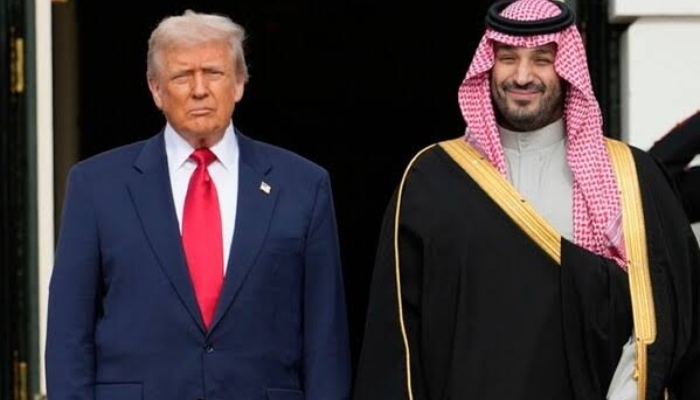
WASHINGTON: The Trump administration has submitted a landmark civil nuclear cooperation agreement with Saudi Arabia to the US Congress for review, but President Donald Trump has maintained that the deal will only move forward if Riyadh agrees to normalize relations with Israel.

The agreement, reached between the United States and Saudi Arabia in July, would allow American companies to provide civilian nuclear technology to the kingdom. It was formally submitted to Congress on Monday under procedures required by US law, according to US officials.

The move puts a potentially major energy partnership into a closely watched congressional review process while adding another layer to Washington’s efforts to reshape relations between Saudi Arabia and Israel.

Trump has said the nuclear agreement is conditional on Saudi Arabia joining the Abraham Accords, the US-backed framework that established diplomatic ties between Israel and several Arab and Muslim-majority countries. Riyadh has not agreed to normalize relations with Israel and has repeatedly linked such a move to progress toward Palestinian statehood.

The nuclear agreement is intended for peaceful energy purposes and could support Saudi Arabia’s plans to develop nuclear power as part of its broader effort to diversify its economy and reduce reliance on oil. The pact would also open opportunities for US nuclear companies to participate in the kingdom’s planned nuclear infrastructure.

However, the deal has already attracted scrutiny from lawmakers and nuclear nonproliferation experts. A key concern is whether the agreement would place sufficient restrictions on Saudi Arabia’s ability to enrich uranium or undertake other activities that could potentially be used for weapons development.

Trump previously said the arrangement would not permit uranium enrichment and would be limited to civilian, non-military purposes. However, reports on the agreement have raised questions over the precise safeguards and long-term provisions surrounding Saudi Arabia’s nuclear programme.

Congress now has a review period under US law during which lawmakers can examine the agreement and potentially object to it. The classified nature of the submitted document is expected to add to congressional scrutiny.

For Saudi Arabia, the agreement could mark a major step toward nuclear energy. For Washington, however, the deal has become intertwined with one of the Middle East’s most sensitive diplomatic questions: whether Riyadh will ultimately establish formal relations with Israel.


Similar Posts

  • | |

    Dar calls for Muslim unity to protect Al-Aqsa

    Deputy Prime Minister and Foreign Minister Ishaq Dar has urged Arab and Islamic countries to stand together to protect Al-Aqsa Mosque and defend the rights of the Palestinian people amid the worsening situation in occupied Jerusalem and the West Bank. Speaking at a ministerial meeting on Jerusalem in Amman, Jordan, Dar said Muslim nations must adopt a united and coordinated approach to preserve the sanctity of Jerusalem’s holy sites. He stressed that immediate action is needed to stop violations at Al-Aqsa Mosque and maintain the site’s historical and legal status. Dar said the international community must ensure unrestricted access to Jerusalem’s holy places and prevent any attempts to alter their religious or historical character. He added that continued Israeli actions threaten regional stability and undermine prospects for a lasting peace. The foreign minister strongly opposed Israeli settlement expansion, annexation efforts, forced displacement of Palestinians and demographic changes in the occupied territories, including East Jerusalem. He said such measures violate international law and several United Nations Security Council resolutions. He also called for the complete implementation of the Gaza peace plan and all relevant UN resolutions. Dar welcomed diplomatic efforts by the United States, Egypt, Qatar and Türkiye, expressing hope that all parties would honour their commitments and move the peace process forward. Referring to the humanitarian crisis in Gaza, Dar said the ceasefire had brought limited relief, but conditions remained critical. He noted that millions of Palestinians continue to face severe food shortages, displacement and insecurity despite recent progress. Dar urged Muslim countries to strengthen diplomatic efforts to ensure international protection for Palestinians and hold those responsible for violations of international law accountable. He said justice and respect for international law are essential for achieving sustainable peace. Reaffirming Pakistan’s longstanding support for Palestine, Dar said Israel has no sovereignty over occupied East Jerusalem or its Islamic and Christian holy sites. He reiterated Pakistan’s support for the establishment of an independent and sovereign Palestinian state based on the pre-1967 borders, with Al-Quds Al-Sharif as its capital. The minister also warned that continued attacks on religious sites could inflame tensions across the Muslim world and increase the risk of wider regional conflict. The ministerial meeting concluded with a joint declaration by Arab and Muslim foreign ministers announcing the creation of a permanent mechanism to document Israeli violations in Jerusalem and at its Islamic and Christian holy sites. The mechanism will include a media platform to record incidents involving worshippers and religious sites and present documented evidence before international organisations and the global community. The declaration reaffirmed that East Jerusalem remains an occupied territory and rejected all unilateral measures aimed at changing its legal or demographic status. It also stressed that a two-state solution remains the only viable path to lasting peace in the region. On the sidelines of the meeting, Dar held separate discussions with the foreign ministers of Saudi Arabia, Egypt, Türkiye, Jordan and Somalia. The meetings focused on strengthening bilateral cooperation, reviewing regional developments and coordinating diplomatic efforts on the Palestinian issue.

  • |

    13 migrants missing after boat sinks off Tunisia

    TUNIS: At least 13 Tunisians are missing after a migrant boat sank off the country’s coast while attempting to reach Italy, according to a migrant rights official. Two people were rescued following the incident, but one of them was reported to be in critical condition. The head of the Tunisian Observatory for Human Rights, Mostafa Abdelkebir, said the boat had departed early Thursday. One of the survivors told rescuers that the passengers had spent hours stranded at sea after the vessel overturned. Rescue efforts were launched after the boat sank, but the whereabouts of the missing migrants remained unknown. The incident highlights the continuing dangers faced by migrants attempting to cross the Mediterranean in overcrowded or poorly equipped vessels. Tunisia has been a major departure point for migrants seeking to reach Europe, particularly Italy. However, the number of departures from the country has declined significantly over the past two years as authorities have strengthened maritime surveillance and border controls. The tighter measures have received financial and technical support from European countries, particularly Italy, as part of efforts to curb irregular migration across the Mediterranean. The European Union’s migration cooperation with Tunisia has also faced criticism from international rights organisations. Human Rights Watch, Amnesty International and other humanitarian groups recently accused the EU-Tunisia arrangement of contributing to serious abuses against migrants and asylum seekers. The organisations have urged the EU to suspend funding for migration and border-control operations involving Tunisian security forces. Tunisian authorities have defended their position, saying the country is facing intense pressure from the growing number of migrants attempting to use its territory as a route towards Europe. The central Mediterranean remains one of the most dangerous migration routes in the world. Migrants from African and Middle Eastern countries frequently attempt the journey in boats that can be overcrowded, poorly maintained or unsuitable for long sea crossings.

  • | |

    Pakistan’s major dams reach 72% storage capa…

    Pakistan’s water reserves have improved significantly, with the country’s major reservoirs now filled to 72% of their total storage capacity, according to official data released on Sunday. The latest figures show that the combined water storage in the country’s key reservoirs has reached 9.466 million acre-feet (MAF), compared with a total storage capacity of 13.149 million acre-feet. Officials said the improvement follows a substantial increase in water inflows across the Indus River system, with inflows significantly exceeding outflows. The higher inflow has helped replenish major dams and strengthen the country’s water reserves. The increase in reservoir levels is expected to support irrigation needs, improve water availability for agriculture and enhance overall water management during the current season. Authorities continue to monitor inflows and reservoir levels as the monsoon season contributes to rising water storage across the country’s major dams.

  • |

    South Korea to enshrine nuclear pledge in law

    SEOUL: South Korea is preparing legislation that would legally reaffirm its commitment to nuclear non-proliferation while it moves ahead with plans to develop nuclear-powered submarines. The proposed bill is expected to be released for public consultation by the Defence Ministry. It will set out five key principles governing the country’s nuclear-powered submarine programme. If approved, the legislation would formally establish in domestic law Seoul’s pledge not to develop, produce, possess or use nuclear weapons. The proposed law would also prevent the government from using nuclear materials specifically for weapons-related purposes. It would prohibit activities that could weaken the international nuclear non-proliferation system. The move is aimed at addressing concerns that South Korea’s submarine programme could eventually lead to a domestic nuclear weapons capability. The legislation would reaffirm Seoul’s commitments under the Nuclear Non-Proliferation Treaty. It would also require cooperation with international organisations during the development of the submarines. The proposed framework would include safeguards for public safety and environmental protection against radioactive materials. The government also wants to speed up the submarine programme. The proposed law would reportedly allow the project to bypass a preliminary feasibility study. South Korea’s nuclear-powered submarine project, known as Jang Bogo N, involves plans for attack submarines powered by low-enriched uranium. The programme is being developed with US approval. The two countries reached an agreement on the project during a leaders’ summit last October. Seoul plans to launch its first nuclear-powered submarine in the mid-2030s. The vessel is expected to enter operational service later in the decade. Defence authorities are reportedly considering three submarines weighing about 8,000 tonnes each. However, official technical details have not yet been released. South Korean Defence Minister Ahn Gyu-back has previously stressed that the country will continue to follow its international non-proliferation commitments. Seoul also plans to work closely with the International Atomic Energy Agency throughout the programme.

  • | |

    President approves Nishan-i-Imtiaz for Strategic C…

    President Asif Ali Zardari has approved the conferment of the Nishan-i-Imtiaz (Military) on General Syed Aamer Raza, the newly appointed Commander of the National Strategic Command (NSC). The announcement was made by the President’s Secretariat through a post on X, stating that the country’s highest civilian office had endorsed the prestigious military honour for General Raza in recognition of his distinguished service. General Raza has previously received the Hilal-i-Imtiaz (Military) and the Sitara-i-Basalat, reflecting a career marked by operational leadership and professional excellence. His latest recognition comes shortly after his promotion to the rank of four-star general and appointment as Pakistan’s first Commander of the National Strategic Command. The position was created as part of the sweeping reforms introduced under the 27th Constitutional Amendment, which reshaped the country’s higher defence structure. Under the new framework, the office of the Chairman Joint Chiefs of Staff Committee was abolished and replaced by the position of Chief of Defence Forces, a role currently held concurrently by Field Marshal Asim Munir as Chief of Army Staff. The National Strategic Command serves as the unified operational headquarters for Pakistan’s strategic forces, bringing together the strategic commands of the Army, Navy and Air Force under one command. Despite this restructuring, the National Command Authority, chaired by the prime minister, remains the country’s highest decision-making body on nuclear policy and strategic employment. General Raza was appointed to the post by Prime Minister Shehbaz Sharif on the recommendation of the Chief of Defence Forces. As provided under the amended Army Act, the appointment carries a three-year tenure. Before assuming his new responsibilities, General Raza served as Chief of General Staff, where he supervised key operational planning and played a central role in implementing military reforms introduced after the constitutional changes. He also oversaw organisational restructuring following last year’s conflict with India, including the establishment of the Army Rocket Force Command. Commissioned into the 6th Lancers in 1988 after graduating from the Officers Training School (OTS), General Raza has held several important command and staff appointments throughout his military career. These include commanding an armoured regiment, an armoured brigade, an infantry brigade in South Waziristan, an infantry division and Lahore’s IV Corps. He has also served as Chairman of Heavy Industries Taxila, Director General Weapons and Equipment, and Chief of Staff at II Corps.

  • | |

    Chilling details of Nancy Guthrie’s first ra…

    The investigation into the alleged kidnapping of Nancy Guthrie has taken a chilling turn as details of the first ransom note sent to her family have been revealed. The note, which authorities have described as both genuine and threatening, was addressed to Nancy’s daughter, Savannah, and contained warnings that have left investigators and the public on edge. Crime journalist Briana Whitney, speaking on the Crime Junkie podcast, revealed the terrifying message allegedly sent to Savannah. The most chilling line in the note read: “It is in the best interest of everyone to have this completed as soon as possible.” Whitney, reading from the ransom message, further detailed the captors’ demands: “You will not be able to contact me from here on out. There will be no negotiation. Do not play games. Law enforcement will not be able to help you.” The note, which was sent shortly after Nancy was last seen at home on January 31, has dominated the investigation. While some ransom notes were reportedly deemed to be hoaxes, authorities confirmed that others were genuine, adding to the complexity of the case. Investigators have yet to produce a suspect in the alleged kidnapping, leaving the family and the public seeking answers. The ransom notes have been central to the case, with authorities reportedly keeping many details under wraps to avoid compromising the investigation. However, the release of these chilling details has shed new light on the threats faced by the Guthrie family. The note’s warning that law enforcement would not be able to help and that there would be no negotiation suggests a calculated effort by the captors to isolate Savannah and exert maximum pressure on the family. Nancy Guthrie’s disappearance has sparked widespread concern, with her family making several public pleas for her safe return. The investigation remains ongoing, with authorities urging anyone with information to come forward. The release of the ransom note details has reignited public interest in the case, with many hoping that the new information will lead to a breakthrough. As the investigation continues, the Guthrie family remains in the spotlight, their ordeal serving as a stark reminder of the terror faced by families of kidnapping victims. The chilling words of the ransom note have left an indelible mark on the case, underscoring the urgency of finding Nancy and bringing her captors to justice. The public awaits further developments, hoping for a resolution that will bring closure to the family and accountability for those responsible.

Leave a Reply

Your email address will not be published. Required fields are marked *