|

India says talks with China stressed need for border peace to boost ties

India and China have held a new round of border talks in New Delhi, emphasising that maintaining peace along their disputed frontier remains essential for broader bilateral relations.

The 36th meeting of the Working Mechanism for Consultation and Coordination on India-China Border Affairs focused on boundary delimitation, border management, and trans-border cooperation. Indian officials also highlighted the necessity of early dialogue regarding shared rivers and the technical details of upstream projects.

Both nations agreed to continue using diplomatic and military channels to resolve outstanding issues and prevent miscalculations along the Line of Actual Control.

Similar Posts

  • | | | |

    Trump warns Oman over Strait of Hormuz

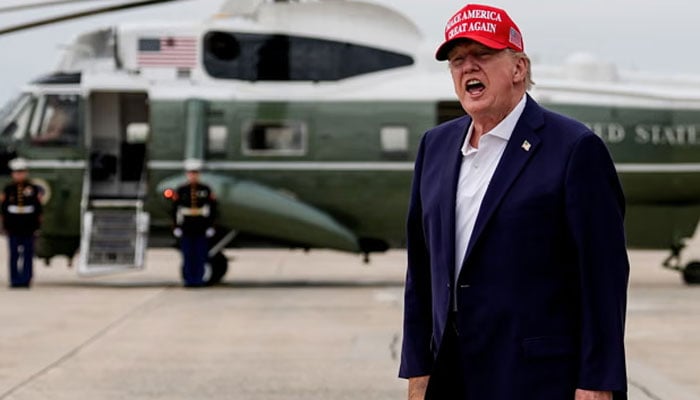
    US President Donald Trump has warned Oman that Washington could launch an attack if Muscat interferes with US efforts in the Strait of Hormuz, according to comments he made in an interview with US media. Trump said the United States would take military action if Oman obstructed American operations in the strategically important waterway. His remarks mark another escalation in Washington’s warnings toward Oman, following a similar threat he reportedly made in May. The US president also said his administration had established a direct, behind-the-scenes communication channel with Iran’s Islamic Revolutionary Guard Corps (IRGC). He did not provide further details about the nature or purpose of those contacts. Trump also sought to underline the scale of America’s military capabilities, saying the United States still has extensive weapons stockpiles. He claimed that the amount of weaponry the US has used so far represents only a small fraction of its available reserves. “We have a lot of weapons left,” Trump said, while indicating that Washington still possesses large quantities of medium-range weapons. The Strait of Hormuz remains a critical global energy route, making any potential military confrontation in the area a major concern for international markets and regional security. Any disruption to shipping through the strait could affect global oil supplies and trigger wider economic and geopolitical repercussions.

  • | | |

    Trump could resume Iran strikes, US senator warns

    US Republican Senator Jim Banks has warned that President Donald Trump could order fresh military strikes against Iran if Tehran does not quickly agree to end its nuclear programme and reopen the Strait of Hormuz. Speaking to Fox News, Banks said the Trump administration still prefers a diplomatic solution but expects Iran to return to negotiations and reach an agreement soon. He warned that if Iranian leaders refuse to come back to the negotiating table, the United States could resume heavy military attacks. According to Banks, the decision to delay further strikes does not represent weakness or a retreat by Washington. Instead, he said, Trump has given Tehran another opportunity to pursue a peaceful settlement and avoid further escalation. The senator also claimed that divisions exist within Iran’s leadership over how to respond to US pressure. He described the situation as a struggle between hardline military figures and elements within the ruling establishment who may favour negotiations. Banks argued that some Iranian officials now recognise the scale of America’s military capabilities and the potential consequences of continued confrontation. He said the pressure from the United States has created a situation in which parts of Iran’s leadership may be more willing to reach an agreement. The Republican senator’s remarks come amid heightened tensions over Iran’s nuclear programme and the strategic Strait of Hormuz, a vital global energy route. Any prolonged disruption in the waterway could have significant consequences for international oil supplies and global markets. Banks maintained that Washington’s objective remains to push Iran toward a deal while keeping military action as an option. His comments suggest that the Trump administration could increase military pressure if diplomatic efforts fail to produce progress in the near future.

  • | | |

    Rs22 Billion allocated to PIMS, 14 newborns dead

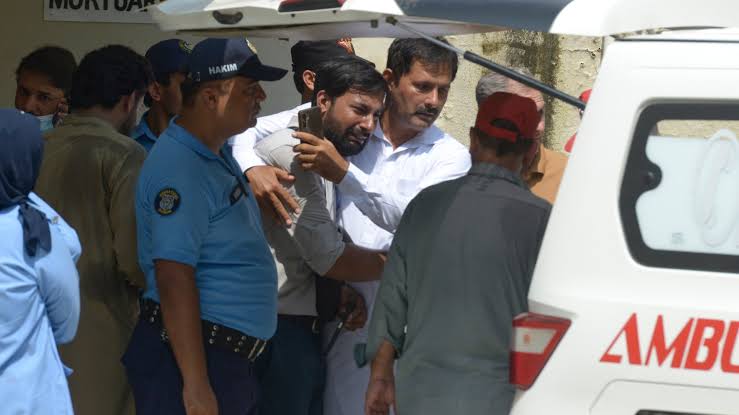
    ISLAMABAD: A deadly fire at the Pakistan Institute of Medical Sciences (PIMS) on August 26 resulted in the deaths of at least 14 newborns, raising serious questions about safety standards, hospital management and the use of public funds. The tragedy has brought renewed attention to the financial resources provided to the country’s major public hospitals. Federal government records show that approximately Rs22 billion was allocated to PIMS over the past three years. Despite these substantial allocations, the hospital continues to face staff shortages, maintenance concerns and problems with essential equipment Official budget figures show that PIMS received an allocation of Rs6.84 billion during the previous financial year. However, the hospital spent approximately Rs7.51 billion, exceeding its approved budget by around Rs670 million.The institution also received an additional Rs660 million in supplementary funds during the year.For the current financial year, the government’s allocation for PIMS has been increased to approximately Rs7.63 billion. Questions have also been raised over funds allocated for repair and maintenance. The federal government had previously provided Rs500 million under this category, while only Rs230 million has been earmarked for the current year. These figures have prompted concerns over whether available resources are being effectively utilised and whether sufficient priority is being given to basic safety, maintenance and patient care. Despite receiving billions of rupees in government funding, PIMS is reportedly operating with a significant shortage of staff. Hospital data indicates that 949 sanctioned positions remain vacant. These include 385 doctors, 363 nurses and 201 paramedical staff. Such shortages can place additional pressure on existing employees and affect the hospital’s ability to provide timely care. Understaffed wards can also make emergency response more difficult, particularly in critical departments where patients require continuous monitoring. The PIMS fire has therefore intensified questions about whether staffing gaps and inadequate resources played any role in the tragedy. Determining the exact causes, however, will require a transparent and independent investigation. The concerns surrounding PIMS are part of a broader debate over safety and accountability in Pakistan’s public hospitals. A review of reported incidents between 2016 and 2026 has highlighted several cases involving alleged negligence and failures in healthcare facilities across the country. In June 2025, 20 children, including 15 newborns, reportedly died at DHQ Hospital Pakpattan, with oxygen shortage cited as a possible factor. In October 2020, seven patients died at Khyber Teaching Hospital Peshawar following an oxygen supply failure. In November 2024, a three-year-old child reportedly fell into an open manhole inside Children’s Hospital Lahore. Other reported incidents across different cities have involved alleged treatment delays, incorrect injections, oxygen-related problems and unsafe hospital infrastructure. The PIMS tragedy has once again raised questions about whether increasing government allocations are producing meaningful improvements in public healthcare. The government has ordered an inquiry into the fire, which is expected to determine the circumstances surrounding the deaths and identify any negligence or safety failures. For the families who lost their newborns, however, no investigation can undo the loss. The central question now is whether the billions allocated to PIMS have been used effectively and whether hospital authorities maintained adequate staffing, equipment, fire-safety systems and infrastructure. If a major public hospital receiving billions in government funding cannot guarantee basic safety for vulnerable patients, accountability must extend beyond temporary suspensions or administrative changes. The tragedy has highlighted the urgent need for stronger oversight, transparent financial management, adequate staffing and enforceable safety standards across Pakistan’s public healthcare system.

  • | | |

    Lt Gen Amir Raza promoted to four-star general

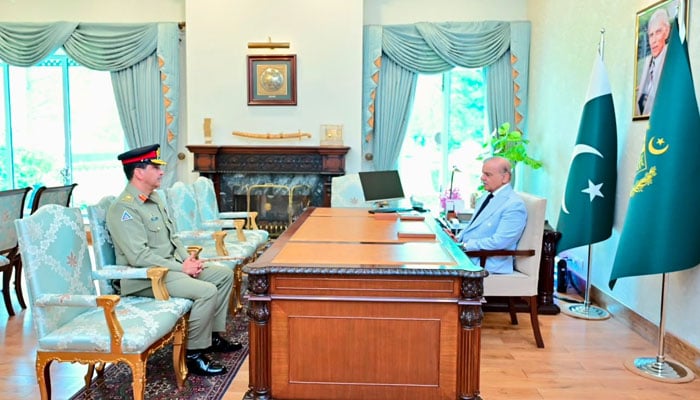
    The government has promoted Chief of General Staff Lieutenant General Amir Raza to the rank of four-star general and appointed him as Commander of the National Strategic Command. Prime Minister Shehbaz Sharif announced the promotion and new appointment, congratulating General Amir Raza, Hilal-i-Imtiaz (Military) and Sitara-i-Basalat, on taking up the senior military position. The prime minister also extended his best wishes to General Amir Raza and expressed confidence in his ability to carry out the important responsibilities associated with his new role. The promotion marks a significant step in General Amir Raza’s military career and places him in charge of a key strategic command. Prime Minister Shehbaz Sharif wished him success in fulfilling his duties and serving the country in his new capacity.

  • |

    Houthis clash with Yemeni government forces as regional tensions escalate

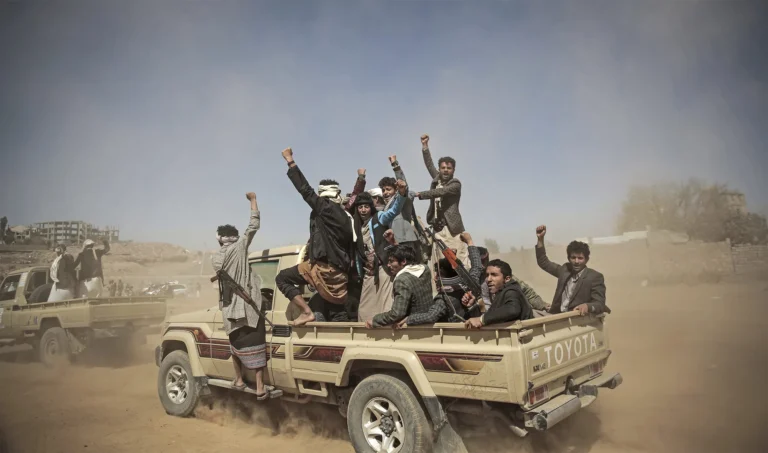
    Fighting between Iran-backed Houthi rebels and Yemeni government troops intensified in Taiz province, claiming the life of at least one government soldier and critically injuring another amid fears of a renewed civil war. Yemeni military officials reported that the recent flare-up is part of a broader wave of Houthi assaults across multiple provinces that have killed dozens of government troops over the past week. Concurrently, the Houthis claimed responsibility for a drone attack targeting a Saudi Aramco oil refinery in Jazan, marking the second reported strike on the facility following an incident last weekend that caused a localized fire. The military escalation coincides with a Houthi-announced blockade on Saudi maritime shipping, further threatening crucial red sea trade corridors. In response to regional instability, the US Navy directed the USS George Washington to deploy toward the Middle East, replacing the USS Abraham Lincoln following reported operational strains and crew welfare concerns aboard the long-deployed carrier.

Leave a Reply

Your email address will not be published. Required fields are marked *