judge blocks trumps
|

Judge blocks Trump’s White House media ban, orders access to be restored 

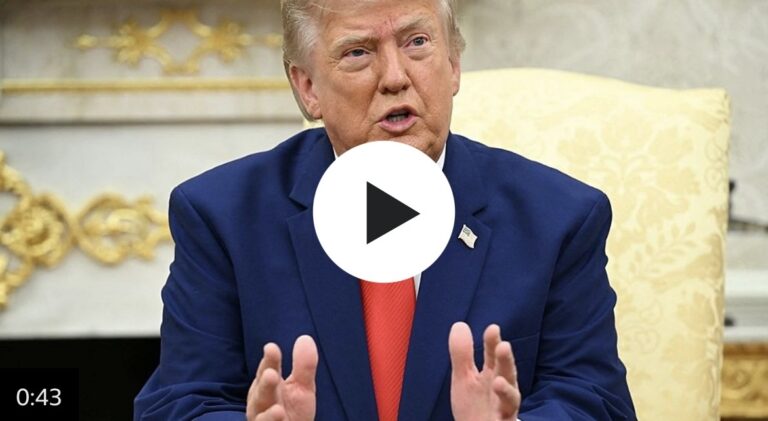
A federal judge ordered US President Donald Trump on Thursday, September 24, to restore White House access for journalists from CNN, MS NOW, and Politico, saying his ban on the three media outlets was likely unconstitutional.

In a major setback for Trump in one of his biggest battles with the media, US District Judge Tim Kelly issued his order in a lawsuit that the news organizations filed contesting the ban that the Republican president announced on September 18.


Judge blocks Trump’s White House media ban, orders access to be restored 

Kelly ordered the Trump administration to immediately return the outlets’ press passes and blocked officials from enforcing the ban for 14 days. The judge rejected the government’s assertion that the ban was motivated by national security concerns.

“The record lacks factual support for defendants’ contention that the revocation of plaintiffs’ hard passes will in fact protect national security or that national security will be endangered if the court orders their passes reinstated while this litigation proceeds,” he said, adding that Trump himself had stated the ban was due to “alleged lack of truthfulness and negativity” of the outlets’ reporting.

The White House and representatives for the outlets did not immeidately respond to requests for comment.

Trump had said on social media that the three outlets “shouldn’t be able to constantly write or report FICTION and LIES,” and Justice Department lawyers had sought to justify the ban on national security grounds.

The three outlets sued Trump and other members of his administration in federal court in Washington on Monday, saying the ban violated the US Constitution’s First Amendment protections for free speech and a free press, as well as their due process rights. They requested a temporary restraining order that would immediately reinstate their White House access while their legal challenge plays out.

The legal battle has unfolded just weeks before the November 3 midterm elections in which Trump’s fellow Republicans are fighting to retain control of Congress. Trump’s job approval ratings are at record lows in opinion polls amid concerns over issues such as the Iran war and inflation.

Kelly said at a Wednesday hearing that two precedents from the US Court of Appeals for the District of Columbia Circuit made clear that journalists are entitled to due process before their White House press passes can be revoked. The judge added that it did not appear that the White House had given the targeted news outlets a meaningful opportunity to contest the revocation of their access.

A lawyer for the news outlets told Kelly that they were banned without legally required advance notice or opportunity to contest the decisions, which he said were unprecedented, unreasonable and severe punishments.

A Justice Department lawyer told the judge the Trump administration provided a sufficient explanation for the revocation of the press passes in letters sent to the news outlets on Tuesday. But the judge signaled skepticism of that argument, noting that the letters were sent after the revocation occurred and the lawsuit was filed.

In a legal filing on Tuesday, the Justice Department argued that access to the White House is a privilege, not an entitlement, and that the president has the authority to suspend access by news organizations.

A coalition of press freedom groups and dozens of news organizations filed a legal brief on Wednesday supporting the three news outlets. They asserted that “stripping journalists and news outlets of their rights because of perceived editorial viewpoint violates decades of Supreme Court jurisprudence.”

The brief was signed by the Reporters Committee for Freedom of the Press, Reuters, the Washington Post and Fox News, among others. – Rappler.com
Similar Posts

  • |

    Iranian flight plunges, makes emergency Ankara landing

    ANKARA: An Iranian passenger aircraft travelling from Istanbul to Tehran made an emergency landing at Ankara International Airport after reportedly developing a serious technical problem during the flight. According to sources, Iranian Flight 7282 departed from Istanbul at 11:43am Pakistan Standard Time with Tehran as its destination. The flight initially proceeded normally after takeoff. At around noon, the aircraft was reportedly cruising at an altitude of approximately 35,000 feet when a sudden technical malfunction occurred. The aircraft subsequently began losing altitude, prompting the crew to take emergency measures. The pilot formally declared an emergency at approximately 12:13pm. During the emergency descent, the aircraft rapidly lost altitude and reportedly descended to around 10,975 feet. Sources said the aircraft later disappeared from radar at an altitude of approximately 7,815 feet. It reportedly reappeared on radar around five minutes later at an altitude of about 5,150 feet. As the situation developed, the pilot contacted Ankara Air Traffic Control and requested permission to divert the aircraft to Ankara for an emergency landing. The request was granted, and the aircraft landed safely at Ankara International Airport at approximately 12:29pm. Following the landing, security and emergency personnel immediately moved into position around the aircraft. The plane was surrounded as a precaution and subsequently transferred to a designated area of the airport. Sources said the aircraft remained at Ankara Airport following the emergency landing. Its engines were reportedly still running while the aircraft remained under observation. There were no immediate reports of casualties or injuries following the landing. The exact nature of the technical malfunction has not yet been officially disclosed. It is also unclear whether the problem involved the aircraft’s engines, flight-control systems or another critical component. A technical inspection is expected to determine what caused the aircraft to lose altitude so rapidly during the flight. The incident comes as aviation authorities continue to maintain strict emergency procedures for aircraft experiencing technical problems while operating in international airspace.

  • | |

    Colombia’s death toll from earthquake climbs…

    Rescue crews continue combing through collapsed buildings across western Colombia after a powerful magnitude 7.4 earthquake struck the region on Monday, August 10, with officials confirming the death toll has risen to at least 164 people. Authorities said more than 880 people have sustained injuries, while over 3,200 remain unaccounted for as soldiers, emergency responders and local volunteers work through debris from dozens of collapsed structures. Thousands of residents have been forced from their homes since the quake struck, adding to the scale of the humanitarian response now underway. The earthquake flattened multi story buildings in cities including Pereira and Cali, and severely damaged one of the towers of a historic cathedral in Manizales. The tremor originated at an intermediate depth with its epicenter located near San José del Palmar in the western department of Chocó, causing widespread destruction across Pereira, Cali, Manizales and other communities in Colombia’s coffee growing region. Residential buildings, hospitals, schools and key infrastructure, including several regional airports, all suffered severe damage in the quake. At one city hospital, several upper floors, including sections dedicated to pediatric care, collapsed inward, trapping some patients inside and forcing hospital staff to treat roughly 600 additional patients outdoors on a street littered with debris, according to hospital director Irne Torres Castro, who spoke to a Colombian television network. That same city saw some of the earthquake’s most extensive destruction, with entire residential blocks reduced to piles of concrete and twisted metal. Video circulating online captured buildings shaking violently as residents fled into the streets, while separate footage showed a regional airport swaying dramatically during the quake as large sections of ceiling came down around people sheltering inside. Among the most widely shared images online is footage showing the Cathedral Basilica of Our Lady of the Rosary shaking and partially collapsing. The cathedral, built in the 1920s, holds the distinction of being Colombia’s tallest cathedral and ranks among the highest neo Gothic churches anywhere in the Americas. The disaster struck just days after Abelardo De La Espriella was sworn in as Colombia’s president, immediately confronting his new administration with a major crisis. The earthquake also comes with memories still fresh of a pair of devastating earthquakes that struck neighboring Venezuela in June. Colombia’s national government has declared a state of emergency and mobilized the military, police and specialized rescue units to lead recovery operations, while accepting offers of international assistance as the search for survivors continues. The disaster adds to a string of major seismic events across the region in recent months, underscoring the ongoing vulnerability of Andean nations to powerful earthquakes and the strain such disasters place on emergency infrastructure even in areas with established disaster response systems.

  • Trump imposes 50% tariffs on Canada as Carney vows to consider ‘All Options’ in response

    US President Donald Trump has imposed a 50% tariff on a wide range of goods imported from Canada, retaliating against what he called “unequal treatment” of US cars, dairy, and alcohol. Everyday consumer items like wine and hockey sticks, as well as industrial goods such as cement, are on the target list, though several key exports including energy, potash, critical minerals, and fish will be spared. Prime Minister Mark Carney said he had spoken to Trump and both leaders agreed to “intensify” trade talks in a bid to calm growing tensions between the North American neighbours. However, Carney warned that “all options” were on the table in terms of how Canada could respond to the fresh tariff threat. Since the tariff war broke out more than 18 months ago, Carney said Canadians have “stood together” by buying home-produced goods and agreeing new trade routes with other countries. “[The] country is stronger, stronger because we are united, and we will remain united,” he told reporters. Tensions between the major trading partners have been simmering since Trump returned to office in January last year and unleashed a wide-ranging global programme of tariffs. Asked about the latest tariffs, which the White House says will take effect in 30 days, Trump said Canada had been “very, very tough on us over the years” and “no other presidents done anything about it.” He added: “I love Canada, I love the people of Canada, many friends that live in Canada. Without us, there’s no way they can survive.” The latest move comes after the US Supreme Court ruled earlier this year that many of the tariffs imposed globally under emergency powers were illegally enacted. Trump has since sought other legal avenues to push through his flagship trade policy. Trump has said the levies will boost American manufacturing and jobs, but some economists have warned that higher charges on imported goods risk pushing up prices for consumers. This new round of duties on Canadian goods has also fuelled speculation about a potential wider tariff announcement by the US on countries across the world. US Trade Representative Jamieson Greer said on Tuesday that he expected to “see some action soon” when asked about the possibility of forthcoming levies. Canada, which is one of the US’s closest trading partners, was one of the few countries to retaliate last year against Trump’s tariffs, placing a 25% levy of its own on about C$30 billion worth of US goods. Carney later dropped some of them. As the trade war escalates, the implications for both economies remain significant. Canada’s reliance on US markets for exports and the interconnected nature of North American supply chains mean that any prolonged tariff dispute could have far-reaching consequences. Carney’s warning that “all options” are on the table suggests that Canada is prepared to respond forcefully if necessary, potentially escalating the conflict further. The coming weeks will be critical in determining whether diplomatic efforts can de-escalate the tensions or whether the trade war will intensify, impacting businesses and consumers on both sides of the border. The international community will be watching closely as two of the world’s largest trading partners navigate this dangerous standoff.

Leave a Reply

Your email address will not be published. Required fields are marked *