colombia8217s death toll
| |

Colombia’s death toll from earthquake climbs…

Rescue crews continue combing through collapsed buildings across western Colombia after a powerful magnitude 7.4 earthquake struck the region on Monday, August 10, with officials confirming the death toll has risen to at least 164 people.

Authorities said more than 880 people have sustained injuries, while over 3,200 remain unaccounted for as soldiers, emergency responders and local volunteers work through debris from dozens of collapsed structures. Thousands of residents have been forced from their homes since the quake struck, adding to the scale of the humanitarian response now underway.

The earthquake flattened multi story buildings in cities including Pereira and Cali, and severely damaged one of the towers of a historic cathedral in Manizales. The tremor originated at an intermediate depth with its epicenter located near San José del Palmar in the western department of Chocó, causing widespread destruction across Pereira, Cali, Manizales and other communities in Colombia’s coffee growing region.

Residential buildings, hospitals, schools and key infrastructure, including several regional airports, all suffered severe damage in the quake. At one city hospital, several upper floors, including sections dedicated to pediatric care, collapsed inward, trapping some patients inside and forcing hospital staff to treat roughly 600 additional patients outdoors on a street littered with debris, according to hospital director Irne Torres Castro, who spoke to a Colombian television network.

That same city saw some of the earthquake’s most extensive destruction, with entire residential blocks reduced to piles of concrete and twisted metal. Video circulating online captured buildings shaking violently as residents fled into the streets, while separate footage showed a regional airport swaying dramatically during the quake as large sections of ceiling came down around people sheltering inside.

Among the most widely shared images online is footage showing the Cathedral Basilica of Our Lady of the Rosary shaking and partially collapsing. The cathedral, built in the 1920s, holds the distinction of being Colombia’s tallest cathedral and ranks among the highest neo Gothic churches anywhere in the Americas.

The disaster struck just days after Abelardo De La Espriella was sworn in as Colombia’s president, immediately confronting his new administration with a major crisis. The earthquake also comes with memories still fresh of a pair of devastating earthquakes that struck neighboring Venezuela in June.

Colombia’s national government has declared a state of emergency and mobilized the military, police and specialized rescue units to lead recovery operations, while accepting offers of international assistance as the search for survivors continues.

The disaster adds to a string of major seismic events across the region in recent months, underscoring the ongoing vulnerability of Andean nations to powerful earthquakes and the strain such disasters place on emergency infrastructure even in areas with established disaster response systems.
Similar Posts

  • |

    Leaked FIFA letter congratulates Argentina on World Cup runner-up finish

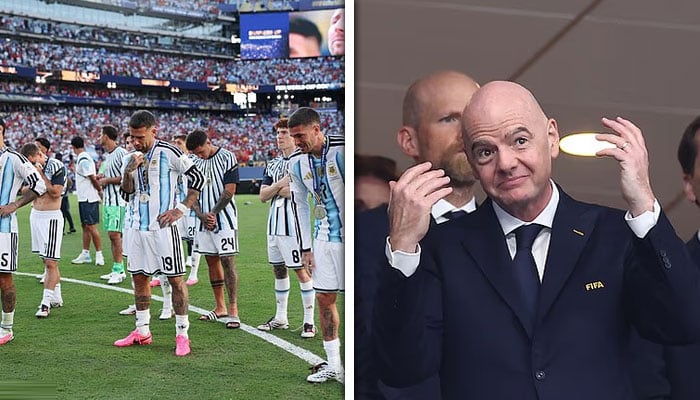
    A letter written by FIFA President Gianni Infantino to Argentine Football Association President Claudio Tapia has reportedly surfaced amid an ongoing FIFA investigation into the post-match confrontation following the 2026 World Cup final. In the letter, Infantino referred to Argentina’s defeat against Spain in the final played on July 19, 2026. He congratulated Argentina on securing the silver medal and praised the team’s overall performance throughout the tournament. Infantino described Argentina’s World Cup campaign as an impressive achievement. He also praised the players and head coach Lionel Scaloni for their hard work, professionalism and commitment to football. The letter has emerged at a sensitive time for Argentine football. FIFA is currently investigating a confrontation between players following the final. Tensions reportedly rose after Argentina lost to Spain in extra time. The atmosphere remained tense during the trophy presentation, with most Argentine players reportedly turning their backs while the Spanish team received the trophy. A physical altercation between players also reportedly took place after the match. FIFA is examining the incident as part of its formal disciplinary process. The leaked correspondence, however, focuses on Argentina’s sporting achievement rather than the post-match controversy. Infantino’s message praised the team for reaching the final and securing the runners-up position. Sending formal congratulatory letters to medal-winning teams is a customary FIFA practice following the conclusion of major international tournaments. Argentina’s silver-medal finish marked the culmination of a strong World Cup campaign, despite the team falling short against Spain in the final.

  • | |

    Indian activist Sonam Wangchuk says he remains ali…

    Indian activist Sonam Wangchuk says he has lost 11 kilograms during a 26 day hunger strike but remains alive, as his protest continues to fuel a wider youth movement demanding education reforms in India. Wangchuk, known widely as Sonam sir, has become the central figure in a youth led campaign organized by the Cockroach Janta Party, which is calling for sweeping education reforms and the resignation of Education Minister Dharmendra Pradhan. He was removed from the group’s protest site at Delhi’s Jantar Mantar on Saturday and taken to a hospital, where he has continued his fast. Despite his removal from the demonstration site, thousands of supporters have kept returning to Jantar Mantar, even after a heavy handed police response to a march toward parliament earlier in the week left numerous protesters and police officers injured. That crackdown has intensified public anger and energized opposition parties, creating a growing political challenge for Prime Minister Narendra Modi’s government. Modi has not addressed the protests directly or met with demonstrators, but he issued a statement on social media that many interpreted as an effort to connect with students angered by repeated leaks of exam papers. He wrote that the welfare of the country’s youth matters above all else and said the government would establish fast track courts to deliver swift punishment for those responsible for the leaks. A spokesperson for the Cockroach Janta Party, Ashutosh Ranka, responded that the government’s plan addressed the aftermath rather than the root cause, saying the movement wants to know why the leaks keep happening and who profits from them. He indicated in a video statement that protesters intend to continue their campaign until their demands are met. Even though Wangchuk is no longer physically present at the protest grounds, his fast has become a symbolic centerpiece of the movement, with demonstrators displaying placards and artwork referencing his hunger strike. Before he was hospitalized, he spent 21 days enduring intense summer heat while consuming only salt and water. Medanta Hospital in Gurugram said in a statement that Wangchuk was admitted to intensive care and is being monitored by a team of specialists. The hospital described his condition as stable and said his vital signs remain within normal ranges, adding that all treatment is being given with his consent. On Wednesday, senior figures including Cockroach Janta Party founder Abhijeet Dipke, along with opposition lawmakers, activists and public personalities, again urged Wangchuk to end his fast. Health Minister JP Nadda, who visited the hospital on Tuesday night, said he too had asked the activist to stop and rejoin efforts to guide young people, adding that the government remains willing to discuss the issues he has raised. Wangchuk has so far rejected these appeals. In a video statement recorded from his hospital bed on Wednesday night, he said he wants to end his fast because his work matters to him, but added that he would only do so once the government guarantees no force or retaliation will be used against students. He said he would end the strike immediately if that assurance comes, and would continue if it does not. He also praised the students involved in Monday’s confrontation with police, saying they showed remarkable composure even while being beaten with sticks, and said their restraint under pressure led him to keep going with his fast. Neither Wangchuk’s latest statement nor an earlier letter he sent to government ministers he met on Tuesday mentioned Pradhan’s resignation directly, though the Cockroach Janta Party maintains that the demand has not changed. Dipke told supporters that the protest at Jantar Mantar will continue until Pradhan steps down, and said the movement would not let Wangchuk’s sacrifice or the injuries suffered by students go without result. The standoff reflects a broader pattern seen in past protest movements across South Asia, where a single high profile figure’s personal sacrifice becomes a rallying point that sustains momentum long after the initial spark fades. Hunger strikes in particular have a long history in Indian political life as a tool for applying moral pressure on governments, dating back to independence era activism, and their effectiveness often depends on sustained public attention and the government’s willingness to negotiate before a health crisis forces the issue. As the standoff continues, the government faces mounting pressure to address both the immediate demand for accountability over exam paper leaks and the broader question of how education policy is managed, while doctors continue to monitor Wangchuk’s condition inside the hospital.

  • | | |

    Source rejects Imran deal, Shehbaz-Asim rift repor…

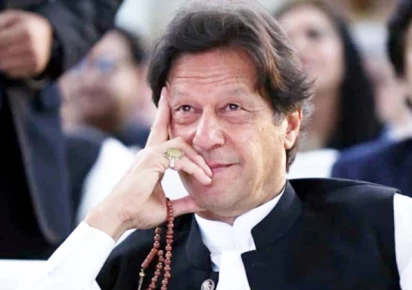
    An informed source familiar with political and government developments has categorically rejected speculation about any possible “deal or relief” for former Prime Minister Imran Khan, as well as reports of differences between Prime Minister Shehbaz Sharif and Chief of Army Staff Field Marshal Asim Munir. The source described the possibility of both developments as “zero,” amid intense speculation following the Supreme Court’s order concerning Imran Khan’s medical treatment. It had been expected that Imran Khan would be shifted to Shifa International Hospital for treatment. However, instead of being taken to Shifa International, he was transferred to the Pakistan Institute of Medical Sciences (PIMS) and later returned to Adiala Jail. The development triggered speculation in political circles about whether the issue was linked to a possible deal or some form of relief for the Pakistan Tehreek-e-Insaf founder. When specifically asked whether there was any possibility of a deal or concession for Imran Khan, the informed source gave a clear one-word response: “Zero.” The source was also asked about reports and speculation regarding differences between Prime Minister Shehbaz Sharif and Field Marshal Asim Munir. The response was again: “Zero.” According to the source, such speculation is not unusual in Pakistan. Political developments involving the civilian and military leadership have historically been interpreted through the lens of possible deals, concessions or disagreements between the civilian government and the military establishment. The source said that whenever an unusual political development takes place, speculation immediately emerges that a behind-the-scenes deal may be under discussion or that differences have developed between the civilian and military leadership. However, the source stressed that the current political and institutional arrangement should not be viewed through the lens of Pakistan’s past political experiences. Referring to the political setup that took shape around three to four years ago, the source said the relationship between the civilian government under Shehbaz Sharif and the military leadership was “completely different” from arrangements witnessed in the past. The source also suggested that many reports currently circulating may reflect the wishes or expectations of certain individuals rather than the actual situation on the ground.

  • | |

    Asim Azhar invites cover artists for ‘Khabbay Sajjay’ unplugged version

    Pakistani singer Asim Azhar is giving one talented cover artist a chance to work with him on the official unplugged version of his popular Punjabi song ‘Khabbay Sajjay’. Azhar announced the opportunity through an Instagram reel after noticing the large number of fans and musicians sharing their own covers of the track. The singer asked his followers to tag their favourite cover artist in the comments of his latest reel. He said one selected artist would get the opportunity to join him for the official unplugged rendition of the song. Azhar later shared an Instagram story to clarify that the opportunity was genuine. He said he was impressed by the creativity and talent shown by musicians who had performed their versions of the song. He also hinted that the unplugged project could include a music video featuring the selected artist. ‘Khabbay Sajjay’ is among the 10 tracks featured on Azhar’s album. The Punjabi romantic song revolves around deep affection and devotion towards a loved one. The track has also attracted significant attention on YouTube, where it has crossed the one-million-view mark. With the new initiative, Azhar is not only celebrating the song’s popularity but also creating an opportunity for emerging musicians to work alongside an established Pakistani artist.

  • | | |

    Spanish royals captivate with Mediterranean charm

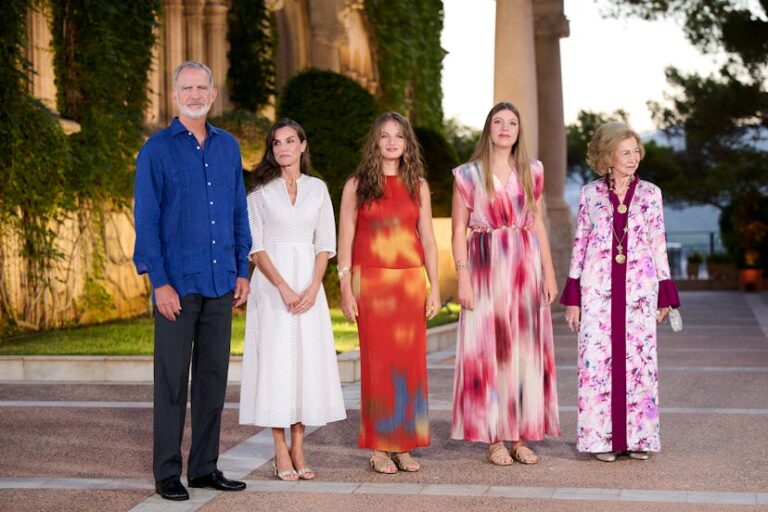
    Spain’s royal family has officially begun its annual summer holiday with a traditional public appearance in the Mediterranean island of Mallorca, where members of the royal household showcased relaxed yet elegant fashion that reflected the country’s coastal culture. Every August, Spain’s monarchs spend part of their summer in Palma de Mallorca, the capital of the Balearic Islands. The visit begins with an official reception at the historic Marivent Palace, where the royal family meets local government officials, community leaders and representatives from across the islands before starting their private vacation. This year’s gathering brought together King Felipe VI, Queen Letizia, their daughters Crown Princess Leonor and Infanta Sofía, as well as the King’s mother, Queen Sofía. The appearance highlighted the close relationship between Spain’s monarchy and the Balearic Islands while offering the public a glimpse of the family’s more casual summer style. Unlike the formal attire usually seen during official state events, the royal family opted for lightweight outfits suitable for the warm Mediterranean weather. Queen Letizia, widely regarded as one of Europe’s most stylish royals, wore a flowing white dress by Spanish designer Sybilla. The elegant outfit featured soft pleats and subtle striped details, giving it a simple yet sophisticated look. She paired the dress with gold high-heeled sandals, while King Felipe chose a light blue shirt and neutral trousers, keeping his appearance relaxed. Their elder daughter, Crown Princess Leonor, selected a sleeveless orange two-piece outfit by Spanish fashion label Thinking Mu. The colourful ensemble featured artistic shades of blue, yellow and orange, inspired by Mediterranean sunsets. She completed her look with gold bracelets and naturally styled hair. Meanwhile, Infanta Sofía wore a long pastel-coloured maxi dress decorated with soft pink, cream and lavender tones, creating a fresh summer appearance. The youngest royal’s outfit complemented the vibrant floral caftan worn by Queen Sofía, whose multicoloured dress reflected the cheerful atmosphere of the Mediterranean season. The annual reception is considered one of the final public engagements for the Spanish royal family before they begin their private summer holiday. The event has become a long-standing tradition and attracts significant public and media attention each year, with many observers focusing not only on the royal family’s activities but also on their fashion choices. For many Pakistanis unfamiliar with Spain’s monarchy, the country’s royal family plays a largely ceremonial constitutional role similar to several other European monarchies. While the elected government manages day-to-day political affairs, the King serves as the country’s head of state and represents Spain during official ceremonies, national events and international engagements.

Leave a Reply

Your email address will not be published. Required fields are marked *