indonesia reopens jakarta
|

Indonesia reopens Jakarta airport, 4 others after ash clears

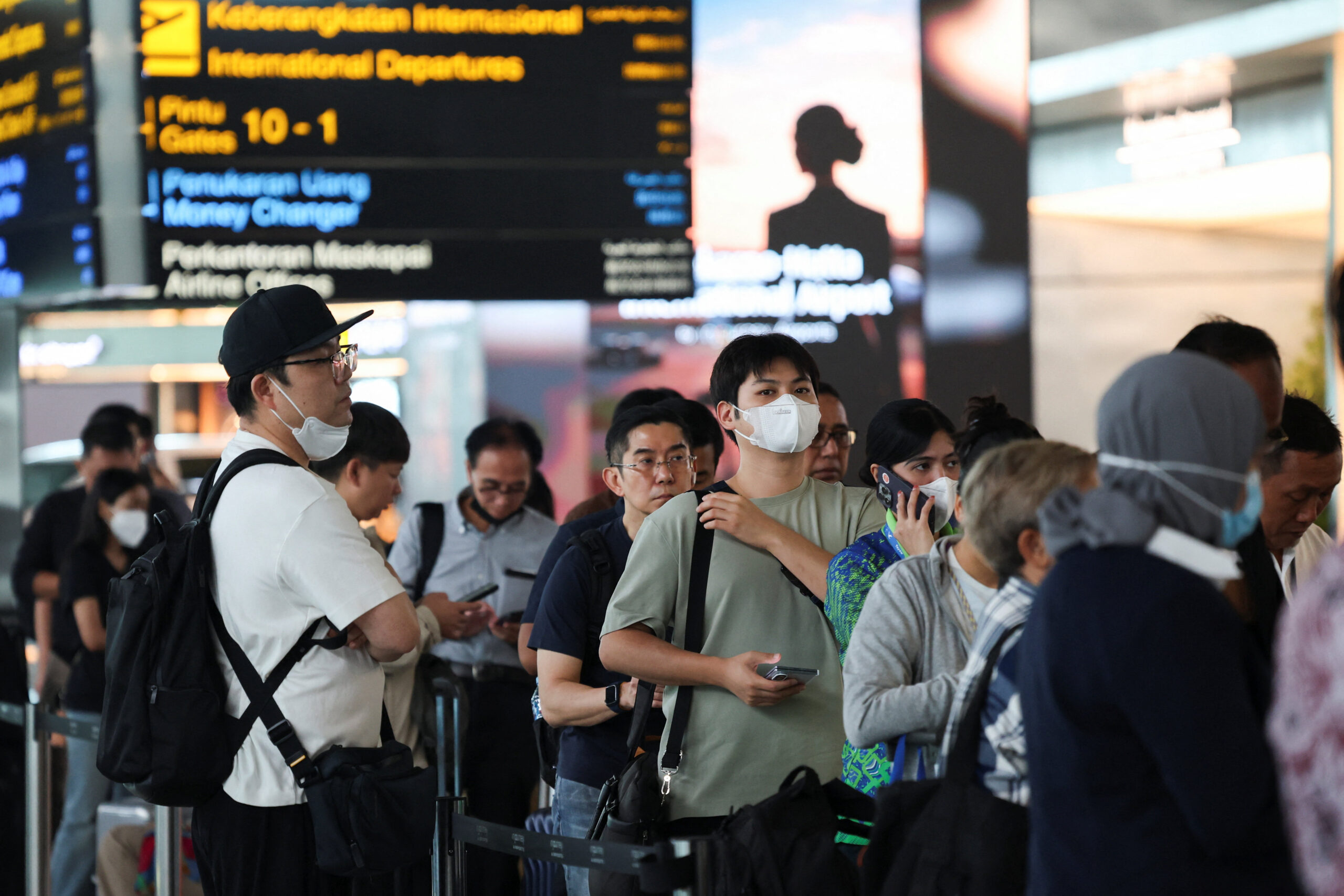
JAKARTA, Indonesia – Indonesia has reopened its main Jakarta airport and four other airports that had been closed due to volcanic ash from a series of eruptions at Mount Anak Krakatau, transport minister Dudy Purwagandhi said in a statement on Tuesday, September 8.

Ash from Anak Krakatau, which sits halfway between Java and Sumatra islands, has blanketed Jakarta and some surrounding areas since its initial eruption late on Friday. That led to the closure of eight airports for safety reasons, with more than 340,000 travelers impacted.

Dudy said the Soekarno-Hatta Airport, Jakarta’s main airport, resumed operations on Tuesday after wind blew the ash away from its surrounding areas. Four other airports, including a smaller one in Jakarta and in the neighboring city of Bandung, also reopened.

Another airport had reopened on Monday, and two remain closed.

Dudy said authorities still need to check on the airworthiness of the 178 planes that were at Soekarno-Hatta through the closure.

“Perhaps it’ll take some little extra time to prepare the planes,” he said.

Around 341,000 people have been affected by the delay, diversion, or cancellation of 2,961 flights across the closed airports, Chief Infrastructure Minister Agus Harimurti Yudhoyono said on Monday.

Anak Krakatau is one of about 130 active volcanoes in Indonesia, which straddles the “Pacific Ring of Fire,” a highly seismically active zone where different plates on the Earth’s crust meet to create a large number of earthquakes and volcanic eruptions.

Anak Krakatau, which means child of Krakatau, began emerging a century ago from the area previously occupied by Krakatau, then known as Krakatoa. The older volcano destroyed itself in mass eruptions in 1883, which killed more than 36,000 people after triggering a series of tsunamis. – Rappler.com

Similar Posts

  • |

    Irish politicians urge action over citizen’s high-security pro-Palestinian trial in Germany

    A cross-party delegation of Irish politicians has called on Dublin to send official observers to the trial of the “Ulm 5” activists in Stuttgart and raise concerns over the severe detention conditions of Irish citizen Daniel Tatlow-Devally. Tatlow-Devally, 32, was arrested alongside four other Berlin-based European activists in September after trespassing at an Ulm facility owned by Israeli defense contractor Elbit Systems, where they destroyed equipment and smashed windows to protest German arms exports to Israel. German prosecutors have charged the group with trespassing, property damage exceeding €1 million, and membership in a criminal organisation under Section 129 of the German criminal code. The visiting delegation, including Sinn Féin TD Mairéad Farrell and representatives from Fine Gael, Labour, People Before Profit–Solidarity, and the Social Democrats, voiced alarm over Tatlow-Devally being confined to a 5×2-metre cell for 23 hours a day with only one hour of monthly visitation. They also highlighted courtroom barriers, such as holding the defendants behind glass panels that restrict direct legal communication. Farrell urged Irish Prime Minister Micheál Martin to press German Chancellor Friedrich Merz on human rights and legal access concerns during his upcoming visit to Dublin.

  • |

    Taliban mark five years in power

    KABUL: The Taliban on Saturday marked five years since returning to power in Afghanistan, staging a military parade in Kabul and presenting their rule as a period of stability despite mounting humanitarian and human rights concerns. Armoured Taliban vehicles moved past the former US embassy in Kabul as officials raised flags and banners for what the government called “victory day” over Western domination. Interior Minister Sirajuddin Haqqani said in a video message that the Taliban’s return resulted from “morale, courage” and “divine assistance.” He also acknowledged that the country still faces unresolved issues and problems. The United Nations and international aid organisations have warned that Afghanistan continues to struggle with severe humanitarian and natural crises. They have also criticised the Taliban’s restrictions on women and girls. According to UNESCO, the Taliban have kept around 2.5 million girls and women out of secondary schools and universities since 2021 and imposed restrictions on their movement. UN Women reported this week that half of Afghan women now leave their homes only once or twice a month. The Taliban maintain that they uphold women’s rights under Islamic Sharia law. The group has also faced security challenges, including a series of attacks on officials in northeastern Afghanistan. Islamic State claimed responsibility for the killing of the Taliban’s information director in Badakhshan in late July. The mayor of the provincial capital was also killed in an attack on Thursday, according to local media. The Taliban seized power in August 2021 as US and allied forces withdrew from Afghanistan. The group initially promised a more moderate form of government than during its previous rule in the late 1990s and early 2000s. However, rights groups say its policies have instead imposed sweeping restrictions on women and girls. Five years after returning to power, the Taliban government still lacks broad international recognition. Russia remains the only country to have formally recognised it. Meanwhile, relations with Pakistan have deteriorated. Islamabad accuses Kabul of allowing Pakistani militants to operate from Afghan territory, adding further pressure to an already strained relationship.

  • | |

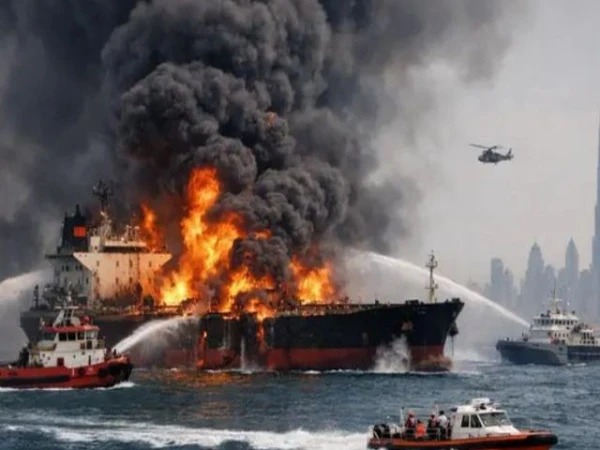
    Explosion reported near oil tanker off Oman coast,…

    A powerful explosion was reported near a commercial oil tanker off the coast of Oman on Saturday, raising fresh concerns about maritime security in one of the world’s most strategically important shipping routes. Authorities have launched an investigation into the incident, while no casualties or damage have been reported so far. According to the United Kingdom Maritime Trade Operations (UKMTO), a commercial vessel reported hearing a loud explosion followed by a large splash in the water near its location. The incident occurred approximately 21 nautical miles (39 kilometers) northeast of Khasab, Oman, close to the Strait of Hormuz. Initial reports indicate that the explosion took place near the tanker rather than on board the vessel. The ship continued its voyage without reporting any structural damage, and there have been no reports of injuries among the crew. In an official advisory, UKMTO confirmed that the cause of the explosion remains unknown and that investigations are ongoing. Authorities have not identified the source of the blast or determined whether it was the result of an accident, a security incident, or another cause. Following the incident, UKMTO urged all commercial and cargo vessels operating in the Strait of Hormuz and surrounding waters to exercise extreme caution. Ship operators were advised to immediately report any suspicious activity, explosions, or security threats to the relevant maritime authorities. The Strait of Hormuz is one of the world’s busiest and most strategically significant maritime chokepoints, serving as a vital route for global oil and liquefied natural gas exports. Any security incident in the area is closely monitored by governments, shipping companies, and energy markets because of its potential impact on international trade and energy supplies. The reported explosion comes at a time of heightened tensions across the Middle East, with regional security concerns continuing to affect maritime operations. Although no link has been established between the blast and any ongoing geopolitical developments, the incident has renewed attention on the safety of commercial shipping in the Gulf region. Maritime authorities are expected to release further details once the investigation progresses. Until then, vessels navigating the area have been advised to remain alert, follow official guidance, and maintain close communication with regional maritime security agencies.

  • | | |

    1,300-year-old shipwreck hides incredible gold tre…

    Archaeologists have uncovered an extraordinary collection of gold coins and precious jewelry from a sunken Byzantine-era ship near Croatia’s southern coastline, offering new insights into the empire’s maritime history and suggesting that a high-ranking official may have been among the passengers. The ancient shipwreck was first discovered more than a decade ago, but researchers spent several years conducting detailed underwater excavations before releasing their findings. The results, announced on Thursday, indicate that the vessel most likely dates back to the seventh or eighth century AD, making it one of the region’s most significant archaeological discoveries in recent years. According to experts, the remarkable collection of valuables recovered from the wreck suggests that the ship was far more than an ordinary merchant vessel. Instead, archaeologists believe it may have been transporting an influential government official, noble, or other prominent figure, accompanied by attendants or security personnel. Among the most valuable discoveries are gold coins minted during the reigns of four Byzantine emperors from the Heraclian dynasty, which ruled between AD 610 and 711. Researchers also recovered ornate gold fittings from luxury boxes decorated with rubies, emeralds, and pearls, highlighting the wealth and status of those on board. The quality and rarity of the artifacts provide important clues about the Byzantine Empire’s political, economic, and cultural life during the early medieval period. Experts say the recovered objects demonstrate the sophisticated craftsmanship of the era and reveal the importance of maritime travel for government officials and elite members of society. The ongoing archaeological investigation is expected to deepen historians’ understanding of Byzantine trade routes, royal travel, and naval activity across the Adriatic Sea. Researchers hope that further analysis of the ship’s structure, cargo, and recovered artifacts will help reconstruct the vessel’s final journey and explain the circumstances that led to its sinking centuries ago. Officials involved in the excavation described the discovery as a major milestone in underwater archaeology. As conservation work continues, many of the recovered treasures are expected to be carefully preserved and studied, providing valuable information for future research into the Byzantine Empire and its influence across southeastern Europe. The discovery underscores the importance of underwater archaeological exploration and demonstrates how centuries-old shipwrecks continue to reveal remarkable stories about ancient civilizations, their rulers, and the maritime networks that connected them across the Mediterranean world.

  • | |

    Spider-Man, Brand New Day faces boycott calls over…

    Pro-Palestinian campaigners in Lebanon, Jordan and other parts of the Arab world are calling for a boycott of Spider-Man: Brand New Day, turning the release of the highly anticipated superhero film into a wider debate over politics, culture and entertainment. The campaign is focused on producer Avi Arad, an Israeli and US citizen and former Marvel Studios chief, whose public statements and past military service have drawn criticism from activists opposed to Israel’s conduct during the war in Gaza. In Lebanon, the Campaign to Boycott Supporters of Israel urged audiences not to buy tickets for the film, arguing that spending money on productions involving individuals who have publicly supported Israel amounts to cultural normalisation. The group called on the public to avoid paid screenings and questioned whether audiences should financially support a production involving people with political ties to Israel. A separate anti-normalisation group in Jordan, Taharrak, also called for the movie to be boycotted and urged cinemas not to include it in their schedules. The group appealed to Jordanian artists, cinema operators and other organisations to take a position against its screening. The boycott calls have subsequently been shared by activists and online content creators in other Arab countries. The film, which stars Tom Holland as Peter Parker, was released internationally on July 31. Directed by Destin Daniel Cretton, it is produced by Arad alongside Kevin Feige, Amy Pascal and Rachel O’Connor. Campaigners have specifically targeted Arad rather than the film’s storyline or its wider cast and production team. Arad served in the Israeli military from 1965 to 1968 and has previously spoken publicly about his connection to Israel. In a 2024 letter published by TheWrap, he criticised former US Senate Majority Leader Chuck Schumer after Schumer criticised Israeli Prime Minister Benjamin Netanyahu and called for new Israeli elections. Arad argued that American politicians should not interfere in Israel’s electoral affairs and described himself as a proud former member of the Israeli military. Campaigners say such statements justify their call for a boycott, arguing that ticket purchases could provide financial support to a production involving Arad. However, the impact of the campaign on the film’s commercial performance remains uncertain. Despite the boycott appeal, Spider-Man: Brand New Day continued screening in Lebanon, while a representative of Grand Cinemas told L’Orient Today that audience demand remained strong shortly after its release. The controversy highlights how major Hollywood releases can become entangled in geopolitical debates, with audiences increasingly examining the political positions and backgrounds of figures behind popular entertainment.

Leave a Reply

Your email address will not be published. Required fields are marked *