iranian flight plunges
|

Iranian flight plunges, makes emergency Ankara landing

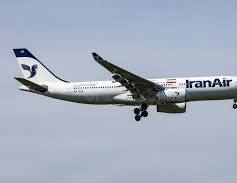
ANKARA: An Iranian passenger aircraft travelling from Istanbul to Tehran made an emergency landing at Ankara International Airport after reportedly developing a serious technical problem during the flight.

According to sources, Iranian Flight 7282 departed from Istanbul at 11:43am Pakistan Standard Time with Tehran as its destination. The flight initially proceeded normally after takeoff.

At around noon, the aircraft was reportedly cruising at an altitude of approximately 35,000 feet when a sudden technical malfunction occurred. The aircraft subsequently began losing altitude, prompting the crew to take emergency measures.

The pilot formally declared an emergency at approximately 12:13pm. During the emergency descent, the aircraft rapidly lost altitude and reportedly descended to around 10,975 feet.

Sources said the aircraft later disappeared from radar at an altitude of approximately 7,815 feet. It reportedly reappeared on radar around five minutes later at an altitude of about 5,150 feet.

As the situation developed, the pilot contacted Ankara Air Traffic Control and requested permission to divert the aircraft to Ankara for an emergency landing.

The request was granted, and the aircraft landed safely at Ankara International Airport at approximately 12:29pm.

Following the landing, security and emergency personnel immediately moved into position around the aircraft. The plane was surrounded as a precaution and subsequently transferred to a designated area of the airport.

Sources said the aircraft remained at Ankara Airport following the emergency landing. Its engines were reportedly still running while the aircraft remained under observation.

There were no immediate reports of casualties or injuries following the landing.

The exact nature of the technical malfunction has not yet been officially disclosed. It is also unclear whether the problem involved the aircraft’s engines, flight-control systems or another critical component.

A technical inspection is expected to determine what caused the aircraft to lose altitude so rapidly during the flight.

The incident comes as aviation authorities continue to maintain strict emergency procedures for aircraft experiencing technical problems while operating in international airspace.
Similar Posts

  • | | | |

    Trump administration asks Congress for $87 billion…

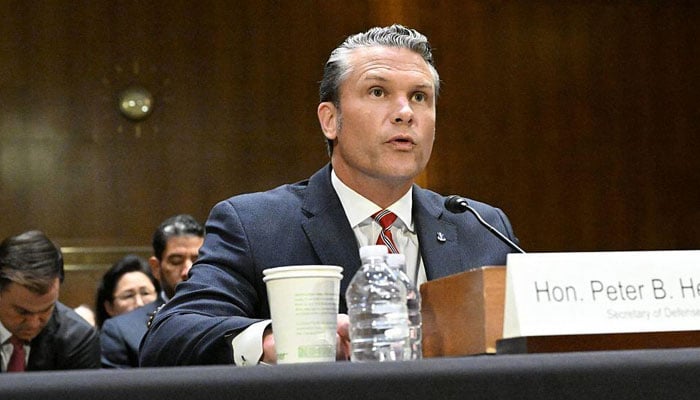
    WASHINGTON: The Trump administration has asked Congress to approve nearly $87 billion in emergency funding as the United States faces mounting military costs linked to its escalating confrontation with Iran, according to American officials. The funding request was presented after US Defense Secretary Pete Hegseth delivered a classified briefing to lawmakers, outlining the financial and operational demands of the ongoing conflict. He later addressed members of a Senate committee, arguing that additional resources are essential to sustain military operations and protect US national security interests. During the briefing, Hegseth said the conflict with Iran has already cost the United States approximately $37.5 billion, reflecting the growing financial burden of extended military deployments, air operations and regional security missions. Warning lawmakers about the consequences of delaying the request, the defense secretary said failure to approve the funding would create what he described as one of the most serious security risks facing the country. He also rejected suggestions that Washington was responsible for the current crisis, insisting that Iran’s actions had driven the escalation. The administration’s request comes as military tensions between Washington and Tehran remain high, with both sides exchanging threats and continuing operations across the region. Analysts say the financial demands of the conflict are increasing as the United States seeks to maintain its military presence while supporting allies in the Middle East. Meanwhile, The Washington Post reported that US funding allocated for military operations against Iran is being depleted at a rapid pace. The report suggested that continued operations without fresh congressional approval could place additional strain on defense resources and future military planning. The funding debate is expected to become a major issue on Capitol Hill, where lawmakers are likely to scrutinize both the size of the request and the administration’s broader strategy toward Iran. Some members of Congress are expected to seek greater clarity on military objectives, projected costs and the potential duration of the conflict before approving additional spending. Political observers say the request highlights the increasing economic impact of the confrontation, which is unfolding alongside rising concerns over global energy markets and regional stability. As Congress prepares to debate the proposal, the administration continues to argue that additional funding is necessary to maintain operational readiness and respond to evolving security challenges. The outcome of the request could play a significant role in shaping Washington’s military posture and diplomatic options in the weeks ahead.

  • | | |

    Trump claims US controls Iran’s finances 

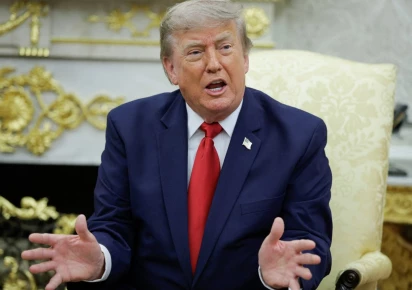
    WASHINGTON: US President Donald Trump has claimed that Washington has control over Iran’s financial resources as the conflict between the United States and Iran continues. In an interview, Trump said the US was effectively acting as a banker for Iran. He claimed Washington had control over a large amount of Iranian money. Trump also described Iran’s economic situation as extremely difficult. He alleged that the country was facing very high inflation and that its currency had lost much of its value. The US president further claimed that Iran was struggling to pay its soldiers and suggested that the economic pressure could become increasingly difficult for Tehran to sustain. Trump outlined several possible approaches toward Iran. He said Washington could maintain the current economic pressure, launch further military action or rely more heavily on financial measures. He said his main objective in the conflict was to prevent Iran from acquiring a nuclear weapon. Trump also claimed that US military action had stopped Tehran from obtaining such a capability. Qatar urges reopening of Strait of Hormuz Meanwhile, Qatar said talks between Iran and Oman on arrangements for reopening the Strait of Hormuz had reached an advanced stage. Qatari Foreign Ministry spokesman Majed Al-Ansari said the negotiations had reached a critical point. He expressed hope that the strategically important waterway would reopen as soon as possible. Qatar said it supports diplomatic efforts aimed at reducing tensions and resolving the dispute. Iran and Oman have been discussing legal and technical arrangements for the resumption of maritime traffic through the strait. Shipping activity in the area has been disrupted following the military confrontation between Iran and the United States. Tehran has linked the reopening of the waterway to the resolution of disputes surrounding what it describes as US violations of a June memorandum of understanding. Araghchi says US sought negotiations Iranian Foreign Minister Abbas Araghchi has claimed that Washington eventually sought negotiations with Tehran after initially demanding Iran’s unconditional surrender. Speaking during a televised press conference, Araghchi said the US had initially taken a hard-line position but later sought talks. He claimed that the change demonstrated Iran’s ability to withstand military and political pressure. Araghchi also said Iran had surprised countries around the world by resisting the United States. The Iranian foreign minister said Washington had support from Israel and several Western countries during the conflict. He also discussed the situation with German Foreign Minister Johann Wadephul during a telephone conversation. According to Iranian state media, Araghchi told his German counterpart that the insecurity in the Strait of Hormuz was the result of US and Israeli military actions against Iran. He briefed Wadephul on Iran’s discussions with Oman regarding the creation of a safe route for maritime traffic through the strategic waterway. The two officials also discussed bilateral relations and wider regional and international developments. Araghchi called on the international community to hold Washington accountable for what he described as the security and economic consequences of the disruption in the Strait of Hormuz. He maintained that lasting security in the waterway would require an end to what Tehran considers US military aggression, maritime restrictions and violations of previous commitments.

  • | | |

    Kuwait’s foreign minister arrives in Pakistan on…

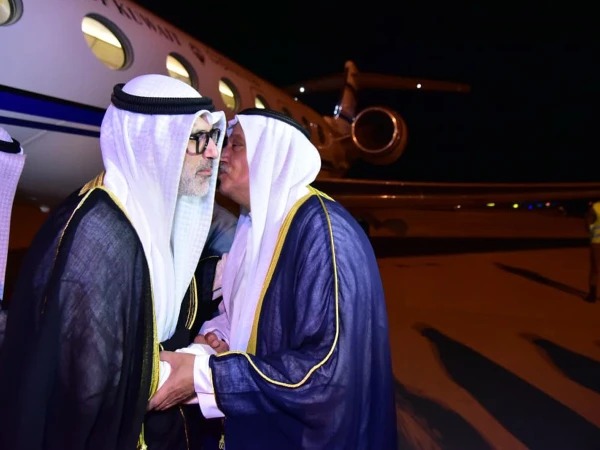
    Kuwait’s Foreign Minister, Sheikh Jarrah Jaber Al-Ahmad Al-Sabah, arrived in Islamabad on Tuesday for an official visit to Pakistan at the invitation of Deputy Prime Minister and Foreign Minister Ishaq Dar. The visit highlights the longstanding friendship and growing diplomatic cooperation between the two countries. According to Pakistan’s Ministry of Foreign Affairs, the Kuwaiti foreign minister received a warm welcome upon his arrival at Islamabad International Airport. Additional Secretary for the Middle East, Zahid Hussain, welcomed the distinguished guest on behalf of the Pakistani government. During the visit, senior officials from both countries are expected to hold high-level discussions on a wide range of bilateral, regional, and international issues of mutual interest. The talks will focus on strengthening political cooperation, expanding economic partnerships, enhancing trade and investment opportunities, and promoting collaboration in various sectors. The Foreign Office stated that the visit reflects the deep-rooted brotherly relations between Pakistan and Kuwait, built on a shared history, mutual trust, and close cooperation over the years. Both nations have maintained friendly diplomatic ties and regularly work together on regional and international platforms. Pakistan and Kuwait enjoy strong cooperation in labor, energy, investment, and defense, while a large Pakistani expatriate community continues to contribute significantly to Kuwait’s economy. The leadership of both countries has repeatedly expressed a commitment to further strengthening these ties through increased engagement and high-level exchanges. Officials believe the visit will provide an opportunity to review the progress made in bilateral relations and identify new areas for collaboration. Discussions are also expected to cover regional developments in the Middle East and South Asia, as well as other international issues of common concern. The official visit underscores the shared commitment of Pakistan and Kuwait to enhancing diplomatic relations, promoting economic cooperation, and expanding strategic partnerships. It also reaffirms both countries’ desire to deepen engagement through regular dialogue and continued collaboration for mutual benefit. The outcomes of the meetings are expected to contribute to stronger Pakistan-Kuwait relations and pave the way for future initiatives aimed at boosting trade, investment, and regional cooperation.

  • |

    Veteran British columnist Rod Liddle dies at 66

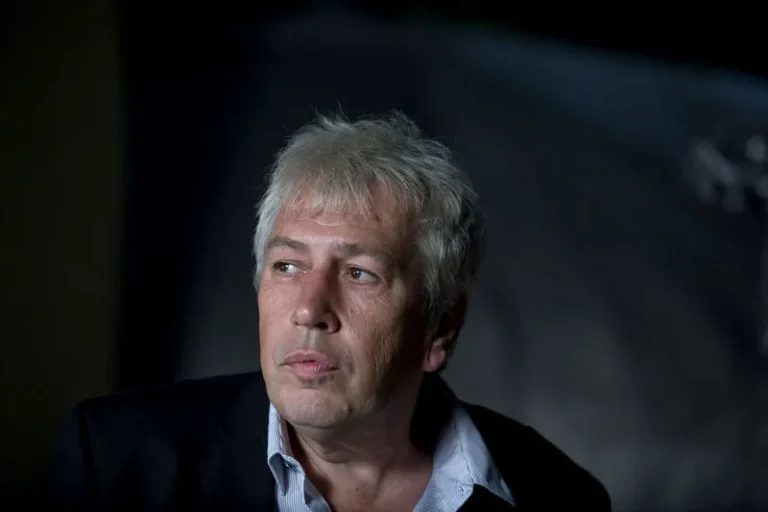
    Rod Liddle, the outspoken newspaper columnist and broadcaster, has died at the age of 66 following a short illness. He passed away at The James Cook University Hospital in Middlesbrough on Sunday evening. Liddle built a long and colourful career in British media. He wrote regular columns for both the Sun and the Sunday Times. He also contributed a weekly column to the Spectator. Beyond print, he hosted a show on Times Radio, reaching audiences across multiple platforms for decades. His children, Wilder, Tyler, and Emmy, shared a heartfelt tribute following his passing. They described feeling shocked and saddened by how suddenly he’d gone. They said their father raised them to be curious, courageous, and quick with humour, just as anyone might expect from him. Even during his final weeks in hospital, they said he stayed remarkably composed. According to his children, he consistently held the room and never let the awful situation show. They spoke of the legacy he left behind, calling him their model for living life fully and fearlessly. Rebekah Brooks, CEO of News UK, also paid tribute to her longtime colleague. She called him an inimitable journalistic force whose influence shaped British journalism for years. Brooks noted that Liddle never shied away from challenging popular opinion. She said his work left a lasting impression on the industry as a whole. She went on to describe him as brilliant and provocative, someone whose wit and fearless commentary became a fixture across News UK’s publications and shows for decades. Brooks added that his absence would be deeply felt, not just by colleagues but by the many readers, listeners, and viewers who followed his work over the years. She extended condolences to his family on behalf of everyone at News UK. Liddle’s career spanned print, radio, and television, and though he was often described as divisive, few would dispute the size of his footprint on British media. His voice, whether praised or criticized, was one that consistently sparked conversation, debate, and reaction across the industry. He leaves behind three children and a body of work that continues to define the sharper, more combative side of British journalism.

  • | |

    Pakistan plans $500 million export-oriented auto z…

      A major initiative has been announced to establish an automotive zone on 150 acres of land at Port Qasim in Karachi, with the government expecting the project to create new opportunities for exports and generate significant foreign exchange for Pakistan. The announcement was made during a meeting of the Port Qasim Authority Board, chaired by Federal Minister for Maritime Affairs Junaid Anwar Chaudhry. The meeting reviewed plans aimed at strengthening Pakistan’s maritime infrastructure and promoting industrial and export-related activities through the country’s major port facilities. Speaking at the meeting, Federal Minister Junaid Anwar Chaudhry said the proposed auto zone would cover approximately 150 acres at Port Qasim. He said the project was expected to generate around $500 million in annual exports, while contributing approximately $200 million in foreign exchange earnings each year According to the minister, the auto zone will provide a range of facilities linked to the automotive industry. These will include refurbishment facilities, display areas and spare-parts services. The development is expected to support businesses involved in the import, refurbishment and export of automotive products and components. The minister said the project would create new export opportunities for Pakistan’s automotive sector and help the country strengthen its position in international markets. He described the proposed auto zone as an integrated framework that would bring together automobile imports, refurbishment and exports at a single location. The initiative is also expected to encourage greater investment in the automotive sector by providing businesses with dedicated infrastructure and facilities. By bringing different stages of automotive-related activities together, the project could help improve efficiency and create opportunities for companies seeking to expand their operations in Pakistan. Port Qasim’s strategic importance as one of Pakistan’s major ports could further support the project. The location provides access to maritime transportation and international trade routes, potentially making it easier for automotive businesses to handle imported vehicles, spare parts and other related products before exporting refurbished or finished products to overseas markets. The government expects the auto zone to contribute to the country’s broader efforts to increase exports and generate foreign exchange. Pakistan has been seeking new avenues to expand its export base and reduce pressure on its foreign exchange reserves. In this context, the proposed automotive zone could provide a platform for developing value-added activities rather than relying solely on the import and sale of automotive products. The inclusion of refurbishment facilities is particularly significant because it could allow imported vehicles and automotive components to be repaired, upgraded or prepared for resale and export. Similarly, dedicated spare-parts facilities could support both local businesses and export-oriented automotive operations. The project is therefore being presented as more than a conventional industrial development. It is intended to establish an integrated automotive ecosystem connecting imports, refurbishment, display, spare parts and exports. If implemented as planned, the Port Qasim auto zone could attract investment, support businesses associated with the automotive industry, create employment opportunities and increase Pakistan’s export earnings. The government believes that the project will open new avenues for growth in the automotive sector while contributing to the country’s overall foreign exchange generation and export expansion efforts.

  • |

    Nadia Afgan says actors mask money worries behind curated posts

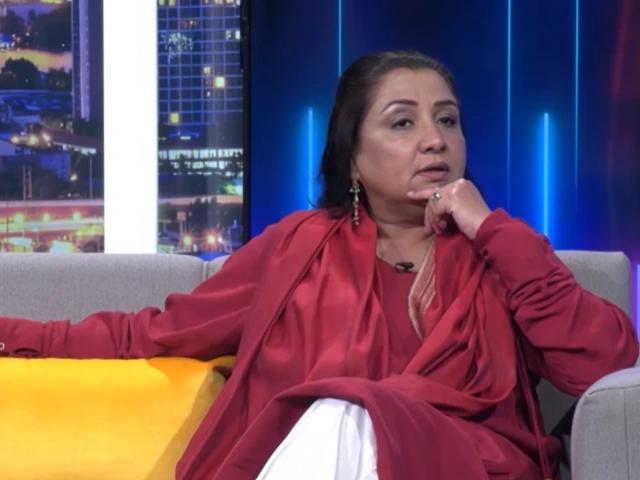
    Actor Nadia Afgan is speaking candidly about the financial pressures young actors face early in their careers. She specifically criticised the trend of moving into expensive, high-status neighbourhoods purely to keep up appearances. Reflecting on how demanding the profession really is, Nadia said the job is far tougher than it looks from the outside. She explained that young actors often work incredibly hard when starting out, and encouraged them to prioritise saving money or investing in property, rather than chasing status symbols just because their peers happen to live a certain lifestyle. According to Nadia, that kind of comparison amounts to peer pressure, and it’s pushing many actors into spending well beyond what they can sustainably afford. She also took aim at social media for reinforcing that illusion. Nadia pointed out that people readily post about their cars, scenic views or business-class flights, but rarely share the moments of genuine financial stress that often follow, like panicking over a hefty bill. Speaking more broadly about shifts within the entertainment industry, Nadia said visibility now often matters more than actual talent. She noted that becoming an influencer first has become a common route into television dramas, with anyone holding a camera and an active social media following able to break in more easily. She added that production houses tend to prioritise numbers over craft as well. According to Nadia, casting someone with a large following almost guarantees higher viewership, which directly benefits the channel or production house involved. She admitted knowing many genuinely talented individuals who get overlooked, while influencers with large followings continue landing opportunities instead. Beyond industry commentary, Nadia also reflected on her own journey as an actor. She spoke about her long-held desire to move beyond comedic roles, admitting that meaningful change only came gradually, as her personality and outlook evolved over time. She shared that her father’s illness and eventual passing brought a newfound sense of steadiness to her life. According to Nadia, having witnessed life’s ups and downs so closely has helped her understand and portray complex characters with far greater depth. Nadia is best known for her roles in dramas including “Suno Chanda,” “Shashlik,” “Shehr-e-Zaat” and “Kabuli Pulao.”

Leave a Reply

Your email address will not be published. Required fields are marked *