summons sindh over
| |

SC summons Sindh IG over murder FIR delays

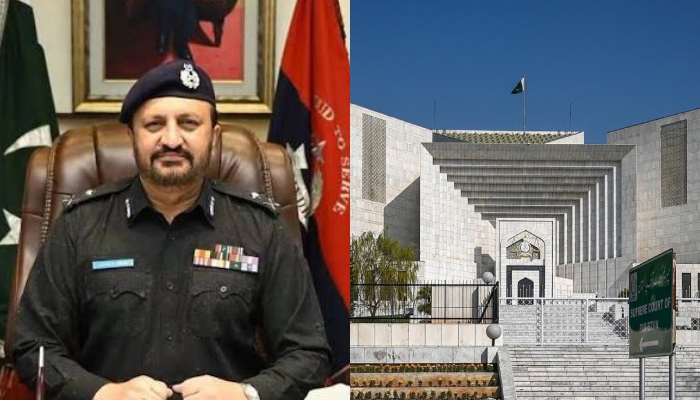
The Supreme Court has summoned the Inspector General of Sindh Police over delays in registering murder cases.

A bench of the Supreme Court heard a case concerning the alleged delay in the registration of murder FIRs. During the hearing, the court expressed serious concern over the police response to complaints and directed the Sindh police chief to appear personally at the next hearing.

The court also summoned the Advocate General Sindh and the Deputy Inspector General (DIG) Sukkur. All three officials have been directed to appear before the court at the next hearing and explain the situation regarding delays in registering criminal cases.

Justice Hashim Kakar expressed strong displeasure over the performance of the Sindh police. He observed that the system of accountability and punishment appeared to be ineffective in the province.

The judge said the police were allegedly allowing accused persons to escape accountability. He noted that in the case being heard by the court, the murder case was registered two days after the killing.

Justice Kakar further observed that police in several cases appeared reluctant to register FIRs. He questioned how victims and their families could receive justice if cases were not registered promptly.

The judge used strong remarks to highlight the seriousness of the situation and criticised what he viewed as shortcomings in the handling of murder complaints.

Justice Salahuddin also expressed concern over the law-and-order situation in parts of Sindh. He specifically pointed to the conditions in Sukkur and Larkana, describing the situation there as particularly troubling.

The court directed the relevant officials to appear personally and provide answers regarding the alleged delays and the overall performance of the police in registering murder cases.

The Supreme Court subsequently adjourned further proceedings in the case until September 21. The summoned officials are expected to appear before the court on that date and respond to the concerns raised by the judges.

Similar Posts

  • |

    White House considers removing top DC prosecutor over dropped monument case

    US President Donald Trump is contemplating the dismissal of Jeanine Pirro from her position as US Attorney for the District of Columbia following her department’s move to abandon the criminal prosecution related to damage at the Lincoln Memorial Reflecting Pool. The decision by federal prosecutors to drop charges against former Olympian David Hearn came after evidence revealed the peeling liner stemmed from a rushed, substandard renovation rather than criminal intent. Trump reportedly felt caught unawares by the court submission, publicly rebuking Pirro for backing down under judicial pressure and claiming she buckled during proceedings. In defence of her office’s actions, Pirro explained that crucial documentation regarding the botched installation was withheld by the Department of the Interior until after the original indictment had been filed. Conversely, Interior Secretary Doug Burgum disputed this account, continuing to insist that intentional destruction caused the damage. Formal dismissal of the charges against Hearn remains pending before the court.

  • |

    Kangana Ranaut’s viral NEET claim dismissed as fake

    Actor and politician Kangana Ranaut has once again found herself at the center of online discussions after a viral post falsely claimed that she had requested Prime Minister Narendra Modi to appoint her as India’s Education Minister. The statement quickly spread across social media platforms, leading many users to believe it was genuine because it closely resembled Kangana’s usual writing style. However, the viral quote is fabricated and was never shared by the actress. According to the fake post, Kangana allegedly said she understood the importance of education and wanted to become the country’s Education Minister. The message also included a satirical proposal related to the National Eligibility-cum-Entrance Test (NEET), claiming that students who watched her films in theatres would receive extra marks in the medical entrance examination. The fabricated statement read that she wanted to be appointed Education Minister because she was “the first person to show people the truth that India attained independence in 2014.” It further joked that awarding additional NEET marks to students who watched her movies would help end her string of box-office flops while also benefiting students. The post gained significant attention online, with many users sharing screenshots and commenting on the supposed remarks. Some believed the statement was authentic due to its resemblance to Kangana’s outspoken social media posts, while others questioned whether it had been created as satire. Despite its widespread circulation, the claim has been confirmed to be false. Kangana did not make the statement, nor did she post it on any of her verified social media accounts, including Instagram. There is no evidence that she requested to become India’s Education Minister or proposed any changes to the NEET examination in the manner described. The viral message appears to have been carefully crafted to imitate Kangana’s distinctive online tone, making it convincing enough to mislead many social media users. Such edited or fabricated posts often spread rapidly, particularly when they involve well-known public figures and controversial topics. The incident serves as another reminder of how quickly misinformation can circulate online. Experts frequently advise users to verify viral claims by checking official social media accounts or credible sources before sharing them further. Kangana, known for expressing her views on political and social issues, has often made headlines for her outspoken opinions. However, in this case, the viral statement circulating online has no factual basis and should not be treated as a genuine comment from the actress. As the post continues to be shared across various platforms, social media users are being urged to exercise caution and verify the authenticity of viral content before accepting it as true. The claim about Kangana Ranaut seeking the Education Minister’s post and offering extra NEET marks to students who watch her films is entirely false.

  • | |

    Fake arms licence racket busted in KP, two arreste…

    Police have uncovered a fake arms licence racket in Khyber Pakhtunkhwa, exposing an illegal network that allegedly produced forged weapon licences from a house. Authorities believe the operation had been running through a well-organised system and involved both private individuals and a government employee. According to police, the suspects were preparing counterfeit arms licences using computer equipment and printing materials inside a residential property. Investigators said each fake licence was sold for amounts ranging from Rs80,000 to Rs250,000, depending on the type of licence and the customer’s requirements. Police said an employee of the Home Department’s Licence Branch has also been found involved in the case. His alleged role is being investigated to determine how official records or procedures may have been misused. A case has been registered, and two suspects have been arrested during the operation. Police carried out a raid and seized a large quantity of equipment allegedly used to manufacture the fake licences. The recovered items include a laptop, a printer, ink bottles, around 700 licence cards, and other materials believed to have been used for printing forged documents. Investigators are examining the seized equipment to identify additional suspects and uncover the full scale of the operation. Police have also written to the Home Department, requesting assistance in the investigation. Officials are expected to examine departmental records to determine whether more employees were involved or if official data was misused. Sources in the Home Department said a committee will be formed to conduct a detailed inquiry into the incident. The committee will investigate the role of all individuals linked to the case and recommend legal and departmental action where necessary. CCPO Dr Mian Saeed said the investigation is progressing and that authorities are determined to bring everyone involved to justice. He said strict action will be taken against all suspects, including any government officials found responsible. He added that no official involved in the fake arms licence racket would be given any leniency, and the investigation would continue until the entire network is exposed.

  • | |

    Ebola outbreak becomes Congo’s deadliest, death …

    KINSHASA: The Democratic Republic of Congo is facing its deadliest Ebola outbreak on record, with the death toll reaching 2,325 and confirmed infections climbing to 4,945, according to the latest government figures. The outbreak, declared on May 15, has now surpassed the 2,299 deaths recorded during Congo’s previous worst Ebola epidemic from 2018 to 2020. Health authorities also reported 101 new confirmed cases in a single day, highlighting the rapid spread of the disease. The current outbreak is the country’s 17th and has already become its largest in terms of confirmed cases. Only the devastating West African Ebola epidemic of 2014–2016, which killed more than 11,000 people across Guinea, Liberia and Sierra Leone, has recorded a higher overall toll. Health officials say the outbreak is being driven by major challenges, including weak healthcare infrastructure, insecurity and resistance within some communities. Delays in detecting infections and getting patients into medical care are also contributing to the high death rate. The case fatality ratio has climbed sharply to 46%, compared with around 20% in early June. Public health experts caution that the increase does not necessarily mean the virus has become more deadly. Instead, they say many patients are being identified only after their condition has severely deteriorated or after death. The outbreak is being caused by the Bundibugyo species of Ebola, for which there are currently no approved vaccines or specific treatments. Researchers are assessing experimental vaccines and therapies, but available evidence remains limited. Ebola is transmitted through direct contact with the bodily fluids of infected people, including those who have died from the disease. Symptoms can include fever, vomiting and diarrhoea, while severe infections may lead to internal or external bleeding. The outbreak also crossed into neighbouring Uganda, where authorities confirmed 20 cases and two deaths before declaring the outbreak over last month.

  • Thailand has enough oil for local consumption, but prices will rise: Government

    BANGKOK — The government has confirmed there are adequate supplies of oil for local consumption but warned that local prices will still rise in line with global prices, even with the use of subsidies to offset the increase. Thailand’s Current Oil Reserves Will Last 61 Days, Energy Ministry Confirms Speaking after a meeting on the […]

  • | |

    Rising heat pushes even Africa’s resilient c…

    Camel herders and scientists across Africa say that rising temperatures are now overwhelming animals long regarded as uniquely suited to desert extremes, with herds facing rising death tolls, illness, and shrinking grazing lands. In the Afar region of northeastern Ethiopia, among the hottest and driest places on the planet, nomadic herders traditionally lead camel caravans loaded with salt across the desert. Ali Umer, a 40 year old herder from Semera who owns around 500 camels, said he watches his animals struggle under conditions he has never seen before. He described blistered feet, watery eyes, and burned skin among his herd, and said the sand itself now scorches the animals as they rest. Umer said he lost eight camel calves in a single month due to extreme heat, and added that even the wind no longer brings relief. He said the changes have become noticeably worse in recent years. Umer’s account matches what researchers and veterinarians are documenting across the continent. Scientists and animal welfare specialists point to stress, fatigue, dehydration, and rising disease rates as direct consequences of extreme heat, while indirect effects such as water shortages, vegetation loss, and disappearing shade compound the damage. North Africa and the Horn of Africa are home to roughly 80 percent of the world’s dromedary camel population, the single humped variety that farmers across the region have increasingly relied on because of its reputation for withstanding drought and heat. A 2025 study examining herder perceptions in southern Ethiopia found that climate variability had measurably harmed camel health, productivity, and reproduction. The crisis appears especially acute in Somalia. Research published in June found that drought linked camel deaths have affected nearly 46 percent of camel owning households, based on a survey of almost 6,000 pastoral families. The mortality was heavily concentrated in northern areas, with the Sool region recording a death rate of nearly 73 percent. Experts say extreme heat is the central driver behind the region’s drought conditions, though poor veterinary access and weak herd management make outcomes worse. Atmospheric scientists have linked the severe 2021 to 2022 drought to sustained high temperatures, which accelerate evaporation from soil and water sources and increase the rate at which plants release moisture into the air. Veterinarians on the ground report a growing caseload tied to heat. Hassan Nuya Guyo, a veterinary officer in Marsabit county in northeastern Kenya near the Ethiopian border, said his clinic is seeing a sharp rise in hyperthermia cases that leave camels vulnerable to secondary infections. He said camel deaths in the county have risen more than 15 percent over the past two years due to heat and drought. Separate research from the Horn of Africa links heat stress to higher disease rates and falling milk yields among camel herds. A similar pattern is emerging in North Africa. A study conducted in Algeria and published this year documented a marked rise in camel deaths during summer heatwaves, with researchers noting clear seasonal mortality spikes that they say call for targeted responses such as emergency water supplies, supplemental feeding, and closer disease monitoring during peak summer months. The World Meteorological Organization says extreme heat events have become routine across North Africa, with heatwaves trending upward since 1981. Several countries in the region and the wider Middle East recorded temperatures above 50 degrees Celsius in 2024. The organization’s most recent State of the Climate in Africa report found that North Africa warmed faster than any other subregion on the continent between 1991 and 2025, at a rate of 0.43 degrees Celsius per decade. Camels are naturally equipped to handle heat up to about 40 degrees Celsius. Their bodies allow internal temperature to fluctuate throughout the day, reducing the need to sweat, while concentrated urine, dry waste, and a thick protective coat help limit water loss and block solar radiation. But researchers say those adaptations are no longer enough. Mohammed Bengoumi, a camel health specialist with the United Nations Food and Agriculture Organization who works across North Africa, said summer temperatures in large parts of the Sahara now regularly exceed 50 degrees Celsius, raising the risk of severe heat stress, especially where vegetation, water, and shade are already scarce. Abdelmadjid Chehma, a professor at the University of Ghardaia in Algeria who has conducted experimental research on desert camels, said sustained heat above 41 to 45 degrees Celsius damages the animals at a cellular level, weakening their immune systems and preventing white blood cells from repairing themselves. He said the resulting stress slows the animals’ metabolism as their bodies try to limit internal heat production, which in turn reduces appetite and causes lethargy, lower milk output, and reproductive problems. Mohammed el Khasmi, an animal hydrobiology expert at the University of Casablanca in Morocco, said his team has documented a wide range of heat related harm in camels, including weight loss, inflammation, muscle and bone damage, kidney related chemical imbalances, and parasite driven infections. The combined pressures are forcing some herding communities to abandon land they have used for generations. Daniel Gelan, a pastoralist development researcher at Vision University in Ethiopia, said herders in the country’s north are relocating permanently to southern areas with more reliable water and vegetation, rather than following the seasonal migration patterns of the past, because the northern region can no longer sustain camel herding. The Horn of Africa is still recovering from a severe drought that lasted from 2020 to 2023 and is now facing another period of harsh conditions, according to the charity Oxfam, which reported that water prices in parts of Somalia have jumped by more than 2,000 percent. Back in Afar, Umer said he fears disease could soon begin killing his adult camels as well. Chehma said that concern reflects a broader shift underway across the region, where an animal once seen as the ultimate survivor of desert life is now being pushed toward its own breaking point by the pace and severity of current heatwaves.

Leave a Reply

Your email address will not be published. Required fields are marked *