daanish schools enrol
| |

Daanish schools enrol only 40,000 in 15 years: Edu…

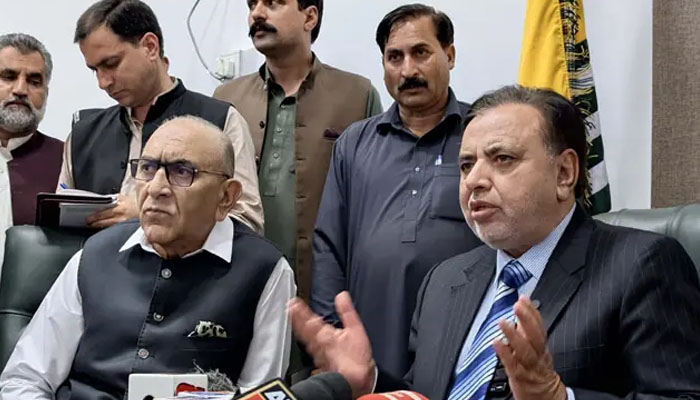
Punjab Education Minister Rana Sikandar Hayat has raised questions about the performance and accessibility of the Daanish School System.

He said education at Daanish schools was expensive. As a result, the system had enrolled only around 40,000 students in 15 years.

The minister questioned the effectiveness of earlier education initiatives in the province. He specifically referred to comprehensive and pilot schools established in Punjab.

He asked where those schools had gone and why they had failed to deliver the expected results.

Rana Sikandar Hayat said the Punjab government was working to reduce the gap between public and private education.

For this purpose, the government had moved towards a public-private partnership model. He said the approach could help improve the quality of education and increase access for children.

The provincial minister also highlighted the enrolment performance of the Nawaz Sharif School of Eminence programme.

He said these schools had recorded an average enrolment of around 112 per cent so far.

Rana Sikandar Hayat also spoke about the issue of inaccurate student records in government schools.

He claimed that authorities had removed around 1.5 million ghost students from government school records across Punjab.

The minister said the province still faced a major education challenge. Around 25 per cent of children in Punjab remain out of school, according to him.

He said the dropout problem becomes particularly serious when students reach the high-school level.

A significant number of children leave education after reaching secondary-level schools, he said. This affects the overall literacy and education indicators of the province.

The minister said the government was now focusing on bringing children who are outside the education system back into schools.

He said schools operating under outsourcing arrangements had been given a specific target. They would be required to enrol 5 per cent of children currently deprived of education.

The initiative is aimed at increasing school enrolment and reducing the number of children who remain outside the formal education system.

Rana Sikandar Hayat said improving access to education required both enrolment and retention. Bringing children into schools would not be enough if they later dropped out.

He stressed the need to strengthen the education system and ensure that children continue their studies through higher grades.

The minister’s remarks highlight the challenges facing Punjab’s education sector. Despite having a large network of schools, the province continues to deal with out-of-school children, inaccurate enrolment records and high dropout rates.

The government is now looking towards partnerships with the private sector and reforms in public schools to address these problems.

The minister said the ultimate objective was to provide more children with access to quality education and reduce the divide between public and private schooling.

Similar Posts

  • | |

    Police identify key suspects in Abdullah Tahir mur…

    LAHORE: Police have made significant progress in the investigation into the murder of former Pakistan Tehreek-e-Insaf (PTI) ticket-holder Abdullah Tahir, who was shot dead in Lahore on July 29. Investigators say fresh evidence has led to changes in the direction of the probe, while efforts are underway to arrest all those allegedly involved in the killing. According to police officials, the investigation has been reassigned after the suspected shooters were identified during the inquiry. The case was initially being handled by the Investigation Wing of Ghalib Market Police Station. However, investigators decided to revise the probe after obtaining new information about the suspects and their alleged roles in the incident. Police said the alleged main facilitator, Arsalan Jatt, played a key role in the planning and execution of the attack. Investigators claim he transported the suspected shooters from Gujranwala to Lahore in a vehicle before the murder took place. Authorities believe this journey was part of a pre-planned operation carried out before the attack on Abdullah Tahir. Officials further stated that the prime suspect accused of masterminding the murder, identified as Gogi Butt, is currently outside Pakistan. Police said legal proceedings have been initiated to secure his return to the country. Authorities plan to seek the issuance of an international Red Notice to facilitate his arrest and extradition through the relevant international law enforcement agencies. Investigators are also working to trace the remaining suspects believed to have participated in the crime. Police teams are analysing evidence, questioning witnesses and reviewing available records to establish the complete sequence of events and identify everyone involved in the planning and execution of the attack. Police officials said the investigation is continuing on multiple fronts and further arrests are expected as more evidence is collected. Authorities have expressed confidence that all individuals responsible for the murder will be brought before the courts. Abdullah Tahir, a former PTI ticket-holder, was killed in a shooting incident in Lahore on July 29.

  • | | |

    Pezeshkian says Iran seeks peace, not wider conflict

    Iranian President Masoud Pezeshkian has said that Iran has no intention of prolonging the current conflict or expanding it beyond its existing scope. However, he made it clear that the country will continue to defend its sovereignty, territorial integrity and national interests against any threat. Speaking at a ceremony in Tehran, the president said Iran’s policy is based on protecting its borders while avoiding any unnecessary escalation. He stressed that the country does not seek war but will not hesitate to respond if its security or independence is challenged. Pezeshkian said maintaining national security is not only the responsibility of the armed forces but also depends on the unity and solidarity of the Iranian people. He urged citizens to set aside political and social differences and work together to strengthen the country during a difficult period. The president said internal unity is one of the strongest defenses against foreign interference. According to him, divisions within society can create opportunities for outside powers to influence domestic affairs. He added that a united nation is better equipped to face political, economic and security challenges. He emphasized the need to build a strong and stable society where people enjoy confidence in national institutions and where hostile elements cannot create unrest or weaken public trust. He said Iran must focus on strengthening its social fabric to prevent enemies from exploiting internal disagreements. Pezeshkian also called for greater national cooperation to overcome current challenges. He said every segment of society has a role to play in safeguarding the country’s future and preserving stability. The Iranian president reiterated that his government remains committed to protecting the country’s borders and national interests while pursuing policies that avoid a wider regional conflict. He said Iran’s priority is to maintain security, preserve national unity and prevent conditions that could lead to further instability.

  • | |

    Shakib’s home attacked after Hasina media event

    Former Bangladesh cricket captain Shakib Al Hasan’s ancestral home was attacked by a group of people after he participated in the first public media event of former Prime Minister Sheikh Hasina since her removal from power in 2024. According to police, the attack took place in Magura, around 170 kilometres southwest of Dhaka. Protesters reportedly smashed windows of the house and threw bricks along with two petrol bombs. The attack triggered a fire on the upper floor of the residence. Authorities said the property was vacant at the time of the incident and no injuries were reported. Police have launched an investigation into the attack. The incident occurred hours after Shakib joined a virtual discussion organised by the Foreign Correspondents’ Club of South Asia in New Delhi. During the event, Sheikh Hasina addressed the media for the first time since leaving office and declared that she intended to return to Bangladesh in December despite the legal cases against her. Hasina said she was prepared to face imprisonment or even death if she returned, insisting that she wanted to stand with the people of Bangladesh. She also called for the ban on her Awami League party to be lifted so it could resume political activities. Shakib, who was elected to parliament on an Awami League ticket in January 2024, has remained outside Bangladesh since the student-led uprising that forced Hasina from power. He is currently facing several investigations, including allegations related to murder, financial misconduct, fraud and money laundering, all of which remain under legal process. The Bangladesh government strongly criticised Hasina’s media appearance from India, describing it as harmful to the country’s sovereignty. Officials warned that allowing such activities could negatively affect relations between Dhaka and New Delhi. Hasina has been living in India since August 2024 after leaving Bangladesh during the political unrest. The Bangladeshi government has requested her extradition, while Indian authorities have said the request is being reviewed under legal procedures. Last year, Bangladesh’s war crimes tribunal sentenced Hasina to death in absentia over charges linked to the deadly crackdown on the 2024 student protests. The former prime minister has rejected the charges, calling them politically motivated.

  • | |

    Israel rejects Trump’s 15-point Gaza plan

    Israeli Prime Minister Benjamin Netanyahu has rejected US President Donald Trump’s proposed 15-point plan for Gaza, insisting that Israel will not withdraw its forces until Hamas is fully and genuinely disarmed. Netanyahu made the statement during a cabinet meeting on Sunday. He said Israel would not accept any arrangement that allows Hamas to retain its weapons while Israeli troops are required to leave Gaza. “Israel rejects the 15-point document,” Netanyahu said, adding that the Israeli military would continue operating against threats to its forces and citizens. The dispute has created another obstacle for Trump’s efforts to establish a lasting ceasefire and political settlement in Gaza. Trump’s Board of Peace had previously announced that an agreement had been reached on the complete disarmament of Hamas and other armed groups operating in the territory. Hamas, however, has linked the handover of its heavy weapons to wider conditions. The group has demanded an end to Israeli military operations and a withdrawal of Israeli forces from Gaza. Netanyahu said disarmament must take place before any Israeli military withdrawal. He rejected the possibility of what he described as a symbolic or “fictitious” disarmament process. The Israeli premier said his government was discussing the next steps with US officials. He indicated that some American proposals were acceptable to Israel, while others remained unacceptable. “We know how to stand our ground on these matters,” Netanyahu said. The disagreement represents a major challenge for Trump’s Gaza initiative, which was presented as a framework for ending the conflict and creating conditions for reconstruction. The proposed plan includes the disarmament of Hamas, a phased Israeli military withdrawal and the rebuilding of Gaza. It also envisages the creation of an international Board of Peace to oversee implementation of the agreement. Hamas had previously signalled support for aspects of the disarmament framework. However, the group has maintained that weapons cannot simply be surrendered while Israeli forces remain in Gaza and military operations continue. Israel, meanwhile, has continued military strikes in Gaza despite the initial ceasefire agreement reached last October. Netanyahu is also facing political pressure at home. His far-right coalition partners have strongly opposed concessions that could allow Hamas to remain armed or secure a significant Israeli withdrawal. National Security Minister Itamar Ben Gvir has rejected the proposed framework and called it unacceptable. With Israeli elections approaching, Netanyahu faces pressure from both domestic allies and international partners. Any major concession on Gaza could create tensions within his governing coalition. The latest rejection therefore puts Trump’s peace initiative under renewed pressure. The central disagreement remains over the sequence of events: Hamas wants Israeli forces to withdraw and military action to end before completing disarmament, while Israel insists that Hamas must first surrender its weapons.

  • | |

    Mathira urges society to let men express emotions

    Television host and social media personality Mathira has urged society to change the way boys are raised, saying men should be allowed to express their emotions without fear of being judged. She believes many men struggle with emotional pressure because they are expected to remain strong at all times while carrying the burden of family and financial responsibilities. Speaking in a recent interview, Mathira said society often teaches boys to hide their feelings from an early age. As they grow older, they become uncomfortable talking about sadness, stress, anxiety, or depression. According to her, this emotional suppression affects their personal lives and relationships. She said many men work tirelessly to support their families but rarely receive emotional support themselves. The pressure to provide and meet expectations often leaves them mentally exhausted. As a result, some find it difficult to become emotionally available as fathers, husbands, sons, or brothers. Mathira stressed that emotional intelligence should be taught during childhood. She said parents play the biggest role in shaping a child’s personality and values. Instead of telling boys to suppress their emotions, families should encourage them to express their feelings openly and honestly. She also rejected the idea that television or social media is responsible for raising children. According to her, parents decide what children watch, what they learn, and the values they adopt. She said children spend their early years learning from their families, making the home environment the most important influence on their development. Mathira emphasized that mothers and fathers should work together to create a safe and supportive atmosphere where children feel comfortable discussing their emotions. She believes such an environment helps children develop confidence, empathy, and healthy communication skills. Sharing her own experience, Mathira said she is raising three sons and has always encouraged them to speak openly about their emotions. She tells them that crying, feeling sad, or admitting they are having a difficult day is completely normal. She believes emotional expression is a sign of honesty and strength rather than weakness. The television host also said she teaches her children to respect women and avoid judging others based on appearance, clothing, or personal choices. Growing up in a household led by women, she said her sons have learned to understand the challenges women often face in society and the importance of treating everyone with dignity and respect. Reflecting on her experience as a divorced single mother, Mathira said both men and women should develop qualities that help build stronger relationships. She believes men should embrace emotional sensitivity, while women should develop confidence and resilience to face life’s challenges.

  • | |

    Jaranwala tragedy remains a deep wound, says Punja…

    Punjab Minister for Minority Affairs Sardar Ramesh Singh Arora has said that the painful memories of August 16 are still fresh. He described the Jaranwala tragedy as a deep wound on the hearts of the affected families and communities. In a statement, Arora said the Punjab government stood with all victims of the tragedy. He said Chief Minister Punjab and the provincial government were committed to protecting the rights of religious minorities. Arora said the Punjab government had adopted an effective strategy to ensure the safety of minority communities. He added that security measures had been strengthened to protect people from violence and discrimination. The provincial minister said the protection of religious minorities was a priority for the government. He claimed that the government had taken steps to ensure that such an incident would not happen again. Arora warned that no individual or group would be allowed to take the law into their own hands. He said violations of the rights of religious minorities would not be tolerated. He stressed that every citizen had the right to live in safety and with dignity. He said the government was responsible for protecting the lives and property of all citizens, regardless of their religious background. The minister also said religious minorities in Punjab were being provided with all possible facilities. He said the government was working to address their concerns and improve their overall security. Arora said the Punjab government would continue taking measures to create a peaceful environment for all communities. He added that protection of minorities was essential for maintaining harmony and stability in the province. The minister’s statement came on August 16, the anniversary of the Jaranwala incident. The episode remains a painful memory for the Christian community and has continued to raise concerns about the protection of religious minorities. Arora said the government was determined to learn from the tragedy and prevent similar incidents in the future. He reiterated that no one would be permitted to violate the law or target minority communities.

Leave a Reply

Your email address will not be published. Required fields are marked *