bessent says hormuz
| |

Bessent says Hormuz shipping deal with Iran could …

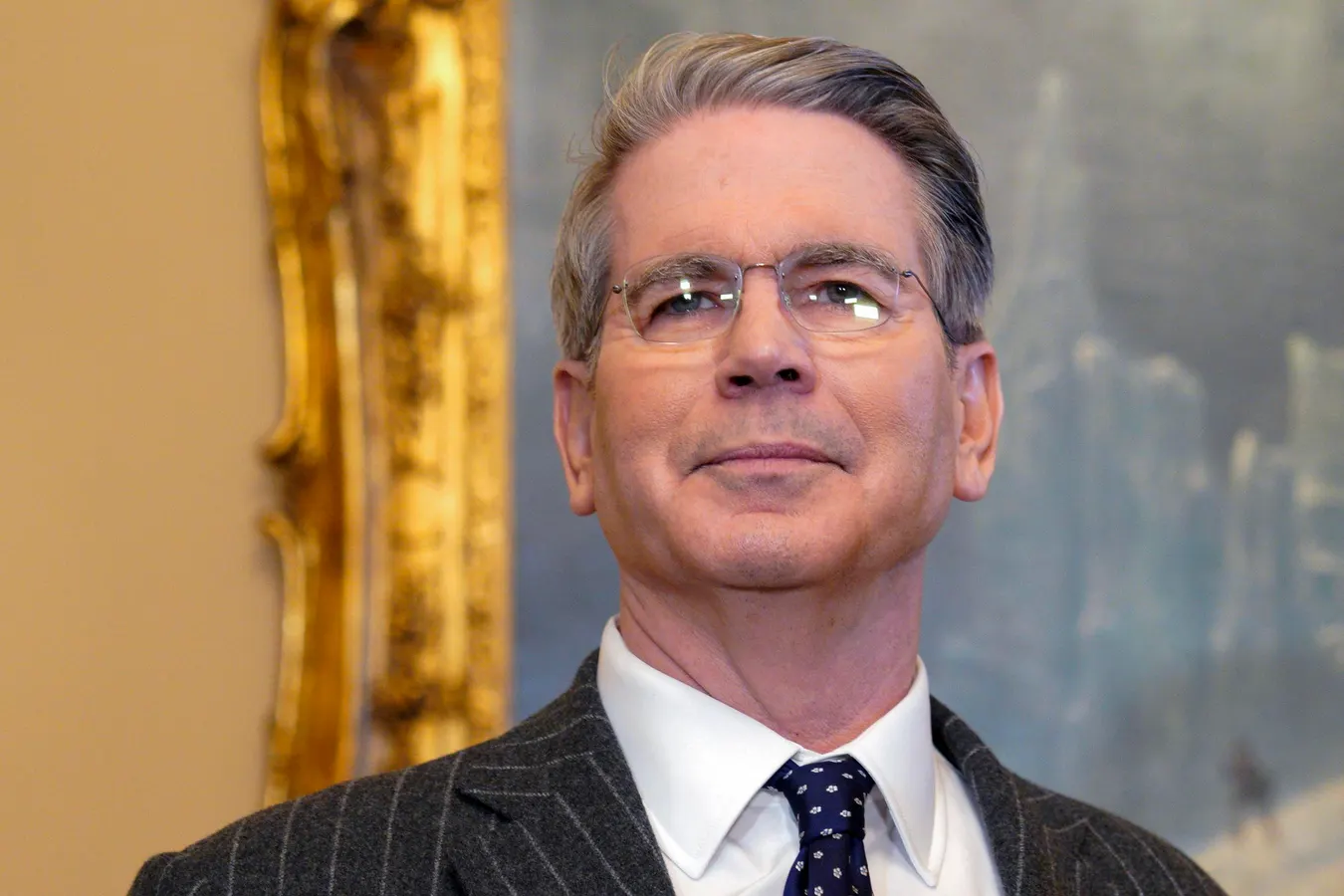
US Treasury Secretary Scott Bessent said on Tuesday that a deal to reopen the Strait of Hormuz to normal shipping traffic could be reached within a day or two, as diplomatic activity intensified across the Gulf region.

Speaking in a television interview, Bessent said American officials are in active discussions with Iranian counterparts and expressed optimism about a near term breakthrough. “There is a chance we may have a deal today or tomorrow,” he said, adding that the goal is to move toward a more normalized posture in the conflict. Asked whether any agreement would let Iran charge ships a toll for using the waterway, Bessent said he expects the outcome to guarantee freedom of movement rather than a fee based system. He noted that vessel traffic through the strait has picked up in recent days despite lingering danger, and predicted that energy prices would ease once a deal takes hold.

His comments followed a report from The New York Times saying Iran and Oman have moved close to an arrangement that would restore commercial shipping through the strait. Under the terms described in that report, inbound vessels would travel through a corridor close to the Iranian coast while outbound ships would use a route nearer Oman. Iranian officials told the newspaper that no formal tolls would apply, though they said a service charge tied to environmental protection, cargo security and staffing costs would be split evenly between Tehran and Muscat. A US official pushed back on that characterization, calling the Iranian version inaccurate and insisting any temporary shipping lanes would not need Iranian sign off or involve fees. The report also noted that some Pentagon officials worry the arrangement could look like a concession to Tehran, while some Iranian officials privately questioned whether it would actually stop further American strikes.

Qatar’s Foreign Ministry said Tuesday that mediators including Doha, Pakistan and Oman continue to coordinate closely to bridge the gap between Washington and Tehran, exchanging draft proposals between the two sides. Ministry spokesperson Majed Al Ansari said there is still no clear timeline for a final agreement, and Qatar separately called for a return to normal conditions in the strait while diplomacy continues.

Tension over the waterway remained visible even as talks progressed. A dry bulk carrier called the Minoan Pioneer, sailing under the Liberian flag, was struck by an unidentified projectile near Oman’s coast on Tuesday, according to maritime security sources. The strike reportedly hit the engine room and sparked a fire in the crew’s living quarters, forcing the entire crew to abandon ship. One crew member, the vessel’s third engineer, was reported missing. The ship’s Greece based operator did not immediately respond to requests for comment. The incident followed an earlier report from the UK Maritime Trade Operations center, which said a separate cargo vessel had broadcast that it was hit by an unknown projectile about 20 nautical miles northeast of Khasab, Oman. No group has claimed responsibility for either strike, and authorities have opened an investigation.

In Tehran, President Masoud Pezeshkian used a televised address to reject reports that he had offered his resignation amid the ongoing standoff with Washington. “If I were going to resign, I would announce it publicly,” he said, denying any rift with Supreme Leader Ali Khamenei or the armed forces and insisting the leadership is working in full coordination. He separately said Iran intends to defend its territorial integrity but has no interest in expanding the conflict, while claiming Iranian missile and drone strikes had disrupted US military goals during a recent 17 day period of fighting.

The regional picture grew more complicated elsewhere. Yemen’s Houthi movement claimed responsibility for a drone strike on Najran Airport in southern Saudi Arabia, with military spokesman Yahya Saree saying the attack struck its target accurately. He described the strike as retaliation for alleged Saudi drone incursions over Yemen’s Saada and Hajjah provinces and warned that further violations would draw a response. Saudi authorities had not commented on the claim as of Tuesday.

In Lebanon, a seventh round of direct negotiations with Israel opened in Rome under American sponsorship, continuing talks tied to a framework agreement the two sides signed in June covering a phased Israeli withdrawal from Lebanese territory in exchange for Lebanese army deployment and the disarming of armed factions, a clear reference to Hezbollah. Hezbollah Secretary General Naim Qassem used a speech at an Arbaeen commemoration in Baalbek to criticize the talks, saying they have delivered only “shame, humiliation, despair and repeated concessions” for Lebanon. He accused Lebanese President Joseph Aoun of acting with bias rather than serving as a unifying figure and argued that only the earlier US brokered truce between Washington and Tehran had kept Israeli strikes at bay.

Financial markets showed relief at the signs of diplomatic movement. Brent crude futures fell about 7 percent to near $83.77 a barrel on Monday, while the Dow Jones Industrial Average closed at a record high. Asian stocks and oil prices ticked higher again on Tuesday. In a Truth Social post, Trump described Iran’s leadership as “unbelievably duplicitous” while claiming more talks were scheduled for the near future. He also reasserted that the US Navy maintains full control over the strait, writing that nothing passes through unless Washington allows it.

The exchange fits a broader pattern that has defined the conflict since it began roughly five months ago under the codename Operation Epic Fury. Trump has repeatedly threatened major military escalation only to step back and cite diplomatic openings, while Iran has publicly refused direct talks with Washington since a memorandum of understanding both sides signed collapsed in early July. Washington maintains that June’s memorandum obligated Iran to open the Strait of Hormuz to shipping, while Tehran insists the agreement preserved its authority over traffic through the waterway, a disagreement that continues to sit at the center of the standoff.
Similar Posts

  • |

    Tourist plane crash in Peru kills 13

    LIMA: A tourist aircraft crashed in southern Peru on Saturday, killing all 13 people on board during a sightseeing flight over the world-famous Nazca Lines, authorities confirmed. The aircraft, identified as a Cessna Caravan C-208, was carrying 11 foreign tourists and two pilots when it went down near the Nazca archaeological site shortly after taking off from Pisco Airport. According to officials, the passengers included seven Italian nationals, two Germans and two Spaniards. Emergency responders rushed to the crash site, but there were no survivors. Police and rescue teams launched recovery operations immediately after the accident. Authorities said the impact completely destroyed the aircraft, making rescue efforts impossible. Investigators have begun examining the wreckage to determine what caused the crash. The Nazca Lines, a UNESCO World Heritage Site, attract thousands of visitors every year. The enormous ancient geoglyphs, etched into the desert more than 1,500 years ago, are best viewed from the air, making sightseeing flights a popular tourist activity. Local authorities expressed deep sorrow over the tragedy and extended condolences to the victims’ families. The airline operating the flight said it would cooperate fully with investigators and review its flight operations in line with directives from aviation authorities. The accident is the latest in a series of aviation incidents involving sightseeing flights over the Nazca Lines. Similar crashes in previous years have raised concerns about the safety of tourist flights in the region. Officials said a full investigation is underway to establish the exact circumstances behind the fatal crash.

  • | |

    Former senator Mushtaq Ahmed Khan detained in Isla…

    Islamabad Police have detained former senator Mushtaq Ahmed Khan over alleged violations of Section 144 and other charges linked to a protest rally in the federal capital. According to police officials, authorities took Khan into custody after he allegedly participated in a rally without obtaining the required permission. Police also accused him of violating restrictions imposed under Section 144 and causing a disturbance during the gathering. The authorities said the action followed the enforcement of restrictions on public gatherings and demonstrations in Islamabad. Section 144 allows the administration to impose temporary restrictions on public assemblies and other activities in order to maintain law and order. Police officials maintained that the former senator had not secured official permission to hold the rally and that his participation in the gathering led to legal action. The exact circumstances surrounding his detention and the nature of the allegations will likely become clearer as the authorities proceed with the case. Mushtaq Ahmed Khan, who previously served as a senator, has remained active in public and political affairs. His detention comes amid continued scrutiny of public demonstrations and political gatherings in the capital, where authorities often impose restrictions to prevent disruptions and maintain security. Police have yet to disclose further details about the duration of Khan’s detention, the specific sections of law invoked against him, or whether authorities have formally registered a case. Further developments are expected as the situation unfolds.

  • |

    Govt extends austerity measures to control expenditure

    The federal government has formally extended its existing austerity policy into the ongoing 2026-27 fiscal year as part of a continued effort to manage public spending and restrict non-essential state expenditures. Following an official decision reached by the federal cabinet to maintain spending controls across public sector institutions, the Ministry of Finance issued a detailed notification on Tuesday outlining the continuation of these operational guidelines. Under the reinforced financial regulations, the government has mandated the immediate abolition of all public sector positions across federal departments that have remained vacant for the past three years. Furthermore, the policy maintains a complete, ongoing prohibition on the creation of any new posts, while also extending strict limitations on the procurement of new machinery, official equipment, and public sector vehicles. In addition to procurement restrictions, the federal government has kept in place its ban on state-funded medical treatment abroad for officials, as well as restrictions on non-essential foreign travel funded at the government’s expense. However, the Ministry of Finance specified that certain essential service categories will remain exempt from the purchase ban. These exemptions cover ambulances, specialised mobile medical vehicles, fire-fighting engines, buses and vans intended for educational institutions, waste and garbage collection vehicles, and operational motorcycles.

  • | | |

    Pakistan moves to strengthen digital finance and e…

      Finance Minister Muhammad Aurangzeb has called for a more supportive regulatory framework to expand electronic transactions, improve digital access to finance and accelerate Pakistan’s broader digital transformation. The minister made these remarks during a meeting with Pakistan Digital Authority (PDA) Chairperson Dr Sohail Munir, where the two discussed digital finance, technology-driven economic activity and the development of Pakistan’s digital infrastructure. According to the Ministry of Finance, Aurangzeb stressed that existing regulations must evolve alongside technological advancements and new business models. The meeting focused on creating an environment that recognises electronic transactions and encourages greater use of digital systems in trade and financial activities. The participants also examined ways to improve access to finance by expanding digital platforms and making financial procedures more efficient. Aurangzeb particularly highlighted the need to simplify customer onboarding, strengthen data-sharing systems and improve the interoperability of financial information. Greater integration between banks and capital markets was also discussed, with the aim of making investment opportunities more accessible to ordinary citizens. The minister said streamlined digital account-opening procedures could encourage wider participation in the capital market. Better connections between banking and capital-market systems, he added, could increase investor participation and improve access to investment opportunities. The meeting also covered the importance of connecting government data systems. According to the ministry, better-integrated data could help policymakers improve planning, policy formulation and decision-making. The increased use of technology and artificial intelligence was identified as another opportunity to improve the efficiency of government and financial services. Digital infrastructure was another key area of discussion. Aurangzeb emphasised that new initiatives should be practical, scalable and consistent with Pakistan’s wider digital transformation goals. Digital assets and tokenisation were also discussed, particularly their possible applications in real estate and other investment sectors. Participants stressed that appropriate regulations and supporting mechanisms would be necessary for the responsible adoption of emerging technologies. Aurangzeb appreciated the work of the Pakistan Digital Authority and called for practical, high-impact initiatives that could improve efficiency, expand financial access and strengthen the country’s digital capabilities. He also emphasised continued coordination among relevant stakeholders to ensure steady progress in Pakistan’s digital economy. Pakistan has already witnessed significant growth in digital payments. According to the State Bank of Pakistan, retail payments through the banking system reached 3.7 billion transactions during January-March 2026, representing a 9% increase from the previous quarter. Digital channels accounted for 92% of total retail payment volumes, processing around 3.4 billion transactions worth Rs68.3 trillion. Mobile banking and digital wallet registrations exceeded 132 million by March 2026, rising 37% year-on-year. Nearly half of Pakistan’s 268 million bank accounts were connected to a mobile banking application or digital wallet. Meanwhile, Raast processed 742 million transactions worth Rs23.27 trillion during the quarter, reflecting growing public acceptance of instant digital payments. Mobile wallets such as Easypaisa and JazzCash have also expanded access to basic financial services, particularly for people previously underserved by traditional banking. Merchant adoption is growing as well. QR-enabled merchants more than tripled during FY25, rising from 516,000 in FY24 to more than 1.9 million by the end of 2025. Although digital adoption remains stronger in urban areas, the figures indicate that Pakistan’s digital financial ecosystem is expanding rapidly.

  • |

    Abdullah Ejaz reveals painful reason behind leaving modelling

    Abdullah Ejaz, one of Pakistan’s well-known former male models and actors, has opened up about the difficult circumstances that forced him to step away from modelling. The former model, who once dominated the fashion industry, revealed that severe sciatica pain had a major impact on his career and eventually led him to pursue a different professional path. Abdullah Ejaz rose to prominence as one of Pakistan’s leading male models and received a Lux Style Award in 2006 in recognition of his work. After establishing himself in the modelling world, he successfully transitioned into acting and became part of several popular television projects. Over the years, Abdullah appeared in dramas and shows including Piya Mann Bhaye, Nail Polish, Tera Mera Rishta, Silsilay, and Hum Sab Umeed Se Hain. He later introduced himself to a new generation of viewers through his appearance in Tamasha Season 3, where audiences got the opportunity to see more of his personality beyond his earlier modelling and acting career. Abdullah is now working as a commercial director. He is also married to his university fellow from business school, Rabia, and the couple has two children. During a recent appearance on Wasim Shah’s talk show Zabardast with Wasi Shah, Abdullah spoke candidly about the health struggle that changed the direction of his career. Reflecting on the difficult period, he explained that he began experiencing severe sciatica around one and a half years ago. According to Abdullah, the pain became so intense that even sitting was extremely difficult for him. His condition eventually affected even the most basic aspects of his daily routine. Abdullah recalled that his back pain was so severe that he sometimes had to eat while lying down. He described the period as extremely challenging, not only for himself but also for his family, particularly his wife, who stood by him throughout the ordeal. The former model admitted that he still does not know exactly what caused the problem. However, he speculated that years of intense training and overtraining may have contributed to it. He said the pain appeared suddenly but continued for a prolonged period, making the experience particularly difficult. While discussing his wife’s role during that challenging time, Abdullah praised Rabia for the strength and support she showed. He described her as an “iron lady” and said her army background had made her exceptionally strong and resilient. Abdullah’s revelation gives fans a glimpse into the personal struggle behind his decision to move away from modelling. Although his career has taken a different direction, he continues to remain connected to the entertainment industry through commercial direction. His journey from a celebrated model to an actor and now a commercial director reflects the different phases of his career, while his recent candid revelation highlights the personal challenges that can sometimes remain hidden behind a successful public image.

  • | |

    Afghan man married to Pakistani woman granted bail…

    The Supreme Court of Pakistan has granted bail to an Afghan national, who is married to a Pakistani woman, against surety bonds worth Rs20,000 in a case registered under the Foreign Act. During the hearing, the government lawyer informed the court that the accused had been arrested under the Foreign Act. He argued that the man did not possess a marriage certificate proving his marriage to the Pakistani woman at the time of his arrest. The prosecution further stated that the marriage certificate was obtained in 2024, although the accused claimed to have married in 1993. The lawyer also told the court that the man had no documentary evidence of his entry into Pakistan and was not carrying an Afghan passport. Justice Hashim Kakar questioned the prosecution’s arguments, observing that in many rural areas marriages are conducted without immediately registering a formal marriage certificate. The defence counsel told the court that the couple had married in 1993 and only later obtained official documentation. Justice Kakar also noted that two high courts had already directed authorities to issue the man a domicile, adding that the government itself had allowed Afghan nationals to enter Pakistan in the past. He remarked that they had even been provided ration support. The judge further questioned the prosecution, asking what additional proof of marriage was required when the couple had two children together. He also asked how the authorities had concluded that the accused was an Afghan citizen if he allegedly had no identification or official documents. After hearing the arguments from both sides, the Supreme Court approved the Afghan national’s bail, subject to the submission of surety bonds worth Rs20,000.

Leave a Reply

Your email address will not be published. Required fields are marked *