pims denies scan
| |

PIMS denies CT Scan failure after Imran Khan’s h…

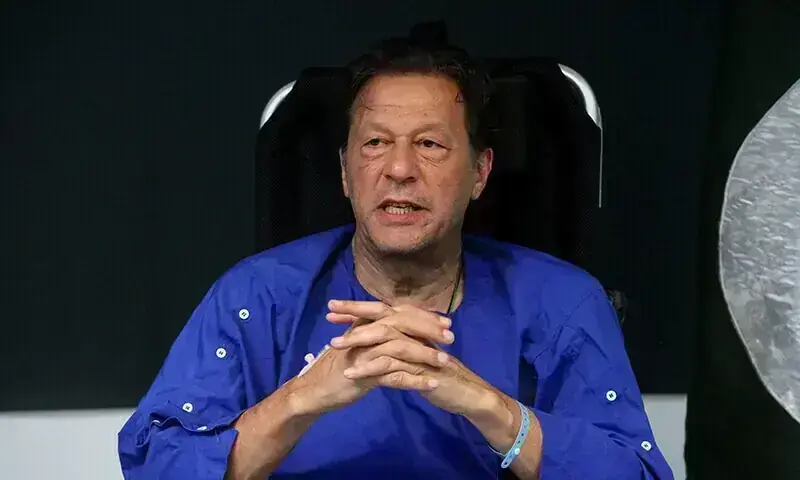
ISLAMABAD: The Pakistan Institute of Medical Sciences (PIMS) has rejected reports that its CT scanning facility was unavailable after former prime minister and PTI founder Imran Khan was unable to undergo a recommended heart scan during his recent visit to the hospital.

In a statement issued on Tuesday, the hospital administration said the CT machine installed in 2022 “remains functional” and continues to provide diagnostic services.

Imran, who is currently incarcerated at Adiala Jail, was taken to Pims last week for an eye-related procedure and other medical examinations. Doctors had reportedly recommended a CT coronary angiography (CTA), a diagnostic test used to examine the coronary arteries and identify possible blockages. However, the test was not performed before he was returned to jail.

The development prompted Prime Minister Shehbaz Sharif to order an inquiry into reports that the required facility at Pims was not operational. An inquiry committee was subsequently constituted to establish the facts surrounding the missed examination.

Pims clarified that medical imaging procedures are carried out according to clinical assessments, specialist recommendations, patient-safety requirements and established medical protocols. The administration also cautioned against interpreting the use or non-use of a particular imaging procedure outside its medical context.

A senior Pims doctor, speaking on condition of anonymity, said approximately a dozen CT coronary angiographies had been performed at the hospital before the latest statement was issued.

The controversy has also intensified demands from PTI leaders for Imran to be transferred to Shifa International Hospital in Islamabad. The Supreme Court had directed on August 18 that he be shifted to the facility.

PTI Information Secretary Sheikh Waqas Akram has questioned why the recommended examination was not carried out. He said a government-appointed medical board examined Imran on August 10, while a Pims cardiologist had recommended the cardiac scan earlier due to reported fluctuations in blood pressure, palpitations, headaches and restlessness, along with concerns related to his age and prolonged incarceration.

Akram alleged that the test was considered medically necessary but was not conducted when Imran was brought to Pims. He further claimed that hospital officials cited the unavailability of the facility despite the presence of a functioning CT scanner.

The conflicting accounts have placed renewed attention on Imran’s medical care and the circumstances surrounding the recommended cardiac examination, with the government-ordered inquiry expected to clarify whether the test was withheld for medical reasons or because of an operational issue.

Similar Posts

  • | |

    Sindh information minister Sharjeel Memon accuses …

      Sindh Information Minister Sharjeel Inam Memon has alleged that the Pakistan Muslim League-Nawaz (PML-N) is attempting to secure power in Azad Jammu and Kashmir (AJK) through electoral manipulation rather than the democratic process Speaking at a press conference in Islamabad, Memon strongly criticized the ruling party’s political approach and accused its leadership of relying on what he described as “backdoor” methods to gain power. He claimed that the PML-N was now trying to repeat the same strategy in Azad Kashmir ahead of the upcoming political developments in the region. “The Pakistan Muslim League-N wants to come to power in Azad Kashmir through rigging,” Memon said while addressing journalists. He argued that free and fair elections are essential for maintaining public trust in democratic institutions and urged all stakeholders to ensure transparency in the electoral process. During the press conference, Memon also took aim at former Prime Minister Nawaz Sharif and Punjab Chief Minister Maryam Nawaz. He alleged that Nawaz Sharif had himself entered power through what he called the “backdoor,” adding that Maryam Nawaz had followed the same path. Referring to one of her recent public remarks, Memon criticized her statement asking, “When will the Day of Judgment come?” He said such expressions should not be used by political leaders, arguing that they were inappropriate in public discourse. The Sindh minister emphasized that politicians should exercise caution in their choice of words and avoid making statements that could create unnecessary controversy or distract from issues affecting the public. He said political leaders have a responsibility to maintain respectful and constructive dialogue, particularly during periods of heightened political activity. Memon also spoke about the challenges facing Karachi, describing the country’s largest city as unique in both its size and complexity. “Karachi has many challenges because Karachi is not just a city—it is like a country,” he remarked. He said the metropolis faces a wide range of issues, including infrastructure demands, traffic congestion, rapid population growth, and the need for improved public services. According to Memon, the Sindh government continues to work on addressing these longstanding challenges through development projects and administrative reforms. He stressed that managing Karachi requires coordinated efforts from both provincial and federal institutions due to the city’s economic significance and its role as Pakistan’s commercial hub. The press conference primarily focused on the current political environment, electoral transparency, and governance issues. Memon reiterated that democratic values must be upheld and that any attempt to influence election outcomes unfairly would undermine public confidence in the political system. His remarks come amid increasing political activity across the country, with parties positioning themselves ahead of future elections and regional political contests. The statements are expected to draw responses from the Pakistan Muslim League-N, which has previously rejected similar allegations and maintained that it believes in democratic and constitutional processes. The comments made by Sharjeel Memon add to the ongoing political debate in Pakistan, where electoral integrity, governance, and accountability continue to dominate public discussion. As political tensions persist, attention remains focused on ensuring transparent elections and promoting constructive political dialogue across the country.

  • |

    Trump’s Board of Peace plan draws global attention and criticism

    United States President Donald Trump has announced that his Board of Peace has secured an agreement aimed at the complete disarmament of Hamas and other armed groups in Gaza, along with the gradual withdrawal of Israeli forces from the territory. Trump described the agreement as a historic breakthrough and said it would be carried out in stages, with Israeli troops leaving Gaza as disarmament progresses. The Board of Peace was first proposed by Trump in September last year as part of his plan to end the war in Gaza. He later expanded the initiative, saying it would also work to address conflicts in other parts of the world. The board is intended to coordinate peace efforts and oversee reconstruction projects, a role that has traditionally been led by the United Nations. According to its charter, countries joining the board normally serve three year terms. However, nations that contribute one billion dollars toward its activities are eligible for permanent membership. Trump serves as chairman of the initiative and has broad executive authority, including the power to veto decisions and remove members under certain conditions. The White House named Secretary of State Marco Rubio, special envoy Steve Witkoff, former British Prime Minister Tony Blair and presidential adviser Jared Kushner as members of the board’s founding executive team. More than two dozen countries have joined the initiative. Alongside the United States, members include Israel, Saudi Arabia, Egypt and Qatar, all of which have played important roles in recent Middle East diplomacy. Other participating countries include Bahrain, Jordan, Kuwait, Morocco, Turkey and the United Arab Emirates. Outside the region, Albania, Argentina, Armenia, Azerbaijan, Belarus, Bulgaria, Cambodia, El Salvador, Hungary, Indonesia, Kazakhstan, Kosovo, Mongolia, Pakistan, Paraguay, Uzbekistan and Vietnam have also joined. Several major countries and international partners have declined to participate. Britain, France, Germany, Norway, Sweden and the European Union have all decided not to join the initiative. Brazil, Mexico, India and South Africa have also remained outside the board, while China and Russia have chosen not to participate. The Vatican has argued that responsibility for handling international conflicts should remain with the United Nations. Canada also lost its invitation after a diplomatic disagreement between Trump and Prime Minister Mark Carney earlier this year. The Board of Peace received international recognition after the United Nations Security Council approved a United States drafted resolution acknowledging its temporary role in Gaza. Under the resolution, the board will coordinate funding for reconstruction and oversee a temporary international stabilisation force in Gaza through 2027. It must also report its progress to the Security Council every six months. China and Russia abstained from the vote, saying the resolution did not clearly define the United Nations’ role in Gaza’s future administration. Despite official backing, the initiative has attracted widespread criticism from human rights organisations and political observers. Critics argue that the board resembles a colonial style governing structure because it is designed to supervise Gaza without including Palestinian representatives. They have also questioned the inclusion of Tony Blair because of his role in the Iraq war and criticised the participation of countries with poor human rights records. The decision to include Israel on a body responsible for overseeing Gaza has generated additional controversy. Opponents argue that Israel’s ongoing military campaign has left much of Gaza destroyed and displaced its population. Israel maintains that its military actions were carried out in self defence following the Hamas attack in 2023 that killed around 1,200 people and resulted in more than 250 hostages being taken. Since its launch, the Board of Peace has focused mainly on plans for rebuilding Gaza. Trump said member countries have already pledged around seven billion dollars toward reconstruction, although experts estimate that restoring the territory after more than two years of conflict could cost as much as 70 billion dollars. The board has also reportedly held discussions with international companies on future infrastructure and supply chain projects as planning for Gaza’s recovery continues.

  • | |

    PM Shehbaz arrives in Madinah, visits Masjid-e-Nab…

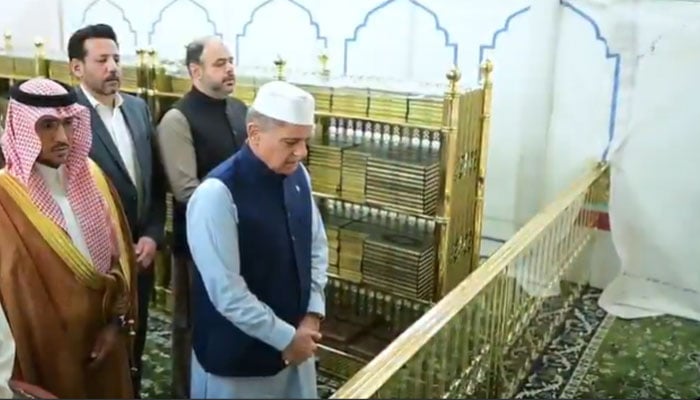
    Prime Minister Shehbaz Sharif has arrived in Madinah during his visit to Saudi Arabia and paid his respects at Masjid-e-Nabawi ﷺ. The prime minister was accompanied by members of his delegation during his visit to the holy mosque. Prime Minister Shehbaz offered Nafl prayers at Riyaz-ul-Jannah. He also prayed for the peace, progress and prosperity of Pakistan and the well-being of its people. During his visit, the prime minister also had the honour of visiting Roza-e-Rasool ﷺ. He offered prayers and paid his respects at the sacred site. The visit to Madinah is part of Prime Minister Shehbaz Sharif’s ongoing engagement with Saudi Arabia. His visit also reflects the close and longstanding ties between Pakistan and the Kingdom of Saudi Arabia. The prime minister’s presence at Masjid-e-Nabawi ﷺ was marked by prayers for the country’s stability, development and prosperity. He also prayed for the safety and well-being of the Pakistani nation. Earlier, Prime Minister Shehbaz Sharif has described the signing of the Makkah Agreement for Joint Defence between Pakistan, Saudi Arabia and Türkiye as a historic step towards strengthening peace, security and regional stability. In a post on X, the prime minister said he had the honour of signing the agreement alongside Saudi Crown Prince and Prime Minister Mohammed bin Salman and Turkish President Recep Tayyip Erdogan.

  • |

    Pakistan eyes bigger share in global islamic economy

    Pakistan has significant room to expand its presence in the global Islamic economy by introducing innovative Shariah-compliant financial products, strengthening regulatory frameworks and developing specialized professional expertise, Secretary General of the Islamic Chamber of Commerce and Development (ICCD) Yousef Hassan Khalawi has said. Speaking at the Securities and Exchange Commission of Pakistan (SECP) Talk Series on Islamic finance, Khalawi highlighted Pakistan’s structural advantages and said the country was well placed to capture a larger share of the rapidly evolving global Islamic economy. He noted that Pakistan has a large Muslim population, a substantial overseas Pakistani community and an expanding Islamic finance sector. The country also has a growing base of professionals working in banking, capital markets and other financial services, providing a foundation for further development of the industry. However, Khalawi stressed that Pakistan would need to move beyond conventional Islamic finance offerings if it wanted to compete more effectively in international markets. He encouraged financial institutions and regulators to focus on developing innovative products capable of addressing emerging domestic and global demand, particularly through financial technology. Fintech seen as key driver According to Khalawi, fintech could play an important role in making Islamic financial services more accessible, efficient and affordable. Digital platforms can potentially reduce transaction costs while allowing Shariah-compliant products to reach customers who remain underserved by traditional financial institutions. He also emphasized that Islamic finance should not be viewed solely as a mechanism for structuring financial transactions. Instead, he said, the sector should play a wider role in supporting economic growth, social welfare and productive investment. One area with considerable potential is Waqf-based investment. Khalawi suggested that professionally managed and transparent listed Waqf structures could enable individuals to make relatively small contributions that could collectively generate financing for projects in key social sectors. Such models, he said, could help channel funds towards education, healthcare and infrastructure while creating a more organized framework for mobilizing charitable and community-based capital. Agriculture offers untapped potential Agriculture was also identified as an important sector where Islamic finance could make a greater contribution. Khalawi called for the development of specialized Shariah-compliant financing instruments tailored to the needs of farmers, agribusinesses and other participants across the agricultural value chain. Greater technical expertise would also be required to design products that address the specific risks and cash-flow patterns associated with agriculture. Expanding access to appropriate financing could help unlock investment and support productivity in the sector. Interest-free lending and financial inclusion The discussion also examined Qard Hassan, an interest-free lending mechanism that can provide financing to individuals without imposing conventional interest charges. Khalawi said technology could help make Qard Hassan arrangements easier to administer and more accessible to potential borrowers. Digital platforms could reduce administrative expenses, improve transparency and facilitate the distribution of small-scale interest-free loans. He further highlighted the importance of establishing common Shariah standards to promote consistency across the Islamic finance industry. Differences in interpretation and product structures can create challenges for institutions seeking to operate across markets, making greater standardization important for the sector’s international growth. Professional training was another key area highlighted during the discussion. Khalawi stressed that the continued expansion of Islamic finance would require professionals with expertise in both financial markets and Shariah principles. For Pakistan, strengthening regulatory capacity, expanding specialized training and encouraging innovation could help create an ecosystem capable of supporting new Islamic financial products. The SECP discussion underscored the broader opportunity for Pakistan to position Islamic finance as a tool not only for financial-sector development but also for investment, entrepreneurship, social welfare and sustainable economic growth.

  • |

    25 US states challenge Trump’s new tariffs in court

    NEW YORK: A coalition of 25 US states has filed a lawsuit against the administration of President Donald Trump, seeking to block a new round of tariffs imposed on imports from dozens of countries. The legal challenge was submitted to the US Court of International Trade in New York, where the states asked the court to suspend the tariffs, declare them unlawful and order the federal government to refund businesses that have already paid the import duties. The coalition argued that the administration exceeded its legal authority by introducing sweeping tariffs under Section 301 of the Trade Act of 1974. According to the lawsuit, the investigations cited by the administration as justification for the tariffs were used as a pretext to impose broad trade restrictions. The disputed tariffs, ranging from 10% to 12.5%, were introduced last month and apply to imports from 60 trading partners, covering a significant share of goods entering the United States. The Trump administration has defended the measures, saying they are intended to address concerns related to forced labour in international supply chains and to protect American trade interests. The White House maintains that the tariffs were imposed within the government’s legal authority and remain an important tool for securing fair trade practices. A White House spokesperson said the administration is using powers granted under US trade law to respond to what it considers unfair policies and practices affecting American commerce. Officials also argued that Section 301 tariffs have previously withstood legal scrutiny and continue to be a lawful instrument of trade policy. The lawsuit follows earlier legal disputes over President Trump’s tariff policies. Previous tariffs introduced under emergency economic powers were struck down by the US Supreme Court earlier this year, prompting the administration to replace them with the current Section 301 measures after a temporary global tariff expired in July. The states involved in the case contend that the latest tariffs are arbitrary and unlawful, arguing that while they support efforts to combat forced labour worldwide, such concerns cannot be used to justify what they describe as an illegal expansion of presidential tariff powers.

  • |

    Seales rocks Pakistan as West Indies tighten grip on first test

      TAROUBA: Pakistan’s batting line-up came under early pressure as the visitors slipped to 25-3 while chasing a target of 211 against the West Indies on the fourth day of the opening Test at the Brian Lara Cricket Academy on Tuesday. West Indies fast bowler Jayden Seales made an immediate impact with the new ball, removing Pakistan’s top order during an impressive opening spell. His early breakthroughs left the tourists struggling before lunch and handed the hosts complete control of the contest. Pakistan’s chase began on a disappointing note when opener Imam-ul-Haq was dismissed for just five runs. Azan Awais also failed to settle at the crease, contributing only three runs before returning to the pavilion. With both openers dismissed inside the first five overs, Pakistan found themselves under significant pressure at 21-2. Seales continued his destructive spell by trapping Salman Ali Agha leg before wicket without allowing him to score. The dismissal reduced Pakistan to 25-3, placing the visitors in a difficult position with a challenging target still well out of reach. Experienced batter Babar Azam then joined wicketkeeper-batter Mohammad Rizwan in an attempt to stabilize the innings. The pair negotiated the remaining overs of the morning session without losing another wicket, providing Pakistan with some much-needed resistance after the early collapse. Earlier in the day, Pakistan’s bowlers wrapped up the West Indies’ second innings for 181, setting a victory target of 211. Veteran fast bowler Mohammad Abbas starred with the ball, producing another outstanding spell to claim his seventh five-wicket haul in Test cricket. The West Indies resumed play at 126-7, hoping their lower order could stretch the lead and make Pakistan’s chase more difficult. Shamar Joseph and Kemar Roach responded with an aggressive counterattack, frustrating the Pakistani bowlers with a valuable lower-order partnership. The pair added 28 runs during the morning session to extend their stand to 61 runs. Their attacking approach pushed the West Indies’ overall lead beyond 180 runs, strengthening the hosts’ position in the match. Shamar Joseph played an entertaining innings, scoring 38 runs from just 27 deliveries. His knock featured four towering sixes and one boundary, allowing the West Indies to score valuable quick runs before Pakistan finally broke the partnership. Mohammad Ali provided the breakthrough by deceiving Joseph with a slower delivery, bringing an end to the dangerous stand. Despite the dismissal, the West Indies tail continued to add useful runs as Kemar Roach and Jomel Warrican frustrated Pakistan with another steady partnership. Roach contributed 18 runs before becoming Mohammad Abbas’ fourth victim of the innings. Warrican also added an important 14 runs, helping the West Indies move their lead closer to the 200-run mark. Abbas then completed the innings by dismissing Warrican, finishing with exceptional figures of 5 wickets for 22 runs in 15.5 overs. His disciplined pace bowling proved crucial in preventing the West Indies from posting an even bigger target. Mohammad Ali and Khurram Shahzad also played important supporting roles with the ball. Ali picked up two wickets in his 14-over spell, while Khurram Shahzad claimed two scalps after bowling 15 overs. Although Pakistan succeeded in restricting the West Indies to 181 in the second innings, the visitors’ difficult start with the bat shifted the momentum back in favour of the home side. With Babar Azam and Mohammad Rizwan at the crease, Pakistan will rely heavily on their experienced pair to steer the chase and keep hopes of victory alive as the first Test heads toward an exciting finish.

Leave a Reply

Your email address will not be published. Required fields are marked *