pakistan eyes bigger
|

Pakistan eyes bigger share in global islamic economy

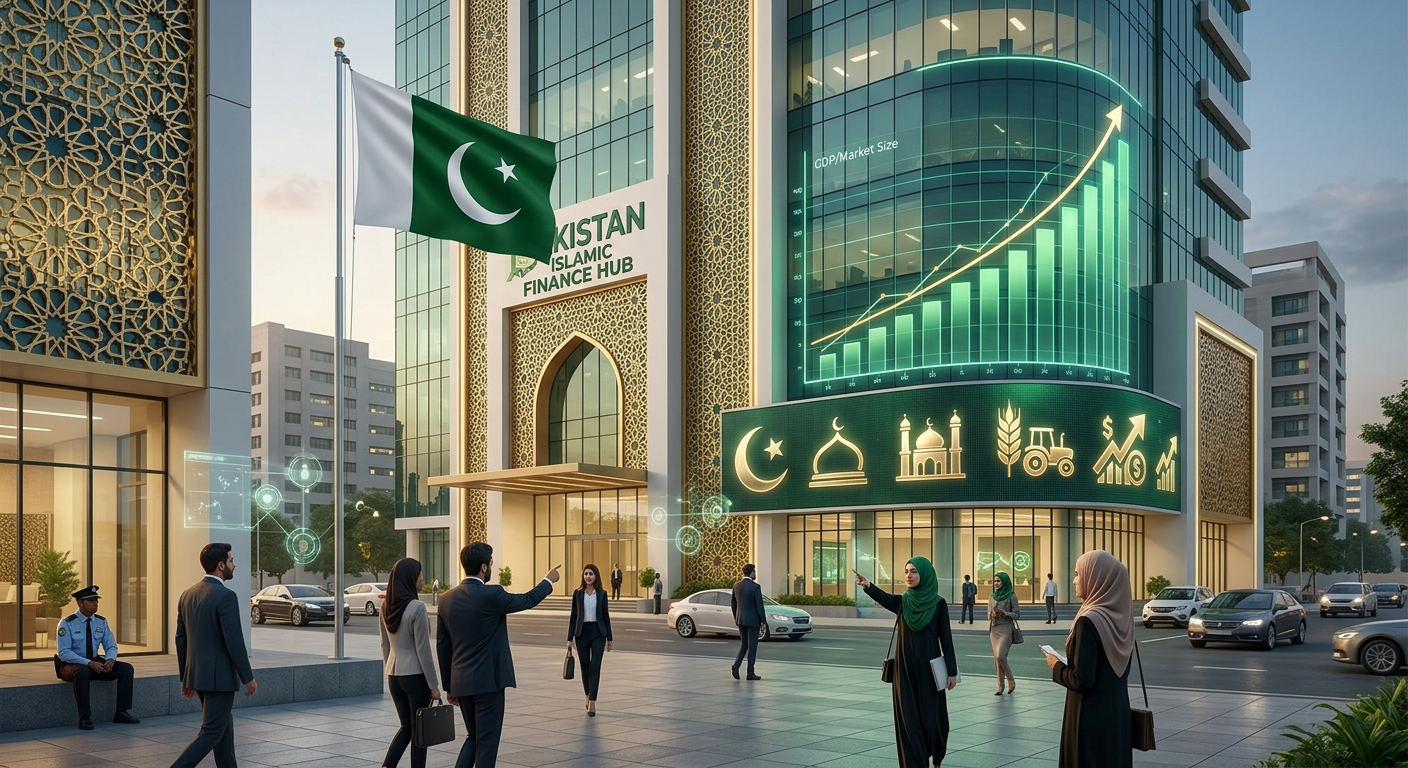
Pakistan has significant room to expand its presence in the global Islamic economy by introducing innovative Shariah-compliant financial products, strengthening regulatory frameworks and developing specialized professional expertise, Secretary General of the Islamic Chamber of Commerce and Development (ICCD) Yousef Hassan Khalawi has said.

Speaking at the Securities and Exchange Commission of Pakistan (SECP) Talk Series on Islamic finance, Khalawi highlighted Pakistan’s structural advantages and said the country was well placed to capture a larger share of the rapidly evolving global Islamic economy.

He noted that Pakistan has a large Muslim population, a substantial overseas Pakistani community and an expanding Islamic finance sector. The country also has a growing base of professionals working in banking, capital markets and other financial services, providing a foundation for further development of the industry.

However, Khalawi stressed that Pakistan would need to move beyond conventional Islamic finance offerings if it wanted to compete more effectively in international markets. He encouraged financial institutions and regulators to focus on developing innovative products capable of addressing emerging domestic and global demand, particularly through financial technology.

Fintech seen as key driver

According to Khalawi, fintech could play an important role in making Islamic financial services more accessible, efficient and affordable. Digital platforms can potentially reduce transaction costs while allowing Shariah-compliant products to reach customers who remain underserved by traditional financial institutions.

He also emphasized that Islamic finance should not be viewed solely as a mechanism for structuring financial transactions. Instead, he said, the sector should play a wider role in supporting economic growth, social welfare and productive investment.

One area with considerable potential is Waqf-based investment. Khalawi suggested that professionally managed and transparent listed Waqf structures could enable individuals to make relatively small contributions that could collectively generate financing for projects in key social sectors.

Such models, he said, could help channel funds towards education, healthcare and infrastructure while creating a more organized framework for mobilizing charitable and community-based capital.

Agriculture offers untapped potential

Agriculture was also identified as an important sector where Islamic finance could make a greater contribution. Khalawi called for the development of specialized Shariah-compliant financing instruments tailored to the needs of farmers, agribusinesses and other participants across the agricultural value chain.

Greater technical expertise would also be required to design products that address the specific risks and cash-flow patterns associated with agriculture. Expanding access to appropriate financing could help unlock investment and support productivity in the sector.

Interest-free lending and financial inclusion

The discussion also examined Qard Hassan, an interest-free lending mechanism that can provide financing to individuals without imposing conventional interest charges.

Khalawi said technology could help make Qard Hassan arrangements easier to administer and more accessible to potential borrowers. Digital platforms could reduce administrative expenses, improve transparency and facilitate the distribution of small-scale interest-free loans.

He further highlighted the importance of establishing common Shariah standards to promote consistency across the Islamic finance industry. Differences in interpretation and product structures can create challenges for institutions seeking to operate across markets, making greater standardization important for the sector’s international growth.

Professional training was another key area highlighted during the discussion. Khalawi stressed that the continued expansion of Islamic finance would require professionals with expertise in both financial markets and Shariah principles.

For Pakistan, strengthening regulatory capacity, expanding specialized training and encouraging innovation could help create an ecosystem capable of supporting new Islamic financial products.

The SECP discussion underscored the broader opportunity for Pakistan to position Islamic finance as a tool not only for financial-sector development but also for investment, entrepreneurship, social welfare and sustainable economic growth.
Similar Posts

  • | |

    Maryam Nawaz orders timely salaries for Sutrah Pun…

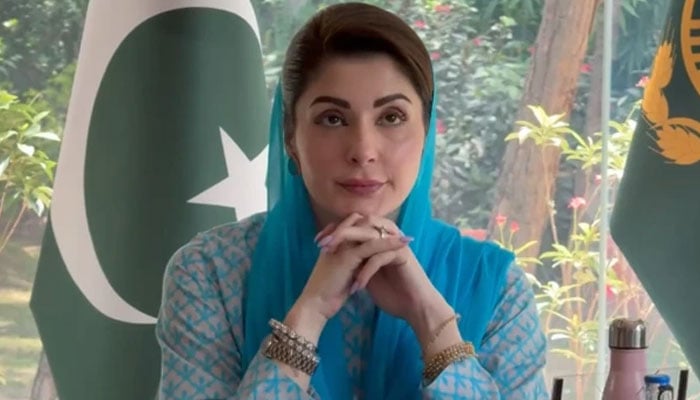
    Punjab Chief Minister Maryam Nawaz has directed that workers associated with the Sutrah Punjab programme be paid their salaries by the fifth of every month. According to an official statement, the chief minister also sought monthly reports from the companies responsible for making payments to the workers to ensure that salaries are being disbursed on time. Maryam Nawaz ordered a zero-tolerance policy against workers who fail to perform their duties. She also directed authorities to develop standard operating procedures (SOPs) to regularly assess workers’ performance and improve the overall efficiency of the programme. The chief minister stressed that special attention should be given to cleanliness at fruit and vegetable markets. She said additional efforts were required to achieve better sanitation results across Punjab. Maryam Nawaz also directed officials to begin washing and cleaning major roads at 5am. She instructed authorities to ensure door-to-door waste collection and maintain proper cleanliness around schools, colleges, universities and hospitals. She further ordered the use of uniform garbage bins and waste bags in markets and commercial areas. Officials were directed to establish specific timings for removing waste from commercial zones and ensure that vacant plots in different areas were also cleaned.

  • |

    China rejects US sanctions on research institutions

    China has strongly opposed a US decision to place several Chinese research institutions on a sanctions list. Beijing criticised the move on Wednesday. It accused Washington of using national security concerns to restrict scientific and technological cooperation between the two countries. A spokesperson for China’s Ministry of Commerce said Beijing would take necessary steps to protect the legitimate rights and interests of its research institutions. The spokesperson also said China wanted to maintain a stable environment for normal scientific exchanges and cooperation with international partners. Beijing accused the United States of repeatedly expanding the definition of national security. It said Washington had created discriminatory barriers against Chinese institutions. China also criticised what it described as the politicisation and weaponisation of scientific research. According to Beijing, such policies could damage cooperation between researchers and universities in both countries. The Chinese government said the US measures were against the broader global trend of international cooperation in science and technological innovation. Beijing urged Washington to withdraw what it called unjustified accusations against Chinese research institutions. China also called on the United States to correct its policies as soon as possible. It demanded fair, just and non-discriminatory treatment for Chinese research organisations. The dispute comes amid wider tensions between Washington and Beijing over technology, trade and national security. The United States has increasingly tightened restrictions on Chinese access to advanced technologies. Semiconductor manufacturing has become a major area of competition between the two countries. China is also working to expand its domestic semiconductor industry. Beijing aims to reduce its dependence on advanced foreign chips affected by US export restrictions. Last week, the US Department of Defence updated a list of foreign institutions it considers involved in “problematic activities”. The updated list included Chinese defence-related academies and several universities. Shanghai-based Fudan University was also among the institutions added to the list. The latest move is likely to add another point of tension to already strained US-China relations. Beijing has repeatedly opposed US measures targeting Chinese companies, universities and research organisations. Washington, meanwhile, has maintained that its restrictions are linked to national security and technology concerns.

  • |

    India reclaim No. 1 spot in T20I rankings after Zimbabwe series win

    HARARE, July 26: India have returned to the top of the ICC Men’s T20I rankings after securing a 2-0 lead in their three-match series against Zimbabwe. The reigning T20 World Cup champions had recently slipped from the No. 1 position after England swept them 4-0 in a five-match series. India have now responded strongly by winning the opening two matches of their Zimbabwe tour and reclaiming the summit. India began the series with a comfortable seven-wicket victory. Young opener Vaibhav Sooryavanshi provided the main highlight, scoring a rapid half-century from just 19 balls. The second match saw an even stronger batting performance from India. They posted 219-5 in their 20 overs, with Ishan Kishan producing an aggressive 81 and Tilak Varma remaining unbeaten on 60. Zimbabwe struggled in their chase. India’s bowlers restricted the hosts to 129 runs and secured a commanding 90-run victory. The result gave India an unassailable lead in the series and pushed them back to the top of the T20I rankings. Kishan said India’s batting approach was based on reading the pitch and adjusting their plans according to the conditions. He said the team focused on building partnerships after losing early wickets. The wicketkeeper-batter also highlighted the partnership with Shreyas Iyer. He said they aimed to take the innings deep rather than chase an unnecessarily high total. India’s return to the top comes after a difficult period in T20 cricket. Their latest success has provided a strong response to the setbacks suffered on the previous tour. With the series already secured, India have also strengthened their position ahead of the final T20I. A clean sweep would give the world champions further momentum after their return to the top of the rankings.

  • | |

    POC holders allowed to perform Hajj under Pakistan…

    ISLAMABAD: Holders of the Pakistan Origin Card (POC) will now be able to perform Hajj under Pakistan’s official Hajj quota, according to sources familiar with the development. Sources said one per cent of Pakistan’s total Hajj quota will be reserved for POC holders. The decision is expected to provide an opportunity for overseas Pakistanis of Pakistani origin who no longer hold Pakistani citizenship or passports to perform Hajj through Pakistan’s quota for the first time. Under the arrangement, 1,792 POC holders will be eligible to perform Hajj using Pakistan’s allocated quota. The sources said Saudi Arabia has allowed POC holders to be included in Pakistan’s Hajj quota. The permission is being described as a significant development for people of Pakistani origin living abroad who have surrendered their Pakistani citizenship or passports but retain their connection with the country through the Pakistan Origin Card. POC holders will reportedly be eligible to benefit from both the government and private Hajj schemes. This will give eligible applicants the option of choosing between the two arrangements, subject to the applicable rules and requirements. The allocation of one per cent of the overall quota means that a specific number of pilgrims of Pakistani origin will be accommodated within Pakistan’s annual Hajj arrangements without holding Pakistani citizenship. The facility is particularly significant for overseas Pakistanis who have maintained strong links with Pakistan despite giving up their citizenship. The Pakistan Origin Card provides such individuals with a formal connection to the country and facilitates their access to several rights and services. Sources said the inclusion of POC holders in Pakistan’s Hajj quota has been permitted by Saudi authorities following discussions concerning arrangements for Pakistani pilgrims. The move is expected to benefit members of the Pakistani diaspora who have previously faced limitations in performing Hajj through Pakistan because they no longer possess Pakistani passports. The development comes as preparations for the upcoming Hajj season continue. A large number of Pakistani pilgrims are expected to travel to Saudi Arabia under both government and private schemes. The government has also been working on arrangements concerning accommodation, transportation, medical facilities and other services for Pakistani pilgrims. The inclusion of POC holders could further strengthen the connection between Pakistan and its overseas community, particularly those who continue to maintain cultural, family and social ties with the country.

  • | |

    How Gen Z turned India’s NEET protests into a vi…

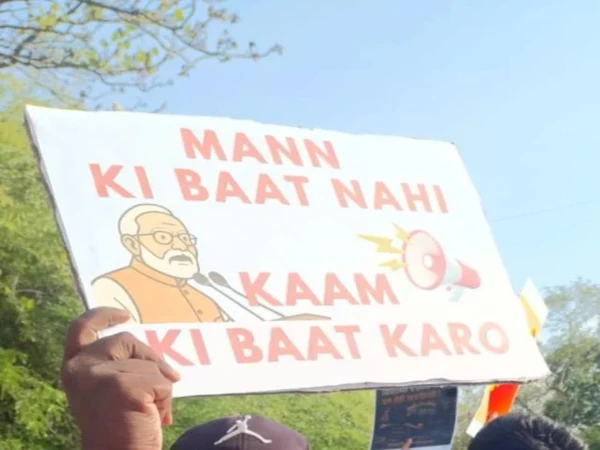
    NEW DELHI: What began as a protest over alleged exam paper leaks in India has evolved into something far bigger—and far more digital. Instead of relying solely on slogans and marches, Generation Z is using memes, Instagram Reels, viral trends, and pop culture references to transform street demonstrations into a social media movement. The demonstrations, centered around alleged irregularities in the NEET medical entrance examination and concerns over transparency in recruitment and education, have continued for weeks at New Delhi’s Jantar Mantar, where students are demanding accountability and reforms. At the heart of the campaign is the Cockroach Janata Party (CJP), a youth-led movement that initially emerged after a sarcastic remark reportedly linked to India’s Chief Justice. What started as an online response quickly expanded into a broader campaign highlighting alleged examination leaks, recruitment irregularities, and calls for reforms in India’s education system. Protesters are demanding the resignation of Education Minister Dharmendra Pradhan and a comprehensive overhaul of the country’s examination process, arguing that repeated controversies have undermined students’ trust in competitive exams. Memes Become a Powerful Protest Tool Unlike traditional demonstrations, Gen Z participants are blending activism with internet culture. Viral memes, trending audio clips, and humorous videos have become powerful tools for spreading their message beyond protest sites. Rather than using conventional political messaging, young creators are adapting popular online formats to explain their frustrations in a way that resonates with millions of social media users. The strategy has helped the movement gain significant attention on platforms such as Instagram, where short-form videos often reach audiences much larger than traditional news coverage. ‘Get Ready With Me’—For a Protest One of the movement’s most recognizable trends is the adaptation of the viral “Get Ready With Me” (GRWM) format. Normally associated with makeup tutorials or fashion content, the videos now begin with captions such as, “Get ready with me to join the NEET paper leak protest.” Instead of cosmetics, creators show themselves preparing protest placards, packing water bottles, carrying first-aid kits, and heading to demonstration sites with friends. The creative twist has struck a chord with young viewers, turning ordinary protest preparations into relatable and widely shared content. Romance Trend Gets a Political Twist Another viral internet format, “Who Said I Love You First?”, has also been reimagined. Typically featuring playful romantic questions between couples, protesters have replaced the dialogue with sarcastic exchanges about exam leaks, government policies, and student frustrations. The humorous approach allows serious concerns to be communicated through entertaining content, making the videos highly shareable while keeping attention focused on the movement’s demands. Real Life Meets ‘Subway Surfers’ Perhaps the most eye-catching trend compares protesters running from police with the popular mobile game Subway Surfers. Several Instagram Reels feature demonstrators moving through streets while the game’s iconic background music plays, creating a humorous parallel between the game’s endless chase sequences and real-life protest scenes. For many young Indians who grew up playing the game, the comparison instantly resonated, helping the videos spread rapidly across social media. Digital Activism Enters a New Era Analysts say the movement highlights a broader shift in youth activism, where online engagement is becoming as influential as demonstrations on the ground. Memes, viral challenges, and short videos are no longer just entertainment—they have become tools for mobilizing support, shaping public conversations, and amplifying calls for change. Whether these creative online campaigns translate into policy reforms remains uncertain. But one thing is clear: Gen Z has rewritten the rules of modern protest, proving that in the age of social media, a viral meme can sometimes carry as much impact as a protest banner.

  • | |

    Scarlett Johansson reflects on how Hollywood red c…

    Scarlett Johansson is opening up about the evolution of Hollywood’s red carpet culture, revealing how the expectations placed on actors have shifted dramatically since she began her career. The Oscar-nominated actress says today’s approach to fashion and public appearances is far more polished and strategic than it was when she first entered the entertainment industry. Speaking in a recent interview, Johansson reflected on the early years of her career, recalling a time when red carpet events felt more relaxed and less focused on creating viral fashion moments. According to the actress, celebrities once had greater freedom to express themselves without the intense scrutiny that now comes with every public appearance. (People⁠) Johansson explained that, in the past, actors often selected outfits based on personal preference rather than carefully planned branding strategies. Today, however, red carpet appearances have become an important part of celebrity image-building, with stylists, fashion houses, and social media all playing significant roles in shaping a star’s public identity. The Black Widow star acknowledged that fashion remains an exciting part of the entertainment industry, but she believes the pressure surrounding high-profile events has increased considerably. Every outfit is now analyzed instantly across social media platforms, where fans and fashion critics closely examine every detail. Looking back, Johansson said she appreciates the more spontaneous atmosphere that existed when she was starting out. She noted that celebrities were able to experiment with different styles without worrying that every fashion choice would become the subject of widespread online discussion. The actress also reflected on how digital media has transformed celebrity culture. Before the rise of social media, red carpet moments were largely limited to television broadcasts and magazine coverage. Today, images circulate around the world within seconds, making fashion an even bigger part of an actor’s public presence. (Vanity Fair⁠ and People⁠) Despite the changes, Johansson said she still enjoys attending premieres and industry events. She praised the creativity of designers and stylists while emphasizing that confidence and authenticity remain more important than following every trend. For her, the best fashion moments are those that genuinely reflect a person’s personality rather than simply chasing headlines. Johansson’s comments have resonated with many fans, who praised her honest perspective on the realities of modern Hollywood. Some agreed that celebrity fashion has become increasingly commercialized, while others argued that social media has also given stars more opportunities to connect directly with audiences and showcase their individual style. As one of Hollywood’s most recognizable actresses, Johansson has attended countless premieres, award shows, and international film festivals throughout her career. Her reflections offer a rare behind-the-scenes look at how celebrity culture has evolved over the past two decades. While glamorous red carpets continue to be a defining part of the entertainment industry, Scarlett Johansson believes the experience has fundamentally changed. Her candid remarks highlight the growing influence of fashion, branding, and social media, while reminding audiences that authenticity remains timeless in an industry constantly adapting to new expectations.

Leave a Reply

Your email address will not be published. Required fields are marked *