gulf shipping slumps
| | |

Gulf shipping slumps as Houthi claims of Saudi tan…

NEW DELHI: Commercial shipping through two of the world’s most strategic maritime routes declined sharply on Wednesday after Yemen’s Houthi movement claimed it had launched missile attacks on Saudi oil tankers, raising fresh concerns over security in the Gulf.

Shipping data showed that traffic through the Strait of Hormuz and the Bab el-Mandeb Strait fell significantly compared with the previous day. According to maritime analytics firm Kpler, only two vessels passed through the Strait of Hormuz on Wednesday—a Panama-flagged coal carrier entering the waterway and a Marshall Islands-flagged commodity vessel departing. The previous day, eight vessels had transited the route.

Before the outbreak of the US-Israel conflict with Iran and Tehran’s subsequent closure of the Strait of Hormuz, the waterway typically handled between 130 and 140 ships daily, making it one of the busiest energy transit routes in the world.

Traffic through the Bab el-Mandeb Strait also dropped sharply. Kpler data showed that only one Bahamas-flagged dry bulk carrier crossed the chokepoint on Wednesday, compared with 20 vessels the day before.

The Houthis announced that they had fired missiles at a Saudi oil tanker near the Red Sea port of Yanbu and targeted another Saudi tanker in the Gulf of Aden. Saudi authorities had not confirmed either attack at the time of reporting.

The Iran-aligned group has maintained what it describes as a naval blockade against Saudi-linked shipping in the Red Sea since last month, saying the move is a response to an alleged Saudi siege on Yemen. Riyadh has rejected those allegations.

The latest claims have heightened concerns over the safety of commercial navigation in the region, where maritime trade remains vulnerable to escalating geopolitical tensions.


Similar Posts

  • | |

    Dar highlights growing momentum in Pakistan-Russia…

    ISLAMABAD: Deputy Prime Minister and Foreign Minister Ishaq Dar has welcomed what he described as positive progress in relations between Pakistan and Russia. Dar made the remarks during a meeting with Russian Ambassador to Pakistan Albert Khorev in Islamabad on Tuesday. According to the Foreign Office, the two sides discussed bilateral relations and regional developments. Dar stressed the importance of maintaining the current momentum and expanding cooperation between the two countries. The foreign minister called for greater collaboration in key areas. He also emphasised the need for regular high-level engagement to further strengthen ties between Islamabad and Moscow. Dar said Pakistan remained committed to resolving regional disputes through dialogue and diplomatic efforts. He maintained that negotiations were the most effective way to address differences and promote peace and stability in the region. The meeting comes as Pakistan and Russia continue efforts to broaden their relationship beyond traditional areas of cooperation. Economic engagement has emerged as an important part of the bilateral relationship. Earlier this year, Energy Minister Awais Ahmed Khan Leghari said Pakistan and Russia had agreed to work towards an Economic Cooperation Programme extending until 2030. The programme is expected to provide a framework for expanding economic engagement and strengthening cooperation in areas of mutual interest. Officials have also been working to improve people-to-people contacts. A recently signed readmission agreement is expected to contribute to smoother visa arrangements and facilitate greater interaction between citizens of the two countries. Pakistan’s engagement with Russia is also taking place against the backdrop of wider regional changes. Islamabad has repeatedly emphasised the importance of diplomatic engagement and cooperation for addressing regional challenges. Dar’s latest meeting with the Russian ambassador reflects Pakistan’s efforts to maintain regular high-level contacts with Moscow and explore opportunities for deeper bilateral cooperation.

  • | |

    Court extends Gul Plaza probe till Aug 9

    KARACHI: A judicial magistrate in Karachi has granted investigators additional time to complete the investigation into the Gul Plaza tragedy case. The court extended the deadline until August 9 and directed the investigating officer to submit a complete report at the next hearing. During the proceedings, the investigating officer informed the court that the inquiry was still in progress and requested more time to finalize the investigation. He said responses from several government departments had been collected, but information from some key institutions was still awaited. The court was told that six government departments had already submitted their replies to investigators. However, responses from the Sindh Building Control Authority (SBCA) and the Water Corporation had not yet been received, preventing the investigation from being completed. The investigating officer requested that the court allow additional time so that all pending replies could be included in the final investigation report. The court accepted the request and granted an extension until August 9. The magistrate directed the investigating officer to complete all remaining inquiries before the next hearing and submit a comprehensive report covering all aspects of the case. The court stressed the importance of ensuring that the investigation is thorough and based on complete information from all relevant departments. The Gul Plaza tragedy case has remained under investigation as authorities continue collecting evidence and official records from various institutions. Investigators are examining the role of different departments and reviewing all available documents before reaching their final conclusions.

  • |

    Government plans major reforms to modernise Pakistan’s construction sector

    ISLAMABAD: The federal government has stepped up efforts to reform Pakistan’s construction industry, with a comprehensive package under consideration to improve regulation, financing, taxation, procurement practices and construction quality. Federal Minister for Economic Affairs and Establishment Division Senator Ahad Khan Cheema chaired a high-level meeting on Saturday to review proposed reforms aimed at strengthening the construction sector and bringing national practices closer to modern standards. The meeting was attended by Minister of State for Finance Bilal Azhar Kayani, Federal Secretary for Housing and Works Captain Mahmood (retd), Managing Director of the Public Procurement Regulatory Authority (PPRA), representatives of the Construction Association of Pakistan (CAP) and senior government officials. The discussions focused on developing a coordinated policy framework capable of addressing longstanding regulatory, operational and financial challenges faced by the construction industry. Construction Industry Development Board proposed As part of the proposed reform package, the government is considering the creation of a Construction Industry Development Board (CIDB) to serve as both a development and regulatory body for the sector. The proposed board would be responsible for supporting the growth of the construction industry while also establishing and enforcing standards for contractors, consultants and other stakeholders. According to the plan discussed at the meeting, the CIDB would include representatives from both the public and private sectors, creating a platform for cooperation between government institutions and industry stakeholders. Senator Ahad Cheema said there was broad agreement between the federal government and CAP on the need for such an institution. He said the government would prepare the proposed framework and present it to the prime minister for approval. The proposed regulatory mechanism is expected to address gaps in the existing system, particularly those relating to professional standards, project quality and accountability. Consultants may face greater accountability One of the major issues discussed during the meeting was the lack of a clear accountability mechanism for consultants involved in public infrastructure projects. Cheema noted that contractors could face penalties for delays, defaults and poor performance, but similar legal and financial consequences were not adequately available for consultants when design or technical shortcomings resulted in project failures. Under the proposed CIDB framework, consultants would come under a more formal regulatory structure. The objective would be to ensure that professionals responsible for project design and technical supervision could also be held accountable for serious errors, design deficiencies or technical mistakes. CAP representatives supported the proposal, maintaining that stronger oversight of consultants would improve the quality of project designs and help safeguard public funds. Defect liability period to be extended The government is also preparing to increase the Defect Liability Period (DLP) for public development projects. At present, the standard liability period is one year. The government plans to initially extend it to three years and subsequently work towards increasing it to five years. Cheema said public infrastructure should remain durable for a considerable period after completion and should not begin deteriorating soon after being handed over. He argued that extending the liability period would create stronger incentives for contractors and executing agencies to maintain quality standards throughout construction. Under a longer liability period, contractors would remain responsible for addressing defects for an extended period, potentially discouraging the use of substandard materials or poor construction practices. The government views the proposed change as an important step towards improving the long-term value of public development spending. Construction development package under consideration The proposed construction industry development package is expected to address several financial and policy constraints currently affecting the sector. The package could include targeted tax reforms, revised import and export policies and incentives aimed at encouraging the adoption of modern construction technologies. Officials also discussed the need to strengthen domestic construction capacity by facilitating access to modern machinery, equipment, materials and technical expertise. The government believes that a more predictable policy environment could encourage greater private investment while supporting the development of local construction companies and suppliers. Proposal for Construction Development Bank Financing challenges faced by construction companies also came under discussion. CAP representatives highlighted difficulties encountered by contractors in obtaining banking facilities, particularly when arranging financial and performance guarantees required for government projects. The industry also proposed establishing a dedicated Construction Development Bank (CDB) to address the sector’s specialised financing needs. In response, Cheema directed Minister of State for Finance Bilal Azhar Kayani to consult the State Bank of Pakistan (SBP) and the Pakistan Banks Association (PBA). The feasibility of creating a dedicated construction development bank will be assessed after obtaining feedback from the central bank and commercial banking sector. Officials will also examine the financial implications and potential structure of such an institution before any decision is taken. Import and export policies to be reviewed The government is also considering changes to import and export policies affecting construction-related businesses. The proposed review is intended to facilitate access to modern technologies and equipment while simultaneously encouraging greater domestic production and development of local industrial capacity. The authorities are expected to examine existing duties, procedures and policy barriers to determine whether adjustments could help improve competitiveness without undermining domestic manufacturing. Focus on value for public money During the meeting, Cheema stressed that improving construction quality was directly linked to protecting public finances. He said the government’s objective was not simply to complete infrastructure projects but to ensure that they delivered value over their intended lifespan. The minister emphasised the importance of cost-effectiveness, durability and accountability at every stage of public construction projects. The proposed reforms, if approved, could introduce significant changes to the way construction contractors and consultants are regulated, how public projects are monitored and how construction companies access financing. The government is now expected to consolidate the proposals into a broader policy framework and seek approval for the proposed measures.

  • |

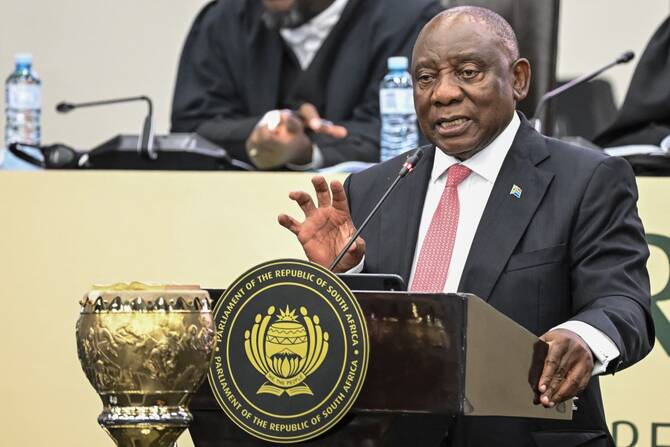
    South African court pauses impeachment proceedings against Cyril Ramaphosa

    South Africa’s Western Cape High Court has granted President Cyril Ramaphosa a temporary order halting parliamentary impeachment proceedings against him. The interdict pauses the work of a parliamentary impeachment committee until the court reviews a November 2022 panel report in September, which concluded that Ramaphosa “may have committed” serious violations regarding the Phala Phala farm scandal. The controversy stems from a 2020 break-in at Ramaphosa’s luxury farmhouse in Limpopo, where $580,000 in undeclared foreign currency hidden inside a sofa was stolen. While a former spy chief alleged the stolen sum reached $4 million and accused the president of concealing the robbery from tax and police authorities, Ramaphosa has maintained his innocence, stating the cash came from a legitimate sale of 20 buffaloes. Although the ruling African National Congress (ANC) initially quashed impeachment efforts in Parliament in 2022 and prosecutors dropped criminal charges in 2024, a Constitutional Court ruling in May 2026 reinstated the impeachment process. Ramaphosa welcomed Friday’s court decision, affirming his respect for judicial independence while awaiting the full review hearing in September.

  • | |

    LHC CJ orders 2-month deadline for long-pending tr…

    Chief Justice Lahore High Court (LHC) Justice Aalia Neelum has taken a major step to expedite the trials of accused persons who have remained in custody for more than three years, directing that their cases be decided within two months. On the directions of Chief Justice Aalia Neelum, letters have been issued to the Sessions Judges of 28 districts across Punjab, directing them to ensure the speedy disposal of cases involving under-trial prisoners who have been in detention for more than three years. The Sessions Judges have been instructed to place such cases on a fast-track basis and hear them on a priority basis so that decisions are delivered within the stipulated period of two months. The Chief Justice directed that all Sessions Judges in Punjab would be bound to ensure the disposal of these cases within the prescribed timeframe. The district judiciary has also been directed to accelerate proceedings in cases involving long-incarcerated under-trial accused and avoid unnecessary adjournments that could further prolong their detention. The Lahore High Court has also sought implementation reports regarding cases in which accused persons have remained behind bars for more than three years, in order to monitor progress and ensure compliance with the directions. The initiative aims to facilitate the timely provision of justice to prisoners whose trials have remained pending for prolonged periods. The directions are also intended to address unnecessary delays in criminal proceedings and reduce the backlog of long-pending cases. The Chief Justice’s directive underscores the need for the district judiciary to prioritize cases involving under-trial prisoners and ensure that prolonged detention does not continue merely because of delays in the disposal of their trials. The Sessions Courts across Punjab have accordingly been asked to take immediate measures to speed up proceedings and submit reports regarding compliance with the Lahore High Court’s directions.

  • | |

    110 stranded Pakistani students return from Afghan…

    Another group of 110 Pakistani students has safely returned from Afghanistan through the Torkham border crossing following efforts to facilitate the repatriation of citizens affected by tensions between Pakistan and Afghanistan. According to border security officials, the students were brought back as part of ongoing arrangements to ensure the safe return of Pakistanis who had remained stranded across the border. Earlier, around 70 Pakistani students were also repatriated through the same crossing about a month ago. Authorities said the latest return reflects continued coordination between officials on both sides of the border to ease the movement of stranded individuals. The repatriation process was carried out smoothly under agreed arrangements aimed at addressing humanitarian concerns. In addition to the return of students, authorities also permitted 592 Pakistani cargo trucks to re-enter the country through the Torkham border. The move is expected to provide relief to transporters and traders whose commercial activities had been disrupted due to restrictions at the border. Border officials said the phased return of students and commercial vehicles was made possible through coordinated efforts involving diplomatic representatives, border security authorities from both countries and local facilitators working to improve cross-border movement.

Leave a Reply

Your email address will not be published. Required fields are marked *