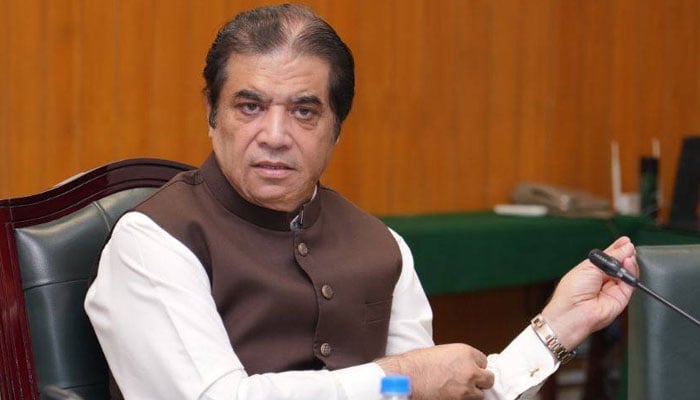
justice delayed imam
|

Justice delayed for Imam and Muhammad Umar

Hani Rasheed

Through the pages of your esteemed newspaper, I wish to draw attention to the tragic case of Imam and Muhammad Umar, two brothers whose family is still waiting for justice. Their suffering has raised serious questions about the protection of innocent citizens and the effectiveness of our justice system.
The pain of their family cannot be ignored. When innocent people suffer and justice is delayed, public trust in the law is badly affected. Every citizen deserves protection, dignity and a fair investigation, regardless of their background.
The authorities must take immediate notice of this case and ensure a transparent investigation. Those responsible must be held accountable according to the law. Justice should not depend on influence or power. The family of Imam and Muhammad Umar deserves answers, and the people deserve justice.
I hope the relevant authorities will act without further delay and provide justice to the affected family

Similar Posts

  • | |

    Electricity bills to increase this month under new…

    The National Electric Power Regulatory Authority (NEPRA) has announced a 75-paisa per unit increase in electricity prices for consumers across Pakistan, including domestic users of K-Electric. The revised tariff will be reflected in electricity bills issued during August 2026, according to an official notification released by the regulator. The increase has been approved under the monthly fuel cost adjustment (FCA) for June 2026, a mechanism through which electricity tariffs are periodically revised to account for changes in fuel generation costs. The adjustment applies to electricity consumers served by power distribution companies nationwide, including those receiving electricity from K-Electric in Karachi. According to the notification, consumers will pay an additional Rs0.75 per unit in their August electricity bills. The fuel cost adjustment is a routine regulatory measure designed to recover fluctuations in the cost of electricity generation caused by varying fuel prices and the overall energy mix used by power producers. NEPRA stated that the revised charges are part of the monthly adjustment process and are intended to align electricity tariffs with the actual cost of power generation during the relevant period. The authority regularly reviews requests submitted by power distribution companies before approving any changes in consumer tariffs. The latest increase comes as electricity consumers across Pakistan continue to face higher utility costs amid rising inflation and increasing household expenses. The adjustment will affect millions of residential, commercial, and industrial consumers, although the exact financial impact will depend on individual electricity consumption levels. Domestic consumers in Karachi supplied by K-Electric will also be subject to the revised tariff, ensuring that the increase is implemented uniformly across the country. The notification confirms that the additional charges will be included in the current billing cycle for August. Fuel cost adjustments are separate from the base electricity tariff and may result in either increases or reductions in monthly bills depending on changes in fuel prices and electricity generation costs. In recent years, these periodic revisions have become a regular feature of Pakistan’s electricity pricing system as regulators seek to recover actual power generation expenses. Consumers are advised to review their upcoming electricity bills carefully to understand the impact of the latest tariff adjustment and any other applicable charges included in the monthly billing statement.

  • | | |

    Naqvi tells tycoons: Stop funding politicians

    Federal Minister Mohsin Naqvi has called for sweeping structural reforms, warning that Pakistan cannot overcome its long-standing economic and governance challenges without fundamental changes to the country’s political and administrative systems. Speaking at the First Pakistan Investment Summit in Islamabad, Naqvi said the existing governance structure has become outdated and is no longer capable of meeting the country’s growing economic needs. He cautioned that without meaningful reforms, Pakistan could still be facing the same problems a decade from now. Addressing business leaders and investors, the minister said responsibility for the current state of affairs does not rest solely with politicians. He argued that the business community also plays a significant role in sustaining the existing system by financing political campaigns. Naqvi urged business leaders to stop funding political parties during elections and instead push for greater transparency, accountability and institutional reforms. He said reducing financial dependence on wealthy donors could help strengthen democratic institutions and improve governance. The minister also stressed the need to reduce Pakistan’s reliance on foreign loans. He said the country must focus on generating domestic resources, expanding investment and building a stronger economic foundation through long-term planning. Calling for national unity, Naqvi urged political parties to set aside differences and work together on a comprehensive reform agenda. He said lasting economic stability can only be achieved through collective decision-making and institutional improvements. Other speakers at the summit also highlighted the need for major administrative reforms. They argued that changes in governance structures, including decentralisation and stronger regional administration, could improve service delivery and reduce governance challenges. Business leader S.M. Tanvir said structural weaknesses continue to slow economic progress and called for fresh leadership and institutional reforms to strengthen the country’s administrative framework. Participants also expressed concern over Pakistan’s social and economic indicators. They noted that a large segment of the population continues to live below the poverty line, while unemployment remains a major challenge, particularly among young people. Several speakers said temporary welfare measures alone cannot address the country’s long-term economic issues. They called for policies that create sustainable employment opportunities, promote merit-based recruitment and equip young people with the skills needed to participate in the economy

  • |

    Aiman Khan and Muneeb Butt enjoy family vacation in Baku

    Aiman Khan and Muneeb Butt are among the most popular celebrity couples in Pakistan. Both stars have built successful careers in the entertainment industry and have remained in the public spotlight for years. Aiman Khan began her career as a child artist before establishing herself as a leading actress through popular dramas such as Baandi, Ishq Tamasha and Mere Humnasheen. Muneeb Butt, who entered the acting industry in 2012, has also appeared in several successful projects, including Koi Chand Rakh, Baandi and Qismat. The couple tied the knot in November 2018 and have since become one of the most followed celebrity families in the country. They are parents to three daughters, Amal, Miral and Naimal, and often share glimpses of their family life with their fans on social media. Together, Aiman and Muneeb have attracted a huge following across different social media platforms, with their combined audience exceeding 15 million. Recently, the couple travelled abroad with their daughters for a family vacation. The family first spent some quality time in Dubai before making their way to Baku, Azerbaijan. The trip has given them an opportunity to enjoy some memorable moments together while exploring the scenic city. Aiman and Muneeb have been regularly sharing pictures and videos from their holiday, giving fans a glimpse into their family getaway. The family has visited several popular and picturesque locations in Baku, capturing moments from their sightseeing and time spent together. The celebrity couple also marked Pakistan’s Independence Day on August 14 while they were in Baku. Aiman and Muneeb celebrated the occasion by wearing matching white T-shirts, while their daughters wore shirts featuring Pakistani flag prints. Their coordinated outfits added a festive touch to the family photographs. The pictures quickly attracted attention from fans, who praised the family’s adorable appearance and their decision to celebrate Independence Day while travelling abroad. Their vacation posts have also offered followers a closer look at their family bond and the fun moments they are enjoying together. With Aiman, Muneeb and their daughters continuing to explore Baku, fans are eagerly following their latest updates and waiting to see more pictures from the family’s memorable trip.

  • | |

    Gold nears record high as investors set sights on …

    International gold prices could move back toward the $5,000-per-ounce level in the coming weeks as investors closely monitor inflation, US Federal Reserve policy and growing demand for safe-haven assets. Spot gold fell 0.5 percent to around $4,643 per ounce on Wednesday after reaching its highest level since mid-May earlier this week. Meanwhile US gold futures settled at approximately $4,700.70. Despite the slight decline, the recent rally has strengthened expectations that gold could make another attempt at the psychologically important $5,000 mark. The precious metal has benefited from renewed investor demand as market participants look for protection against economic and financial uncertainty. Market attention is now turning toward developments that could influence the direction of gold prices. Investors are particularly watching trade conditions in the Gulf and the impact of inflation on major economies and businesses. Another important catalyst will be a speech by US Federal Reserve Chairman Kevin Warsh on Friday. His comments could provide fresh clues about the central bank’s monetary policy outlook and potentially influence gold prices in the short term. Gold could also gain further support if concerns about the sustainability of US government finances increase. Rising concerns over government debt and fiscal stability can encourage investors to seek alternative stores of value including precious metals. With gold already trading close to record levels, several major market events could determine its next move. Inflation data and signals from the Federal Reserve are likely to remain among the most important factors for traders. If upcoming economic data strengthens expectations of easier monetary policy gold could regain upward momentum and move closer to the $5,000-per-ounce level in the near term. Lower interest rates generally make non-yielding assets such as gold more attractive to investors. At the same time continued geopolitical and economic uncertainty could further support demand for the precious metal. For now, traders will be watching the Federal Reserve’s signals inflation trends and broader market conditions closely. A combination of softer inflation and expectations of monetary easing could provide the catalyst needed for gold prices to resume their rally toward the closely watched $5,000 level.

  • | |

    Hanif Abbasi says India tops list of Pakistan’s enemies

      ISLAMABAD: Federal Minister for Railways Hanif Abbasi has said that only two or three countries can be considered enemies of Pakistan, with India at the top of the list. He said Israel and Afghanistan are also among the countries that PakistanFederal Minister for Railways Hanif Abbasi has said that only two or three countries can be considered enemies of Pakistan, considers hostile. Speaking to journalists outside Parliament House, Abbasi said Pakistan does not regard all countries as enemies and stressed that the list is limited to a few states. His remarks came while discussing political and national issues with the media. The federal minister also spoke about his views regarding Jamiat Ulema-e-Islam-Fazl (JUI-F) chief Maulana Fazlur Rehman, describing him as a respected political figure. Abbasi said he would advise Fazlur Rehman to avoid making decisions while angry, arguing that emotional reactions can sometimes lead to wrong choices. Abbasi said that political differences were a normal part of democratic politics and that he was willing to accept opposition on political grounds. However, he drew a distinction between political disagreement and what he described as personal attacks. The minister said he could tolerate political opposition but did not accept personal hostility. Referring to remarks previously made by Pakistan Tehreek-e-Insaf (PTI) founder Imran Khan about Maulana Fazlur Rehman, Abbasi said that some of the words used against the JUI-F leader had been deeply disturbing. He said the language used against Fazlur Rehman was so harsh that it had left him shocked. According to Abbasi, political opponents could disagree with each other over policies, parties and political strategies, but personal criticism should not cross certain limits. “Political opposition would not have been an issue,” Abbasi said, while arguing that the criticism directed at Fazlur Rehman went beyond ordinary political differences and became personal. The minister’s comments reflect the continuing tensions and rivalries among Pakistan’s major political parties, where disagreements frequently extend beyond policy matters and involve criticism of individual political leaders. Abbasi’s remarks also highlighted the importance of maintaining political restraint, particularly when disagreements become intense. His advice to Fazlur Rehman suggested that political leaders should avoid taking major decisions while angry or under emotional pressure. The federal minister further indicated that political differences should be handled within the boundaries of democratic debate. While politicians may strongly oppose one another on ideological, policy or electoral matters, he suggested that personal attacks can deepen political divisions and make reconciliation more difficult. His comments regarding Pakistan’s perceived hostile countries also came amid continuing discussions about the country’s regional and international relationships. India has historically remained a major source of tension between Pakistan and its eastern neighbour, while relations with Afghanistan have also faced challenges over security and border-related issues. Pakistan’s relationship with Israel remains particularly sensitive due to the Palestinian issue and Islamabad’s longstanding position on the conflict. Abbasi’s statement therefore covered both domestic political differences and broader foreign-policy concerns. He emphasised that Pakistan has only a limited number of countries that it considers enemies, rather than viewing the wider international community through the same lens. The minister’s comments are likely to draw attention because of his criticism of personal attacks in politics and his appeal for political leaders to exercise greater restraint. His remarks underline the distinction between legitimate political opposition and criticism that becomes personal, an issue that continues to shape political discourse in Pakistan.

  • |

    AI builds 16 brand-new viruses in world-first genome experiment

    Artificial intelligence has designed 16 entirely new viruses that have never existed in nature before. Researchers in the US are calling it a genuine scientific breakthrough. According to the team behind the project, these newly designed viruses are fully functional and can replicate successfully in lab conditions. Scientists are describing the achievement as a major turning point for the field. This marks the first time AI has managed to design a complete viral genome from scratch. The viruses were specifically built to target bacteria, particularly drug-resistant strains of E. coli, and pose no risk to humans. The work was led by Dr Brian Hie and his team at Stanford University. They relied on genome language models, including systems called Evo1 and Evo2, trained using data from roughly two million bacteriophages. To keep the research safe, the team deliberately excluded any genetic data linked to viruses capable of infecting humans, animals or plants. That precaution was built into the training process from the very start. Hie explained that this represents a new level of complexity for what generative AI can design. He noted that building a complete, functional genome capable of replicating inside cells was completely uncharted territory for his team. Out of thousands of AI-generated designs, researchers narrowed the list down to around 300 for lab synthesis. After testing, only 16 of those proved effective at killing antibiotic-resistant E. coli. Scientists have framed the achievement as a potential breakthrough with real medical applications ahead. Tom Ellis, a synthetic genome expert at Imperial College London, called the work impressive but pointed out its current limitations. He noted that this particular genome remains one of the simplest and smallest to design successfully. Ellis added that concerns around AI-designed pathogens are often overstated compared to more realistic risks. He explained that modifying existing pathogens through gain-of-function techniques remains a far easier and more likely biosecurity threat. Still, some researchers in the wider scientific community remain cautious about where this technology could eventually lead. Experts at the Johns Hopkins Center for Health Security warned that proper oversight for this kind of AI-driven genome design doesn’t fully exist yet. Dr Filippa Lentzos from King’s College London argued that regulation needs to focus on multiple layers, including lab safety and DNA synthesis screening, rather than restricting AI models alone.

Leave a Reply

Your email address will not be published. Required fields are marked *