vedika pinto receives
|

Vedika Pinto receives love for promoting Musafir Cafe on Instagram

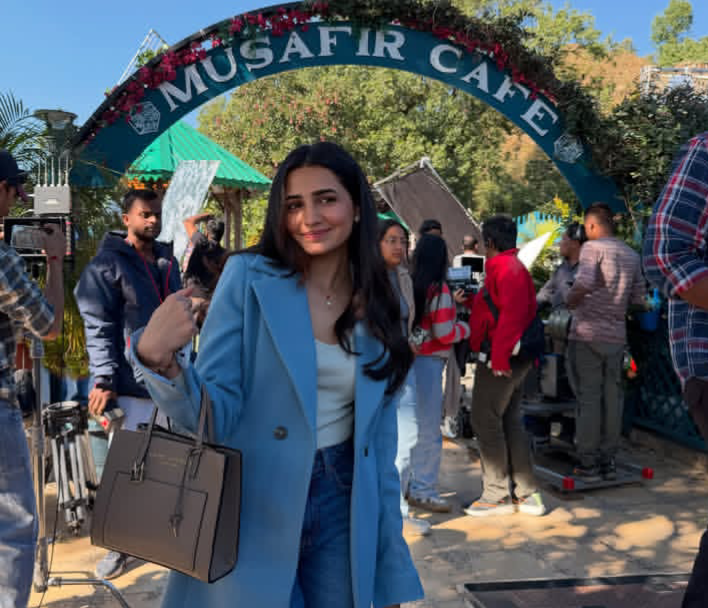
Actor Vedika Pinto has once again captured the attention of her fans with a cheerful Instagram post promoting her latest project, Musafir Cafe. The actress shared a series of bright and elegant photos, giving followers a glimpse of her stylish look while encouraging them to watch the Netflix series.

Dressed in a maroon saree and wearing a warm smile, Vedika kept her look simple yet graceful. Her latest post quickly gained traction on social media, with thousands of fans praising both her appearance and her performance in the recently released series.

Sharing the photos, Vedika wrote, “Monday ko kam jeete ho kya? Musafir Cafe on @netflixin pleeeease go watch it if you haven’t already.”

The light-hearted caption struck a chord with her followers, who flooded the comments section with encouraging messages and compliments. Within a short time, the post crossed 125,000 likes, reflecting the growing popularity of both the actress and the series.

Many viewers applauded Vedika for her role in Musafir Cafe, saying her performance left a lasting impression. One fan commented, “I absolutely loved your role girl,” while another wrote, “I’m in love with Sudha. Best series ever. Congratulations Vedika.”

Several other users described her performance as “great acting” and “lovely work,” while many called her one of their favorite actors. Some fans also praised the storytelling of Musafir Cafe, calling it a well-written series with strong performances from the entire cast.

Beyond the appreciation for her acting, Vedika’s latest photographs also received plenty of admiration. Fans complimented her traditional look, elegant styling, and radiant smile. Comments including “Nostalgic,” “Movie cute,” and “Right now you are my favorite” reflected the affection she continues to receive from her growing fan base.

Vedika has steadily built a strong presence in the entertainment industry through her performances and active engagement with fans on social media. Her posts often attract positive reactions, as followers enjoy seeing glimpses of her personal style and behind-the-scenes moments from her professional journey.

Musafir Cafe has also generated considerable buzz among viewers, with many praising its engaging storyline and memorable characters. The positive response to the series has further boosted Vedika’s popularity, with audiences highlighting her portrayal as one of the standout performances.

As conversations around the show continue online, Vedika’s latest Instagram update has added to the excitement surrounding Musafir Cafe. By combining a cheerful message with elegant photographs, the actress successfully encouraged more viewers to discover the series while strengthening her connection with fans.

With overwhelming appreciation pouring in for both her appearance and her performance, Vedika Pinto continues to enjoy a wave of positive attention on social media. Her latest post serves as another reminder of the strong bond she shares with her audience, who remain eager to support her work and celebrate her achievements.
Similar Posts

  • | | | | |

    Iran rejects US ceasefire proposal sent through Ir…

    TEHRAN/WASHINGTON: Iran has reportedly rejected a US-backed ceasefire proposal delivered through Iraq, insisting that any agreement must address the underlying causes of the conflict rather than offer only a temporary halt in fighting, according to a report published by The New York Times. The report said the proposal was conveyed during Iraqi Prime Minister Ali Al-Zaidi’s visit to Tehran after meetings with US officials in Washington. Acting as an intermediary, the Iraqi leader is said to have relayed Washington’s message in an effort to ease rising military tensions between Iran and the United States. According to the report, Iranian officials made it clear that a short-term ceasefire would not be acceptable unless it included concrete solutions to the broader disputes driving the conflict, particularly issues surrounding the Strait of Hormuz, one of the world’s most strategically important maritime routes. While the full details of the reported US proposal were not disclosed, Iranian officials were quoted as saying that a temporary pause in hostilities would do little to resolve the crisis without addressing Tehran’s core strategic concerns. Iranian Foreign Minister Abbas Araghchi confirmed that the Iraqi prime minister had briefed Tehran on his discussions in Washington and shared his observations from the visit. However, Araghchi emphasized that communication channels between Iran and the United States already exist through several regional mediators. “The issue is not the delivery of messages,” Araghchi said, according to Iranian media. “The real problem is Washington’s approach.” He accused the United States of pursuing what he described as an “unreasonable, greedy and controlling” policy that has fueled the current crisis. The report added that Tehran remains committed to its long-standing strategic demands and is unwilling to accept any agreement that it believes undermines Iran’s national interests or regional position. As of the time of publication, the US government had not issued an official response to the New York Times report or to the statements attributed to Iranian officials. The details of the alleged proposal have also not been independently verified. Diplomatic efforts involving Iraq, Qatar, Pakistan, and other regional countries are continuing behind the scenes in an attempt to reduce tensions and prevent a wider regional conflict. However, political analysts say deep disagreements between Tehran and Washington continue to limit the prospects for a breakthrough. The reported rejection underscores the significant obstacles facing mediation efforts, particularly as disputes over regional security, sanctions, and freedom of navigation in the Strait of Hormuz remain unresolved. With military tensions still high and both sides maintaining firm public positions, observers believe a comprehensive diplomatic solution remains difficult despite ongoing regional mediation initiatives.

  • | | |

    New KIA Sportage develops repeated fault within 90…

    Islamabad: A consumer court in Islamabad admitted a complaint against KIA Lucky Motors Corporation and related parties after a customer claimed that his brand new KIA Sportage developed a serious technical fault within days of purchase, rendering it unusable despite repeated inspections and repairs. The complaint has been filed under the Islamabad Consumer Protection Act, 1995, and the court has started regular hearing of the matter after reviewing the initial arguments. According to the complaint, the vehicle developed a “Shifter System Malfunctioning: Service Immediately” warning after covering only around 900 kilometres, causing the vehicle to stop working properly and requiring assistance. The complainant claimed that the same problem appeared again shortly after the first repair, raising concerns about the reliability and safety of a newly purchased vehicle. The case was filed against KIA Lucky Motors Corporation, its officials, the Islamabad dealership and KIA Corporation South Korea. The court issued notices to the concerned respondents for appearance and response. The complaint states that the customer purchased the KIA Sportage for personal and official use with the expectation that a new vehicle would be safe, reliable and free from defects. According to the documents, the vehicle was purchased on 13 February 2026 for Rs11.299 million. The customer alleged that while travelling for an official assignment, the vehicle suddenly displayed the shifter system warning and the gear system stopped functioning properly. He claimed that after reaching his destination, the same issue happened again, forcing him to seek help from the company. According to the complaint, the dealership initially informed the customer that the problem was caused by loose internal wiring. The vehicle was inspected and the customer was assured that the issue had been resolved and the vehicle was safe to drive. However, the customer claimed that the same warning appeared again on 30 May 2026 while he was travelling with his family, leaving the vehicle unusable and forcing him to arrange alternative transport. The complaint further states that the vehicle had to be taken away through a recovery service after attempts to fix the problem failed. The customer has alleged that different explanations were provided regarding the cause of the fault, including wiring issues, moisture concerns and failure of the Shifter Control Module, a key part of the vehicle’s transmission system. The complaint argues that these different explanations created further doubts about the actual cause of the problem and the effectiveness of the repairs carried out by the company. The customer has requested the court to order replacement of the vehicle or refund of the purchase price along with compensation for financial losses, inconvenience and distress. The complaint also mentions that the customer contacted the company through official channels and sent a legal notice, but claimed that the issue was not resolved. The company’s response, according to the complaint documents, acknowledged that a shifter malfunction was reported and that the Shifter Control Module was replaced under warranty after diagnosis. The legal case has brought attention to consumer rights in Pakistan, especially regarding the responsibilities of automobile companies when a newly purchased vehicle develops serious problems. The complainant’s lawyer Munir Ahmad Advocate High Court said the purpose of the case is to seek a fair solution for the customer and ensure consumers receive proper protection when purchasing expensive products. The court will continue hearing the matter after receiving responses from the concerned parties.

  • | |

    300 children die daily due to poor healthcare: Mus…

    Federal Health Minister Mustafa Kamal has said that nearly 300 children die every day in Pakistan because of inadequate healthcare facilities, stressing the need for urgent reforms and greater investment in the country’s health sector. Speaking at a ceremony held at a private hospital in Karachi, the health minister said Pakistan is moving in the right direction but acknowledged that significant challenges remain in improving healthcare services across the country. Mustafa Kamal said the nursing curriculum must be updated to meet modern healthcare standards and international requirements. He added that strengthening the skills of healthcare professionals is essential to improving the quality of medical services. Highlighting demographic challenges, the minister said Pakistan’s population is growing at an annual rate of 2.55 percent, placing increasing pressure on education, healthcare and other public services. He noted that the rapidly expanding population has left millions of children without access to education. The minister said the government’s primary focus is to prevent diseases through vaccination and public awareness rather than relying solely on treatment. He added that Pakistan spends millions of dollars every year on vaccination programmes and warned that the cost could rise to $1.2 billion by 2030 if current trends continue. Mustafa Kamal said a lack of public awareness remains one of the biggest obstacles to successful immunisation campaigns. He noted that vaccination teams often face resistance, with some families refusing to cooperate by not allowing health workers into their homes. He said the government is working to improve awareness about the importance of vaccines and strengthen preventive healthcare programmes to reduce the burden of infectious diseases. The health minister also announced that the government is expected to sign agreements within the next few weeks to begin local vaccine production. He expressed hope that Pakistan would start manufacturing vaccines domestically before 2030, reducing dependence on imports and strengthening the country’s public health system.

  • | | |

    Iran says Pakistan ties gaining greater importance

    TEHRAN: Iran has described its relationship with Pakistan as increasingly important, saying Islamabad has played a significant role as a mediator since the outbreak of the regional conflict. Iranian Foreign Ministry spokesperson Esmaeil Baghaei said the two neighbouring countries were maintaining close diplomatic contacts. He also confirmed that Iranian Foreign Minister Abbas Araghchi and Parliament Speaker Mohammad Bagher Ghalibaf had been invited to visit Islamabad. Baghaei said the two officials would travel to Pakistan at a suitable time. He did not announce a specific date for the visit. He described reciprocal visits between the two countries as a natural part of their growing bilateral relationship. The Iranian official also played down concerns that the recently signed defence agreement between Pakistan, Saudi Arabia and Turkiye was aimed at Tehran. Pakistan, Saudi Arabia and Turkiye signed the Makkah Joint Defence Agreement on August 7. The agreement seeks to strengthen collective defence cooperation and provides for a joint response if any member comes under attack. Baghaei said Tehran did not consider the agreement a direct threat to Iran. He said regional countries were increasingly seeking security arrangements based on their own regional realities rather than relying entirely on external powers. He maintained that regional cooperation could contribute to stability if such arrangements remained inclusive and focused on preventing conflict. Baghaei also said Iran was not prepared to resume direct negotiations with the United States while Tehran believed Washington was violating an interim agreement. The Iranian government has also linked the reopening of the Strait of Hormuz to a number of demands. These include compensation for damage caused during the conflict and an end to the US naval blockade of Iranian ports. Meanwhile, Iran and Oman are continuing discussions on arrangements for commercial shipping through the Strait of Hormuz. Baghaei said the talks were progressing in a constructive manner. He said the two sides had reached an understanding on a proposed map for shipping traffic and were working on several technical details. According to the Iranian official, the proposed arrangement would establish mechanisms for safer maritime movement. It would also address environmental protection and maritime crimes. He stressed that the discussions with Oman were focused on ensuring safe international shipping and were separate from broader political disputes. Baghaei nevertheless reiterated that Tehran would not allow the full reopening of the strategic waterway unless its conditions concerning Washington were addressed. In a separate development, Iran has appointed former Islamic Revolutionary Guard Corps commander Mohsen Rezaei to a senior position in the Supreme National Security Council. Rezaei has replaced Mohammad Baqer Zolqadr as secretary of the body responsible for coordinating Iran’s security and foreign policy. No official reason was immediately given for the change. It also remains unclear whether the appointment will lead to any major shift in Iran’s security policy. Rezaei, 71, commanded the Revolutionary Guards from 1981 to 1997. He later served for more than two decades as secretary of Iran’s Expediency Discernment Council and also held the position of vice president for economic affairs. Iran’s Supreme National Security Council brings together senior military, intelligence and government officials. It is formally chaired by the president, while the supreme leader retains ultimate authority over major state matters. A separate decree appointed Rezaei as the supreme leader’s representative on the council. Zolqadr was instead named as a political adviser. The developments come as Iran faces heightened regional tensions and continues efforts to manage its relations with neighbouring countries and major international powers.

  • |

    Asian markets rise after Wall Street rally as oil prices edge higher

    Asian stock markets opened higher on Monday, taking cues from Wall Street’s latest gains after weaker-than-expected US employment data reduced expectations of an immediate increase in borrowing costs. However, rising oil prices and uncertainty surrounding developments in the Gulf limited the overall optimism in financial markets. Investors were also closely monitoring the situation around the Strait of Hormuz, a crucial route for global energy supplies, after Iran said discussions over the reopening of the strategic waterway were nearing an agreement. Iran announced on Sunday that negotiations with Oman on establishing new shipping routes through the Strait of Hormuz had reached their final stages. Tehran, however, maintained that normal traffic through the waterway would resume only after the United States fulfilled additional conditions. The uncertainty surrounding the route kept pressure on crude markets. Brent crude futures increased 0.9% to $84.32 a barrel, while US West Texas Intermediate crude gained 0.7% to $78.74 per barrel. The latest increase in energy prices has added another layer of uncertainty for investors ahead of the release of US inflation figures. US Inflation Data in Focus Market participants are now turning their attention to the US consumer price index report scheduled for Wednesday. Economists are expecting headline consumer inflation to rise by 0.1%, while core inflation, which excludes food and energy costs, is projected to increase by 0.2%. A stronger-than-expected inflation reading could revive concerns that the Federal Reserve may be forced to keep interest rates higher for longer and potentially consider another rate increase at its September meeting. Michael Feroli, chief US economist at JPMorgan, said his forecast for core inflation at 0.22% would probably not be sufficient on its own to trigger a rate increase in September. However, he cautioned that repeated monthly increases close to 0.3% could change the outlook. Feroli also highlighted the possibility of a rebound in prices of core goods after they declined for two consecutive months, saying this would be an important factor for markets to monitor. Expectations for a September rate increase have weakened significantly in recent days. Futures markets now indicate roughly a 44% probability of a rate move in September, compared with about 67% a week earlier. Asian Equities Follow Wall Street Higher The decline in expectations for an immediate increase in US interest rates helped US Treasury bonds rally on Friday and supported a strong performance by Wall Street equities. The positive momentum carried into Asian trading on Monday. Japan’s Nikkei index climbed 0.6%, while South Korea’s benchmark market gained 0.5%. MSCI’s broad index of Asia-Pacific shares excluding Japan also advanced 0.3%, reflecting improved investor sentiment across regional markets. The gains came as traders continued to assess the impact of softer US employment data on the Federal Reserve’s monetary policy outlook. Lower expectations for interest-rate increases generally support equities because cheaper financing conditions can encourage investment and improve corporate earnings prospects. European Markets Show Caution European markets were less enthusiastic, with futures pointing to modest declines at the start of trading. EUROSTOXX 50 futures and Germany’s DAX futures each slipped 0.1%, while FTSE futures were down 0.4%. In the United States, S&P 500 futures declined 0.1%, while Nasdaq futures remained largely unchanged. The subdued futures performance followed a particularly strong week for US technology stocks, with the Nasdaq gaining around 5% amid a series of encouraging corporate earnings reports. Strong Corporate Earnings Support US Stocks Corporate earnings have remained a major source of support for US equities. According to analysts at Bank of America, nearly 90% of companies in the S&P 500 had reported their results, with earnings per share rising approximately 30% year-on-year after excluding investment gains recorded by Alphabet and Amazon. The proportion of companies exceeding earnings expectations also remained unusually strong. Around 76% of reporting companies beat analysts’ earnings-per-share estimates, matching the highest level recorded since 2021. Artificial intelligence-related businesses continued to stand out among the strongest performers. Bank of America analysts said companies linked to AI had recorded median earnings-per-share growth of around 28%, compared with approximately 12% for businesses without a direct AI connection. However, analysts expect the pace of AI-related earnings growth to moderate in the coming quarter, with consensus forecasts pointing to growth of around 16%. Investors will have fewer major earnings releases to digest this week, although several important technology companies are scheduled to report results. These include semiconductor manufacturer Applied Materials, networking equipment company Cisco and cloud infrastructure provider CoreWeave. Bond Yields and Dollar Remain in Focus In the bond market, the yield on the benchmark 10-year US Treasury note edged slightly higher to 4.673%. Investors are also preparing for approximately $125 billion in new US government debt issuance during the week, which could influence Treasury yields and broader financial-market conditions. The recent decline in bond yields, combined with improving appetite for riskier assets, has placed pressure on the US dollar. The euro remained close to a seven-week high at around $1.1557. Meanwhile, the dollar was little changed against the Japanese yen at approximately 157.85. Currency traders remain cautious about the possibility of intervention by Japanese authorities if the yen weakens further. Japan has previously expressed concern over sharp and rapid movements in its currency, particularly when excessive weakness threatens to increase import costs. Gold Holds Near Record Levels Gold also remained firmly supported as lower bond yields improved the appeal of the non-interest-bearing precious metal. Spot gold was trading around $4,342 an ounce after recording a gain of more than 7% during the previous week. The metal continues to benefit from a combination of factors, including expectations surrounding US monetary policy, movements in Treasury yields, currency fluctuations and geopolitical uncertainty. With investors awaiting US inflation data and closely watching developments around the Strait of Hormuz, markets are likely to remain sensitive to changes in energy prices and interest-rate expectations in the days ahead.

  • Australia bans AI-generated music from charts after Madonna cover controversy

    Australian music charts have banned AI-generated music from the beginning of this week following controversy over an Australian DJ’s cover of Madonna’s “Like a Prayer”. The country’s leading music industry trade group, the Australian Recording Industry Association (ARIA), announced on Tuesday that AI-generated music tracks would no longer be eligible for the ARIA Charts. Only recordings in which AI is used in a supporting role will remain eligible, ARIA said. AI-generated music is growing in popularity, while major global record labels have been seeking new licensing arrangements to protect their extensive music catalogues. Artists and users have also called for measures to distinguish AI-generated material from human-composed music. “The ARIA Charts will always remain a transparent measurement of the music Australia consumes, but a chart that rewards unlicensed AI output would undercut the very basis of the recorded music industry we exist to represent,” ARIA CEO Annabelle Herd said. Popular songs and albums released on platforms including Apple Music and Spotify are monitored and collected by ARIA for its charts. Several producers claimed that AI-generated music had been used in Queensland-based DJ Josh Fawaz’s cover of Madonna’s 1989 hit “Like a Prayer”. The song became one of the most-played tracks on Australian radio and reached No. 4 on two ARIA charts in July. Fawaz said in response to comments from Thomas that he used AI “as a tool, it’s not that deep”. He added that he had been releasing music for a long time before the emergence of AI and wanted to give his listeners “good music”. Representatives of Madonna did not immediately respond to a request for comment outside normal response hours. Musicians, songwriters and producers have urged governments to take steps to protect their creative work while criticising the use of AI-generated music without permission. Mark Seymour, singer and guitarist of Australian rock band Hunters & Collectors, said companies were using artists’ creative work without payment or permission. He added that the value of artists’ creative investment should “never be threatened”. Australian Prime Minister Anthony Albanese has assured artists that the government would take steps to protect ownership of their work. The ARIA decision comes amid growing debate worldwide over the use of artificial intelligence in music and concerns among artists and rights holders about copyright, licensing and the use of creative work to develop AI-generated content.

Leave a Reply

Your email address will not be published. Required fields are marked *