iran says pakistan
| | |

Iran says Pakistan ties gaining greater importance

TEHRAN: Iran has described its relationship with Pakistan as increasingly important, saying Islamabad has played a significant role as a mediator since the outbreak of the regional conflict.

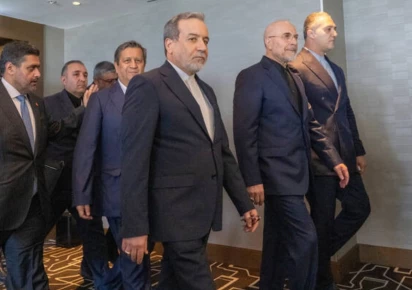
Iranian Foreign Ministry spokesperson Esmaeil Baghaei said the two neighbouring countries were maintaining close diplomatic contacts. He also confirmed that Iranian Foreign Minister Abbas Araghchi and Parliament Speaker Mohammad Bagher Ghalibaf had been invited to visit Islamabad.

Baghaei said the two officials would travel to Pakistan at a suitable time. He did not announce a specific date for the visit.

He described reciprocal visits between the two countries as a natural part of their growing bilateral relationship.

The Iranian official also played down concerns that the recently signed defence agreement between Pakistan, Saudi Arabia and Turkiye was aimed at Tehran.

Pakistan, Saudi Arabia and Turkiye signed the Makkah Joint Defence Agreement on August 7. The agreement seeks to strengthen collective defence cooperation and provides for a joint response if any member comes under attack.

Baghaei said Tehran did not consider the agreement a direct threat to Iran. He said regional countries were increasingly seeking security arrangements based on their own regional realities rather than relying entirely on external powers.

He maintained that regional cooperation could contribute to stability if such arrangements remained inclusive and focused on preventing conflict.

Baghaei also said Iran was not prepared to resume direct negotiations with the United States while Tehran believed Washington was violating an interim agreement.

The Iranian government has also linked the reopening of the Strait of Hormuz to a number of demands. These include compensation for damage caused during the conflict and an end to the US naval blockade of Iranian ports.

Meanwhile, Iran and Oman are continuing discussions on arrangements for commercial shipping through the Strait of Hormuz.

Baghaei said the talks were progressing in a constructive manner. He said the two sides had reached an understanding on a proposed map for shipping traffic and were working on several technical details.

According to the Iranian official, the proposed arrangement would establish mechanisms for safer maritime movement. It would also address environmental protection and maritime crimes.

He stressed that the discussions with Oman were focused on ensuring safe international shipping and were separate from broader political disputes.

Baghaei nevertheless reiterated that Tehran would not allow the full reopening of the strategic waterway unless its conditions concerning Washington were addressed.

In a separate development, Iran has appointed former Islamic Revolutionary Guard Corps commander Mohsen Rezaei to a senior position in the Supreme National Security Council.

Rezaei has replaced Mohammad Baqer Zolqadr as secretary of the body responsible for coordinating Iran’s security and foreign policy.

No official reason was immediately given for the change. It also remains unclear whether the appointment will lead to any major shift in Iran’s security policy.

Rezaei, 71, commanded the Revolutionary Guards from 1981 to 1997. He later served for more than two decades as secretary of Iran’s Expediency Discernment Council and also held the position of vice president for economic affairs.

Iran’s Supreme National Security Council brings together senior military, intelligence and government officials. It is formally chaired by the president, while the supreme leader retains ultimate authority over major state matters.

A separate decree appointed Rezaei as the supreme leader’s representative on the council. Zolqadr was instead named as a political adviser.

The developments come as Iran faces heightened regional tensions and continues efforts to manage its relations with neighbouring countries and major international powers.

Similar Posts

  • | |

    SBP asked to fix banking gaps after complaints of …

    Islamabad: The State Bank of Pakistan (SBP) came under pressure in the Senate after lawmakers raised concerns over complaints from customers, including Politically Exposed Persons (PEPs), who faced difficulties with commercial banks and alleged delays in resolving their issues. The Senate Standing Committee on Finance and Revenue questioned why banks and the SBP failed to establish clear and uniform procedures despite earlier directions to create dedicated officers and better complaint handling systems. During the meeting, Member National Assembly Muhammad Moin Amir Pirzada informed the committee that his bank account was closed in April 2026 and despite repeated communication with the concerned bank and the State Bank of Pakistan, he did not receive a satisfactory response. He told the committee that such situations show the need for a proper yearly data update system and clear banking procedures so customers do not face unnecessary difficulties. The committee learned that no common Standard Operating Procedures had been developed across the banking sector despite previous recommendations. Governor State Bank acknowledged the concerns and informed the committee that rules for dealing with Politically Exposed Persons already exist. He said the problem occurred at the branch level and assured lawmakers that steps would be taken to improve implementation. The Governor informed the committee that a backup officer had already been assigned and a dedicated focal person would also be appointed to handle such matters. The committee stressed that all banks must follow the same procedures so customers receive equal treatment and complaints are resolved quickly. Federal Minister for Finance also supported the need for standard procedures and said proper systems are necessary for better customer service and effective complaint resolution. The committee meeting, chaired by Senator Saleem Mandviwalla, also discussed wider banking issues including customer charges, investment policies and employee matters. Members raised concerns about banking service charges, especially SMS alerts and card transactions. The State Bank Governor informed the committee that SMS alerts are optional, allowing customers to choose whether to use the service. He said banks are also introducing alternative options such as mobile application and email alerts for customers. The Governor clarified that Visa card transactions conducted within Pakistan would not be charged in US dollars. He also informed the committee that banks are currently covering around Rs80 billion annually under the Pakistan Remittance Initiative. Committee members appreciated the reforms under the initiative, stating these steps have helped save significant costs. The committee also discussed complaints regarding dress code instructions in some banks. Senator Dr. Zarqa Suharwardy Taimur raised concerns that some female employees were allegedly pressured to wear abayas. Senator Sherry Rehman stated that no employee should be forced to adopt a specific type of clothing. The State Bank Governor informed the committee that previous recommendations had already been communicated to banks. He clarified that the committee had only recommended a modest dress code and had not ordered banks to impose any particular clothing. The committee directed all banks to submit their human resource dress code policies and instructed SBP to issue updated guidelines to ensure employees are not placed under unnecessary pressure. The committee also reviewed concerns related to investment protection policies. Senator Manzoor Ahmed suggested that incentives provided to the Reko Diq project should also be considered for other investment projects in Pakistan. Finance Ministry officials informed the committee that only one project currently meets the existing criteria and the government’s financial position does not allow similar benefits for all projects. The Finance Minister assured the committee that future proposals would be reviewed according to available resources.

  • | |

    Bans on baajas, firecrackers and one-wheeling ahea…

    PESHAWAR: The Peshawar district administration has imposed restrictions on several Independence Day activities, banning baajas, firecrackers, toy pistols, aerial firing and one-wheeling under Section 144. According to an official notification, the restrictions will remain in effect until August 15 as authorities prepare for Pakistan’s Independence Day celebrations on August 14. The administration has prohibited the sale and purchase of toy horns, toy pistols and firecrackers, while fireworks and aerial firing have also been restricted to prevent accidents and maintain public order. Authorities have particularly warned young people against one-wheeling, describing the stunt as a serious threat to public safety that can endanger both riders and other road users. Officials said the measures are intended to protect lives and property and prevent festive gatherings from turning into incidents involving reckless driving, injuries or public disorder. Residents have been urged to celebrate Independence Day responsibly and comply with the restrictions, with authorities warning that violations could result in legal action.

  • |

    Ariana Grande clears the air on her big break

    Ariana Grande has finally addressed the timing behind her decision to step away from the spotlight. She brought it up herself during a stop on her Eternal Sunshine Tour in Chicago on Monday, August 3. Speaking to the crowd, the 33-year-old singer and actress made it clear the choice was not made overnight. “The announcement that was made yesterday was not a reactive or impulsive thing,” she said. She added that it was a decision she had made quietly, well before it became public. Grande also pushed back against claims that online criticism had pushed her into this choice. She said the decision came from a confident and thoughtful place, not from outside pressure. According to her, more than one thing can be true at once. People can need boundaries. People can need rest. And this chapter of her career can still be one of the best she has ever had. Before wrapping up, she turned her attention to her fans. She said no amount of online noise could ever compete with the bond she shares with them. To her, that connection remains the most real thing in the picture. Her remarks followed a statement from her representative, shared with Deadline just a day earlier. The statement confirmed that Grande plans to step back from public life once her tour ends. Her team said she wants to finish the tour on a high note before taking time away from the spotlight, following months of intense public scrutiny. The break is not limited to music. Grande has also dropped out of the upcoming West End revival of Sunday in the Park with George. The role would have reunited her with Wicked co-star Jonathan Bailey. This news comes shortly after the release of her eighth studio album, Petal. The 12-track project arrived alongside a music video for its lead single. That video sparked fresh concern among fans, many of whom commented on how different she looked. Grande kicked off the Eternal Sunshine Tour back in June, playing her first show on June 6 in Oakland, California. The tour is set to run for 41 dates total, wrapping up at London’s O2 Arena on September 1.

  • |

    Search operation resumes for seven missing Broad Peak climbers

    GILGIT: Search and rescue teams resumed their operation on Saturday morning to locate seven climbers who remain missing after a deadly avalanche struck Broad Peak earlier this week. The mission restarted after weather conditions improved, allowing rescuers to return to one of the world’s most challenging mountain environments. The rescue operation had been suspended late Friday because of heavy snowfall, poor visibility and the continuing risk of avalanches. Officials said improving weather conditions enabled both ground and air teams to resume the search. The avalanche occurred on Thursday while a 10-member international expedition was climbing Broad Peak, an 8,047-metre mountain in Pakistan’s Karakoram range. According to regional authorities, the climbers were ascending at an altitude of around 6,600 metres when they were caught in the massive avalanche. Three climbers were confirmed dead after their bodies were recovered on Friday. The deceased were identified as Omani climber Nadhira Ahmed Abdullah Al Harthy, Nepali mountaineer Pur Bahadur Gurung and American climber Mallory Geis. Their bodies were later airlifted to Skardu. Seven climbers are still missing. They include internationally renowned Nepali mountaineer Nirmal Purja, fellow Nepali climbers Kili Pemba Sherpa, Nima Sherpa, Nawang Thindu Sherpa and Gyalu Sherpa, Pakistani climber Sohail Sakhi and Chinese climber Wang Zhong. According to the local administration, a three-member civilian rescue team led by renowned Pakistani mountaineer Sarbaz Khan resumed the ground search on Saturday morning. Experienced Nepali climbers already stationed at the Broad Peak base camp also joined the rescue effort to assist in locating the missing mountaineers. Pakistan Army helicopters have also been deployed to support the operation. Rescue officials said helicopters are assisting with aerial surveillance, transporting rescue personnel and assessing areas that remain inaccessible by foot. Officials from the Alpine Club of Pakistan said the search operation remains extremely difficult because of steep mountain slopes, unstable snow, harsh weather and the constant threat of further avalanches. These conditions continue to slow rescue efforts and increase risks for search teams. Rescuers have also been using drone technology to scan the mountain. During the operation, drone footage reportedly identified signs of additional climbers at an altitude of around 6,000 metres. Ground teams are attempting to reach the location despite dangerous terrain and difficult weather conditions. The international rescue effort has also received support from renowned Nepali climber Mingma David Sherpa, who travelled to Pakistan to assist in the search for Nirmal Purja and the other missing climbers. Authorities said the expedition team was last in contact on Thursday morning before communication was lost. Data from the climbers’ tracking devices later suggested that several members of the team had been swept hundreds of metres down the mountainside by the avalanche.

  • | |

    245 technical institutes affiliated by FBISE face …

    Islamabad: Questions have been raised over the affiliation process of hundreds of technical institutes after an audit revealed that 245 technical institutions were affiliated with the Federal Board of Intermediate and Secondary Education (FBISE) before concerns over legal authority and inspection procedures were fully addressed. The issue came up during the 47th meeting of the Public Accounts Committee, held under the acting chairmanship of Syed Naveed Qamar, where lawmakers reviewed audit objections related to FBISE’s affiliation procedures. According to audit findings, FBISE affiliated 245 technical institutes during 2022 and 2023 and collected Rs. 26.750 million in affiliation fees. The audit questioned the process, stating that the original FBISE Act of 1975 mainly covered intermediate and secondary education and did not clearly mention technical institute affiliations. Officials informed the committee that the matter was reviewed by the Law and Justice Division, which issued a legal opinion on 15 June 2026. The opinion stated that FBISE has legal authority under relevant sections of the FBISE Act 1975 to conduct examinations, provide affiliations and issue certificates for technical education programmes including Matric Tech and Inter Tech programmes at secondary and higher secondary levels. During the discussion, PAC members stressed that clear policies and official notifications should be issued so that all concerned institutions have proper guidance regarding technical education affiliations. The committee questioned whether the legal position and policy framework were clearly communicated before allowing affiliations. Officials were directed to ensure that proper procedures and documentation are completed before moving forward. The audit also highlighted another issue related to the registration process of technical institutes. Audit observations indicated that provisional registrations were issued to technical institutes before physical inspections were completed. The audit noted that registrations were granted without complete details of teaching staff. Officials informed the committee that inspections were being carried out and most institutions had already been reviewed, while only a limited number of uninspected institutions remained pending as of March 2026. Officials also informed the committee about steps being taken to improve technical and modern education in schools. The Federal Directorate of Education has introduced coding, robotics and artificial intelligence programmes to encourage students towards technology fields. Officials said coding fellows were engaged through support from NUST, while additional technology fellows were also working to support IT education. The committee was also informed about the Matric Tech programme, which was introduced to provide practical skills to students who may not continue traditional education after matriculation and want to enter professional careers. Officials said the aim of the programme is to provide students with useful skills that can help them find employment and participate in modern industries. The meeting also discussed the shortage of teaching resources, especially in areas where educational facilities face staff challenges. Officials informed the committee that 1,699 teaching and non teaching fellows, including technology fellows, were engaged to support educational needs. The committee emphasized that technical education is important for preparing young people for future jobs but stressed that proper monitoring, legal clarity and transparent procedures must remain part of the system.

  • |

    Oil prices rise as Hormuz tensions escalate

    Oil prices climbed on Monday as uncertainty over a possible diplomatic breakthrough between the United States and Iran increased, while a sharp slowdown in tanker movements through the Strait of Hormuz heightened concerns about disruptions to global crude supplies. Brent crude futures gained as much as 1% during early trading to reach $89.40 per barrel. The benchmark was later up 72 cents, or about 0.8%, at $89.20 a barrel by 0229 GMT. US West Texas Intermediate (WTI) crude also moved higher, rising 44 cents to $82.83 per barrel. Both international benchmarks posted gains of more than 5% last week after a series of attacks involving energy and shipping assets in and around the strategically important Strait of Hormuz. The incidents have intensified fears that further escalation could affect one of the world’s most important oil transit routes. Market sentiment was further affected by developments over the weekend, when Iranian Foreign Minister Abbas Araqchi said Tehran had yet to decide whether it would resume negotiations with Washington. US President Donald Trump, meanwhile, told Americans to prepare for somewhat higher gasoline prices as the conflict continues. Analysts said the renewed uncertainty had brought geopolitical risk back into crude markets after oil prices had previously come under pressure on expectations that diplomatic efforts could ease tensions. “Oil prices have now rebounded almost completely from the lows seen in early August, as hopes for a more permanent resolution between the US and Iran have faded and geopolitical risk premiums have returned to the market,” said Priyanka Sachdeva, head of market insights at Phillip Nova in Singapore. Sachdeva cautioned, however, that the rally could lose momentum unless there is evidence of a further deterioration in the situation. She said the market would need to see renewed aggression in the Strait of Hormuz, particularly significant damage to oil tankers or energy infrastructure, before prices were likely to move substantially higher. Hormuz shipping activity slows Concerns over physical supply disruptions increased after ship-tracking data showed a marked decline in vessel traffic through the Strait of Hormuz over the weekend. According to data from Kpler, only five commodity vessels crossed the strategic waterway on Saturday, while no such transits were recorded on Sunday. This compared with 31 commodity vessel crossings during the previous weekend. The slowdown is significant because the Strait of Hormuz is a critical route for international energy shipments. Any prolonged disruption could increase transportation risks, raise insurance costs and place additional upward pressure on crude prices. The United Arab Emirates also accused Iran of attacking another vessel operated by Abu Dhabi National Oil Company (ADNOC) while it was passing through the strait on Friday, according to the Emirati state news agency WAM. The UAE had earlier blamed Iran for two separate incidents involving ADNOC-operated vessels on Thursday evening. The latest incidents have added to concerns among traders that the conflict could increasingly affect commercial shipping and energy infrastructure, rather than remaining confined to military and diplomatic confrontation. Markets remain focused on escalation risks The Strait of Hormuz remains particularly important to global oil markets because a substantial volume of crude and petroleum products moves through the waterway. Any sustained interruption could therefore have consequences well beyond the region. For now, traders are closely monitoring developments involving US-Iran diplomatic contacts, attacks on shipping and the movement of tankers through the strait. While the latest price gains reflect a higher geopolitical risk premium, analysts remain cautious about predicting a prolonged rally. If shipping activity resumes and diplomatic channels reopen, some of the premium built into crude prices could quickly unwind. Conversely, additional attacks on tankers, oil facilities or other critical infrastructure could trigger a stronger market reaction and push prices higher as traders reassess the security of regional supplies.

Leave a Reply

Your email address will not be published. Required fields are marked *