shehbaz says paksauditurkiye
| | |

PM Shehbaz says Pak-Saudi-Turkiye defence pact is …

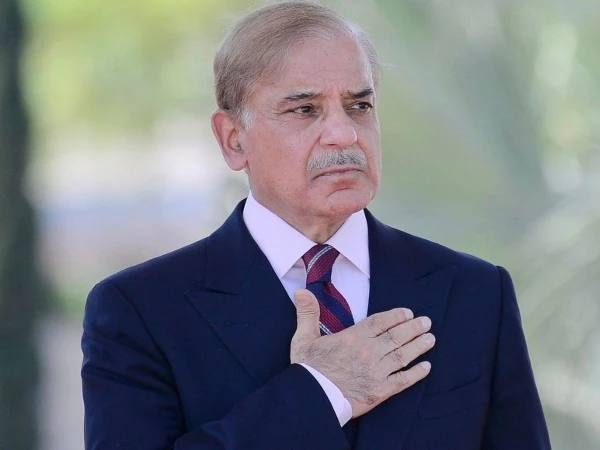
Prime Minister Shehbaz Sharif has said the newly signed defence agreement between Pakistan, Saudi Arabia and Turkiye is strictly defensive in nature.

He said the pact is not intended to promote aggression or create tensions in the region.

The prime minister made the remarks while addressing a meeting of the federal cabinet on Monday.

Pakistan, Saudi Arabia and Turkiye signed the Makkah Joint Defence Agreement on August 7 in Makkah. The agreement aims to strengthen cooperation among the three countries in the field of defence and security.

Under the pact, an attack against any one of the three signatories would be treated as an attack against all three. The arrangement is intended to strengthen collective deterrence and improve coordination among the countries.

PM Shehbaz said the main objective of the agreement was to promote peace, stability, progress and prosperity across the region.

He stressed that the agreement should not be viewed as a preparation for military aggression.

The prime minister described the pact as a source of strength for Pakistan, Saudi Arabia and Turkiye. He also said its benefits could extend to the wider Muslim world.

Shehbaz Sharif congratulated Deputy Prime Minister Ishaq Dar and Chief of Defence Forces and Chief of Army Staff Field Marshal Asim Munir for their role in the agreement.

He said discussions on stronger defence cooperation between the countries had continued for several years before the latest agreement was finalised.

Pakistan and Saudi Arabia had already signed a Strategic Mutual Defence Agreement in September 2025. The prime minister said Pakistan and Turkiye had also maintained defence and security arrangements for decades.

Shehbaz highlighted Pakistan’s long-standing defence cooperation with Saudi Arabia. He recalled that Pakistani personnel had served alongside Saudi forces in protecting the holy cities of Makkah and Madina.

He said the latest trilateral agreement builds on those longstanding ties and provides a broader framework for cooperation.

The agreement has also received attention across the Muslim world. The Organisation of Islamic Cooperation described it as an important strategic development.

Several countries, including Kuwait, Bahrain and Somalia, have welcomed the agreement.

Iran has also responded in a relatively positive tone. Tehran reiterated its preference for regional security arrangements based on cooperation among countries in the region.

The agreement comes amid growing security concerns across the Middle East and wider region. Its signatories have presented the pact as a mechanism for collective defence rather than an offensive alliance.

The Pakistani government has maintained that the arrangement is aimed at strengthening regional stability and protecting the sovereignty and security of its members.

Similar Posts

  • | | | |

    HRCP, PFUJ slam new foreign media rules

    The Human Rights Commission of Pakistan (HRCP) and the Pakistan Federal Union of Journalists (PFUJ) have strongly criticised the government’s newly introduced Foreign Media Facilitation Guidelines 2026, describing the policy as a serious threat to press freedom and independent journalism. The criticism comes after the Ministry of Information and Broadcasting reminded foreign media organisations that journalists must obtain prior government approval before carrying out reporting assignments outside Islamabad, Lahore and Karachi under the revised External Publicity Guidelines. The ministry issued the reminder following concerns over international coverage related to Azad Jammu and Kashmir. In a statement, the HRCP said the new guidelines could discourage independent reporting on issues of public interest instead of facilitating journalistic work. The commission expressed concern that the policy reflects an increasing trend of restrictions on media freedom, including tighter controls on reporting and growing administrative hurdles for journalists. According to the rights body, requiring official permission before reporting from many parts of the country could create an atmosphere where critical journalism is discouraged. It urged the government to withdraw the new measures and ensure protection of freedom of expression in line with constitutional guarantees and international commitments. The PFUJ also condemned the notification, calling it a direct attack on press freedom. The journalists’ union argued that the policy not only limits the movement of foreign correspondents but also places restrictions on Pakistani journalists working for international media organisations. PFUJ President Afzal Butt and Secretary General Arshad Ansari questioned how journalists would be able to perform their professional responsibilities if access to large parts of the country is restricted. They warned that the policy could affect Pakistan’s international reputation and further weaken its standing in global press freedom rankings. The union also expressed concern that Pakistani journalists employed by foreign media organisations could face job losses if they are prevented from reporting from different regions of the country.

  • | |

    Flood alert as rivers rise, Sukkur, Marala and Bal…

    ISLAMABAD: Pakistan is bracing for another spell of flood-related risks as heavy monsoon rains, rising river levels and high water storage at major dams put several parts of the country on alert. The National Disaster Management Authority (NDMA), through its National Emergencies Operation Centre, has warned of possible low to moderate flooding in vulnerable areas of Khyber Pakhtunkhwa, Punjab, Balochistan and Azad Jammu and Kashmir. According to the latest assessment, the Indus River has already reached low flood levels at Kalabagh, Chashma, Taunsa and Guddu. While the Ravi, Chenab, Jhelum, Kabul and Sutlej are currently within normal ranges, officials expect water flows in several major rivers to increase on August 8 and 9. The NDMA has identified Sukkur on the Indus, Marala on the Chenab and Balloki on the Ravi as areas where low-level flooding could occur. The Jhelum downstream of Mangla Dam and the Kabul River near Adezai are also being closely monitored. Several districts in Khyber Pakhtunkhwa, including Chitral, Upper Dir, Abbottabad, Shangla, Khyber, Orakzai, Kohat, Tank and North and South Waziristan, face the possibility of low to moderate flooding. In AJK, Bagh and Kotli are also considered vulnerable, while Zhob, Musakhel, Kohlu, Barkhan and Dera Bugti in Balochistan remain under watch. Punjab is facing risks from hill torrents, particularly in Dera Ghazi Khan and Rajanpur. The NDMA has also warned of possible urban flooding in Rawalpindi, Gujranwala, Sialkot, Narowal, Faisalabad, Okara and Lahore. Water storage at the country’s major reservoirs remains high. Tarbela Dam’s water level has reached 1,548 feet, with storage at 97.94 per cent, compared with 95.98 per cent during the same period last year. Mangla Dam is at 1,205.2 feet, with storage recorded at 62.99 per cent, slightly above last year’s 62.80 per cent. Authorities have urged residents, tourists and travellers in mountainous and flood-prone areas to remain vigilant, as intense monsoon rainfall can trigger flash floods, landslides and debris flows with little warning. People have been advised to avoid riverbanks, streams and other vulnerable locations and to check weather forecasts and road conditions before travelling as the monsoon system continues to affect the country.

  • | |

    J-10C jets downed six Indian aircraft: report

    Pakistan Air Force’s J-10C fighter jets reportedly engaged Indian aircraft during the May 2025 aerial confrontation without direct support from airborne early warning and control (AEW&C) aircraft. The claim was made in a report by Ukrainian defence publication Defense Express. The report cited Chinese state television and comments from Chinese radar specialist Ben De. According to the report, Pakistani J-10C jets used their onboard KLJ-7A radars to detect and engage Indian aircraft. The jets were reportedly able to track targets from a distance of around 200 kilometres. The report claimed that six Indian aircraft were shot down during the confrontation. It included three Rafale fighter jets among the aircraft allegedly destroyed. The report said the Pakistani fighters did not require direct targeting assistance from AEW&C aircraft during the reported engagements. Instead, the J-10Cs reportedly used their own radar systems to identify and track targets. The KLJ-7A is an active electronically scanned array (AESA) radar designed for modern air combat. It can detect and track multiple targets and provide information needed for air-to-air engagements. The report’s claims have drawn attention because AEW&C aircraft are normally used to provide wider-area surveillance and help fighter jets detect threats at longer ranges. The reported use of the J-10C’s onboard radar suggests that the aircraft could conduct long-range engagements with greater independence from airborne surveillance platforms. The May 2025 confrontation involved intense aerial activity between Pakistan and India. Both sides made competing claims about losses and the effectiveness of their military operations. The claim that six Indian aircraft were destroyed, including three Rafales, has not been independently verified. India has also disputed Pakistan’s claims about aircraft losses. The reported account therefore remains a claim attributed to Chinese sources and the Ukrainian defence publication.

  • | |

    Punjab drainage projects curb monsoon flooding: Ma…

    Punjab Chief Minister Maryam Nawaz Sharif has said drainage projects carried out across the province have helped reduce the impact of monsoon rains. She said areas that previously remained submerged for days, weeks or even months were now seeing rainwater cleared within hours. The chief minister made the remarks during a meeting with Punjab Assembly members from Vehari. The meeting reviewed development schemes, political matters and initiatives aimed at improving public services in the district. Maryam said the Punjab Development Programme was promoting more balanced development across the province. She added that the government was focusing on projects designed to address long-standing problems faced by residents. According to the chief minister, improved drainage infrastructure had made a noticeable difference during the current monsoon season. She said the government was working to ensure that heavy rainfall did not cause prolonged water accumulation in populated areas. Maryam also highlighted several initiatives for farmers and students in southern Punjab. She said farmers were benefiting from the Kisan Card programme, while students were receiving laptops and Honhaar Scholarships. The Vehari lawmakers appreciated the government’s development work in the district. They particularly highlighted the reconstruction and expansion of the Vehari-Multan Road. The lawmakers said the previously narrow and deteriorated road had been transformed into a modern dual-carriageway. They described the project as an important development for the region. They said residents of several districts would benefit from improved connectivity between Vehari and Multan. The upgraded road is expected to facilitate travel, transportation and commercial activity in the area. The lawmakers also welcomed the launch of an electric bus service connecting Vehari with Burewala and Tibba Sultanpur. They said the service had provided residents with a new public transport option. Free travel facilities for students, women and senior citizens were also appreciated during the meeting. The MPAs further said development schemes worth around Rs21 billion had been initiated in Burewala, Mailsi and Vehari. They described the projects as a major step towards improving infrastructure and public facilities in the region. They also pointed to the beautification of Vehari Rail Bazaar, saying the project had helped improve the appearance and overall environment of the city. Separately, Maryam Nawaz praised security forces for their recent operation against militants in Balochistan. She commended the personnel for their efforts and sacrifices in the fight against terrorism. According to the information shared by the chief minister, 15 terrorists were killed during the operation and a significant quantity of weapons was recovered.

  • | | |

    LPG becomes costlier from August

    The Oil and Gas Regulatory Authority (Ogra) has increased the price of liquefied petroleum gas (LPG) for August, raising the cost for both domestic and commercial consumers across Pakistan. According to an official notification issued by Ogra, the price of LPG has been increased by Rs12.89 per kilogram, taking the new official rate to Rs254.32 per kg for the month of August. The regulator also revised the price of the standard 11.8-kilogram domestic LPG cylinder, which will now cost Rs3,000.92 following the latest increase. The revised prices will come into effect for the entire month of August under Ogra’s monthly pricing mechanism. The increase is expected to place an additional financial burden on households that rely on LPG for cooking and heating, particularly in areas without access to natural gas. Commercial users, including restaurants, hotels and small businesses that depend on LPG, are also likely to face higher operating costs. Ogra reviews LPG prices every month based on prevailing market conditions and other relevant pricing factors before issuing revised rates through official notifications. Consumers are expected to pay the updated prices from the beginning of August unless further revisions are announced by the regulator.

  • | |

    Mir Raza’s father says new probe is moving in ri…

    KARACHI: The father of young Karachi resident Mir Raza has expressed confidence in the newly formed investigation team. He said he felt, for the first time in 13 days, that the investigation was moving in the right direction. Mir Raza’s parents, lawyer Jibran Nasir and members of the new investigation team visited locations connected to the case. The visit was aimed at reviewing important points and gathering information that could help investigators understand what happened. Jibran Nasir said the family had identified several important locations on its own. These locations were later shown to the police. He said Mir Raza’s parents were cooperating fully with the investigators and answering their questions. Nasir said the investigation team was waiting for the results of samples collected during the post-mortem examination. He said additional samples obtained after the exhumation had also been sent to a forensic laboratory. The lawyer said the family now believed that an honest and serious officer was handling the investigation. He said the family had earlier faced difficulties in getting the matter investigated properly. Mir Raza’s father, Mir Hussain, said the family still wanted clear answers about his son’s death. He said the exact circumstances surrounding the incident had not yet been established. According to him, the initial investigation should have been more effective. He said timely and proper action at the beginning could have taken the case to a different stage. Mir Hussain said the new investigation team was listening to the family’s concerns. He said investigators were considering the information provided by the parents. The family, he added, now had greater confidence in the process. He said the main objective was to establish what happened to Mir Raza and how the incident took place. The family wanted every aspect of the case to be examined. Mir Hussain said Mir Raza’s kitchen was located around half a kilometre from the site of the incident. He also said information about three suspicious individuals had already been shared with the police. The victim’s father further alleged that the previous investigation team had not properly shared details of the inquiry with the family. He hoped the new team would maintain transparency and investigate the case from all possible angles. The family said it would continue cooperating with investigators. Mir Hussain said they would pursue the case as far as necessary to uncover the truth and obtain justice for Mir Raza. Investigators are now expected to examine forensic evidence, statements and other available information. The reports from the forensic laboratory could also play an important role in determining the circumstances surrounding the case.

Leave a Reply

Your email address will not be published. Required fields are marked *