gold nears record
| |

Gold nears record high as investors set sights on …

International gold prices could move back toward the $5,000-per-ounce level in the coming weeks as investors closely monitor inflation, US Federal Reserve policy and growing demand for safe-haven assets.

Spot gold fell 0.5 percent to around $4,643 per ounce on Wednesday after reaching its highest level since mid-May earlier this week. Meanwhile US gold futures settled at approximately $4,700.70.

Despite the slight decline, the recent rally has strengthened expectations that gold could make another attempt at the psychologically important $5,000 mark. The precious metal has benefited from renewed investor demand as market participants look for protection against economic and financial uncertainty.

Market attention is now turning toward developments that could influence the direction of gold prices. Investors are particularly watching trade conditions in the Gulf and the impact of inflation on major economies and businesses.

Another important catalyst will be a speech by US Federal Reserve Chairman Kevin Warsh on Friday. His comments could provide fresh clues about the central bank’s monetary policy outlook and potentially influence gold prices in the short term.

Gold could also gain further support if concerns about the sustainability of US government finances increase. Rising concerns over government debt and fiscal stability can encourage investors to seek alternative stores of value including precious metals.

With gold already trading close to record levels, several major market events could determine its next move. Inflation data and signals from the Federal Reserve are likely to remain among the most important factors for traders.

If upcoming economic data strengthens expectations of easier monetary policy gold could regain upward momentum and move closer to the $5,000-per-ounce level in the near term.

Lower interest rates generally make non-yielding assets such as gold more attractive to investors. At the same time continued geopolitical and economic uncertainty could further support demand for the precious metal.

For now, traders will be watching the Federal Reserve’s signals inflation trends and broader market conditions closely. A combination of softer inflation and expectations of monetary easing could provide the catalyst needed for gold prices to resume their rally toward the closely watched $5,000 level.
Similar Posts

  • | |

    Directorate of Youth Affairs launches citizen comp…

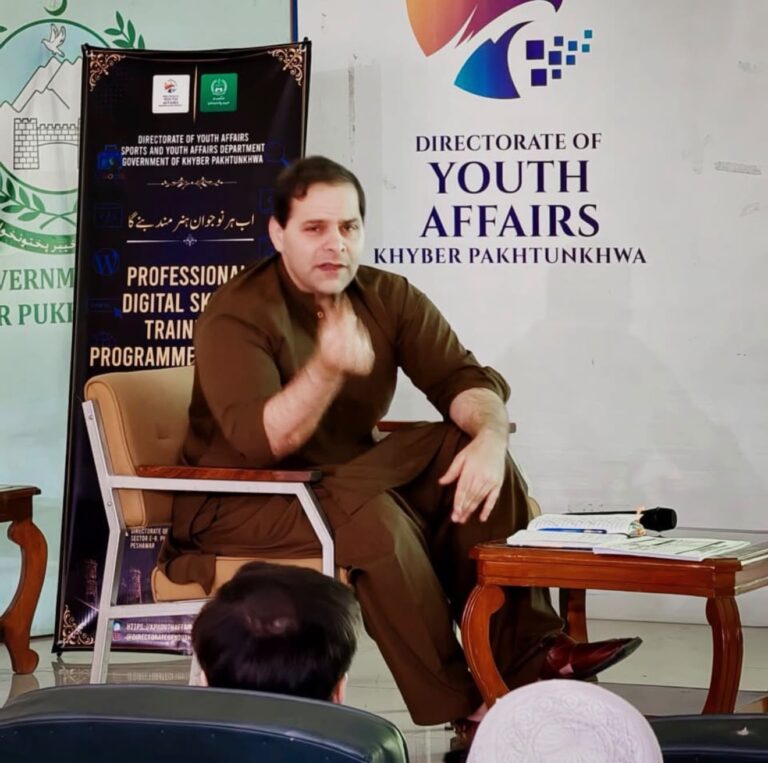
    PESHAWAR: The Directorate of Youth Affairs, Government of Khyber Pakhtunkhwa, has launched the “Ikhtiyar Awam Ka” Complaint Cell across all districts of the province, providing citizens with a dedicated platform to register complaints, submit suggestions and seek information regarding youth-related services through their respective District Youth Offices. The initiative has been introduced to promote transparency, accountability and effective public engagement while ensuring timely redressal of complaints related to youth affairs and government services. Director Youth Affairs Khyber Pakhtunkhwa Abbas Khan Afridi said the establishment of the complaint cell reflects the government’s commitment to responsive governance and citizen-centric service delivery. “The Directorate of Youth Affairs is committed to ensuring that every citizen has direct access to our services. The ‘Ikhtiyar Awam Ka’ Complaint Cell will strengthen communication between the public and the Directorate, enabling us to address complaints promptly and improve the quality of services through public feedback,” Mr Afridi said. He said citizens from every district of Khyber Pakhtunkhwa could contact their respective District Youth Offices through the designated helpline numbers to register complaints, report issues, share recommendations and obtain information about youth development programmes. Mr Afridi added that every complaint received through the complaint cell would be handled with transparency, responsibility and within a defined timeframe to ensure accountability and public confidence. The complaint cell has been established in all district youth offices across Peshawar, Charsadda, Nowshera, Mardan, Swabi, Swat, Buner, Shangla, Lower Dir, Upper Dir, Malakand, Chitral Upper, Chitral Lower, Bajaur, Mohmand, Khyber, Orakzai, Kurram, North Waziristan, South Waziristan Upper, South Waziristan Lower, Lakki Marwat, Bannu, Karak, Kohat, Hangu, Dera Ismail Khan, Tank, Haripur, Abbottabad, Mansehra, Battagram, Torghar, Upper Kohistan, Lower Kohistan and Kolai-Palas Kohistan, where citizens can connect through the officially designated helplines. Officials said the initiative would strengthen public trust, improve institutional accountability and ensure efficient delivery of youth-related services across Khyber Pakhtunkhwa.

  • | |

    SC orders full medical record of Imran Khan

    The Supreme Court has ordered authorities to submit the complete medical record of Pakistan Tehreek-e-Insaf founder Imran Khan and provide detailed information about his meetings with his sisters over the past three years. A three-member bench led by Justice Shahid Waheed heard petitions concerning Imran’s access to his family, personal doctors and medical records. During the hearing, the court was informed that Imran’s sisters had met him 48 times during the last three years. The judges sought the complete record of these meetings. The court also asked authorities to provide details of telephone calls between Imran and his children. Justice Shahid Waheed questioned why Islamabad High Court orders concerning meetings with Imran had not been implemented. The court summoned why  officials from Adiala Jail and directed them to explain the situation at the next hearing. The court was particularly concerned about Imran’s medical information. Justice Waheed directed the Islamabad advocate general to submit the complete medical record instead of a summary. The judge questioned why the full record could not be provided to the court. Justice Naeem Akhtar Afghan also raised questions about a recommendation for Imran to undergo angiography. He asked whether the procedure could be carried out while Imran remained in jail. The Islamabad advocate general replied that the procedure could be performed at a hospital outside the prison. Justice Waheed expressed concern over the medical reports presented before the court. He observed that the reports indicated problems with Imran’s pulse and heart and suggested that some of his vital organs could be affected. The court also discussed the importance of family meetings for Imran’s health. Justice Waheed made it clear that meetings with Imran’s sisters should not be treated as a concession. “Meeting his sisters is not a favour; it is their fundamental right,” the judge observed. Imran’s sister, Uzma Khanum, was present during the proceedings. However, Justice Afghan stopped her from addressing the court directly and advised her to speak through her lawyer. Her counsel, Uzair Bhandari, assured the court that Imran’s sisters would not hold a media briefing outside Adiala Jail after meeting him. He also requested that Imran’s personal physician, Dr Asim Yusuf, and Uzma Khanum be allowed to meet the PTI founder. The court further sought comprehensive details about the legal cases against Imran. Authorities were asked to clarify the number of cases in which he is facing trial, the cases resulting in convictions and those in which his sentences have been suspended. The proceedings came after a medical board recommended greater interaction between Imran and his immediate family. The board said regular family contact could help manage his anxiety and blood pressure. According to the medical information presented to the court, Imran has experienced fluctuating blood pressure, palpitations, headaches, restlessness and anxiety. A cardiologist at the Pakistan Institute of Medical Sciences examined him on August 1. His blood pressure was recorded at 140/100mmHg. The doctor recommended measures to reduce mental stress, including increased family interaction and access to reading material. A four-member medical board examined Imran again on August 10. His blood pressure was recorded at 140/80mmHg. The board recommended daily walking and relaxation. It also suggested more frequent interaction with his immediate family and spouse to help control his anxiety and blood pressure. The medical report stated that Imran had undergone at least 39 medical examinations since his imprisonment. Jail doctors were also reportedly checking him three times a day. The report said his ECG was normal. It also stated that his eyesight had improved significantly after treatment for an eye condition. The PTI has challenged the completeness and authenticity of the medical information. The party has demanded examinations by Imran’s personal doctors, Dr Asim Yusuf and Dr Faisal Sultan, as well as an independent medical board. The government, however, has rejected allegations that Imran is being denied proper medical care. Government officials maintain that he is receiving treatment from qualified specialists and that his medical care and meetings are being managed according to the law and court orders.

  • |

    India alarmed by Pakistan-Saudi-Türkiye alliance

    The defence agreement between Pakistan, Saudi Arabia and Türkiye has emerged as a major strategic concern for India. The three countries signed the Makkah Joint Defence Agreement on August 7. Under the pact, an armed attack against any one of the three countries would be treated as an attack against all three. The agreement has attracted significant attention in New Delhi. Indian analysts are assessing its possible impact on the regional balance of power. An Indian media analysis recalled comments made by Indian Army Deputy Chief Lieutenant General Rahul R Singh in 2025. He had said that during the military confrontation between India and Pakistan in May, India faced several forms of support for Pakistan. The analysis claimed that Pakistan was directly involved in the conflict. It also alleged that China provided satellite information to Pakistan. Türkiye was accused of providing military assistance to Pakistan. The assistance reportedly included drones and other defence equipment. Saudi Arabia’s participation has now added another dimension to India’s concerns. Indian analysts fear that Riyadh could support Pakistan if another armed conflict breaks out between India and Pakistan. The concern comes despite India’s strong relations with Saudi Arabia. The two countries have extensive economic and strategic ties. India and Saudi Arabia cooperate in oil, trade, investment, security and cultural affairs. Their bilateral trade is estimated at around $43 billion. Saudi Arabia also remains an important supplier of crude oil to India. It reportedly meets around 14% of India’s crude oil requirements. Pakistan and Saudi Arabia also have a long history of defence cooperation. Pakistan has provided military training to Saudi forces. Pakistani military personnel have also been deployed in Saudi Arabia at different times. The Indian analysis claimed that Pakistan sent around 8,000 military personnel and 16 JF-17 fighter jets to Saudi Arabia during 2026. It also referred to reports about possible Pakistani drone support and Chinese-made air defence systems. These developments were reportedly linked to Saudi Arabia’s security concerns and attacks involving drones. The relationship between Pakistan and Türkiye has also expanded significantly in recent years. The two countries have increased cooperation in defence technology and military production. Pakistan has acquired Turkish-made warships and other defence equipment. Türkiye has also supported the modernisation of Pakistan’s naval capabilities. The two countries are also cooperating in the field of unmanned aerial systems. Pakistan has acquired Turkish Bayraktar Akıncı drones. Both sides have discussed and worked on expanding cooperation in drone technology. Türkiye’s KAAN stealth fighter has also attracted interest from Pakistan. However, no final purchase agreement for the aircraft has been confirmed.

  • | |

    Punjab University employees intensify protest over…

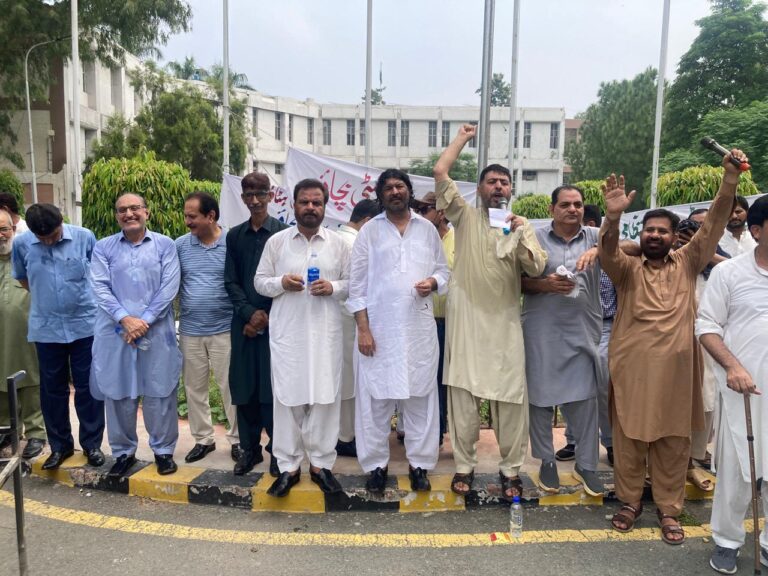
    LAHORE: Thousands of teachers and employees of the University of the Punjab took to the streets on Wednesday in a major protest organized by the Joint Action Committee, demanding the resolution of their longstanding grievances and payment of outstanding dues. The demonstration was attended by office-bearers of the Punjab University Academic Staff Association and the Punjab University Administrative & Technical Staff Association, along with a large number of faculty members and university employees. Addressing the protesters, Joint Action Committee Chairman Prof. Dr. Sardar Asghar Iqbal accused the university administration of favouring a particular group, alleging that the practice had adversely affected the institution’s financial and administrative affairs. Other faculty members, including Prof. Dr. Abdul Rehman Khan Niazi, Prof. Dr. Muqeet Javed, Dr. Abrar Zafar and Prof. Dr. Kamran Mirza, also participated in the protest. Joint Action Committee President and President of the Punjab University Administrative & Technical Staff Association Chaudhry Basharat Mahmood said employees had been protesting peacefully for around one and a half years, but the administration had failed to address their concerns. He said the employees were now compelled to intensify their protest. According to the announced plan, university offices will observe a two-hour work suspension every day, with employees wearing black armbands as a sign of protest. A protest rally will also be organized every Wednesday. Mahmood warned that the protesters could block the Campus Bridge if the administration failed to take their demands seriously. He also announced plans for demonstrations outside the Punjab chief minister’s office and on the GT Road near the university’s Gujranwala and Jhelum campuses. The protesters called for the immediate resolution of teachers’ and employees’ issues and payment of all outstanding dues. They also demanded the removal of DG Rehan Sadiq Sheikh, alleging that his conduct toward employees and role in administrative matters had contributed to the university’s deteriorating financial and administrative situation. The Joint Action Committee further called on the Punjab government to conduct a forensic audit of the university’s financial and administrative affairs to ensure transparency and accountability. Tayyab Ijaz Khan Swati, Tanveer Awan, Hammad Butt, Azhar Iqbal Baloch and former association president Nasir Rehmat were among the other speakers who addressed the gathering. The Joint Action Committee said its protest campaign would continue until the administration accepts and addresses the protesters’ demands.

  • | | | |

    Israeli settlers torch two mosques in West Bank as…

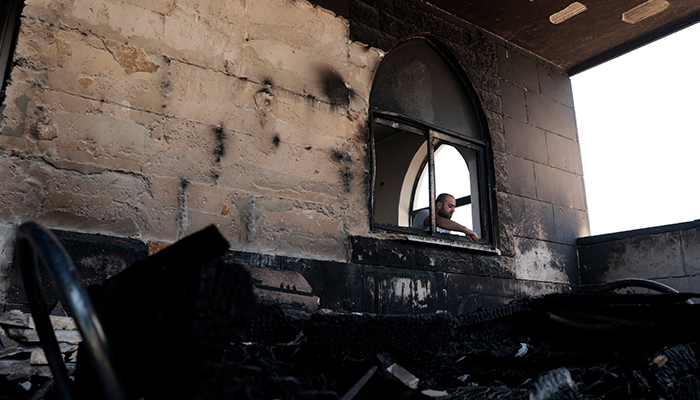
    WEST BANK: Two mosques were set ablaze in the occupied West Bank overnight, Palestinian officials said on Sunday, in the latest escalation of violence that has sharply raised tensions across the territory. The attacks targeted a mosque under construction in Qusra, south of Nablus, and another mosque in the village of Kour, near Tulkarm. The incidents came only days after a deadly confrontation in the nearby village of Tal that left four Palestinians and two Israelis dead. In Qusra, Mayor Abdel Azim Wadi said settlers set fire to the mosque’s entrance and damaged parts of its stonework. Hebrew graffiti, including the word “revenge,” was reportedly sprayed across the walls. The Israeli military said troops were sent to the area after receiving reports of the fire. According to the army, the suspected attackers had already fled when soldiers arrived. Israeli police were expected to collect evidence and investigate the incident. The second attack took place in Kour, where Palestinian officials said a mosque was set alight and racist slogans were written on its walls. Worshippers and local residents managed to prevent the fire from causing further destruction, according to reports. The mosque attacks have added another disturbing chapter to a widening cycle of violence in the West Bank, where clashes, arson attacks and raids have intensified since the Gaza war began in October 2023. The latest incidents also follow a deadly confrontation in Tal on Friday, where four Palestinians and two Israelis were killed. The aftermath has triggered further arrests, raids and attacks in surrounding Palestinian communities. With tensions already running high, the torching of places of worship has raised fresh fears that the latest violence could fuel further retaliation and deepen an already volatile situation across the occupied territory.

  • |

    Independence Day stalls bring festive rush

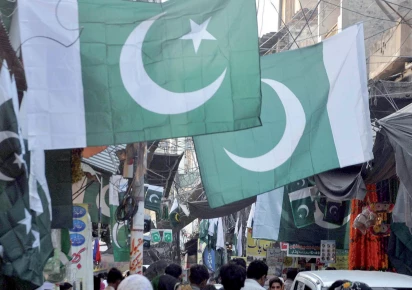
    With Pakistan’s 79th Independence Day approaching, markets across the city have come alive with stalls selling national flags, badges, flag-themed clothes, toys, caps, horns and other decorative items. Vendors have set up stalls at major commercial centres, markets, streets and residential areas. Children, youngsters and families are visiting these stalls to buy flags, badges, dupattas, ladies’ suits and children’s outfits featuring the national colours. Large and small horns remain among the most popular items, particularly among children and students. However, the continuous and often extremely loud “pee-pee” sounds have disturbed residents in several neighbourhoods, affecting their peace and sleep. Youngsters and children have also been setting off firecrackers, including Chinese-made varieties, adding to the noise in residential areas. Rising inflation has also pushed up the prices of Independence Day items, with vendors saying the cost of flags and flag-themed clothing has nearly doubled. Large horns that produce particularly loud sounds are selling for around Rs150 to Rs200.

Leave a Reply

Your email address will not be published. Required fields are marked *