congressional delegation visits
| |

U.S. congressional delegation visits Punjab safe c…

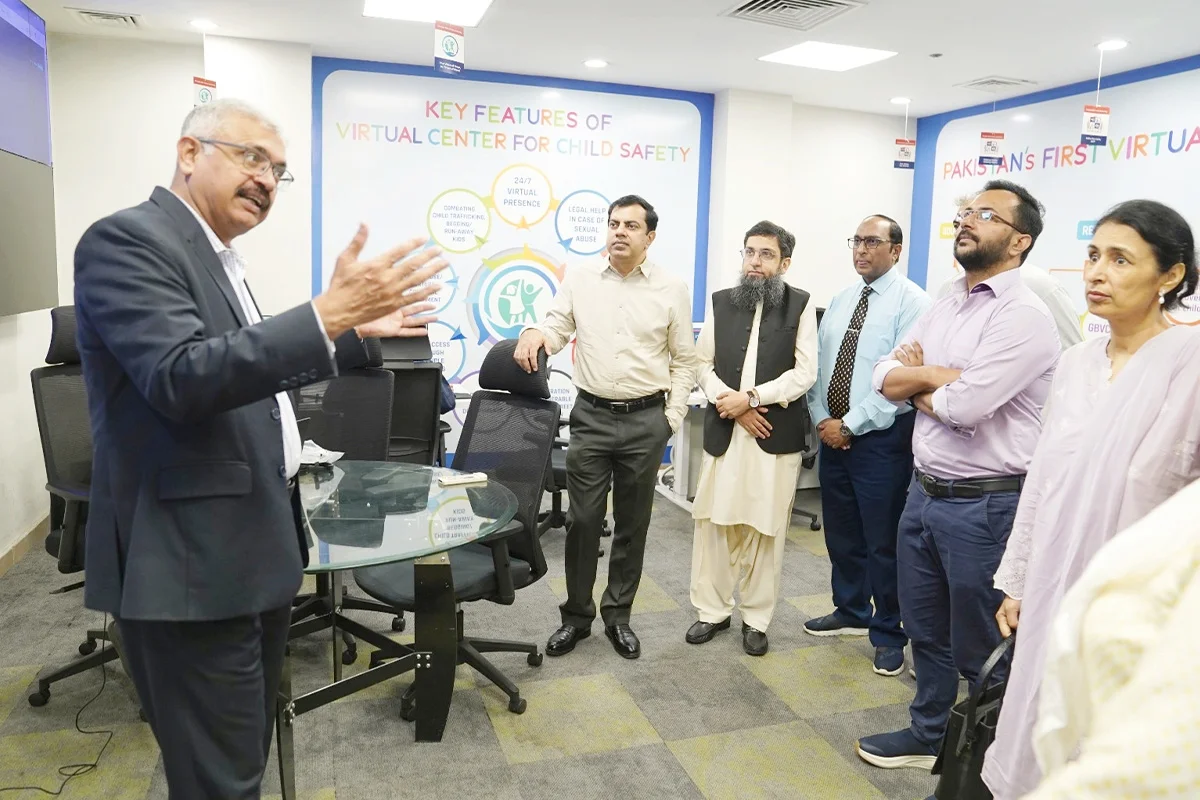
Lahore, July 26, 2026: A high-level delegation from the United States Congress, including Congressman Ryan Zinke and Congressman Michael Baumgartner, visited the headquarters of the Punjab Safe Cities Authority (PSCA) in Lahore. During the visit, the delegation was briefed on the Authority’s advanced Artificial Intelligence (AI)-based systems, modern surveillance technologies, and digital public safety initiatives aimed at improving security and emergency response mechanisms across Punjab.

The visiting delegation was warmly welcomed by Managing Director Punjab Safe Cities Authority Muhammad Ahsan Younas and Chief Operating Officer Muntansir Feroz upon their arrival at the PSCA headquarters. The officials provided an overview of the Authority’s operations and highlighted the role of technology-driven solutions in strengthening law enforcement capabilities and ensuring better public safety services for citizens.

During their visit, the U.S. Congressional delegation toured different operational sections of the Authority and observed the functioning of various advanced security systems. The visitors were informed about the latest technological developments introduced by PSCA, including artificial intelligence-powered upgrades, smart monitoring tools, and digital solutions designed to improve security management throughout the province.

According to the PSCA spokesperson, the delegation received a detailed briefing on the Authority’s modern surveillance infrastructure, including state-of-the-art security cameras, the Integrated Command and Control Centre, AI-based security modules, and province-wide monitoring networks. Officials explained how these technologies help authorities monitor public spaces, respond quickly to emergencies, and support law enforcement agencies in maintaining peace and security.

The delegation was also briefed on PSCA’s coordination with Punjab Police and other security institutions. Officials highlighted the Authority’s role in creating an integrated security environment through advanced communication systems, data-driven monitoring, and rapid emergency response mechanisms. The visitors were informed about how these systems assist law enforcement agencies in improving operational efficiency and providing timely assistance to citizens.

The PSCA spokesperson further explained that the delegation was given a detailed presentation on the upgraded features of Emergency Helpline 15. The briefing included information about its technology-based emergency response system and various citizen-focused digital services developed to make emergency assistance faster and more accessible for the public.

The U.S. Congressional delegation showed particular interest in several major initiatives launched by PSCA, including the Women Safety App, Virtual Women Police Station, Virtual Center for Child Safety, Intelligent Traffic Management System, and other innovative digital public safety projects. These initiatives were presented as examples of how technology can be effectively used to address social challenges and improve public services.

The visiting representatives appreciated the efforts of the Punjab Safe Cities Authority in using modern technology to enhance public security and improve citizen services. They recognized these initiatives as progressive models that demonstrate the potential of artificial intelligence and digital innovation in strengthening safety systems.

At the conclusion of the visit, commemorative shields were presented to the members of the U.S. Congressional delegation as a gesture of appreciation and goodwill. Senior officials from PSCA and representatives of relevant departments were also present during the concluding ceremony.

The visit highlighted the growing importance of technological cooperation and knowledge-sharing in the field of public safety. The Punjab Safe Cities Authority continues to focus on adopting modern digital solutions to create safer communities, enhance emergency response capabilities, and provide improved services to citizens across the province.

Similar Posts

  • | | | |

    AJK polling postponed in LA-27 after landslides

    MUZAFFARABAD: Polling for the Azad Jammu and Kashmir (AJK) Legislative Assembly constituency LA-27 Muzaffarabad-I was postponed on Sunday after heavy monsoon rains and landslides cut off key roads, preventing election officials and polling materials from reaching voting stations on time. According to the AJK Election Commission, severe weather disrupted transportation routes across parts of the constituency, making it impossible for polling staff and election equipment to arrive before the scheduled start of voting. As a result, polling in the constituency was suspended for the day. The commission said the decision was taken after assessing the situation on the ground and consulting the district administration, which had been working to reopen blocked roads since early morning. However, despite continued efforts, several affected routes remained inaccessible due to landslides and debris caused by the intense rainfall. Election authorities announced that a new polling date for LA-27 Muzaffarabad-I would be declared later in the day, with an official announcement expected at 2pm. The Election Commission expressed regret over the inconvenience caused to voters and appealed for public cooperation, stressing that the postponement was necessary to ensure the safety of election personnel and to conduct the electoral process in a fair and orderly manner. While polling was halted in LA-27, voting in all other constituencies across Azad Jammu and Kashmir continued according to schedule under security arrangements. Election officials said polling activities elsewhere remained unaffected by the weather. The suspension highlights the challenges posed by the ongoing monsoon season in the mountainous region, where heavy rainfall frequently triggers landslides and road closures, disrupting transportation and public services. Authorities said they were closely monitoring weather conditions and coordinating with local administration to restore road access as quickly as possible so that polling in the affected constituency can be held without further delay. Voters in LA-27 have been advised to stay updated through official Election Commission announcements regarding the revised polling schedule and any additional instructions.

  • | |

    ATC remands Mushtaq Ahmad for three days

    ISLAMABAD: An anti-terrorism court (ATC) in Islamabad on Monday granted police a three-day physical remand of former senator Mushtaq Ahmad and his associate, Daniyal, in a case linked to a protest over the recent unrest in Azad Jammu and Kashmir (AJK). The suspects were presented before Duty Judge Rukhsanda Shaheen after their arrest. During the hearing, the prosecution requested a 30-day physical remand, arguing that investigators needed additional time to recover a vehicle and alleged weapons connected to the case. After hearing arguments from both sides, the court approved a three-day remand instead of the longer period requested by the prosecution and directed police to continue their investigation. The case has been registered at Islamabad’s Shalimar Police Station. Authorities are investigating the circumstances surrounding the protest and the allegations associated with it. The development comes days after Mushtaq Ahmad’s supporters claimed he had been detained for more than 24 hours after security personnel stopped him from entering Azad Jammu and Kashmir. According to his team, the detention was linked to his public support for protests taking place in the region. Following his release, Mushtaq Ahmad addressed a press conference in Islamabad, where he announced plans to hold a condolence, solidarity and peace gathering in support of the people of AJK. He invited students, journalists, civil society members and Kashmiri residents of Islamabad to participate in the event at F-10 Markaz. Earlier, Mushtaq Ahmad had stated that he was travelling to AJK carrying white flags as a symbol of peace and solidarity with families affected by the recent violence. He said security officials stopped him at Azad Pattan Bridge and prevented him from entering the region, after which he recorded a protest message and began returning to Islamabad. His team further alleged that Punjab Police later intercepted his vehicle in Kahuta and took him into custody.

  • | |

    Nawaz Sharif to lead key Murree meeting

    Prime Minister Shehbaz Sharif has arrived in Murree from Islamabad as the Pakistan Muslim League-Nawaz (PML-N) prepares to hold an important consultative meeting on the political situation in Azad Jammu and Kashmir. The meeting will be chaired by PML-N President Nawaz Sharif at the Government House in Murree. Senior party leadership is expected to discuss the formation of the government in Azad Kashmir and finalise the party’s strategy for the next phase of the political process. Hamza Shehbaz has also reached Kashmir Point in Murree to participate in the meeting. Prime Minister Shehbaz Sharif and Punjab Chief Minister Maryam Nawaz are also scheduled to attend, along with federal ministers and other senior PML-N leaders. The newly elected PML-N members of the Azad Jammu and Kashmir Legislative Assembly have also been invited to the session. Their participation is expected to help the party leadership assess the political situation and discuss possible arrangements for forming the next government. The meeting comes as the PML-N moves forward with consultations following the recent political developments in Azad Kashmir. Party leaders are expected to exchange views on government formation, parliamentary coordination and the future political roadmap. Nawaz Sharif is likely to receive briefings from party leaders and elected representatives during the meeting. The leadership will also consider the names and arrangements linked to the formation of the new administration.

  • | |

    Khawaja Asif hails Sialkot Medical City project

    Defence Minister Khawaja Muhammad Asif has said that Sialkot urgently needed a medical city. He said the project would help improve healthcare facilities for people in the city and nearby areas. Addressing the inauguration ceremony of Sialkot Medical City, Khawaja Asif praised the business community for supporting the project. He also appreciated the role of the Sialkot Chamber in making the initiative possible. The minister said Sialkot had been facing a major healthcare gap. He said patients often had to travel to Lahore when serious medical emergencies occurred in the city. According to Khawaja Asif, the new medical city will help reduce the need for patients to travel to Lahore. It will also provide better healthcare services closer to the people of Sialkot. He said the project was an important development for the city. He hoped that the medical facilities would further improve the quality of healthcare available to local residents. Khawaja Asif also spoke about major road projects in the region. He said another lane would be added to the Lahore-Sialkot Motorway. He said the Kharian Motorway would be completed before the other project. He added that better road links would further improve connectivity between Sialkot and other parts of Punjab. The defence minister recalled that he had received a positive response when the motorway proposal was presented. He said major road networks had connected several cities and towns with each other. He said the route from Shahdara to Rawat had created stronger links between different urban centres. Such projects, he added, were important for trade, travel and economic activity. Khawaja Asif also highlighted the growing importance of Sialkot International Airport. He said the airport was no longer serving only the people of Sialkot. He said people from Jhelum and Gujrat were also using the airport. Residents of Azad Jammu and Kashmir were also travelling through the facility, he added. The minister credited Sialkot’s business community for many of the city’s major development projects. He said local traders and industrialists had made significant contributions to the city’s growth. Khawaja Asif said the Sialkot business community had established high standards. He added that these standards were recognised internationally. He said the success of Sialkot showed what could be achieved through cooperation between the business community and public institutions. He stressed that continued development could further strengthen the city’s position as an important economic and industrial centre.

  • | |

    Mohsin Naqvi’s statement reflects personal o…

    Director General of Inter-Services Public Relations (ISPR) Lieutenant General Ahmed Sharif Chaudhry on Friday said Pakistan’s security depends on effective governance, stressing that terrorists must either surrender under the Constitution and the law or face continued military action. Speaking at a media briefing in Rawalpindi, the military spokesperson said Interior Minister Mohsin Naqvi’s recent remarks about the country’s governance system reflected his personal opinion and declined to comment further. However, he emphasized that good governance remained essential for ensuring national security and long-term stability. The DG ISPR said the National Action Plan continued to enjoy consensus among all major political parties and noted that most of its objectives, including countering extremism, disrupting terror financing and strengthening institutions, relied on strong governance. He added that Pakistan’s growing population made administrative efficiency more important than ever and said citizens had the right to effective governance. Over 40,000 Counterterrorism Operations Conducted Providing an update on security operations, Lt Gen Chaudhry said security forces had carried out 40,348 intelligence-based operations across Pakistan so far in 2026. He said 2,084 confirmed terrorists had been killed during these operations, averaging nearly 194 operations and 10 militant deaths every day. He added that the highest number of operations had been conducted in Balochistan, while 1,971 operations were carried out in Khyber Pakhtunkhwa. According to the military spokesperson, 819 people, including security personnel and civilians, embraced martyrdom during counterterrorism efforts this year, while 28 suicide attacks were recorded nationwide. He also alleged that Afghan nationals were involved in recent terrorist attacks in Tank and Karachi. No Negotiations With Armed Militants The DG ISPR made it clear that there would be no negotiations with armed militant groups. He said militants had only two options: surrender under the Constitution and the law or face continued action by security forces. Explaining the concept of a “hard state,” he said it did not refer to military rule but rather to a country where every individual is equal before the law and all matters are resolved through constitutional and legal mechanisms. Balochistan Facing Coordinated Propaganda Addressing the security situation in Balochistan, Lt Gen Chaudhry said a deliberate campaign was underway to create a false perception that the province was in crisis. He said the Constitution required every citizen to remain loyal to the state and argued that rights should always be accompanied by responsibilities. The DG ISPR alleged that certain elite groups and tribal leaders opposed social progress because they wanted to preserve the existing power structure. He said the state would continue engaging directly with the people of Balochistan instead of those seeking to obstruct development. Highlighting development initiatives, he said Gwadar now had modern healthcare facilities, educational institutions, industrial free zones and major infrastructure projects. He added that Balochistan’s per capita budget allocation exceeded Rs75,000, making it the highest among Pakistan’s provinces. He also said terrorists deliberately targeted labourers, teachers and development projects to slow the province’s progress. Missing Persons and Regional Security On the issue of missing persons, the military spokesperson said the Commission of Inquiry on Enforced Disappearances had received 10,901 cases, of which 9,372 had already been resolved. He stressed that every reported case required proper identification and verification. The DG ISPR further claimed that following what he described as Pakistan’s success during Operation Marka-e-Haq, hostile elements had shifted their focus toward destabilising Balochistan. He alleged that India and the Afghan Taliban regime shared an agenda of supporting terrorism against Pakistan.

  • |

    Constitution, rule of law and strong defence key to Pakistan’s future, says Senator Abdul Qayyum

    LONDON:  Constitutional supremacy, the rule of law, a vibrant economy and a strong defence are the four pillars that will safeguard Pakistan’s sovereignty and ensure its long-term stability, former Chairman of the Senate Standing Committee on Defence Production Senator Lt Gen (R) Abdul Qayyum HI(M) said in London. Addressing a Pakistan Independence Day reception organised by the International Lawyers Club UK (ILCUK) in London to mark Pakistan’s 79th Independence Day, the President of the Pakistan Ex-Servicemen Society (PESS) said Pakistan’s independence was won through “immense sacrifices, visionary leadership and the constitutional struggle led by Quaid-e-Azam Muhammad Ali Jinnah.” “Among the greatest blessings of Allah Almighty is living as free citizens of an independent and sovereign Pakistan,” he said, adding that the country’s freedom “is not merely inherited but has to be continuously protected through unity, discipline and national resolve.” Paying tribute to Pakistan’s Armed Forces, Senator Abdul Qayyum said the military had repeatedly defended the country’s sovereignty and territorial integrity against external aggression, terrorism and hybrid threats. “Our Armed Forces have successfully confronted external aggression, terrorism and various hybrid threats because of the determination of our people and the sacrifices, professionalism and courage of our soldiers,” he said. “The nation takes pride in its internationally respected Armed Forces, which have repeatedly defended Pakistan’s sovereignty and territorial integrity.” He warned that Pakistan continued to face a range of internal and external challenges, including terrorism, foreign-sponsored insurgency, disinformation campaigns, sectarianism and political polarisation. He stressed that operations against terrorists and armed militants should be viewed as a constitutional responsibility of the state rather than political repression. “Action against armed militants, terrorists and those working against the state should not be misconstrued as repression, but rather as the constitutional responsibility of the state to protect the lives and property of its citizens,” he said. While acknowledging the importance of democratic freedoms, Senator Abdul Qayyum said freedom of expression must be exercised responsibly. “Freedom of expression and difference of opinion should never come at the expense of national security,” he said, adding that unity between the people, constitutional institutions and the Armed Forces remained “the strongest guarantee of Pakistan’s sovereignty, stability and democratic future.” Highlighting the historic contribution of lawyers to the Pakistan Movement, he said the legal fraternity had played a decisive role in achieving independence through constitutional means. He urged lawyers and barristers to continue defending the Constitution, upholding the rule of law and strengthening democratic institutions. Turning to Pakistan’s future priorities, the senator called for strict adherence to constitutional governance, separation of powers, an independent judiciary and impartial accountability. He also advocated comprehensive industrial and agricultural reforms, greater investment in education, science, research and artificial intelligence, modernisation of Pakistan’s defence capabilities and stronger border security. Referring to criticism of the military, Senator Abdul Qayyum said retired servicemen, pensioners of second-line forces and civilians associated with the defence sector stood firmly behind the Armed Forces. “Those who demonise this sacred institution in the national and international media do no service to the country,” he said, urging the media to report responsibly and avoid undermining institutions responsible for safeguarding Pakistan’s security. Concluding his address, Senator Abdul Qayyum called on Pakistanis at home and abroad to renew their commitment to strengthening national institutions, rebuilding the economy, educating future generations and honouring the sacrifices of the nation’s martyrs. “I am confident that through unity, collective effort and by placing national interests above political differences, Pakistan will emerge stronger, more resilient and more prosperous in the years ahead,” he said.

Leave a Reply

Your email address will not be published. Required fields are marked *