mohsin naqvi8217s statement
| |

Mohsin Naqvi’s statement reflects personal o…

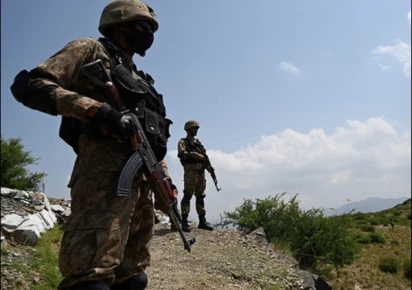
Director General of Inter-Services Public Relations (ISPR) Lieutenant General Ahmed Sharif Chaudhry on Friday said Pakistan’s security depends on effective governance, stressing that terrorists must either surrender under the Constitution and the law or face continued military action.

Speaking at a media briefing in Rawalpindi, the military spokesperson said Interior Minister Mohsin Naqvi’s recent remarks about the country’s governance system reflected his personal opinion and declined to comment further. However, he emphasized that good governance remained essential for ensuring national security and long-term stability.

The DG ISPR said the National Action Plan continued to enjoy consensus among all major political parties and noted that most of its objectives, including countering extremism, disrupting terror financing and strengthening institutions, relied on strong governance. He added that Pakistan’s growing population made administrative efficiency more important than ever and said citizens had the right to effective governance.

Over 40,000 Counterterrorism Operations Conducted

Providing an update on security operations, Lt Gen Chaudhry said security forces had carried out 40,348 intelligence-based operations across Pakistan so far in 2026. He said 2,084 confirmed terrorists had been killed during these operations, averaging nearly 194 operations and 10 militant deaths every day.

He added that the highest number of operations had been conducted in Balochistan, while 1,971 operations were carried out in Khyber Pakhtunkhwa.

According to the military spokesperson, 819 people, including security personnel and civilians, embraced martyrdom during counterterrorism efforts this year, while 28 suicide attacks were recorded nationwide.

He also alleged that Afghan nationals were involved in recent terrorist attacks in Tank and Karachi.

No Negotiations With Armed Militants

The DG ISPR made it clear that there would be no negotiations with armed militant groups.

He said militants had only two options: surrender under the Constitution and the law or face continued action by security forces.

Explaining the concept of a “hard state,” he said it did not refer to military rule but rather to a country where every individual is equal before the law and all matters are resolved through constitutional and legal mechanisms.

Balochistan Facing Coordinated Propaganda

Addressing the security situation in Balochistan, Lt Gen Chaudhry said a deliberate campaign was underway to create a false perception that the province was in crisis.

He said the Constitution required every citizen to remain loyal to the state and argued that rights should always be accompanied by responsibilities.

The DG ISPR alleged that certain elite groups and tribal leaders opposed social progress because they wanted to preserve the existing power structure. He said the state would continue engaging directly with the people of Balochistan instead of those seeking to obstruct development.

Highlighting development initiatives, he said Gwadar now had modern healthcare facilities, educational institutions, industrial free zones and major infrastructure projects. He added that Balochistan’s per capita budget allocation exceeded Rs75,000, making it the highest among Pakistan’s provinces.

He also said terrorists deliberately targeted labourers, teachers and development projects to slow the province’s progress.

Missing Persons and Regional Security

On the issue of missing persons, the military spokesperson said the Commission of Inquiry on Enforced Disappearances had received 10,901 cases, of which 9,372 had already been resolved. He stressed that every reported case required proper identification and verification.

The DG ISPR further claimed that following what he described as Pakistan’s success during Operation Marka-e-Haq, hostile elements had shifted their focus toward destabilising Balochistan. He alleged that India and the Afghan Taliban regime shared an agenda of supporting terrorism against Pakistan.

Similar Posts

  • | | |

    800 young swimmers compete in CM Punjab Championsh…

    The two-day CM Punjab Swimming Academies Championship has started at the Punjab International Swimming Complex. The event has attracted around 800 young swimmers from different swimming academies across Punjab. Boys and girls are taking part in the championship in various age groups. The competition includes participants from Under-6 to Under-19 categories. Young swimmers are displaying their talent and determination in front of coaches, officials and spectators. The championship features five competitive events. These include the 25-metre kickboard race, 25-metre floater race, 25-metre backstroke, 25-metre breaststroke and 25-metre freestyle. Every event is designed according to the age and skill level of the participants, allowing young athletes to compete fairly. The tournament aims to encourage children and teenagers to take part in sports from an early age. It also seeks to strengthen the culture of competitive swimming in Punjab and provide a platform for young talent to grow. Coaches believe such events help swimmers improve their technique, confidence and fitness while gaining valuable experience in a competitive environment. Officials said the large turnout reflects the growing popularity of swimming among young athletes in the province. The championship also gives coaches an opportunity to assess promising swimmers who may represent Punjab in future national competitions. Parents and supporters attended the opening day to cheer for the participants. The atmosphere remained lively as swimmers competed with enthusiasm in different races throughout the day.

  • | |

    Internet restored in Muzaffarabad after 53 days

    Broadband internet services have been restored in Muzaffarabad after a 53-day suspension, bringing relief to residents, businesses, journalists and students who had struggled with limited digital connectivity since early June. The restoration took effect late Wednesday night, allowing broadband users to regain access to online services. However, mobile internet connectivity remained unstable in several areas, with users continuing to report intermittent disruptions. The prolonged shutdown had significantly affected communication, online banking, digital businesses, educational activities and media coverage, particularly during the ongoing election season in Azad Jammu and Kashmir (AJK). Journalists and political workers had repeatedly raised concerns over the lack of internet access, saying it hindered the flow of information and election-related reporting. The restoration comes just days before the second phase of the AJK Legislative Assembly elections, scheduled for August 2, when more than 1.24 million voters are expected to cast their ballots in 21 constituencies. The polls will include nine constituencies in Muzaffarabad Division and 12 seats reserved for Jammu and Kashmir refugees residing in Pakistan. Election authorities have completed polling arrangements and announced enhanced security measures to ensure peaceful, transparent and orderly elections. A total of 351 candidates are contesting the second phase, with several high-profile political leaders participating in closely watched races. Political campaigning has intensified across Muzaffarabad, Neelum Valley and Jhelum Valley as major parties make their final push to secure voter support before polling day.

  • |

    Pakistan’s trade deficit surges 25% to nearly $4 billion in July 

    ISLAMABAD: Pakistan’s trade deficit expanded sharply during the first month of the new fiscal year, reaching nearly $4 billion in July, as a strong rise in imports continued to outpace export growth, highlighting persistent weaknesses in the country’s external sector despite a series of incentives announced for exporters. According to the latest figures released by the Pakistan Bureau of Statistics (PBS), the country’s trade deficit widened to $3.95 billion in July 2026, compared to $3.16 billion recorded during the same month last year. The deficit increased by approximately $794 million, representing an annual rise of 25.2%. The widening gap was primarily driven by a substantial increase in imports, which climbed to $6.9 billion from $5.8 billion in July 2025. This reflects an increase of more than $1 billion, or 18% year-on-year, indicating stronger demand for imported goods and raw materials. Exports Show Growth but Remain Below Key Milestone While Pakistan’s exports registered positive growth, they once again failed to cross the important $3 billion monthly mark. Exports reached $2.94 billion, falling short of the milestone by around $61 million. On an annual basis, exports increased by 9.5%, adding nearly $256 million compared to July last year. Although the improvement reflects steady recovery in overseas shipments, analysts believe the pace remains insufficient to counter the rapid expansion in imports. Exports had crossed the $3 billion threshold in January 2026, touching approximately $3.05 billion, but the country has been unable to maintain that level in the months that followed. Tariff Reforms Under Scrutiny The latest trade figures have renewed debate over Pakistan’s tariff liberalisation policy, introduced under broader economic reforms supported by international financial institutions, including the World Bank and the International Monetary Fund (IMF). The government has gradually lowered tariff barriers to increase competition and integrate Pakistan more closely into global markets. However, economists argue that the economy was opened before domestic industries were provided with sufficient support to compete effectively. Business leaders have repeatedly pointed out that exporters continue to face high energy prices, elevated financing costs, tax-related uncertainties and exchange rate volatility, all of which reduce their competitiveness in international markets. Earlier projections by the World Bank had suggested that tariff reforms would increase exports by 14% while limiting import growth to around 7%. However, the latest figures suggest imports have grown much faster than anticipated, while export gains have remained comparatively modest. Government Rolls Out Fresh Export Incentives To strengthen export performance, the federal government has announced a series of financial support measures during the current fiscal year. In the federal budget, Prime Minister Shehbaz Sharif reduced the minimum and advance tax on exporters to 1.25% and abolished the 10% super tax on export earnings in an effort to improve liquidity and encourage investment in export-oriented industries. More recently, the government approved a Rs98 billion export support package aimed at improving competitiveness and increasing foreign exchange earnings. Under the revised Export Finance Scheme (E-EFS), exporters will be able to obtain six-month working capital loans at an interest rate of 8.5%, with the government absorbing 5 percentage points of the financing cost. The subsidy for this component alone is estimated at Rs58 billion during the current fiscal year. ECC Approves New Financing Facilities The Economic Coordination Committee (ECC) has also expanded access to concessional financing by increasing the ceiling of the existing short-term financing portfolio from Rs1 trillion to Rs1.5 trillion. In addition, the committee approved the launch of a new Long-Term Growth Financing Facility, allowing exporters to access loans at an interest rate of 2% for the first two years, followed by a fixed 5% rate for the subsequent eight years. The government has also introduced a performance-based rebate scheme, effective from July 1, 2026, with an estimated annual allocation of Rs15 billion. Under the programme, exporters recording annual export growth of up to 10% over the previous year will receive a rebate equal to 1% of the incremental export value, while exporters achieving growth exceeding 10% will qualify for a 2% rebate on additional exports. Long-Term Challenges Persist Despite successive incentive packages introduced over several decades, Pakistan continues to struggle with achieving sustained export-led growth. Industry observers note that no single Pakistani exporter has generated $1 billion in annual export earnings, underscoring the structural challenges facing the country’s export sector. These challenges include limited product diversification, low industrial productivity, rising production costs, inconsistent policy implementation and insufficient value addition. Monthly Performance Offers Some Relief On a month-on-month basis, the trade data presented a more encouraging picture. Exports increased by 31% in July compared to June, rising by approximately $697 million, while imports remained largely unchanged at around $6.9 billion. As a result, the monthly trade deficit narrowed by nearly 15%, or around $709 million, compared with the previous month.

  • |

    Mustafa Zahid may return for ‘Awarapan 2’ remake track

    Nearly two decades after Tera Mera Rishta became one of the biggest hits from Awarapan, original singer Mustafa Zahid may be returning for the sequel. The Pakistani vocalist appears set to reunite with the franchise’s makers. According to a Mid-day report, the 41-year-old is reportedly in talks with producers Mukesh Bhatt and Vishesh Bhatt. The discussions center around a remake for Awarapan 2. The development is notable given Bollywood’s long-standing stance on Pakistani artistes since the 2016 Uri attack. That boycott was reaffirmed more recently, following the 2025 Pahalgam attack. Despite that backdrop, talks are reportedly moving forward. If the deal goes through, the song would reportedly be recorded in Dubai rather than India. A source close to the matter told the publication that this could mark one of the rare recent instances of a Pakistani playback singer working on a mainstream Hindi film. However, the track itself will not feature in Awarapan 2 directly, as its inclusion could create certification complications for the film. To work around that, the makers are said to be considering releasing the song exclusively through social media promotions, bypassing theatrical use entirely. Meanwhile, the film’s own trailer dropped on August 6, marking the franchise’s return after 19 years. Emraan Hashmi reprises his role as Shivam Pandit, now portrayed as older and more emotionally scarred. Disha Patani joins the cast as Zara, while Shabana Azmi takes on the role of antagonist Nafisa. The soundtrack brings together composers Mithoon, Jeet Gannguli and Amaal Malik, among others, with tracks like Ve Junoon and Yeh Awarapan already released. The trailer also includes a recreated version of Tera Mera Rishta, now sung by Saaj Bhatt and Subodhh Sharma. Original lyricist Sayeed Qadri has returned to pen the updated version of the track. Directed by Nitin Kakkar, Awarapan 2 is set for a worldwide release on August 14. The film will clash at the box office with Sunny Deol’s Batwara 1947, setting up a high-profile release-date showdown.

  • | |

    Google marks Pakistan’s 79th Independence Day with special Doodle

    ISLAMABAD: Pakistan’s 79th Independence Day has received a colourful digital tribute from Google, which replaced its familiar homepage logo with a special Doodle inspired by the country’s national colours. The special artwork appeared on Google’s Pakistan homepage on Friday, August 14, adding a digital touch to celebrations taking place across the country and among Pakistani communities around the world. Instead of the company’s usual multicoloured “Google” logo, users visiting the search engine in Pakistan were greeted with a design reflecting the green and white colours of the national flag. The simple but eye-catching tribute has brought Pakistan’s Independence Day celebrations to one of the world’s most visited digital platforms, allowing millions of users to see the national-day themed artwork while using Google’s search service. A digital salute to Pakistan Google regularly creates special Doodles to mark national days, historic milestones, cultural occasions, achievements and notable personalities around the world. These temporary artworks replace or transform the company’s standard logo and often incorporate symbols associated with the occasion being commemorated. For Pakistan’s Independence Day this year, Google has continued that tradition with a design centred on the country’s national identity. The appearance of the Doodle comes as Pakistanis across the country celebrate August 14 with flag-hoisting ceremonies, patriotic songs, cultural events and public gatherings. From Islamabad and Lahore to Karachi, Peshawar and Quetta, streets, homes and public buildings have been decorated with the green and white colours of Pakistan. The digital tribute also gives the country’s large overseas community another reason to celebrate, with Pakistanis living in different parts of the world marking the occasion through social media, community events and family gatherings. Not Google’s first Pakistan tribute Google’s recognition of Pakistan’s Independence Day is not a new tradition. Over the years, the technology giant has marked Pakistan-related occasions with Doodles featuring elements of the country’s history, culture, architecture, art and natural heritage. Past designs have highlighted national symbols, historic landmarks and distinctive aspects of Pakistani identity, bringing them to a global online audience. The Doodles have become more than simple changes to a search-page logo. For many users, they offer a brief visual reminder of an important national occasion while connecting local celebrations with the wider digital world. This year’s green-and-white design carries a similarly simple message: Pakistan’s Independence Day is being celebrated not only on streets and public squares but also across the digital landscape. As the country marks 79 years of independence, Google’s colourful tribute has added a modern, global dimension to a day rooted in Pakistan’s history, identity and national pride.

  • | |

    Security official martyred, 6 injured in Mastung r…

    QUETTA: A security official was martyred and six others were injured when an explosive device targeted a security convoy in Khad Kocha, Mastung district, on Saturday, police said. According to officials, the bomb had been planted near Gro in the Khad Kocha area along the Quetta-Karachi National Highway. It was detonated as security vehicles passed through the area, striking one of the vehicles. A senior police officer confirmed the death and injuries, saying the remaining vehicles in the convoy were not affected by the explosion. Following the blast, an exchange of fire continued in the area for some time. Police officials said the attackers fled after additional security personnel arrived at the scene. The deceased official and injured personnel were taken to Nawab Ghous Bakhsh Raisani Memorial Hospital for medical treatment. Authorities subsequently closed the highway, disrupting traffic at several points, while security forces launched a search operation to locate those responsible. The incident came a day after another explosion in the same area killed four labourers working in an apple orchard and injured three others. Medical officials said the victims had suffered visible splinter injuries.

Leave a Reply

Your email address will not be published. Required fields are marked *