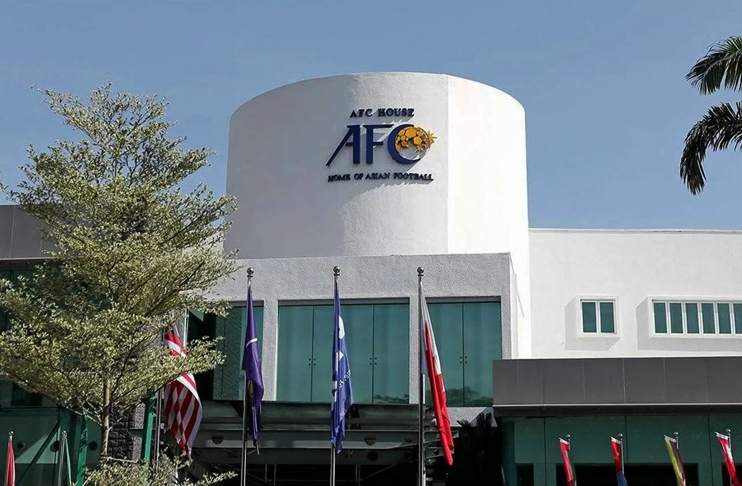
asian football confederation
|

Asian Football Confederation joins UEFA and CONCACAF in FIFA proposal standoff

The Asian Football Confederation has taken a clear stand, and it is backing UEFA and CONCACAF on a growing football dispute. The issue centres on a FIFA proposal. It involves bringing private investment into the World Cup’s business operations. The AFC confirmed its position on Friday.

In its statement, the AFC expressed solidarity with the two other confederations. It raised serious concerns over FIFA’s plan. The organisation represents 47 member nations. These include Australia, China, Japan and Saudi Arabia. Its statement made clear how seriously the body views the matter.

The AFC did not stop there. It pointed out that talk of a possible World Cup boycott has already entered public discussion. According to the AFC, this alone should concern anyone who cares about the sport’s future. It added that this concern should apply across all confederations, not just a few.

FIFA responded with its own statement soon after. It said every member association should get a fair chance to review the proposal. The governing body also acknowledged the feedback it had received from UEFA and CONCACAF.

FIFA confirmed something significant in its response. All 41 member associations under CONCACAF had rejected the plan. This body oversees football across North and Central America. Their rejection focused specifically on selling a stake in the World Cup’s operations.

FIFA also addressed reports around its consultation process. It said the process had been disrupted by what it called inaccurate media coverage. Still, it maintained respect for the concerns raised publicly. It reaffirmed its commitment to keeping things open and democratic.

The organisation said it plans to continue with its consultation as scheduled. Its goal, according to the statement, is to let every member vote based on facts. FIFA wants to avoid decisions being shaped by speculation instead.

This disagreement adds to a growing list of tensions. FIFA’s push for private investment has already faced resistance from two major confederations. Now, with the AFC joining them, the pressure on football’s global body appears to be increasing.

For now, attention remains fixed on FIFA’s next move. All eyes are on how it plans to carry out its consultation process. Many are also watching to see whether these mounting concerns can be addressed, without deepening the divide among football’s governing bodies worldwide.


Similar Posts

  • |

    Hrithik Roshan and Saba Azad spark breakup rumours again

    Rumours surrounding Hrithik Roshan and Saba Azad’s relationship have resurfaced after a purported screenshot from the exclusive dating app Raya went viral on social media. The screenshot allegedly showed a profile featuring Hrithik’s photograph, age and Instagram handle. The bio reportedly described the person as an “Actor/Producer/Entrepreneur” based in Mumbai. Its sudden appearance online sparked widespread discussion, with social media users questioning whether Hrithik and Saba had ended their relationship. However, there has been no independent confirmation that the profile actually belongs to Hrithik Roshan or that the account is genuine and currently active. As a result, the dating-app screenshot remains unverified, despite generating considerable attention online. Amid the speculation, Hrithik and Saba were reportedly spotted together at PVR in Juhu, Mumbai. Their public appearance appeared to contradict the breakup rumours circulating online. The two were seen leaving the cinema together and reportedly walked hand-in-hand, giving the impression that they were still comfortable and close. The couple also appeared to have coordinated their outfits for the outing, with both wearing black T-shirts. Hrithik completed his casual look with a cap as they made their way out of the theatre. Hrithik and Saba have been romantically linked since 2021. Although they initially kept their relationship relatively private, the pair eventually began making joint public appearances. They officially drew wider attention as a couple after attending filmmaker Karan Johar’s 50th birthday celebration together. Since then, Hrithik and Saba have frequently been seen together at social gatherings, events and casual outings. Their relationship has continued to attract significant public interest, particularly because of Hrithik’s status as one of Bollywood’s most prominent actors. Before his relationship with Saba, Hrithik was married to Sussanne Khan. The couple tied the knot in 2000 and later welcomed two sons. Hrithik and Sussanne separated and eventually divorced in 2014, but they have maintained a cordial relationship and continued to co-parent their children. Saba has also developed a friendly connection with Sussanne and has been seen spending time with her and members of her family. Hrithik, meanwhile, shares a cordial relationship with Sussanne’s partner, actor Arslan Goni. Their modern family dynamic has often attracted positive attention from fans. The latest dating-app speculation has therefore remained unconfirmed, while Hrithik and Saba’s recent appearance together has seemingly eased concerns among their followers. Although neither has publicly addressed the latest rumours, their outing at Juhu PVR suggests that the speculation about a possible breakup may not reflect the current state of their relationship. For now, the alleged Raya profile remains unverified, and there is no confirmed indication that Hrithik and Saba have ended their relationship. Fans are likely to continue watching their public appearances for further clues, but any conclusions about their personal lives remain speculative until either of them chooses to comment publicly.

  • | | |

    Karachi firing over motorcycle dispute leaves one …

    Karachi: A dispute between two groups over a motorcycle collision turned violent in Karachi’s Shireen Jinnah Colony, resulting in the death of one person and injuries to four others. According to police officials, the incident began after a motorcycle accident led to an argument between the sons of Abdul Muqadar and Pir Zaman. Residents of the area intervened and managed to calm the situation, after which both groups returned to their homes. However, the situation escalated shortly afterward when Pir Zaman and his associates allegedly arrived at Abdul Muqadar’s residence and opened fire. A gun battle reportedly followed between the two groups. As a result of the firing, Abdul Muqadar and one of his sons were injured, while his other son, Aamir, died on the spot. Two members of the opposing group, identified as Shahid Zaman and Abu Zar, also sustained injuries. Following the incident, a heavy police contingent reached the scene and shifted the deceased and injured individuals to a hospital. Police officials collected multiple bullet casings from the site and launched an investigation into the circumstances surrounding the shooting. Authorities are working to determine the exact cause of the dispute and the role of those involved in the exchange of fire. Further legal action will be taken after completion of the investigation.

  • | |

    Mir Raza’s father raises new questions over son?…

    The father of businessman Mir Raza Ali has raised fresh concerns about the investigation into his son’s death. Speaking to the media on Monday, Mir Hassan claimed that his son’s business partner went missing after being questioned by police. He said police had questioned the business partner once. The man was allegedly not seen again after the questioning. Hassan said the family had not been informed about the investigation involving employees of the guest house in Gulistan-e-Johar. Mir Raza’s body was found near the guest house. “We have not been told what investigations were conducted with the employees,” he said. The victim’s father also questioned why CCTV footage from the guest house had not been made public. The latest concerns have emerged as investigators continue to review the circumstances surrounding Mir Raza’s death. The case took a new turn after the businessman’s body was exhumed for a second post-mortem examination. The second medical examination found a firearm injury and several wounds that had occurred before death. It also reported signs of internal bleeding. According to the findings, a bullet entered the upper right side of Mir Raza’s back and exited through the left side of his chest. The bullet fractured his sixth rib and caused internal bleeding. The report also documented injuries to different parts of his head, face, neck and chest. Following the medical findings, police added Section 302 of the Pakistan Penal Code to the case. The section relates to murder. The original FIR had been registered under Section 365, which concerns kidnapping. Mir Raza, 25, was allegedly abducted from the PECHS area. His body was later found in bushes near a wedding hall in Gulistan-e-Johar. Police had earlier suspected that he may have been tortured before being shot. The case initially faced uncertainty over whether Mir Raza had been murdered or had died by suicide. His family, however, consistently rejected the suicide theory. The second post-mortem has strengthened the family’s claim that Mir Raza was killed. Questions had also been raised about the first post-mortem report. Karachi Police Surgeon Dr Summaiya Syed had pointed out several issues in the initial examination. She had questioned why the body was not X-rayed and why hand swabs were not collected for gunshot residue testing. She had also raised concerns over the scientific measurement and photography of firearm injuries. Questions were further raised about the documentation of the bullet’s path and the examination of the entry and exit wounds. Following these developments, police dissolved the previous investigation team. A new team was formed under the leadership of DIG Crime and Investigation Amir Farooqi. The new team was tasked with conducting a fresh investigation based on the latest medical findings. Investigators were also expected to revisit the crime scene. They were directed to re-question the victim’s family and other relevant individuals. The team was also expected to examine forensic, technical, physical and circumstantial evidence. Mir Raza’s family has repeatedly criticised the handling of the case. They have maintained that he was murdered and demanded that those responsible be identified and brought to justice. The family’s lawyer, Jibran Nasir, had also alleged that investigators pressured the family to accept a suicide theory. He called for an independent and impartial investigation. The Sindh government has meanwhile decided to establish a judicial commission headed by a Sindh High Court judge. The commission is intended to oversee a transparent and impartial investigation into Mir Raza’s death.

  • | |

    Govt approves Rs13bn relief for PTV

    ISLAMABAD: The federal government has approved a Rs13 billion supplementary grant to help Pakistan Television Corporation (PTV) overcome its worsening financial difficulties, while also authorizing sovereign guarantees worth Rs34.6 billion for the Sialkot–Kharian Motorway project. The decisions were made during a virtual meeting of the Economic Coordination Committee (ECC), chaired by Finance Minister Muhammad Aurangzeb. The Ministry of Information and Broadcasting had requested Rs20 billion to cover PTV’s salaries, allowances, utility bills, and other essential operational expenses. However, the ECC approved Rs13 billion, which will be released in quarterly installments of approximately Rs3.25 billion. PTV, which operates under the Pakistan Television Corporation Act and is headed by Information Secretary Ashfaq Ahmed Khokhar as its Managing Director, has been facing mounting financial challenges. According to the Ministry of Finance’s latest report, the broadcaster’s revenue declined by 22 percent during fiscal year 2024-25, falling to Rs14.3 billion. The corporation also recorded a net loss of Rs639 million, placing it among Pakistan’s 20 largest loss-making state-owned enterprises. The ECC also cleared sovereign guarantees totaling Rs34.6 billion for the 69-kilometre Sialkot–Kharian Motorway project. The motorway is being developed under the Public-Private Partnership (PPP) model and was awarded in September 2021 to Sialkot Kharian Infrastructure Management (Private) Limited, a subsidiary of the Frontier Works Organization (FWO). The approved guarantees include Rs17.4 billion for Capital Viability Gap Funding, Rs10.3 billion to facilitate commercial borrowing, and nearly Rs7 billion for Operational Viability Gap Funding. In addition, the Ministry of Finance confirmed that the ECC authorized Rs27.62 billion in fresh sovereign guarantees and approved the rollover of Rs6.94 billion in existing operational viability funding to help the project achieve financial close under its revised financing structure. The government had already revised the PPP agreement for the motorway in February this year, requiring the concessionaire to complete financial arrangements within six months. Rising construction costs, inflation, higher interest rates, and design modifications prompted a restructuring of the project’s financial framework. As part of the revised agreement, the concession period has been extended from 25 years to 29 years. During the first year of operations, toll rates are expected to start at Rs4.1 per kilometre for cars, around Rs10 for minibuses, Rs13.7 for large buses, and Rs23 per kilometre for heavy trucks. The Ministry of Finance estimates that new sovereign guarantees worth Rs683 billion will be issued between April 2026 and June 2027 for various public projects and state-owned entities. Pakistan’s total sovereign guarantees currently stand at Rs4.4 trillion and are projected to exceed Rs5 trillion by June next year. More than Rs2.4 trillion of these guarantees support the power sector, while Rs895 billion have been allocated for commodity procurement and storage operations.

  • | |

    Jaffar Express service suspended for one day

    The Jaffar Express operating from Quetta to Peshawar will remain suspended for one day due to railway track maintenance. Railway authorities in Quetta said the service would be suspended tomorrow to allow repair and maintenance work on the track. The authorities also said the Jaffar Express travelling from Peshawar towards Quetta would operate only up to Jacobabad instead of continuing to Quetta. Passengers have been advised to keep the temporary change in the train schedule in mind while planning their journeys. Railway officials said the suspension is a temporary measure linked to repair work. Normal train operations are expected to resume after the maintenance is completed.

  • |

    West Bank village mourns lost harvest as violence halts annual fig festival

    The Palestinian village of Tel in the northern occupied West Bank should have been celebrating one of its busiest and most cherished times of the year. Residents had spent weeks preparing for the annual fig harvest and a festival expected to attract visitors from across the region. Instead, the village has been left grieving after a deadly confrontation forced organizers to cancel the event and replaced the festive atmosphere with mourning. The violence erupted after an attack involving Israeli settlers last week. The clashes that followed resulted in the deaths of four Palestinians and two Israeli settlers, leaving the community in shock. Black flags now hang where festival decorations were meant to be displayed, while many orchards remain out of reach because of an increased Israeli military presence and ongoing restrictions in the area. Tel village council head Walid Zaidan said the tragedy has deeply affected the community of around 7,000 people. According to him, the village has lost its usual energy and sense of joy after the deaths of four young residents in a single day. He said the emotional impact is visible throughout the village, where families continue to cope with grief and uncertainty. Zaidan said residents had not been seeking confrontation but were trying to protect their homes after repeated attacks by Israeli settlers. He recalled an earlier incident in which the home of a local resident, Sohaib Ramadan, was set on fire. The family managed to escape only moments before the house was completely destroyed. He said many villagers feared another similar attack and went out to defend their neighborhood when violence broke out again. The damage has extended beyond the loss of life. Zaidan said Israeli bulldozers entered farmland and cleared large sections of agricultural land. Initial estimates suggest that around 2,000 dunams, or roughly 500 acres, have been affected. Local officials have been unable to inspect the full extent of the destruction because access to the area remains restricted by Israeli forces and settlers. Residents also claim that a new settlement outpost is being established on the land. At the same time, Israeli forces have carried out arrests and questioned dozens of Palestinians in the village, adding to growing tensions. For the people of Tel, farming is more than an economic activity. Fig trees, olive groves and prickly pear plants have long been central to the village’s identity and way of life. Tel is known throughout the occupied West Bank for producing several varieties of figs, drawing visitors each harvest season to buy fresh fruit and locally made products. Plans for a three day festival featuring figs, dairy products, cheeses and other local goods were abandoned after the violence. Farmers who own nearby livestock and poultry farms have also struggled to reach their animals because roads remain blocked, raising concerns about the welfare of their livestock. Local resident Omar Ishtayeh said the village has depended on agriculture for generations, but increasing restrictions and repeated settler attacks have made farming more difficult. He said orchards that once represented prosperity now reflect the hardships facing local families. With the fig season already underway, many farmers fear the fruit will spoil before they are able to safely return to their land. Palestinian officials argue that the events in Tel are part of a wider rise in settler violence across the occupied West Bank. According to the Palestinian Colonisation and Wall Resistance Commission, thousands of attacks targeting Palestinians and their property were recorded during the first half of 2026. These incidents included assaults on civilians, arson attacks, damage to farmland, restrictions on access to agricultural areas and the expansion of settlement outposts. The United Nations considers Israeli settlements in the occupied Palestinian territories illegal under international law. Palestinians say the continued expansion of settlements is reducing hopes for the creation of an independent Palestinian state and making everyday life increasingly difficult for communities that rely on their land for survival.

Leave a Reply

Your email address will not be published. Required fields are marked *