constitution rule law
|

Constitution, rule of law and strong defence key to Pakistan’s future, says Senator Abdul Qayyum

LONDON:  Constitutional supremacy, the rule of law, a vibrant economy and a strong defence are the four pillars that will safeguard Pakistan’s sovereignty and ensure its long-term stability, former Chairman of the Senate Standing Committee on Defence Production Senator Lt Gen (R) Abdul Qayyum HI(M) said in London.

Addressing a Pakistan Independence Day reception organised by the International Lawyers Club UK (ILCUK) in London to mark Pakistan’s 79th Independence Day, the President of the Pakistan Ex-Servicemen Society (PESS) said Pakistan’s independence was won through “immense sacrifices, visionary leadership and the constitutional struggle led by Quaid-e-Azam Muhammad Ali Jinnah.”

“Among the greatest blessings of Allah Almighty is living as free citizens of an independent and sovereign Pakistan,” he said, adding that the country’s freedom “is not merely inherited but has to be continuously protected through unity, discipline and national resolve.”

Paying tribute to Pakistan’s Armed Forces, Senator Abdul Qayyum said the military had repeatedly defended the country’s sovereignty and territorial integrity against external aggression, terrorism and hybrid threats.

“Our Armed Forces have successfully confronted external aggression, terrorism and various hybrid threats because of the determination of our people and the sacrifices, professionalism and courage of our soldiers,” he said. “The nation takes pride in its internationally respected Armed Forces, which have repeatedly defended Pakistan’s sovereignty and territorial integrity.”

He warned that Pakistan continued to face a range of internal and external challenges, including terrorism, foreign-sponsored insurgency, disinformation campaigns, sectarianism and political polarisation. He stressed that operations against terrorists and armed militants should be viewed as a constitutional responsibility of the state rather than political repression.

“Action against armed militants, terrorists and those working against the state should not be misconstrued as repression, but rather as the constitutional responsibility of the state to protect the lives and property of its citizens,” he said.

While acknowledging the importance of democratic freedoms, Senator Abdul Qayyum said freedom of expression must be exercised responsibly.

“Freedom of expression and difference of opinion should never come at the expense of national security,” he said, adding that unity between the people, constitutional institutions and the Armed Forces remained “the strongest guarantee of Pakistan’s sovereignty, stability and democratic future.”

Highlighting the historic contribution of lawyers to the Pakistan Movement, he said the legal fraternity had played a decisive role in achieving independence through constitutional means. He urged lawyers and barristers to continue defending the Constitution, upholding the rule of law and strengthening democratic institutions.

Turning to Pakistan’s future priorities, the senator called for strict adherence to constitutional governance, separation of powers, an independent judiciary and impartial accountability. He also advocated comprehensive industrial and agricultural reforms, greater investment in education, science, research and artificial intelligence, modernisation of Pakistan’s defence capabilities and stronger border security.

Referring to criticism of the military, Senator Abdul Qayyum said retired servicemen, pensioners of second-line forces and civilians associated with the defence sector stood firmly behind the Armed Forces.

“Those who demonise this sacred institution in the national and international media do no service to the country,” he said, urging the media to report responsibly and avoid undermining institutions responsible for safeguarding Pakistan’s security.

Concluding his address, Senator Abdul Qayyum called on Pakistanis at home and abroad to renew their commitment to strengthening national institutions, rebuilding the economy, educating future generations and honouring the sacrifices of the nation’s martyrs.

“I am confident that through unity, collective effort and by placing national interests above political differences, Pakistan will emerge stronger, more resilient and more prosperous in the years ahead,” he said.
Similar Posts

  • | |

    Pakistan stands firmly with Saudi Arabia: PM

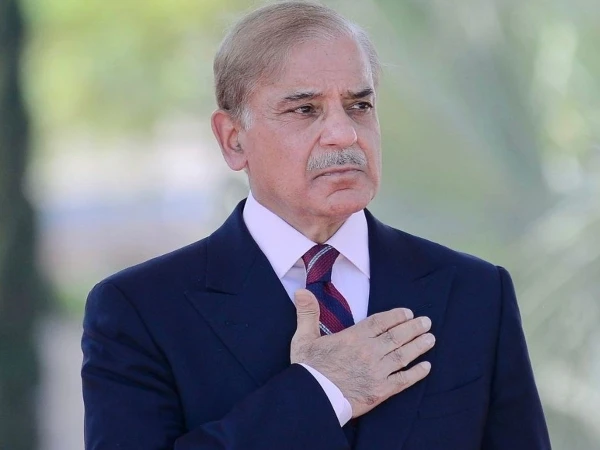
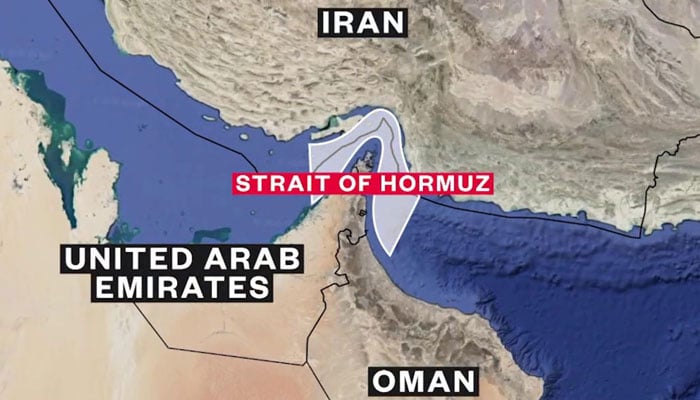
    Prime Minister Shehbaz Sharif has reaffirmed Pakistan’s full support for Saudi Arabia during a telephone conversation with Saudi Crown Prince Mohammed bin Salman. The two leaders discussed the regional security situation, recent developments in the Middle East and the importance of maintaining peace and stability. During the conversation, the prime minister strongly condemned the recent Houthi attacks on Saudi oil tankers in the Red Sea. He described the attacks as unacceptable and said they were a clear violation of international law. He added that such actions pose a serious threat to international maritime security, commercial shipping and the free movement of global trade. Shehbaz Sharif said attacks targeting commercial vessels not only endanger regional stability but also threaten the global economy by disrupting vital shipping routes. He stressed that the international community must work together to ensure the safety of maritime trade and prevent further escalation in the region. The prime minister reaffirmed Pakistan’s complete solidarity with Saudi Arabia. He said he, Field Marshal Syed Asim Munir and the people of Pakistan stand firmly with the Saudi leadership and the brotherly people of the Kingdom during this challenging period. He emphasized that Pakistan fully supports Saudi Arabia’s efforts to safeguard its security and territorial integrity. Shehbaz Sharif also reiterated Pakistan’s unwavering commitment to the sovereignty, independence and prosperity of Saudi Arabia. He said the deep-rooted relationship between Islamabad and Riyadh is based on shared faith, mutual respect and decades of close cooperation in political, economic and security matters. Saudi Crown Prince Mohammed bin Salman thanked Pakistan for its consistent support and appreciated the strong brotherly ties between the two countries. He acknowledged Pakistan’s continued commitment to regional peace and stability. The prime minister conveyed his best wishes to King Salman bin Abdulaziz, Custodian of the Two Holy Mosques, and expressed hope for his continued good health and well-being. Shehbaz Sharif also stressed that Pakistan would continue cooperating with Saudi Arabia and the international community to promote peace, security and stability across the Middle East. He emphasized the importance of ensuring uninterrupted maritime traffic through the Red Sea and the Strait of Hormuz, saying these waterways are critical for global trade, energy supplies and international economic stability.

  • |

    UK prosecutors urge US court to deny bail to Andrew and Tristan Tate ahead of extradition hearing

    British prosecutors have urged a US court to keep social media influencer Andrew Tate and his brother Tristan in custody ahead of a crucial detention hearing, warning the pair pose a severe flight risk and could intimidate witnesses if released. The brothers, who hold dual British and American citizenship, were arrested in Miami on 19 July following a formal extradition request by the United Kingdom. They face a total of 59 charges in the UK, including rape, human trafficking, and offences relating to indecent images of a child. In legal filings submitted ahead of Thursday’s bail hearing in the Southern District of Florida, the UK Crown Prosecution Service (CPS) argued through US prosecutors that the brothers possess the financial resources and global influence needed to evade justice. Prosecutors highlighted the vulnerability of complainants in the case, noting that several alleged victims reported being assaulted and threatened with weapons. The CPS also cited previous social media posts by Andrew Tate in which he mocked law enforcement and hinted at methods to avoid arrest. Lawyers representing the Tate brothers acknowledged that granting bail during international extradition proceedings is rare, but insisted their clients have shown no intention of fleeing prosecution. The brothers were previously arrested in Romania in 2022 on human trafficking charges, though Romanian courts lifted travel restrictions in early 2025, allowing them to travel to the United States. If the US courts rule in favour of extradition, the final decision to surrender the brothers to British authorities will rest with US Secretary of State Marco Rubio. If convicted in the UK, both men could face life imprisonment.

  • | |

    India’s Education Minister resigns amid exam controversy

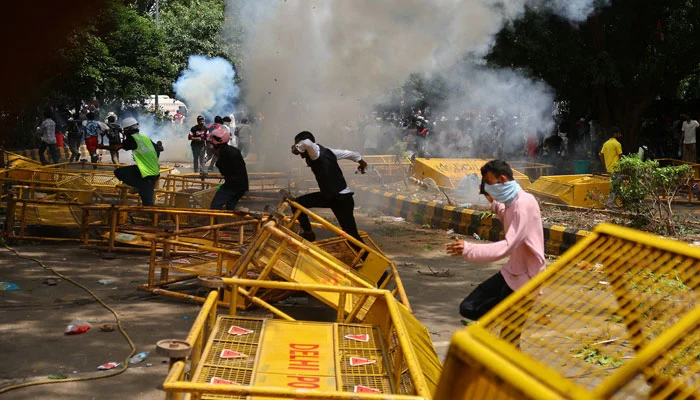
    India’s Union Education Minister Dharmendra Pradhan resigned on Saturday amid growing pressure over a nationwide controversy involving alleged examination paper leaks. His resignation comes after weeks of protests by students and opposition parties. Demonstrators have demanded greater accountability and changes to the country’s examination system. The controversy has intensified criticism of the government’s handling of the issue. Students and opposition leaders have called for stronger measures to prevent examination irregularities and protect the credibility of competitive exams. Pradhan’s departure marks a significant development for Prime Minister Narendra Modi’s government as pressure continues to mount over the examination crisis. The resignation is expected to fuel further debate over examination reforms, transparency and accountability in India’s education system. Earlier, Indian Prime Minister Narendra Modi has pledged to establish fast-track courts to swiftly punish officials involved in examination paper leaks, attempting to contain a widespread youth-led protest movement that has rocked New Delhi and disrupted Parliament. Posting on X in his first public remarks on the crisis, Modi declared that “those who try to harm the future of our youth will not be spared”. The satirical “Cockroach Janta Party” (CJP), coined after India’s top judge reportedly likened unemployed youths to “cockroaches”, promptly rejected Modi’s proposal as a superficial “Band-aid” measure. The CJP continues to demand educational reforms and the immediate resignation of Education Minister Dharmendra Pradhan, who has faced intense pressure following 152 recorded paper leaks over the past decade.

  • | |

    Six Pakistani dramas that gave women powerful stories

    Pakistani television has produced many memorable female characters. Some of them stood out because they were not written simply as victims waiting to be rescued. Over the decades, several dramas showed women working, making difficult choices, facing social pressures and rebuilding their lives. These characters were ambitious, emotional and flawed. Most importantly, they were allowed to shape their own stories. Here are six dramas that created some of Pakistani television’s most memorable female leads. Ankahi (1982) Written by Haseena Moin, Ankahi introduced audiences to Sana Murad, played by Shehnaz Sheikh. Sana is confident, outspoken and determined. After her father’s death creates financial problems for the family, she decides to take responsibility. Despite having limited qualifications, she manages to secure a job after an unexpected meeting with a company chairman. Her journey through professional life becomes a mix of humour, challenges and personal growth. Sana’s character was significant because she was not defined by marriage or romance. She wanted to work and create a future for herself. Tanhaiyaan (1985) Haseena Moin’s Tanhaiyaan, directed by Shahzad Khalil, focused on two sisters who suddenly lose their parents and their family home. Played by Marina Khan and Shehnaz Sheikh, the sisters are forced to rebuild their lives independently. The drama presented women earning their own income without treating their decision to work as something unusual. Their struggles were balanced with friendship, humour and everyday challenges. That combination helped the drama remain popular long after its original broadcast. Maat (2011) Umera Ahmad’s Maat followed two sisters whose different priorities eventually take them in completely different directions. Saba Qamar played Saman, a woman strongly attracted to wealth, comfort and social status. Her sister Aiman, played by Aamina Sheikh, takes a quieter path. Aiman is repeatedly underestimated and overlooked. She faces difficult circumstances but continues building her life with patience and resilience. As the story progresses, the sisters’ fortunes change dramatically. The drama explores how ambition, relationships and personal choices can shape a person’s future. Durr-e-Shehwar (2012) Durr-e-Shehwar explored marriage from a perspective that was rarely shown without romanticising sacrifice. The central character enters marriage expecting affection and companionship. Instead, she faces emotional distance from her husband and hostility from her mother-in-law. The story is later viewed through the eyes of her daughter, Shandana. She initially believes her parents had a perfect marriage. She eventually discovers the struggles her mother endured. The drama raises questions about compromise, expectations and the sacrifices women make to preserve relationships. Digest Writer (2014) Saba Qamar played Fareeda, a young woman whose ambitions are often overshadowed by the expectations placed on her family’s son. Writing becomes Fareeda’s escape and her way of expressing herself. She begins publishing stories under the name Rashk-e-Hina. Her talent eventually attracts the attention of a television producer, giving her an opportunity to enter the drama industry. However, success does not come easily. Fareeda faces professional rivalry, betrayal and pressure from her family. The drama presents ambition as something meaningful while also showing the personal cost of pursuing a career in a difficult environment. Udaari (2016) Udaari tackled one of the most sensitive subjects in Pakistani television. The story follows Zebo, whose childhood is shattered by abuse. However, the drama does not define her entire identity through her trauma. Instead, Zebo gradually finds the courage to speak about what happened to her. Her mother also undergoes a major transformation. After realising the danger her daughter faces, she chooses to protect Zebo and rebuild their lives. Meera, a singer living nearby, also becomes an important source of support. One of the drama’s most powerful moments comes when Zebo confronts her abuser in court. Rather than accepting shame for what happened to her, she identifies herself as a survivor. Across four decades, these dramas demonstrate how Pakistani television has portrayed women in changing ways. From Sana’s determination to build a career to Zebo’s courage to seek justice, these characters were given stories beyond romance and victimhood.

  • |

    ICC removes Karim Khan over sex abuse allegations

    The International Criminal Court (ICC) has officially removed Chief Prosecutor Karim Khan after member states voted in favour of his dismissal over allegations of sexual misconduct. The decision marks a significant leadership change at the world’s top war crimes court, which has been under growing international scrutiny in recent years. The vote was taken by the Assembly of States Parties, the governing body of the ICC, following months of discussions over the allegations against the British lawyer. Khan had already stepped aside from his duties in June after an oversight process recommended further action. Karim Khan has consistently denied all allegations. His legal team said the decision to remove him was politically motivated and argued that he was not given a fair opportunity to defend himself during the proceedings. His lawyers maintained that an independent judicial panel had not found sufficient evidence to establish misconduct under the court’s legal framework. They claimed the final decision ignored those findings and raised concerns about the independence and credibility of the removal process. The development comes at a sensitive time for the ICC. Khan attracted global attention in 2024 after seeking arrest warrants for Israeli Prime Minister Benjamin Netanyahu and former Defence Minister Yoav Gallant over alleged war crimes and crimes against humanity linked to the conflict in Gaza. The move sparked strong reactions from Israel and the United States. Following the warrants, the administration of US President Donald Trump imposed sanctions on Khan and several other ICC officials, increasing pressure on the court. Legal representatives for Khan argued that the prosecutor was removed while facing international political pressure and economic sanctions, suggesting that the circumstances surrounding the vote could affect the court’s independence. The ICC announced that Deputy Prosecutors Nazhat Shameem Khan and Mame Mandiaye Niang will jointly lead the Office of the Prosecutor until a new chief prosecutor is elected. The court said the process to select Khan’s successor will begin soon, but member states are not expected to elect a permanent replacement before next year. The ICC also clarified that Karim Khan’s removal will not affect existing investigations or previously issued arrest warrants. The warrants issued in 2024 against Israeli officials remain legally valid because only ICC judges have the authority to cancel or withdraw them. The court reaffirmed its commitment to conducting independent and impartial investigations despite the leadership change. It said its work to investigate alleged war crimes, crimes against humanity and genocide in different parts of the world will continue without interruption.

  • | |

    Italy’s fourth summer heat wave peaks as rec…

    Italy’s fourth heat wave of the summer reached its most intense point on Monday, with a record 25 cities placed under red heat alerts as temperatures climbed above 40 degrees Celsius in parts of the country, according to local media reports. Italy’s Health Ministry raised the number of cities under its highest heat risk warning from 23 on Sunday to 25 on Monday, marking the highest total recorded so far this summer. Only Reggio Calabria and Messina avoided the red alert designation, though both remained under yellow level warnings. The Po Valley and central regions of the country are experiencing the harshest conditions, while inland areas and Sardinia could also see temperatures exceed 40 degrees Celsius. In parts of central and northern Italy, overnight temperatures are expected to stay above 25 degrees Celsius, a pattern meteorologists have described as super tropical nights. The central province of Terni recorded a temperature of 41 degrees Celsius on Sunday. Experts have linked the extreme heat to a persistent African anticyclone combined with continued warming of the Mediterranean Sea, where surface temperatures have reached or surpassed 30 degrees Celsius across much of the basin. Meteorologist Lorenzo Tedici of iLMeteo.it said the accumulated heat is expected to fuel atmospheric instability, warning of strong afternoon thunderstorms forming over the Alps and Apennines. Italy’s Civil Protection Department has issued yellow alerts for heavy rainfall along the Apennine mountain range stretching from Umbria to Calabria, as well as in inland areas of Sicily. Tedici said a genuine shift away from the hottest phase of summer 2026 is unlikely before at least mid August. Authorities have also flagged an elevated risk of wildfires, placing Sicily and Emilia Romagna under orange alerts as the heat wave continues to grip the country. The extreme temperatures fit a broader pattern of intensifying summer heat across southern Europe in recent years, as scientists have repeatedly linked rising Mediterranean sea temperatures and more frequent heat waves to long term climate trends affecting the region’s weather systems.

Leave a Reply

Your email address will not be published. Required fields are marked *