talks accelerate fully
|

Talks accelerate to fully reopen Strait of Hormuz 


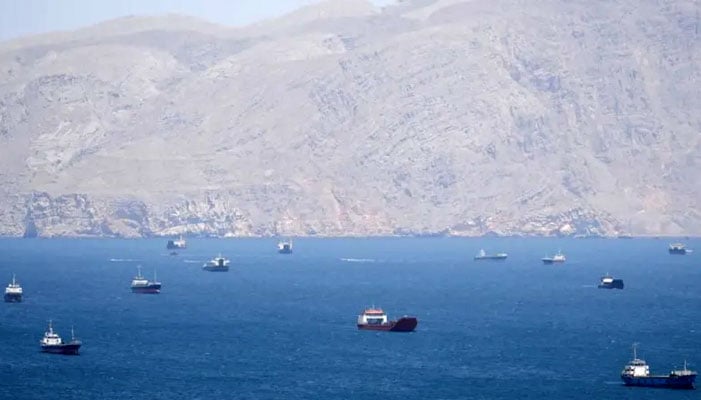
Efforts to fully reopen the Strait of Hormuz, one of the world’s most strategically important maritime trade routes, are gaining momentum as diplomatic contacts between the United States and Iran continue to show encouraging progress. According to reports preparations are underway to restore unrestricted commercial navigation through the vital waterway, with an official announcement expected within the next few hours or by Wednesday.

The Strait of Hormuz serves as a critical shipping corridor connecting the Persian Gulf to international waters, carrying a significant share of the world’s crude oil, liquefied natural gas, refined petroleum products, and other essential commodities. Any disruption in traffic through the strait has immediate consequences for global energy markets and international trade.

Arab television channels have claimed that discussions aimed at fully reopening the waterway have advanced considerably. The reports suggest that diplomatic negotiations have entered their final stages and that an agreement could soon be announced, allowing commercial vessels to resume normal operations after a period of uncertainty.

Earlier, U.S. Treasury Secretary Scott Bessent also expressed optimism regarding the ongoing negotiations. Speaking to media in Washington , he said there was a strong possibility that an agreement to reopen the Strait of Hormuz could be reached by Tuesday or Wednesday.Talks between Washington and Tehran are focused on ensuring the uninterrupted movement of commercial ships through the strategic passage while restoring stability to the region.

During the interview, the Treasury Secretary noted that negotiations are continuing with the aim of normalizing the security situation in the Strait of Hormuz and guaranteeing safe passage for international shipping. He emphasized that both sides are engaged in discussions designed to reduce tensions and facilitate the free flow of maritime commerce.

When asked whether Iran would be permitted to collect toll fees from vessels passing through the Strait of Hormuz, Bessent dismissed the possibility. He clarified that the proposed arrangement is based on the principle of complete freedom of navigation

for all commercial vessels. According to him, the agreement is intended to ensure that ships from every nation can transit the waterway without facing additional charges or restrictions.

If finalized, the agreement is expected to have far-reaching economic benefits. In addition to restoring the uninterrupted export of crude oil from Gulf producers, it would also enable the smooth transportation of fertilizers, refined petroleum products, industrial gases, and numerous other essential commodities. Industry experts believe that the reopening of the strait would significantly improve global supply chains that have been disrupted by regional tensions.

Another major benefit of the proposed agreement would be the release of hundreds of commercial vessels currently delayed or stranded in the Persian Gulf due to security concerns. Allowing these ships to resume their voyages would ease congestion, reduce shipping costs, and improve delivery schedules for international trade.

Economists suggest that a full reopening of the Strait of Hormuz could also help stabilize global energy markets. Increased supplies of crude oil and petroleum products would likely ease concerns over shortages, potentially leading to lower international oil prices. Reduced transportation costs could further contribute to price relief across several sectors, including manufacturing, agriculture, and consumer goods.

While optimism surrounding the negotiations has grown, officials have yet to announce a formal agreement. Diplomatic efforts remain ongoing, and both governments are expected to continue discussions until a final framework is approved. Observers around the world are closely monitoring developments, as the outcome of these talks could have a significant impact on global trade, energy security, and regional stability.

If the anticipated agreement is reached, it would mark an important diplomatic breakthrough, restoring confidence in one of the world’s busiest maritime corridors and helping normalize commercial activity throughout the Gulf region.


Similar Posts

  • |

    China, Indonesia deepen security and economic ties

    JAKARTA: China and Indonesia opened a new round of high-level talks on Friday, with defence cooperation, regional security, political relations and trade expected to dominate discussions as Jakarta seeks to maintain strong ties with Beijing while preserving its relationship with Washington. Chinese Foreign Minister Wang Yi, visiting Jakarta for the first time in two years, met his Indonesian counterpart Sugiono before joining a “2+2” dialogue involving the two countries’ defence ministers. The talks come at a sensitive moment for Southeast Asia, where tensions in the South China Sea, competition between China and the United States and growing economic interdependence are putting pressure on regional governments to carefully balance their relationships with major powers. Wang said the new dialogue mechanism was timely as the world faced increasingly complex challenges. “Unilateralism and hegemonic acts bring serious impact on global cooperation and stability,” he said, adding that China aimed to build cooperation with Indonesia at a high level. Indonesian officials said economic issues and political relations would be among the foreign ministers’ priorities, while China said the discussions would also cover defence cooperation and international and regional affairs. Defence Cooperation Expands Chinese Defence Minister Dong Jun was welcomed with a military honour guard at Indonesia’s defence ministry, where he said the two armed forces had significant room to strengthen cooperation. “The prospects for cooperation between the two militaries are broad,” Dong said, describing the relationship as increasingly effective and higher in quality. Indonesia’s Defence Minister Sjafrie Sjamsoeddin said the countries planned to expand military activities, including joint exercises, officer exchanges and cooperation in the defence industry. He described the move as an important step in strengthening Indonesia’s defence capabilities. The discussions follow a joint naval exercise between China and Indonesia last week that drew attention because of its location east of Taiwan. Taiwan, which Beijing claims as part of China, expressed concern over the exercise. Indonesia’s navy said the activity was routine and noted that it conducts exercises not only with China but also with Japan and the United States. Defence analyst Curie Maharani said the episode highlighted how military diplomacy could serve broader strategic purposes. Indonesia, she said, had gained an important lesson about how major powers can use defence cooperation to project influence. Balancing China and Washington Jakarta’s approach reflects its long-standing “free and active” foreign policy. President Prabowo Subianto has repeatedly said Indonesia intends to remain non-aligned while maintaining friendly relations with all countries, including China and the United States. That balancing act is becoming more complicated as competition between Washington and Beijing intensifies. Indonesia also has differences with China over developments in the South China Sea. Beijing claims almost the entire disputed waterway, while Indonesia has sought to avoid becoming directly involved in broader territorial disputes between China and the Philippines, Malaysia and Vietnam. Jakarta has generally maintained a measured position, prioritising diplomacy and economic cooperation while protecting its own interests. Billions at Stake Economic ties provide another major reason for Indonesia to maintain close relations with Beijing. China contributed $3.9 billion in foreign direct investment to Indonesia during the first half of 2026, according to Indonesian figures. Chinese companies have invested heavily in industries ranging from nickel processing and steel to electric-vehicle batteries. Indonesia possesses the world’s largest nickel reserves, making it strategically important to China’s rapidly expanding electric-vehicle supply chain. Among major investors are Contemporary Amperex Technology, one of the world’s largest electric-vehicle battery makers, and Tsingshan Group, which operates nickel and steel facilities in Indonesia. However, the growing investment relationship has not been free of tension. In May, Chinese companies operating in Indonesia urged Jakarta to introduce more business-friendly policies, arguing that higher taxes and a new nickel pricing formula were increasing costs and threatening investment. The China Chamber of Commerce in Indonesia also complained of what it described as excessive regulation and enforcement, while raising allegations of corruption and extortion. The concerns underline the challenge facing both countries: expanding economic cooperation while managing disagreements over regulation, investment conditions and strategic interests. For Indonesia, Friday’s talks therefore carry significance beyond bilateral diplomacy. Jakarta is trying to strengthen its economy and defence capabilities without becoming overly dependent on either Beijing or Washington. In For China, deeper engagement with Indonesia offers an opportunity to strengthen its influence in one of Southeast Asia’s largest economies while expanding defence and economic partnerships in a strategically important region.

  • | | | |

    Trump weighs massive strike on Iran

    US President Donald Trump is considering launching a new large-scale military operation against Iran, raising fears of a further escalation in tensions across the Middle East. According to reports, the proposed operation could be larger than previous US military strikes carried out against Iranian targets earlier this year. Trump said he was close to making a decision but stressed that no final order had been issued. He said the United States was fully prepared to act if necessary and claimed military plans were already in place. US officials, however, said no formal authorization for a new attack has yet been given. The US president also said Israel could join any future military operation if requested, although he maintained that American forces were capable of carrying out such an operation on their own. Trump accused Iran of refusing to accept the latest diplomatic proposal presented through mediation efforts. He claimed Tehran was delaying negotiations despite increasing military and economic pressure. The remarks came amid continued efforts by international mediators to prevent the conflict from expanding. The US president also warned that Washington would hold Iran directly responsible if Yemen’s Houthi movement launched further attacks on commercial shipping. His warning followed Houthi claims that they had targeted two Saudi oil tankers in the Red Sea using missiles and drones. Trump said any future attacks on commercial vessels would trigger a strong military response against both the Houthis and Iran. He accused Tehran of supporting the armed group and said the United States would not tolerate threats to international shipping routes. Iran responded sharply to the US statements. Foreign Ministry spokesman Esmaeil Baghaei warned American military personnel against targeting civilian infrastructure, saying attacks on facilities such as bridges and power stations would violate international law. He stressed that military personnel remain legally responsible for carrying out unlawful orders. US Secretary of State Marco Rubio said Washington’s main objective remains preventing Iran from acquiring nuclear weapons. He accused Tehran of repeatedly violating previous agreements and said the Iranian leadership continued to support armed groups across the Middle East instead of addressing domestic economic challenges. Rubio also urged Yemen’s Houthis to avoid becoming more deeply involved in the regional conflict. He said further attacks on Saudi Arabia or international shipping would only increase instability and could trigger broader military action. Meanwhile, Oman said it is working with Saudi Arabia, regional partners and the United Nations to revive Yemen’s political peace process. Omani officials called for restraint from all sides and emphasized the importance of protecting freedom of navigation in the Red Sea. Regional tensions continued to grow as Bahrain activated emergency warning sirens following reports of a possible Iranian attack. Authorities advised residents to remain calm and move to safe locations, although no casualties or damage were immediately reported. Jordan’s armed forces also announced that their air defence systems had intercepted several missiles and drones over the past 24 hours. Military officials said three missiles and six drones were destroyed before reaching populated areas, while another missile landed in an uninhabited location without causing damage. The Houthis said they carried out missile and drone attacks on two Saudi oil tankers as part of what they described as a maritime blockade. Shipping companies have already begun changing routes to avoid the Bab el-Mandeb Strait, increasing concerns over global oil supplies and international trade. Iranian military officials warned that if US attacks continue, Tehran will introduce new military strategies designed to make future operations more difficult for its opponents.

  • |

    High Commissioner Tipu Usman unveils people-centred consular reforms for British Pakistanis

    LONDON:Pakistan’s High Commissioner to the United Kingdom, Tipu Usman, has announced a series of people-centred reforms aimed at improving consular services for the British Pakistani community. As part of the new measures, consular services at the Pakistan High Commission in London will now begin at 8:00 am, Monday to Friday, increasing the number of appointments available each day and helping reduce waiting times. The High Commission has also introduced a daily walk-in facility from 3:00 pm to 4:00 pm, Monday to Friday, on a first-come, first-served basis. The service will cover passport issuance and renewal, NADRA-related services, document attestation, including Powers of Attorney, and Police Character Certificates. The reforms are among the first major public service initiatives introduced by High Commissioner Tipu Usman since assuming office. They are aimed at making consular services more accessible, efficient and responsive to the needs of overseas Pakistanis living in London and surrounding areas. Members of the British Pakistani community have welcomed the initiative, describing it as a practical step that will ease access to essential consular services and improve the overall public service experience at the Pakistan High Commission in London.

  • |

    Google’s new AI satellite image tool raises fears over fake visuals

    Google has introduced a new artificial intelligence feature for Google Earth that allows users to create AI generated images using satellite, aerial and three dimensional mapping data. While the company says the tool is designed to support creative and practical uses, researchers and digital investigation experts have expressed concern that it could make it easier to produce convincing fake satellite images. The new feature, called Create Image, was launched on Thursday and uses Google’s Nano Banana 2 image generation technology. It enables users to zoom into locations on Google Earth and generate realistic visualisations within seconds using existing mapping data. Google said the tool is intended to help people visualise historical scenes, develop real estate plans and explore other creative projects. However, experts who specialise in verifying online content warn that the technology could be exploited to spread false information and manipulate public opinion. Open source intelligence researchers say Google Earth has long been considered one of the most trusted resources for checking locations, analysing events and verifying images. They fear that adding AI generated content to the platform could blur the line between authentic satellite imagery and fabricated visuals. Digital investigations expert Henk Van Ess criticised the update, arguing that Google spent years building public trust in its mapping service but has now introduced a feature capable of generating fictional scenes. He warned that even if an AI generated image is not perfect, it could still appear believable because it is linked to a platform widely regarded as reliable. Brady Africk, a research analyst at the American Enterprise Institute who specialises in satellite image analysis, also raised concerns about the technology. He said the update makes it easier to create realistic fake satellite images that could spread rapidly on social media and mislead the public. According to Africk, the growing availability of AI generated imagery could also weaken confidence in genuine satellite photographs. He warned that journalists, researchers and fact checkers may find it increasingly difficult to distinguish authentic images from manipulated ones, making investigations more challenging. In response to the criticism, Google said all images created through the new feature include its SynthID digital watermark technology. The invisible watermark is embedded into AI generated content to help identify that it was produced using Google’s artificial intelligence tools. The company also said users can ask its Gemini chatbot to check whether an image contains a SynthID watermark, providing an additional method for verifying AI generated content. The launch comes as technology companies continue expanding the use of generative artificial intelligence across their products. At the same time, governments, researchers and technology experts are calling for stronger safeguards to prevent AI tools from being used to create misleading content or spread disinformation.

  • |

    Modi vows tough punishment as exam leak protests intensify

    Indian Prime Minister Narendra Modi has promised strict action against those involved in examination paper leak scandals, making his first public comments since nationwide student protests erupted over alleged irregularities in the country’s examination system. In a statement shared on social media, Modi said the future and welfare of India’s youth were of the highest importance. He assured students that the government would take firm action against those responsible for examination fraud and announced plans to establish fast-track courts to ensure speedy trials in paper leak cases. The prime minister said no one would be allowed to jeopardise the future of young people for personal gain. He pledged that all those found guilty of manipulating examinations or leaking question papers would face strict legal consequences. His statement came after thousands of students and young people gathered in New Delhi to protest against repeated examination paper leaks and demand greater transparency in the education system. Demonstrators have also been calling for the resignation of the country’s education minister, accusing the government of failing to prevent repeated examination scandals. The protests have been organised by the Cockroach Janta Party (CJP), a movement that emerged through social media and has rapidly gained support among students and young voters across India. Initially launched as a satirical online campaign, the movement has expanded into a nationwide platform highlighting concerns over examination fraud, unemployment, and opportunities for young people. Tensions escalated earlier this week when large crowds attempted to march towards Parliament during the opening of the monsoon session. Police stopped the protesters by using tear gas and baton charges to disperse the crowds. Clashes later broke out after some demonstrators threw stones at security personnel, resulting in injuries on both sides. According to official figures, at least 178 people, including police officers and security personnel, were injured during the violence. Several protesters also sustained injuries as confrontations continued in different parts of the capital. The latest demonstrations are among the largest youth-led protests seen in New Delhi in recent years. The movement has drawn widespread public attention and increased pressure on the government to restore confidence in India’s examination system. Public anger has grown following a series of examination controversies across the country. One of the biggest scandals involved the leak of a national medical entrance examination paper, forcing more than two million candidates to retake the test. Another controversy related to the online evaluation of high school examinations involving nearly two million students has further raised concerns about fairness and transparency. Students argue that repeated paper leaks are destroying merit and reducing confidence in the education system. Many believe honest candidates are being unfairly affected by corruption and poor oversight in the examination process.

  • |

    Texas governor targets Muslim airport facilities

    Texas Governor Greg Abbott has ordered a review of state grants provided to Dallas Fort Worth International Airport (DFW) and Houston’s George Bush Intercontinental Airport (IAH), alleging that facilities for Muslim passengers to perform ablution and pray could amount to religious discrimination. Abbott’s office said the matter has also been referred to the US Department of Transportation for investigation and possible action. According to a statement from the governor’s office, state grants provided to entities operating airports in Texas will be reviewed to determine whether existing funding should be withdrawn or whether the airports should be denied future state funding. Abbott has argued that providing facilities specifically associated with one religion at government-owned facilities could raise concerns under religious discrimination laws. The governor’s office said DFW International Airport is planning to establish a dedicated ablution facility for Muslim passengers. At George Bush Intercontinental Airport, a similar facility has reportedly already been established, along with a designated space for prayer. Abbott has written to US Transportation Secretary Sean Duffy, asking the Department of Transportation and the Federal Aviation Administration (FAA) to immediately review the existing or proposed religious facilities at both airports. He has also called for corrective or legal action if federal authorities determine that any violations have occurred. The Texas governor maintains that both airports receive federal funding and are therefore required to comply with federal laws prohibiting discriminatory practices. In his statement, Abbott said the proposed ablution facilities appear to provide a special accommodation to a particular section of the population based on religion, which he considers potentially unlawful. He further argued that because the airports are publicly owned, government authorities cannot give preference to one religious viewpoint over others. Abbott reiterated his position on social media, saying that government facilities funded by taxpayers should not allow what he described as unlawful religious discrimination.

Leave a Reply

Your email address will not be published. Required fields are marked *